General Manstein, one of the Wehrmacht’s top Generals. Part 1.

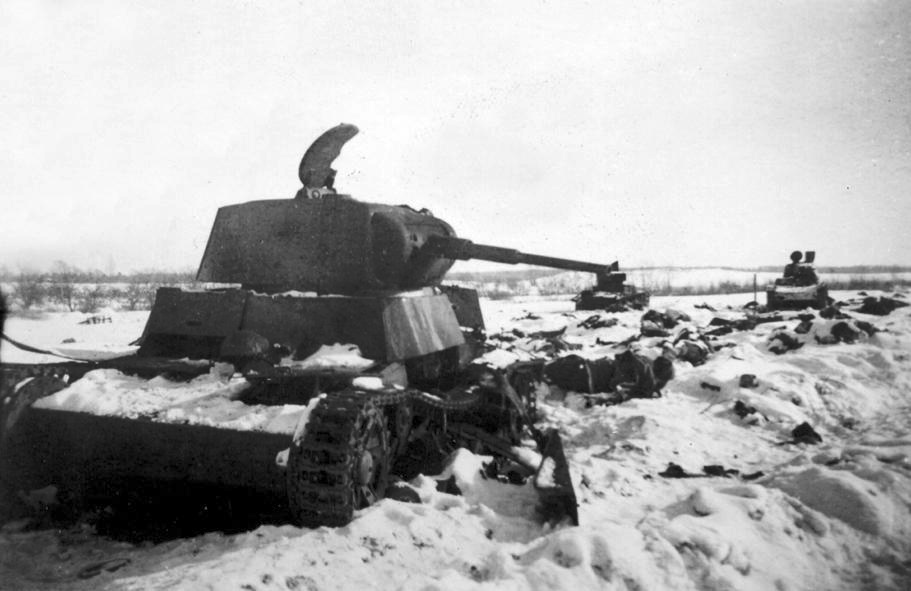
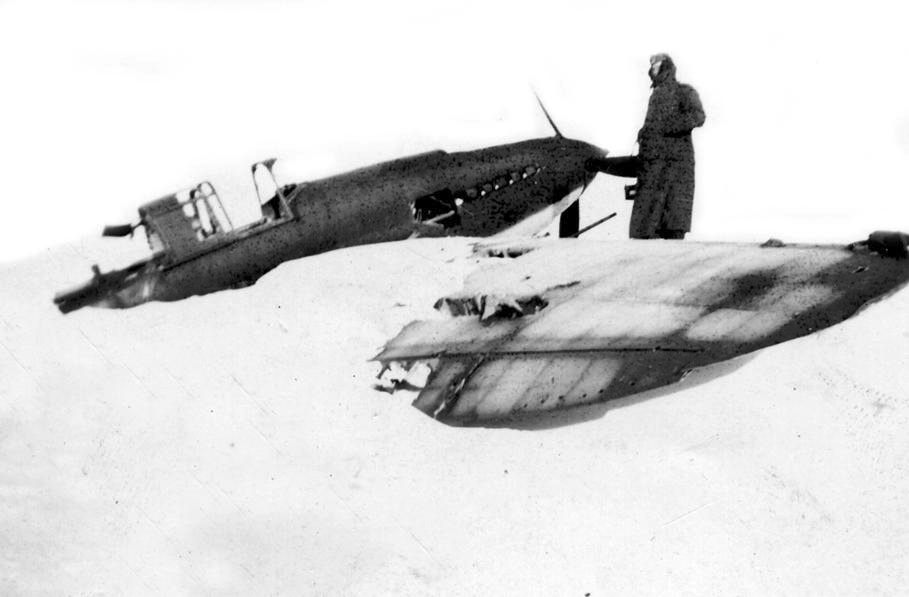
During the battles around southern Leningrad, in October and November 1941, in temperatures reaching -40 degrees, the 3rd Fallschirmjager Regiment, FJR3, 7th Flieger Division, commanded by General Student, was dispatched to defend parts of the River Neva and repulse any Russian attempts at creating a bridgehead. They were used in battalion sized units in a fire-fighting role and consequently some elements suffered up to 75% casualties.

This unit was just a small piece of the jigsaw of Army Group North’s push through the Balkans during Operation Barbarossa, launched by Hitler on Sunday, 22nd June, 1941.

General Manstein also had a key role to play in the invasion of Russia, taking command of LVI AK, LVI Army Corps, in February 1941, under the command of Panzer Group 4. He was assigned the 8th Panzer Division, 3rd Infantry Division (motorised) and the 290th Infantry Division and was ordered, along with Reinhardt of the XLI AK, to strike through the thinly held Russian defences and encircle the Russian 8th Army, before continuing their advance towards the Dvina River and force a crossing. The ultimate goal for Army Group North, was to destroy the Red Army holding the Baltic States, capture Leningrad and link up with the Finnish Army.

Manstein was born in Braunfels in Hesse, on the 24th November 1887, one of ten children. Although born to the Lewinski family, his father a Prussian artillery Generalleutnant, he was brought up by his mother’s sister, as they had no sons with whom to carry the Manstein name forward. Manstein was related to a number of famous Prussian Generals and naturally pursued a career in that same field. After completing his training and attending the Royal Military Academy at Schloss Engers, near Koblenz, he was attached, as a young officer, to the 3rd Garde-Regiment zu Fuss.

At the outbreak of World War 1, in August 1914, he initially served in Belgium before being transferred to the Russian Front in October, where, during the retreat from Warsaw, he was wounded and sent to Wiesbaden to recover.

After the war and under the terms of the Treaty of Versailles, where the size of the Army was limited to 100,000 men, much of his time was spent in an organisational role and it wasn’t until October 1921 that he got his first command, 6th Company, 5th Infantry Regiment. He was now married to Jutta von Loesch and his second child, a son, was born.

To overcome the restrictions placed upon the Army by the Treaty small study groups were created, leading to new doctrine in infantry, armour and motorised warfare. Manstein was fortunate to be included in one of these groups helping develop new military concepts.

Promoted to Major in 1928 and Oberstleutnant, Lieutenant Colonel, in 1931, he commanded II Jaeger battalion of the 4th Prussian Infantry Regiment in Kolberg. He was at Kolberg when Adolf Hitler became Reich Chancellor in January 1933, and along with the rest of the German Military, swore an oath, pledging their loyalty to him. His Wehrmacht service had begun…

Fallschirmjager, Grüne Teufel, Green Devils. Part 2

.

The Fallschirmjager qualification badge.

.

I have just finished writing my third novel in the Devils with Wings series, Devils with Wings: Frozen Sun. The Fallschirmjager, after their successful battle taking Crete in only 10 days, are shipped to Poland to partake in Operation Barbarossa, the German invasion of the Soviet Union.

Leaving temperatures in excess of forty degrees to be used, not in an airborne operation, but as a fire brigade, plugging gaps in the line around Leningrad, particularly along the banks of the River Neva. They were Army Group North’s strategic reserve.  They were quickly placed into the fray, fighting along the River Neva, where temperatures dropped to below -30 degrees, sometimes as low as -40. They were successful at plugging the gaps and preventing the Soviet Union from exploiting their bridgeheads over the River Neva, but at a price. Some units suffered up to 75% casualties. Many who had survived the assault on the Fortress Eben Emael, (Devils with Wings) and the fierce fighting on the Island of Crete (Devils with Wings: Silk Drop) met their fate in this bitter struggle with the atrocious weather and the never ending Soviet hordes.

The German Army, and the Fallschirmjager, were soon to experience the hostile Russian winters.

These next few posts will fill in some of the background to these amazing airborne soldiers. Their training was particularly tough, and they were the first parachute, airborne, division in existence. After a tough physical regime, consisting of strenuous exercise, unarmed combat, weapons handling and long forced marches, culminating in bigger and bigger unit exercises, they complete their parachute training. Before they were allowed anywhere near a parachute, they to jump into a tank of water from a 45 foot tower. Their training, apart from the parachute element, was thought to be similar to that of the British WW2 Commandos.

.

Fallschirmjager helmet, M38 Model Fallschirmjagerhelm.

.

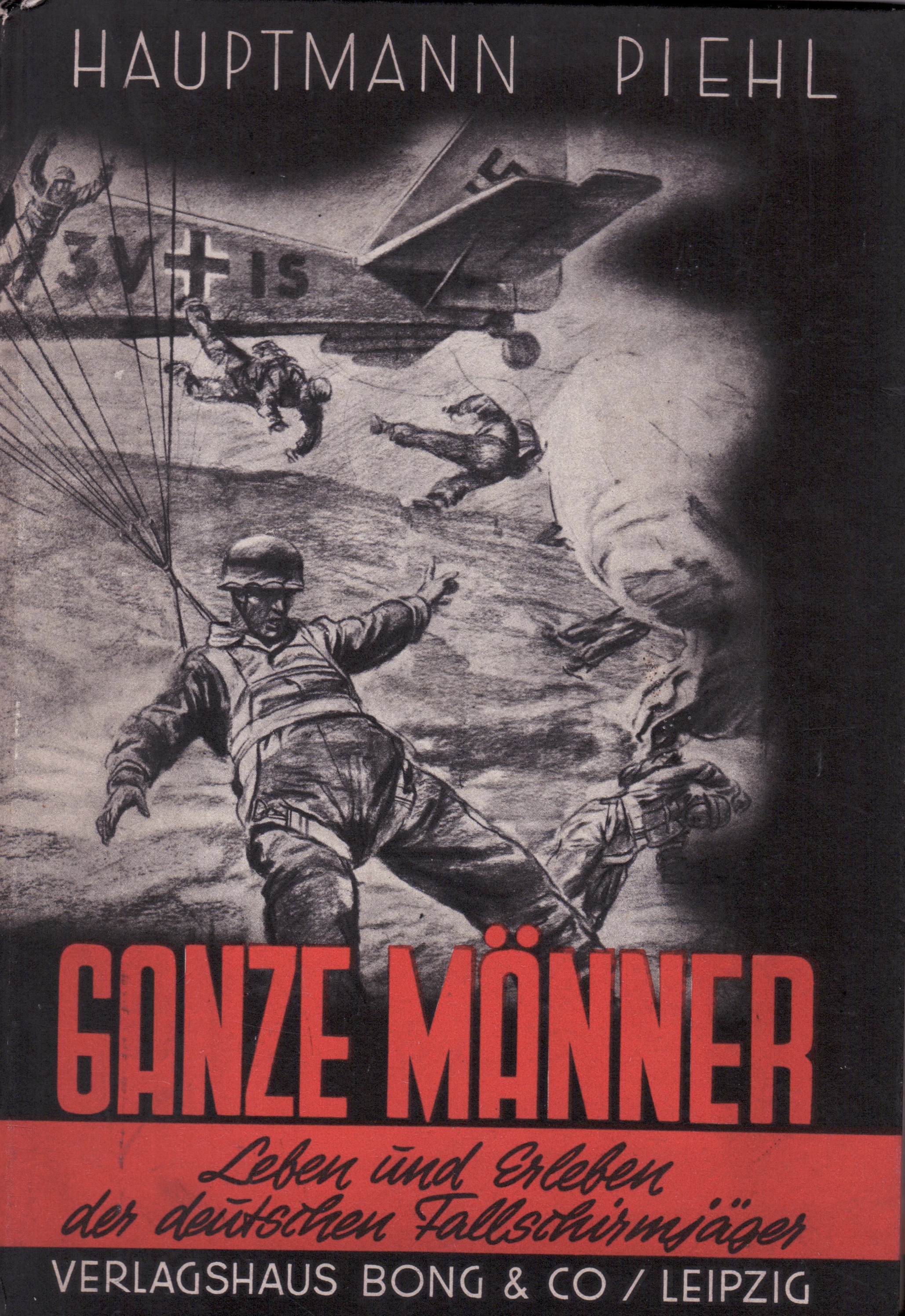
The front cover of Hauptmann Piehl’s Ganze Manner, the 1943 first edition, with a foreword by General Kurt Student. The German Fallschirmjager in WW2.

.

Apart from some initial limited fighting in Poland and Norway, it wasn’t until 1940, that the Fallschirmjager were truly launched into limelight with their famous attack on Fort Eben Emael.

.

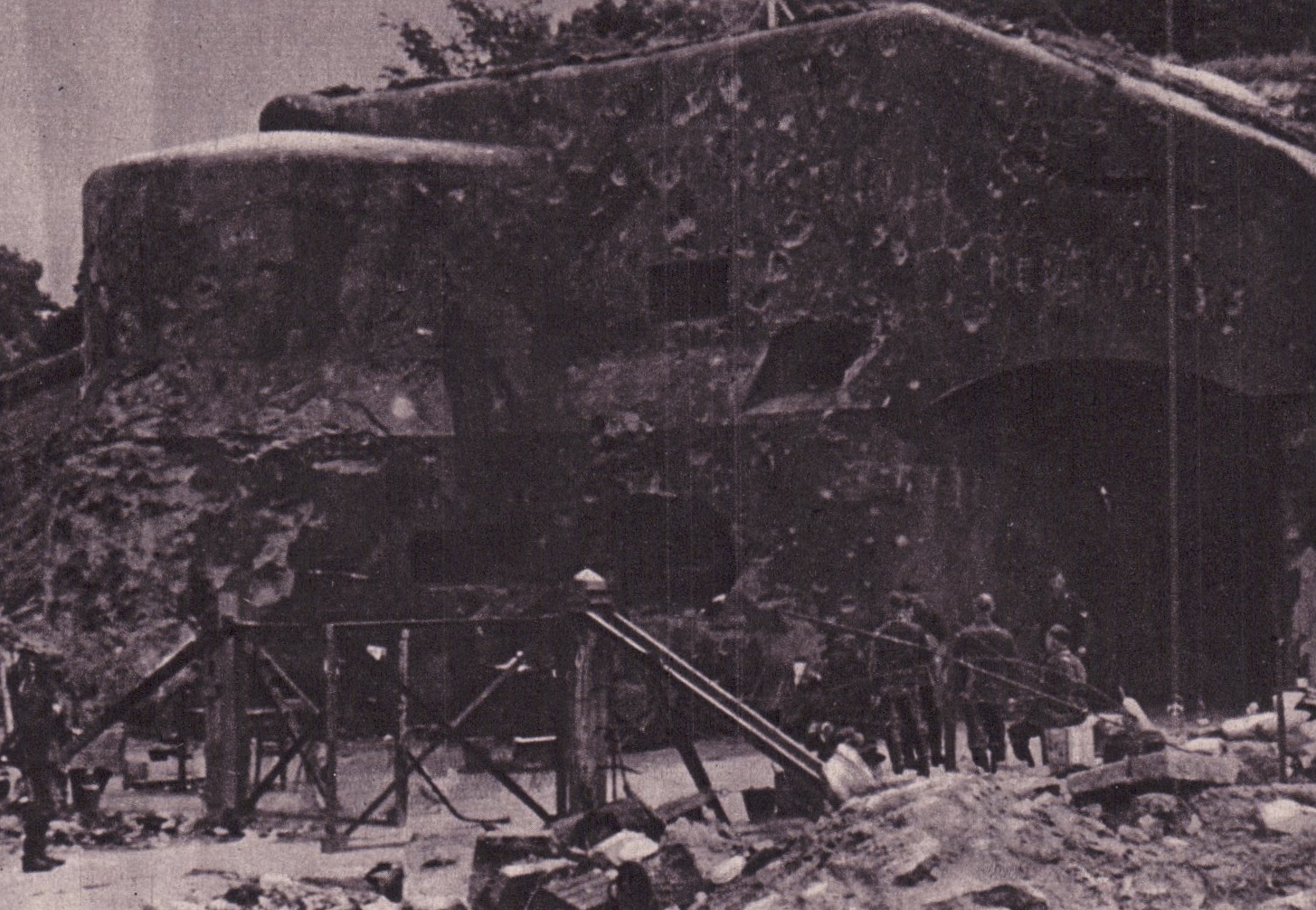
The main gate of what was supposed to be the toughest Fortress in the world.

.

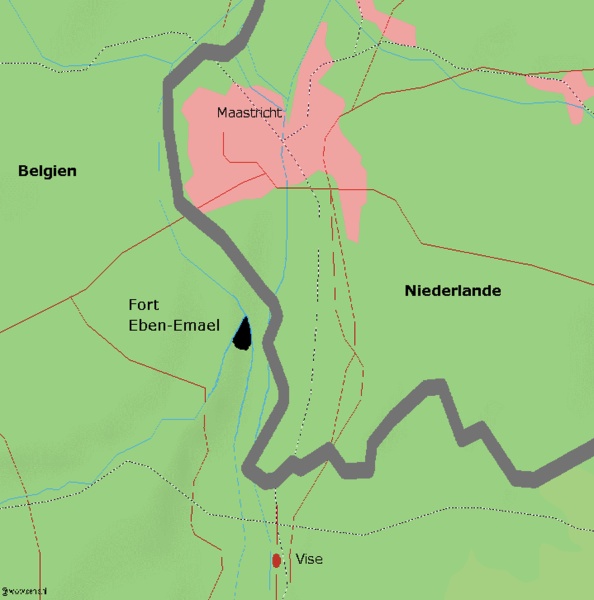
Fort Eben Emael, bordering the Albert Canal, occupies a position just to the east of a small village called Eben Emael.

.

Forst Eben Emael, a Belgian fortification south of Maastricht

.

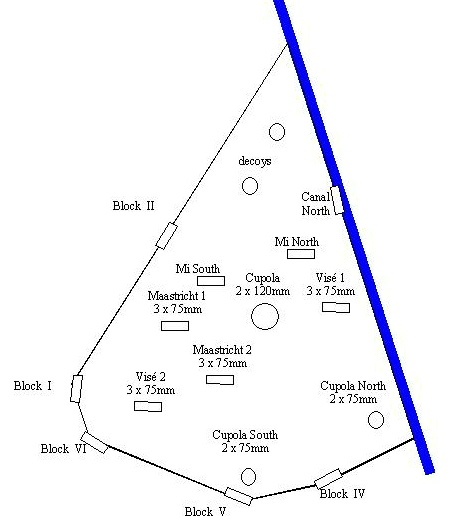
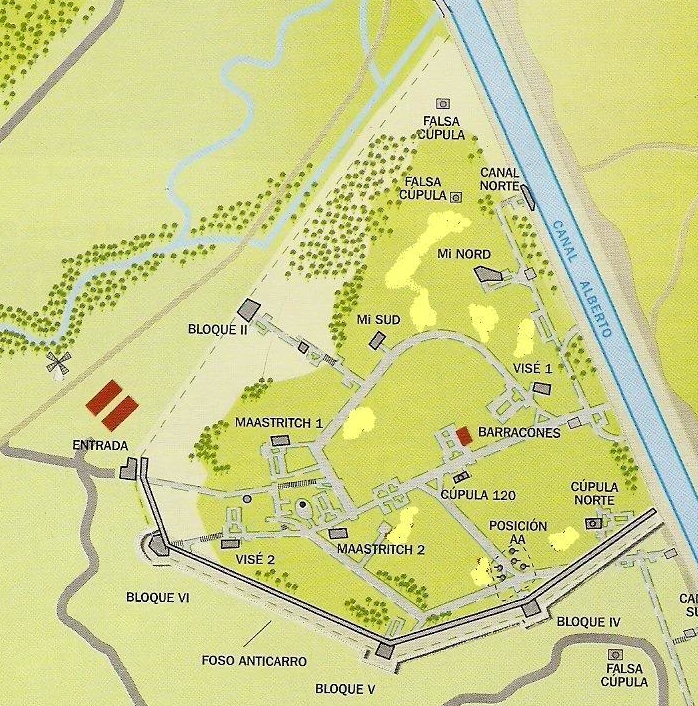
The fort was an irregular shape, measuring 600 metres east to west and over 750 metres north to south.

.

Plan of the fortress, showing the mix of armoured turrets, casemates and Anti-Aircraft guns.

.

Along the eastern section of the fort was the Albert Canal, a serious barrier in itself to any attack from that direction.

.

The cutting of the Albert Canal. ‘Canal-Nord’, a block imbedded into the sheer side of the wall, housed 60mm guns and protected the fort from an enemy attempting to cross the Canal.

.

There were a number of blocks and casemates (9) housing 60mm anti-tank guns and machine guns. In addition, the fort housed Cupola 120, a twin 120mm gun turret with a range of just over 17 kilometres. Cupola-Nord and Cupola-Sud each had a retractable turret with two 75mm guns. A shorter range of 10 kilometres, but still capable of protecting the bridges over the Albert Canal.

.

Cupola – 120. One twin 120mm turret.

.

Mi-Nord and Mi-Sud were twinned blocks housing 60mm guns, Vise 1 & 2, each housed three 75mm guns facing south and Maastricht 1 & 2 contained three 75mm guns facing north.

.

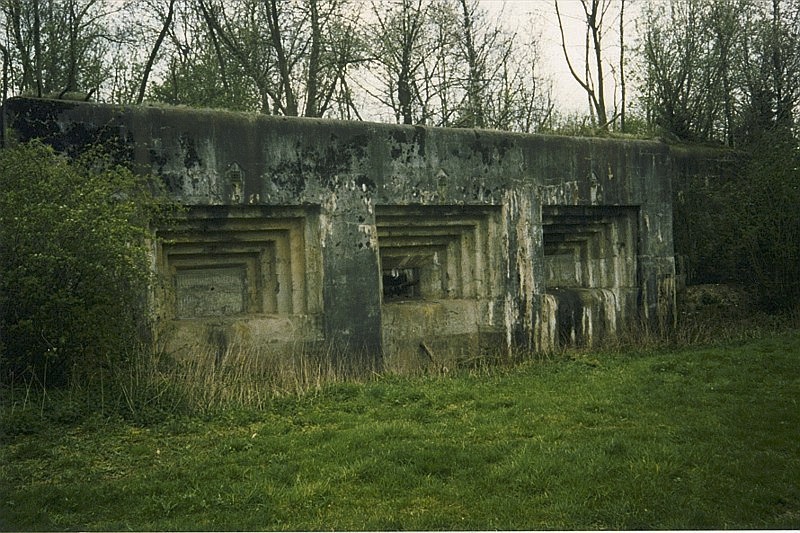
Maastricht-2, housed three 75mm guns.

.

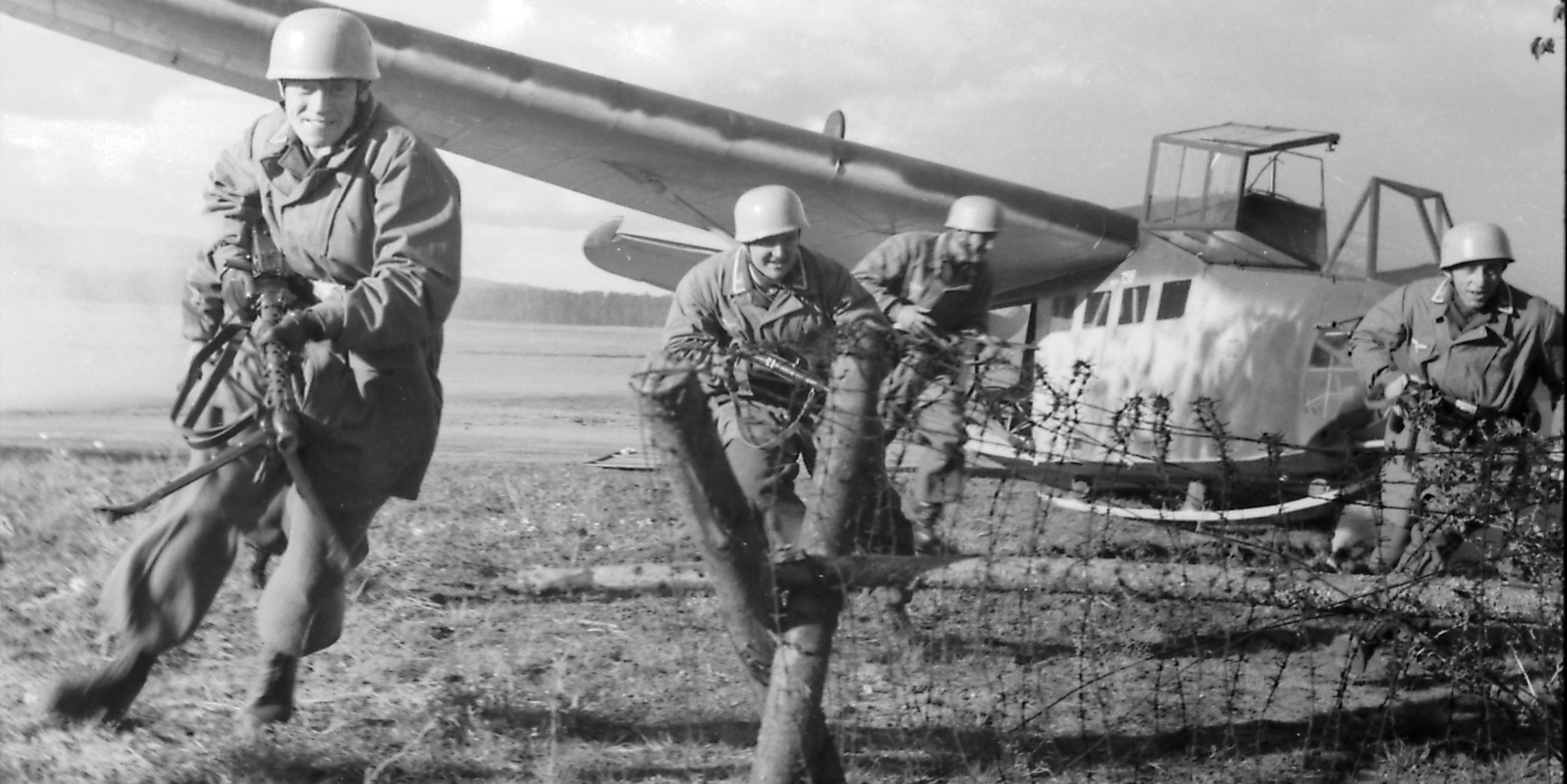
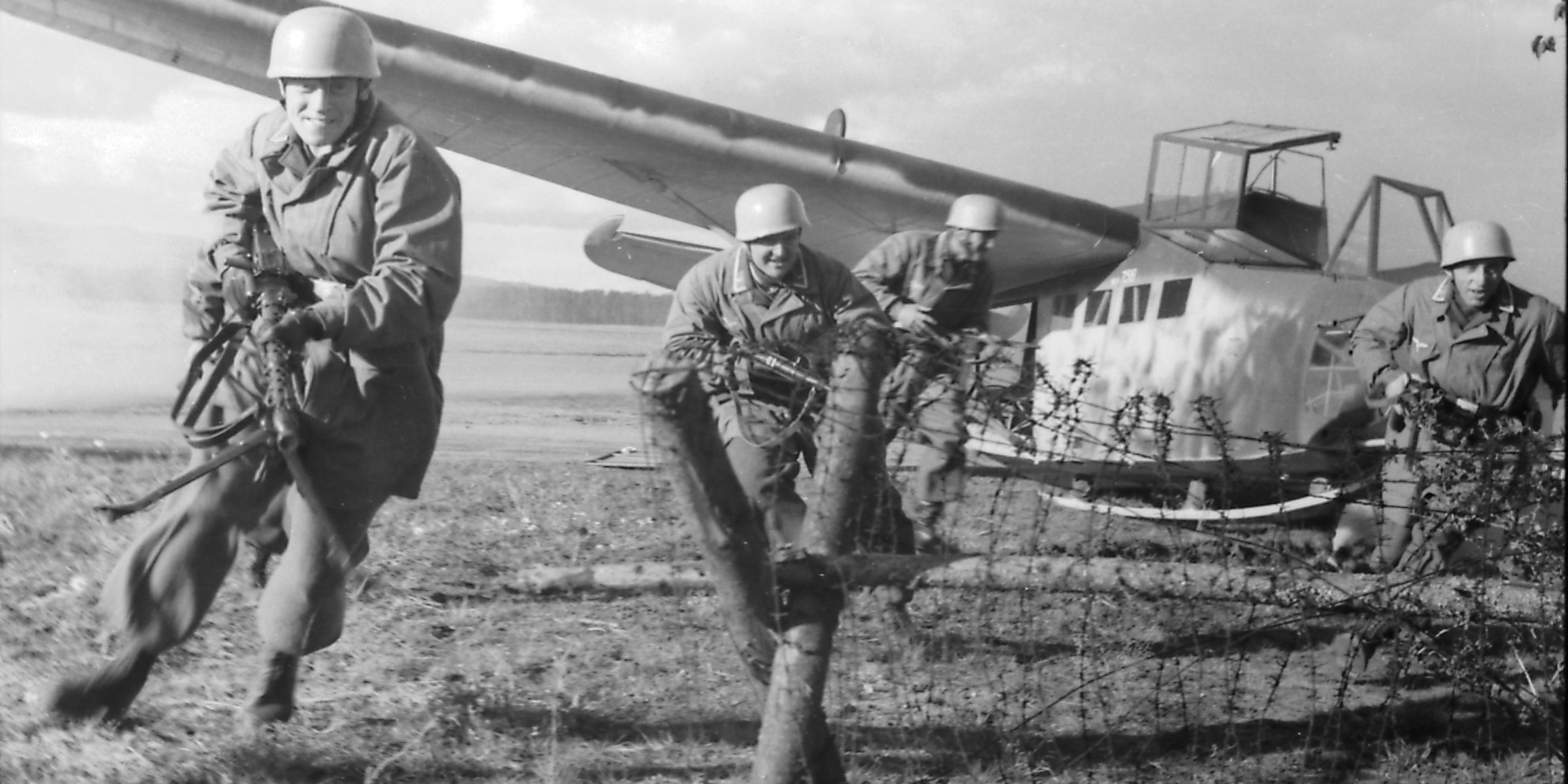
On the 10th May 1940, the Fallschirmjager, Group Granite, led by Oberleutnant Rudolf Witzig, were tasked with securing the supposedly impregnable fort. Seventy eight German paratroopers, Fallschirmjager, landed on top of the fort in the early hours of the morning. They landed in gliders, the first time gliders were ever used in an armed assault.

.

Although the fort was well protected from a ground attack, it had very few defences against an attack from the air. Landing the traditional way, by parachute, the paratroopers would have been spread too far apart.  They also had to take heavy explosives with them to use on the concrete bunkers and armoured turrets.

.

Their other secret weapon was the Hohladung, Hollow-Charged weapon. Again a first for the German Army. The 50kg charge was capable of blasting through the armoured turrets and concrete bunkers. During their 6 months training in Hildesheim, in the foothills of the Harz mountains, in complete secrecy, they weren’t even allowed to use the new explosive in anger. It was exploded on the ground and they didn’t get to see its effect until the actual assault. It was broken down into two parts. Two Fallschirmjager would carry a 25kg section each, assembling it on the target before setting the fuse.

.

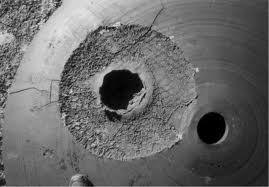
The effects of the Hollow-Charge weapon on one of the Eben Emael turret.

.

The main force, Sturmabteilung Koch, led by Hauptmann Walter Koch, consisted of three other assault groups as well as group Granite. These three other groups, Steel, Concrete and Iron, were responsible for securing the bridges over the Canal.

.

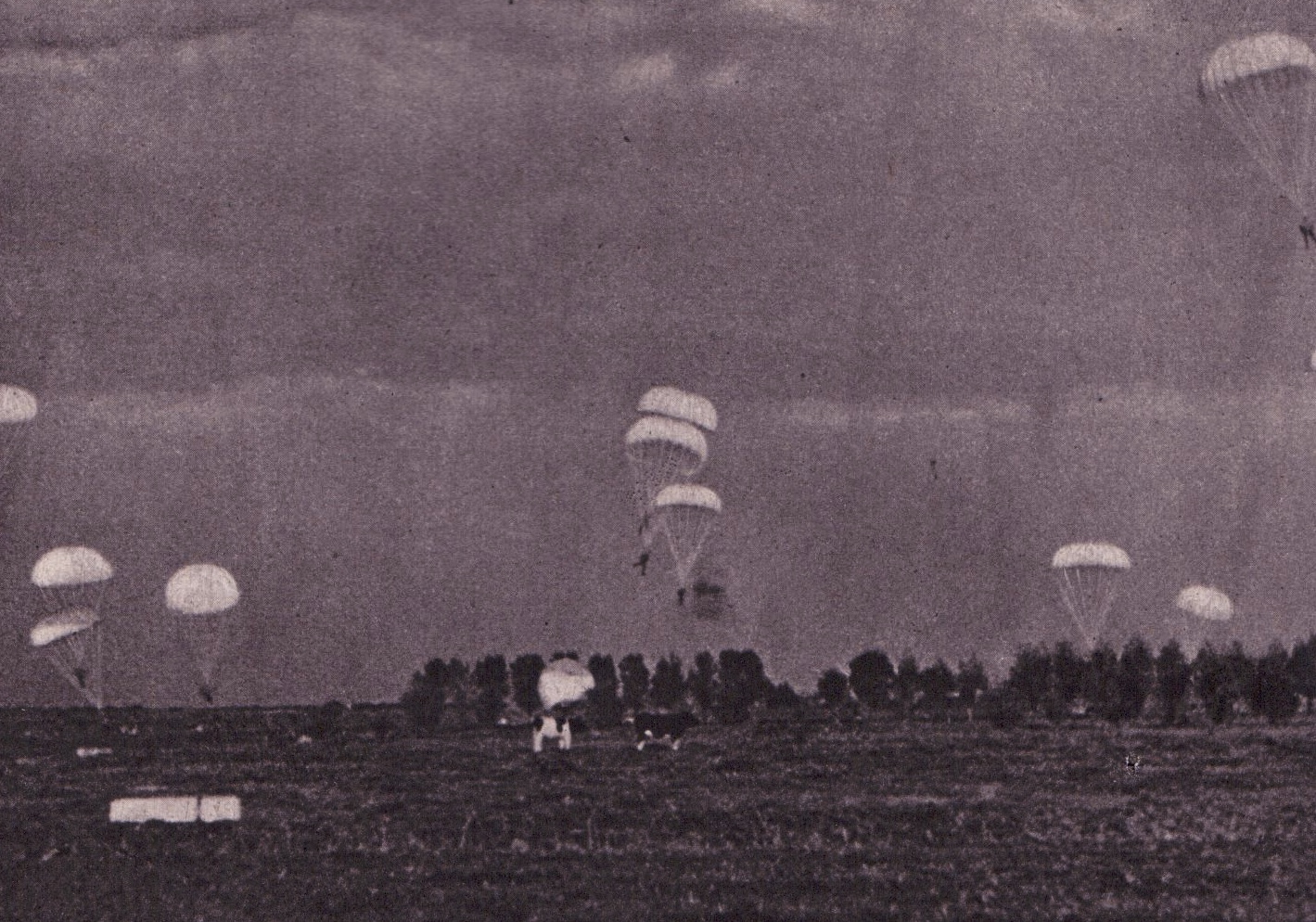
Paratroopers attacking fortress Holland.

.

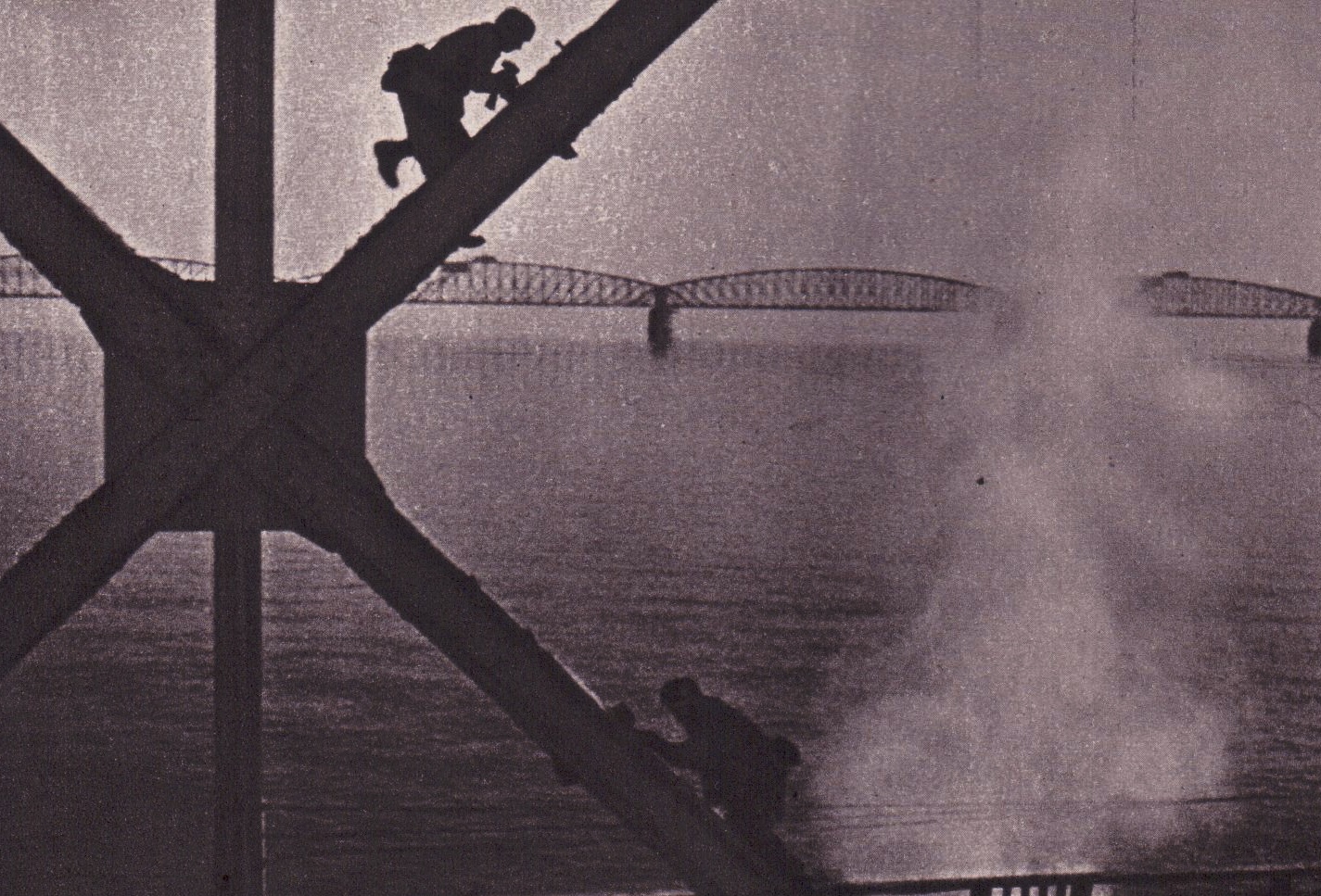
Fallschirmjager removing explosive charges from one of the bridges secured.

.

The advancing panzer Army crosses one of the bridges held by the Fallschirmjager.

.

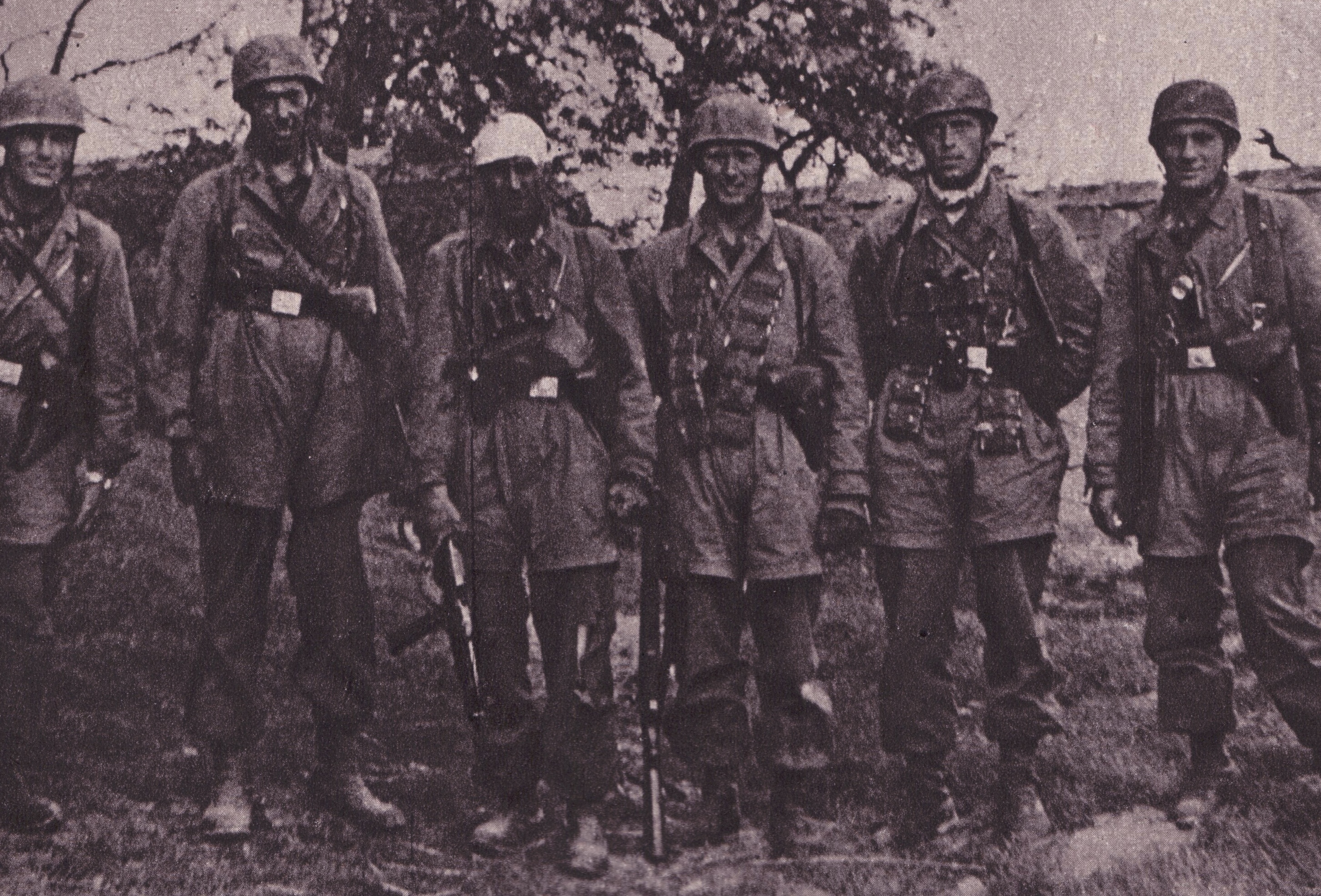
Fallschirmjager after the battle.

.

Adolf Hitler awarding members of Sturmabteilung Koch the Knights Cross of the Iron Cross.

.

Re-enactors at the recent Tank Fest held at the Bovington Tank Museum.

.

Tank Fest

.

Fallschirmjager re-enactor at the recent Bovington Tank Fest.

The qualification phase to become a paratrooper consisted of 6 jumps. The first would be a t height of around 200 metres, the next two at 150 metres, but in a stick of six trainees. Their fourth jump would be from the same height, but at dusk or dawn and as part of a much larger stick, of perhaps 10 men. For the fifth jump they would be part of a Kette formation, a V-formation, a Chain of three Junkers JU-52. The final jump would be made under simulated combat conditions, up to nine aircraft flying at little over 125 metres in height.

.

Fallschirmschutzenabzeichen, parachutist badge.

.

The Parachutist’s “Ten Commandments”

The Fallschirmjager had ten commandments that they lived by as elite soldiers.

Number 2. Cultivate true comradeship, for by the aid of your comrades you will conquer or die.

.

Devils with Wings – Video by Nick Britten

.

The assault on Fort Eben Emael

Devils with Wings – Glider assault on Fort Eben Emael

Fort Eben Emael is worth a visit, it has a fabulous museum.

My intention is not to portray a particular message, but just share some of my photographs and information with you and help set the scene for my forthcoming novel. The next post will cover the airborne invasion of Crete.

 Blog is copyrighted to Harvey Black

Fallschirmjager, Grüne Teufel, Green Devils. Part 1

.

I have just finished writing my third novel in the Devils with Wings series, Devils with Wings: Frozen Sun. The Fallschirmjager, after their successful battle taking Crete in only 10 days, are shipped to Poland to partake in Operation Barbarossa, the German invasion of the Soviet Union.

Leaving temperatures in excess of forty degrees to be used, not in an airborne operation, but as a fire brigade, plugging gaps in the line around Leningrad, particularly along the banks of the River Neva. They were Army Group North’s strategic reserve.  They were quickly placed into the fray, fighting along the River Neva, where temperatures dropped to below -30 degrees, sometimes as low as -40. They were successful at plugging the gaps and preventing the Soviet Union from exploiting their bridgeheads over the River Neva, but at a price. Some units suffered up to 75% casualties. Many who had survived the assault on the Fortress Eben Emael, (Devils with Wings) and the fierce fighting on the Island of Crete (Devils with Wings: Silk Drop) met their fate in this bitter struggle with the atrocious weather and the never ending Soviet hordes.

The German Army, and the Fallschirmjager, were soon to experience the hostile Russian winters.

These next few posts will fill in some of the background to these amazing airborne soldiers. Their training was particularly tough, and they were the first parachute, airborne, division in existence. After a tough physical regime, consisting of strenuous exercise, unarmed combat, weapons handling and long forced marches, culminating in bigger and bigger unit exercises, they complete their parachute training. Before they were allowed anywhere near a parachute, they to jump into a tank of water from a 45 foot tower. Their training, apart from the parachute element, was thought to be similar to that of the British WW2 Commandos.

.

Fallschirmjager helmet, M38 Model Fallschirmjagerhelm.

.

The front cover of Hauptmann Piehl’s Ganze Manner, the 1943 first edition, with a foreword by General Kurt Student. The German Fallschirmjager in WW2.

.

The physical training starts.

.

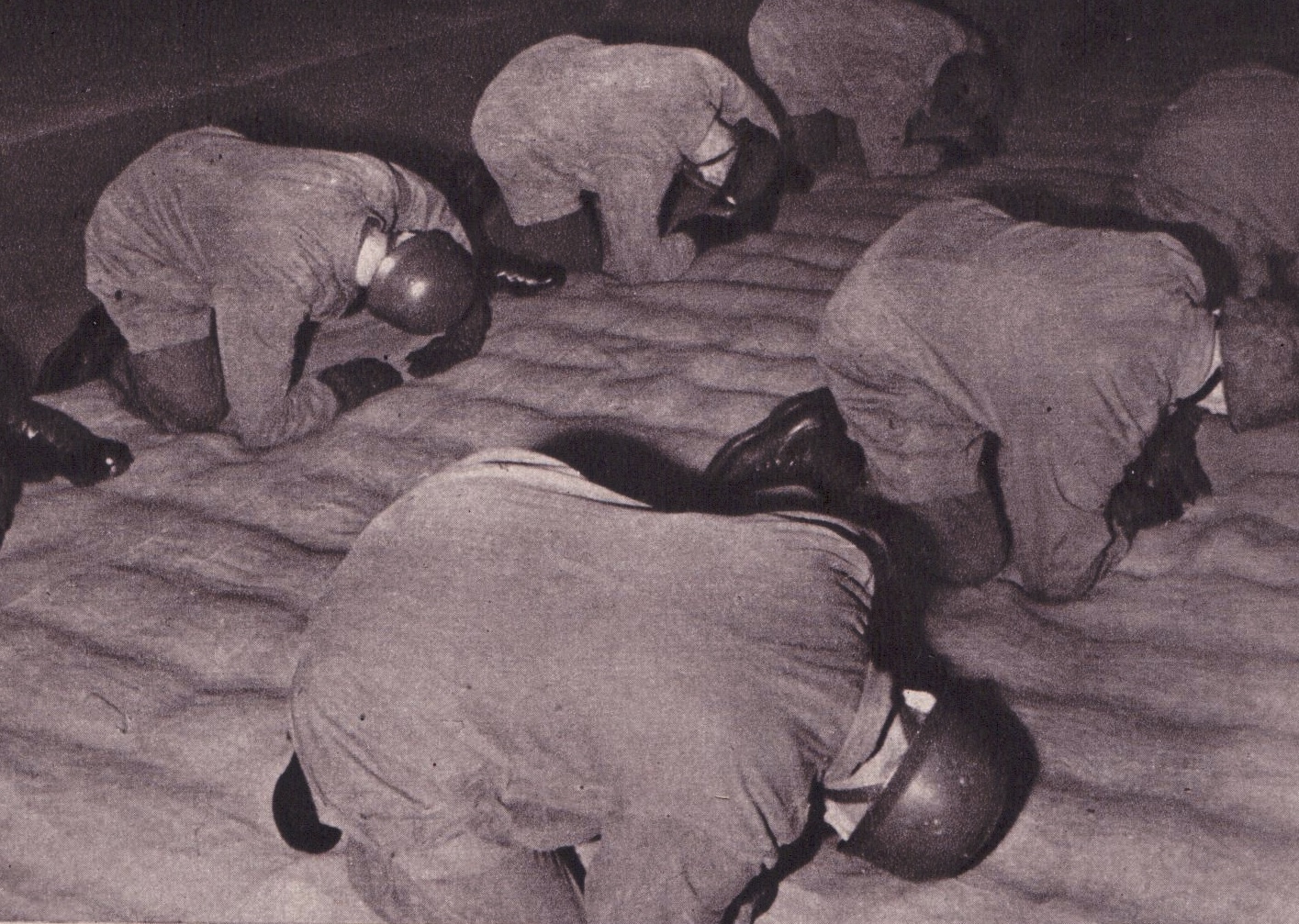
Practising rolls on a mat.

.

Putting on a show, jumping over ten of their fellow paratroopers.

.

Known as the ‘Wind Donkey’, it was used to blast air into their parachutes and force them to be dragged along the ground, helping them to learn how to quickly get onto their feet and collapse the chute.

.

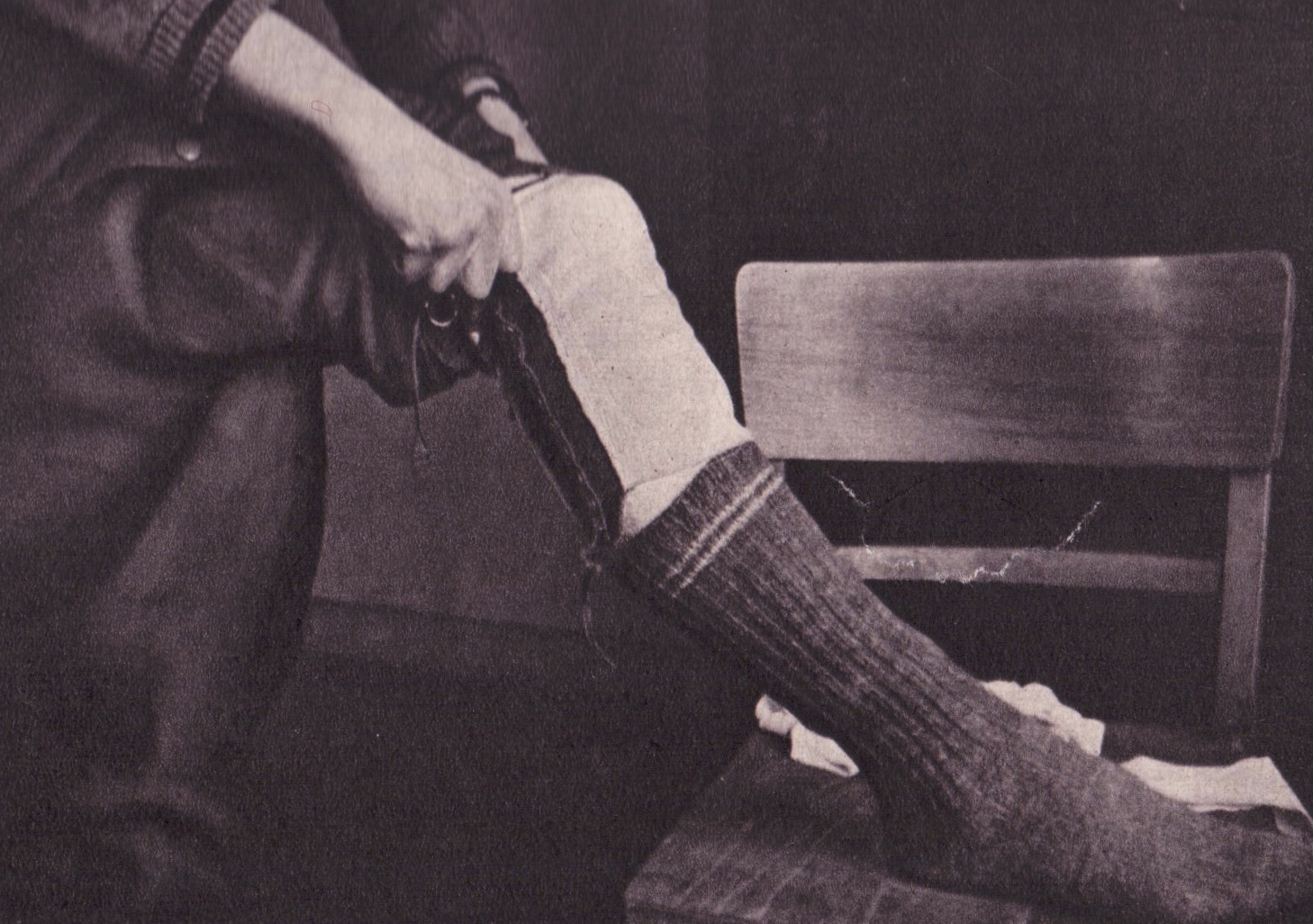
Knee protectors and padding. They also wore cricket-pad like protection for their knees to absorb some of the force of the landing.

.

Number 1 pattern jump boots, reinforced, laced up the side. The later number 2 pattern, were laced up the front.

.

Thick, strong gloves to protect their hands on landing.

.

Parachutes ready for packing. The long parachute packing tables can be seen below.

.

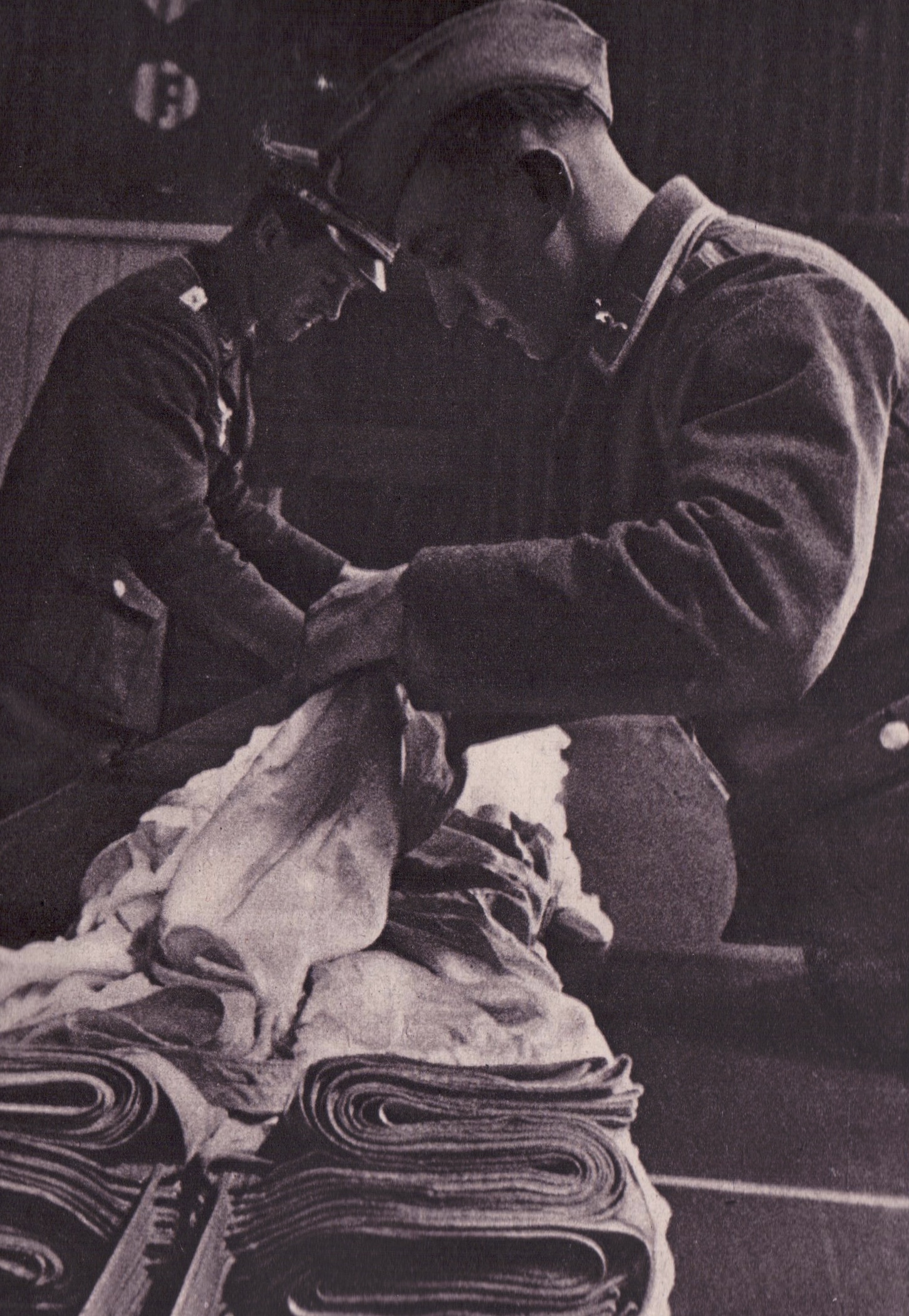
The Fallschirmjager learnt how to pack their own parachutes.

.

That first jump.

.

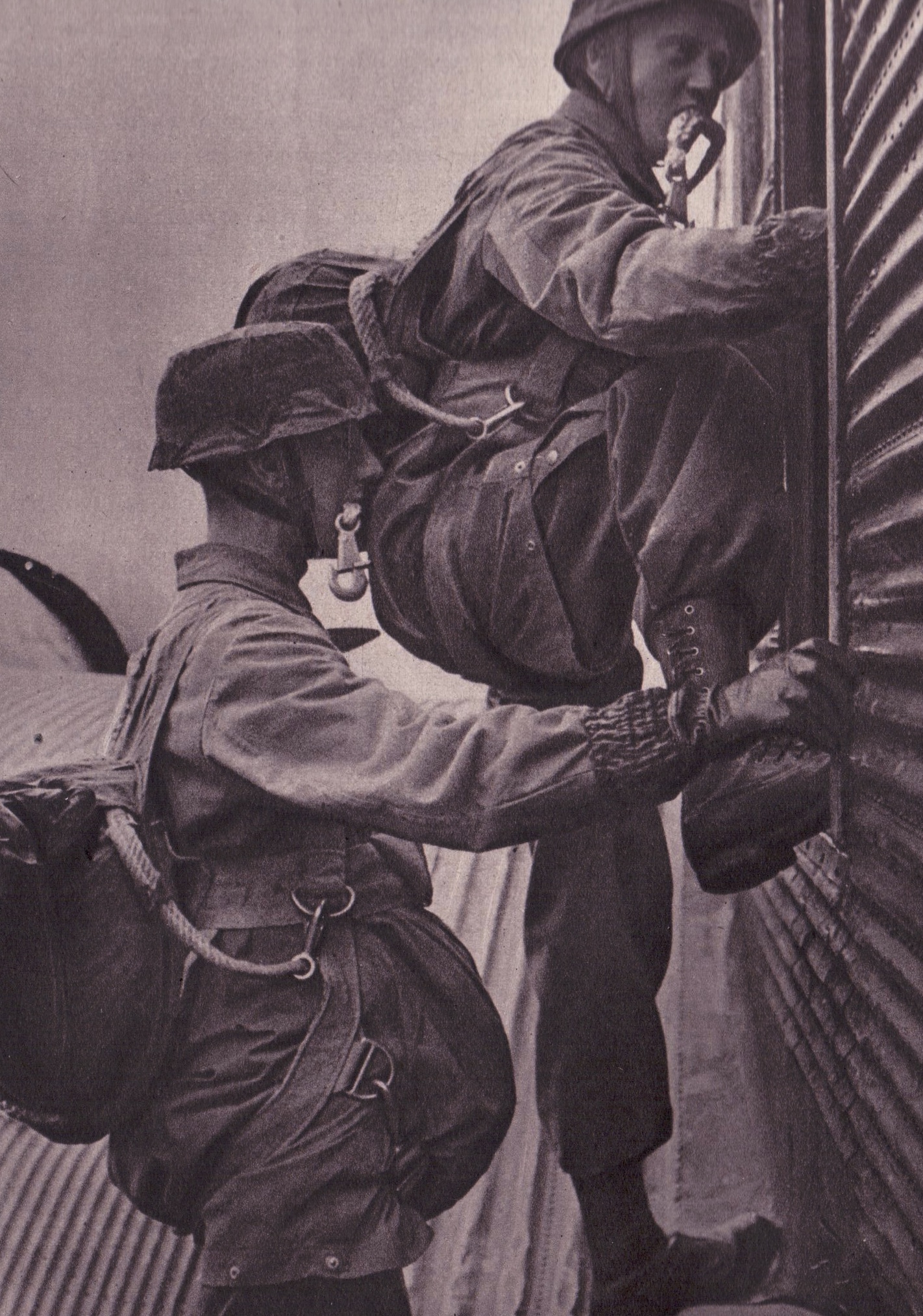
Climbing into a Junkers JU-52, transport aircraft. Affectionately known as ‘Tante Ju’, ‘Auntie June’. They held their static lines in their teeth, leaving their hands free. They would do the same when standing ready to clip on, leaving their hands free as the aircraft was buffeted by wind or even flak.

.

Getting ready for their first jump.

.

The force of the wind is distorting the paratroopers face.

.

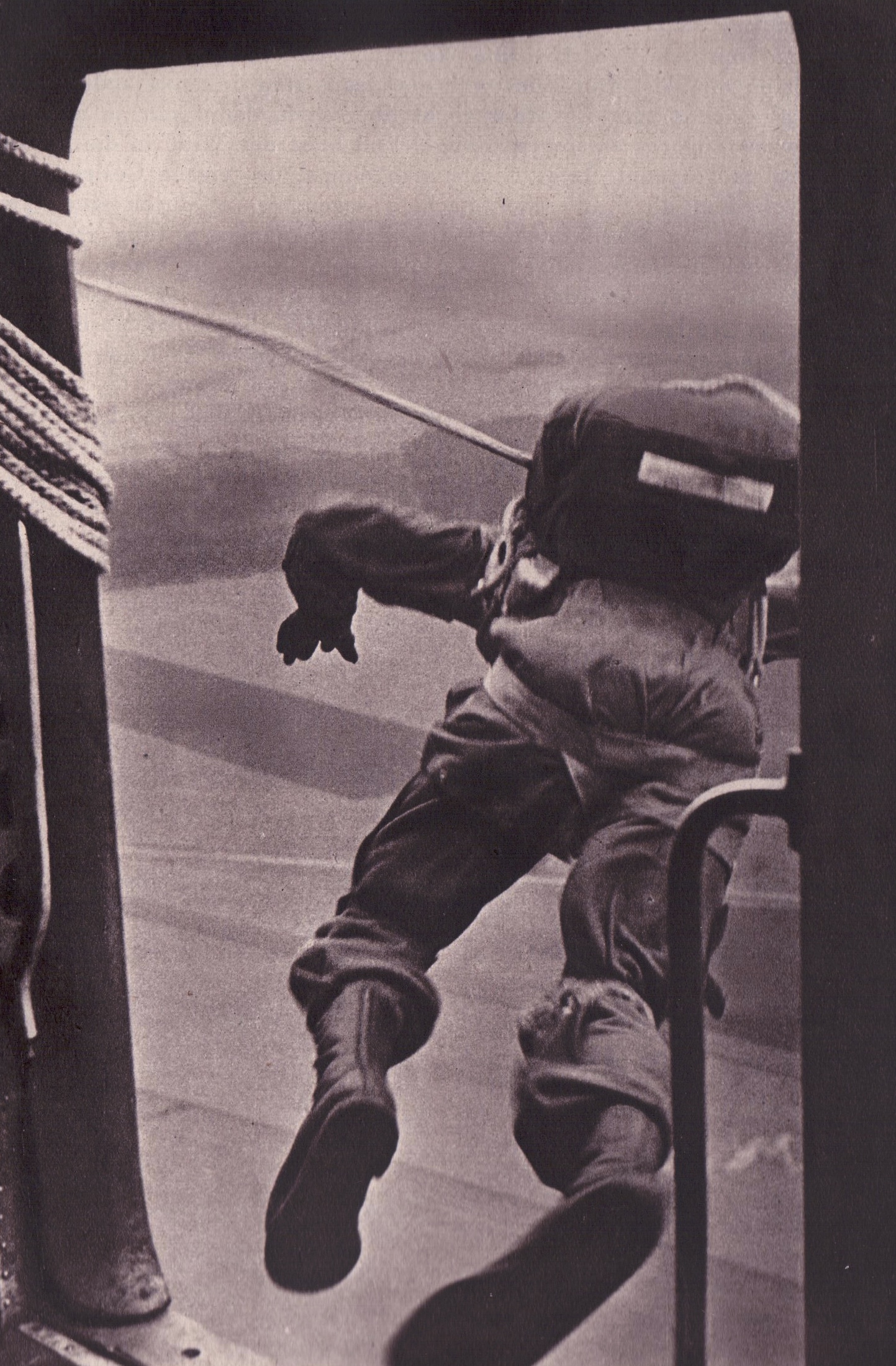
The Absezter, Jump Master, gives the order to jump. You can see by the static lines, some have already left the aircraft.

.

They were suspended by a single point from the centre of their back, making it difficult to manouevre the parachute. It also meant they had to land on their hands and knees, hence the knee pads and the gloves. As a consequence of this, they couldn’t parachute carrying their weapons and equipment, that followed them in canisters.

.

My very first jump back in the 80’s

.

The qualification phase to become a paratrooper consisted of 6 jumps. The first would be a t height of around 200 metres, the next two at 150 metres, but in a stick of six trainees. Their fourth jump would be from the same height, but at dusk or dawn and as part of a much larger stick, of perhaps 10 men. For the fifth jump they would be part of a Kette formation, a V-formation, a Chain of three Junkers JU-52. The final jump would be made under simulated combat conditions, up to nine aircraft flying at little over 125 metres in height.

.

Fallschirmschutzenabzeichen, parachutist badge.

.

The Parachutist’s “Ten Commandments”

The Fallschirmjager had ten commandments that they lived by as elite soldiers.

Number 1. You are the elite of the German Army. For you, combat shall be fulfillment. You shall seek it out and train yourself to stand any test.

.

On Parade.

.

General Kurt Student and his introduction to the book, Ganz Manner.

.

The next few posts will cover some of their major battles. 

.

Fallschirmjager Harvey Black 055

The assault on Fort Eben Emael

.

51r3+Lge68L._BO2,204,203,200_PIsitb-sticker-arrow-click,TopRight,35,-76_AA278_PIkin4,BottomRight,-67,22_AA300_SH20_OU02_

My intention is not to portray a particular message, but just share some of my photographs and information with you and help set the scene for my forthcoming novel.

 Blog is copyrighted to Harvey Black

The Cold War Years – Part 4.

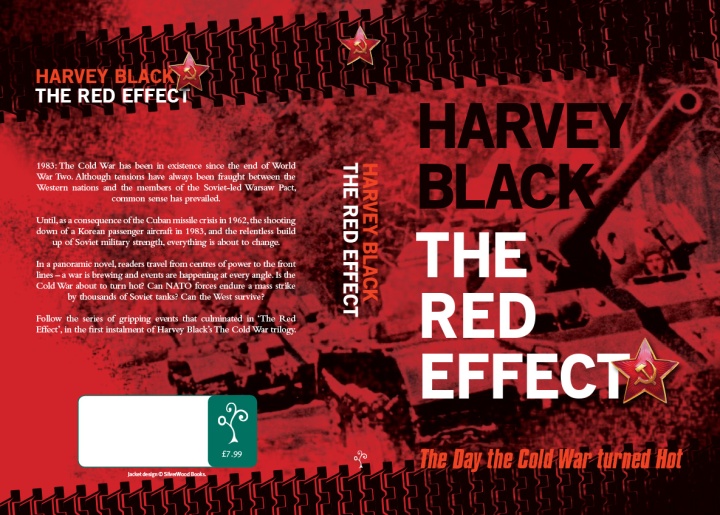
I am 18,500 words into the first novel of my new ‘Cold War’ series. There will be three books in total, covering the hypothetical invasion of West Germany, the Federal Republic of Germany, by the Warsaw Pact in the mid 1980’s. Book 1, ‘The Red Effect’, will encompass the intelligence build up leading to the Warsaw Pact strike against the NATO forces lined up against them.

The Cold War era started very soon after the end of the second world war, when the communist east, led by the Soviet Union, and the Western world, led by the United States and its NATO allies, faced each across what became known as the ‘Iron Curtain’.

.
.

The capital of Germany, Berlin, was divided into four Sectors. The consequence being, that the three Western Allied powers now controlled territory deep within the Soviet Union Zone of Germany.

Over time, the tensions between the four Allied powers increased, eventually resulting in the Berlin blockade in 1948, when the Soviets attempted to starve West Berlin into submission and force the other three Allied powers out. This failed and the Soviets eventually relented, but an ever-increasing number of East Germans fled to the West; between 150,000 and 300,000 a year during 1951-1953. As a consequence restrictions were placed on movement between the divided country. From 1961, the border was closed and Berlin completely encircled, first by barbed wire, then bricks and finally a concrete wall, along with the infamous ‘death strip’.

Access was now restricted between Berlin and the West. A wall, 124 mile miles in length, was placed around the three sectors of West Berlin, cutting off the city from the rest of the world.
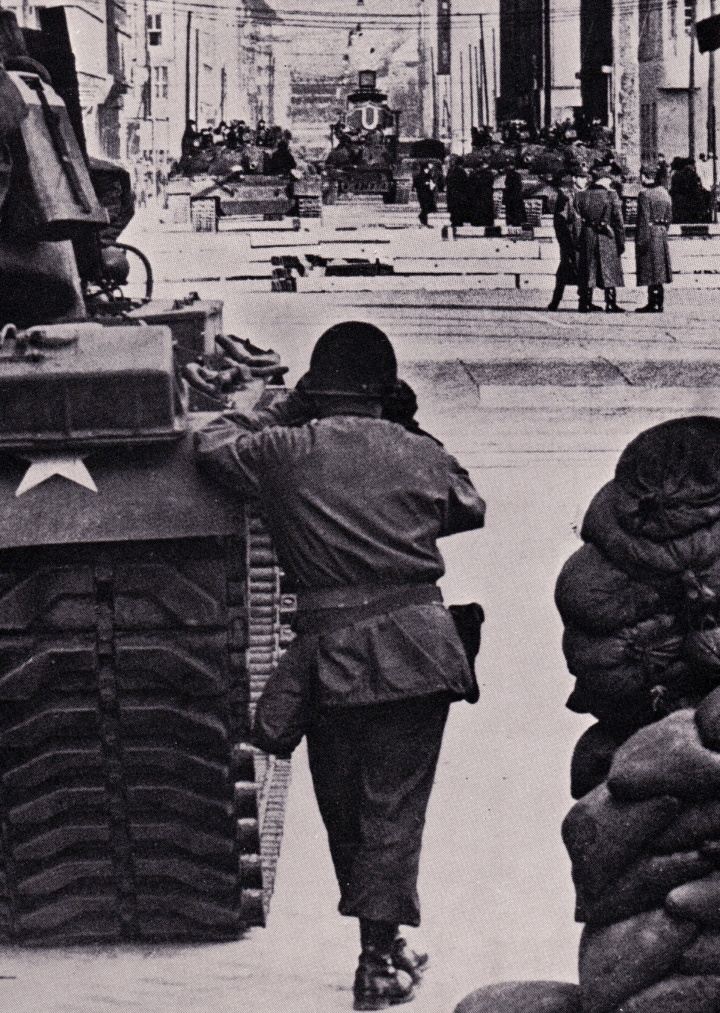
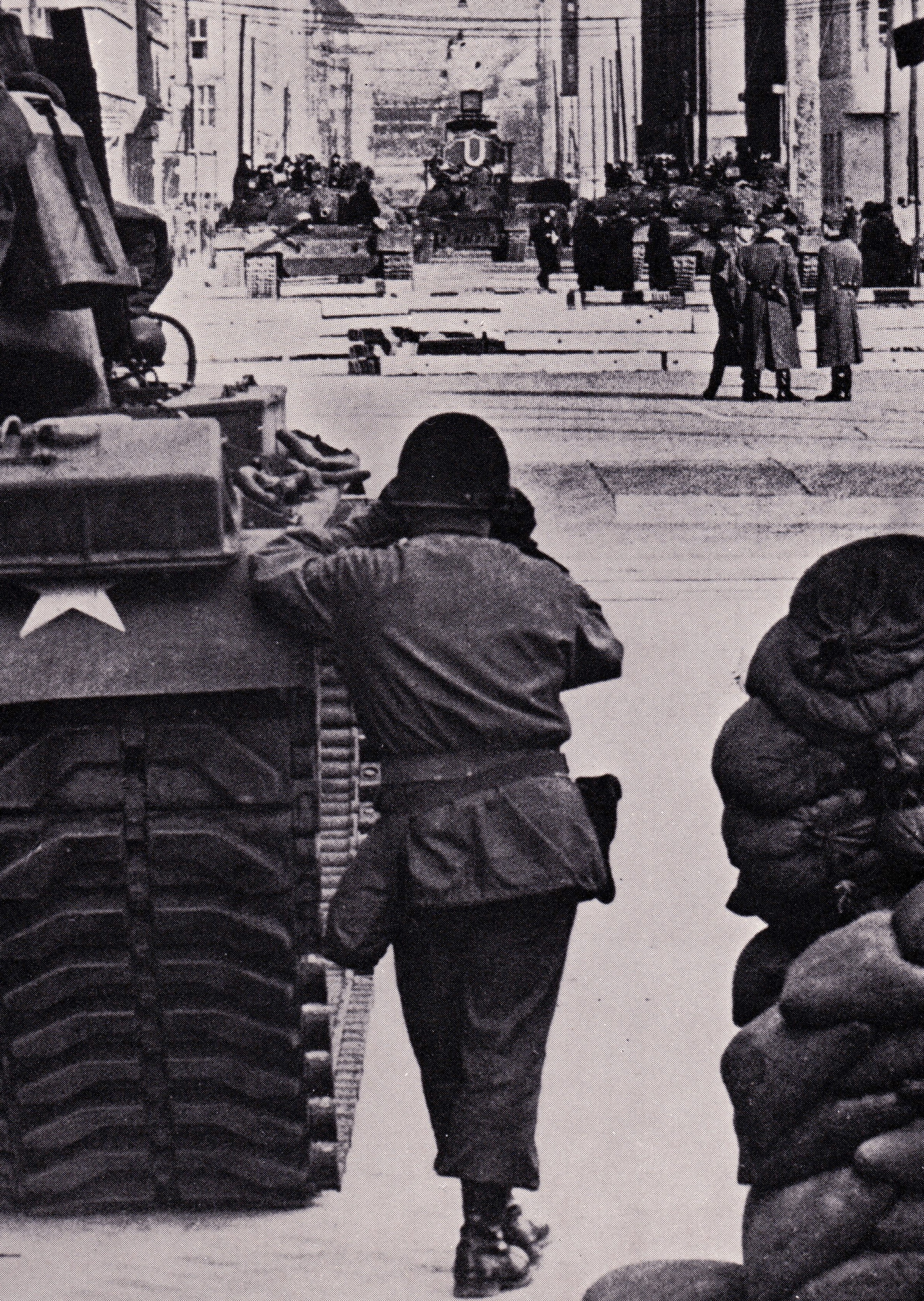
An Iconic picture of the face-off between the West and the East.  The Cold War starts – October 1961.

.

I shall cover various aspects of the two opposing forces, providing the backdrop and background information in preparation for the release of my three novels. In the meantime, you could always read my WW2, Devils with Wings series. :)

In 1984/85, the Warsaw Pact was already a significant force, the Soviet Union in particular.

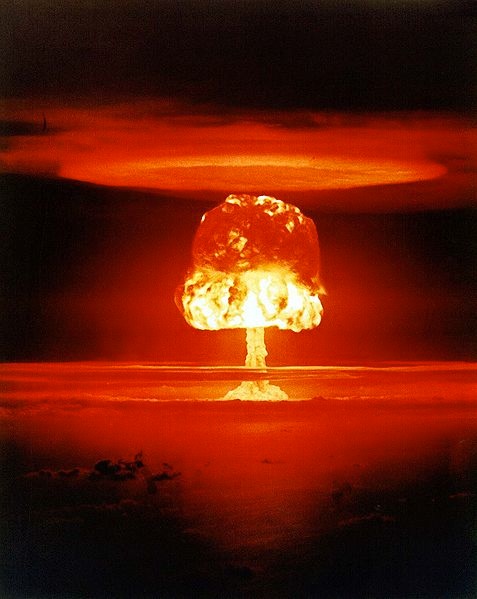
Although the key strategic Nuclear Forces of the Soviet Union and NATO, were either land based or submarine launched, supported by Tactical, Theatre, Nuclear weapons, they also had the use of the Air Force to deliver a nuclear strike.

Soviet Union.

Long Range Bombers – 100 x Tu-95 (Codename Bear). Unknown number of Bear H in production, capable of carrying an air-launched cruise missile.

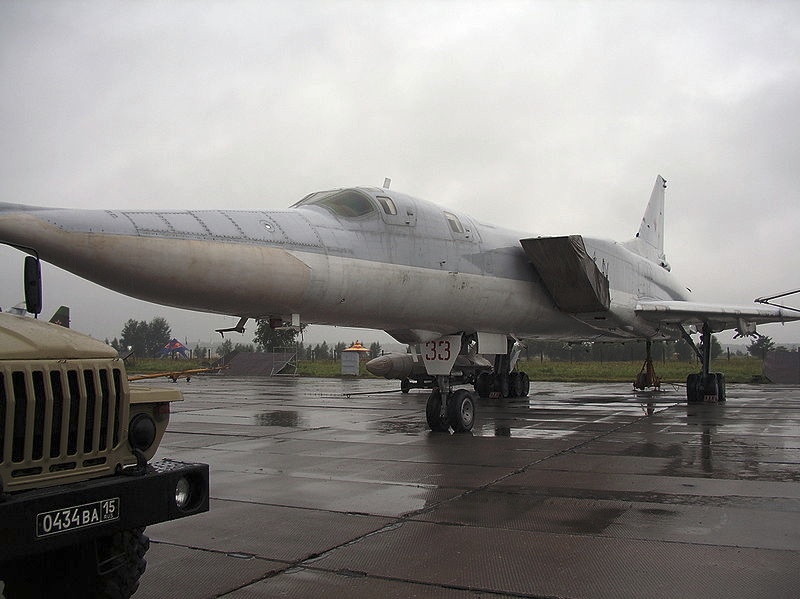
Medium Range Bombers – 220 x Tu-16 (Codename Badger), 125 x Tu-22 (Codename Blinder) and 130 x Tu-22M (codenamed Backfire).

Tu-160 (Codenamed Blackjack).

.

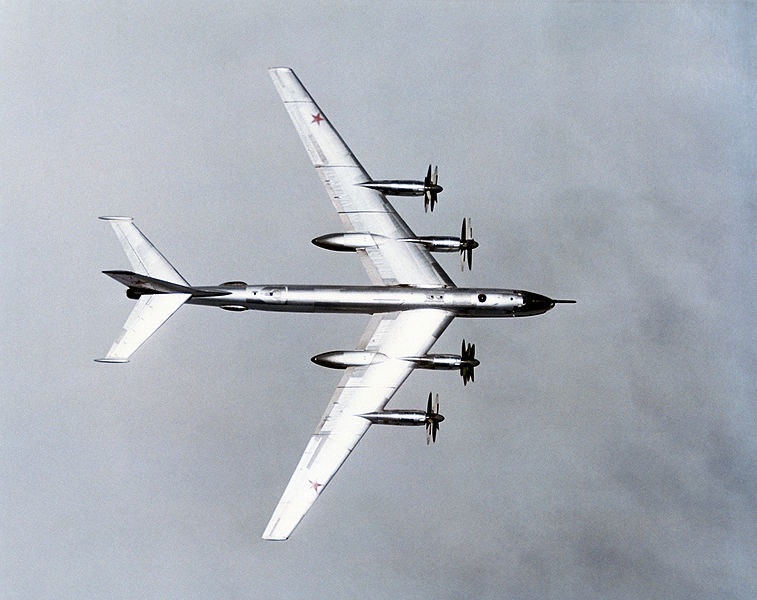
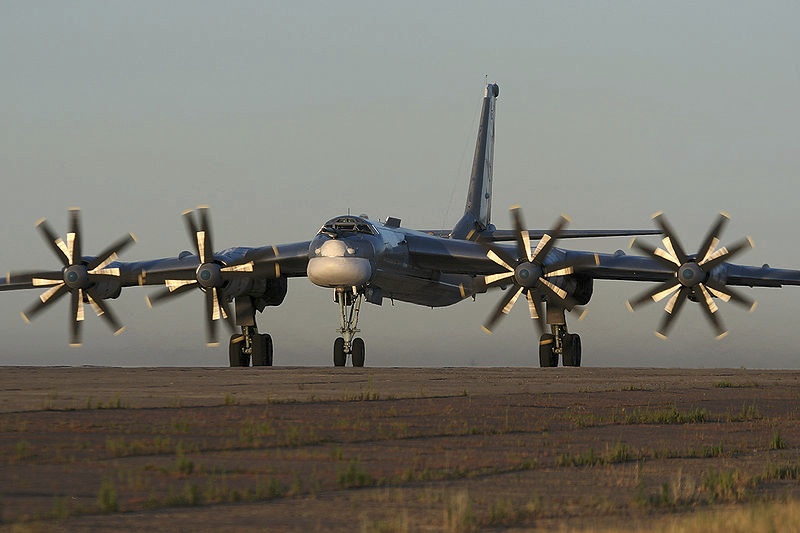
Tupolev Tu-95. (NATO Code Name: Bear). Claimed to be a reverse engineered B-29, Super-fortres. A long wingspan of 164 feet.

.

 Maximum speed of 575 mph with a range of 9,400 miles. Armament of 2 x 23mm AM-23, radar-controlled auto-cannon. 15,000 kilogram payload. The Tu-95MS variant carried the Kh-55, air-launched strategic cruise missile family, one with a 200 kiloton warhead.

.
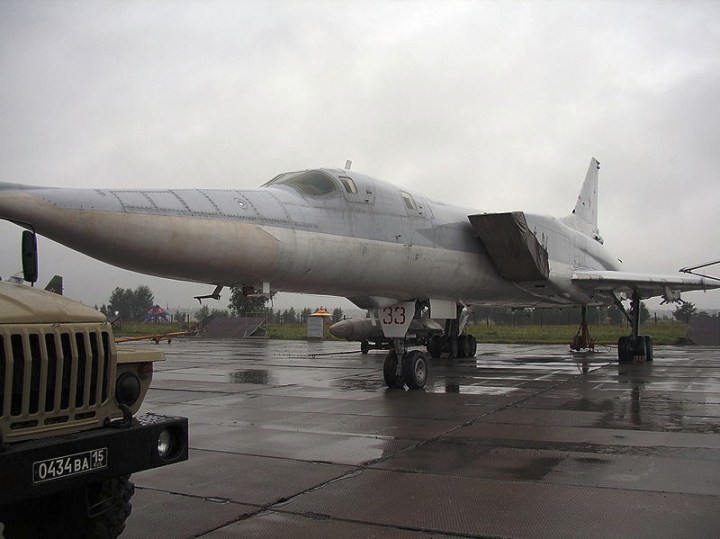
Tu-22 Blinder. A supersonic, swing-wing, long range strategic and maritime strike bomber.

.
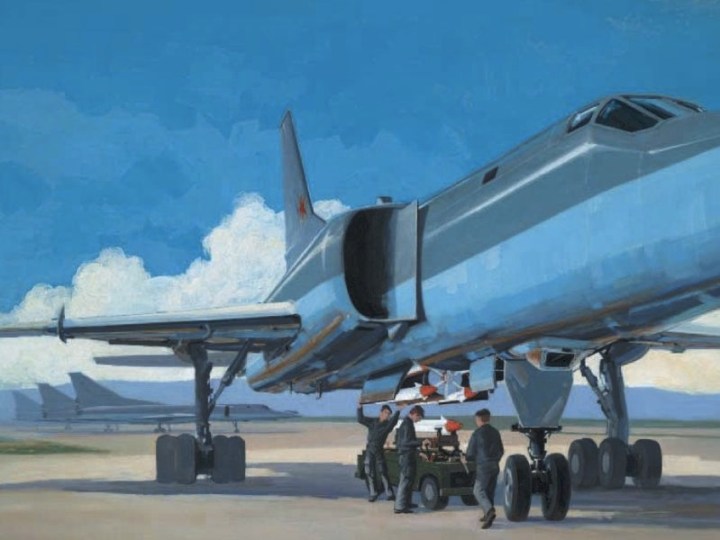
Tu-22. Speed of 1,240 mph with a combat radius of 1,500 miles. 1 x 23 mm GSh-23, remote-controlled cannon in tail turret. The Kh-55 nuclear cruise missile has been tested on this aircraft, but no confirmation that it is in service.

.

Tu-160 (Codename Blackjack).  Swing-wing, with a max speed 1,380 mph and a range of 7,600 miles, without in-flight refuelling. Can carry 12 x Raduga Kh-55, nuclear cruise missiles or 12 x Raduga Kh-15 short-range nuclear missiles.

.

Kh-55 Cruise Missile.

.

United States of America

Long Range Bombers – 90 x B-52H and  84 x B-52G

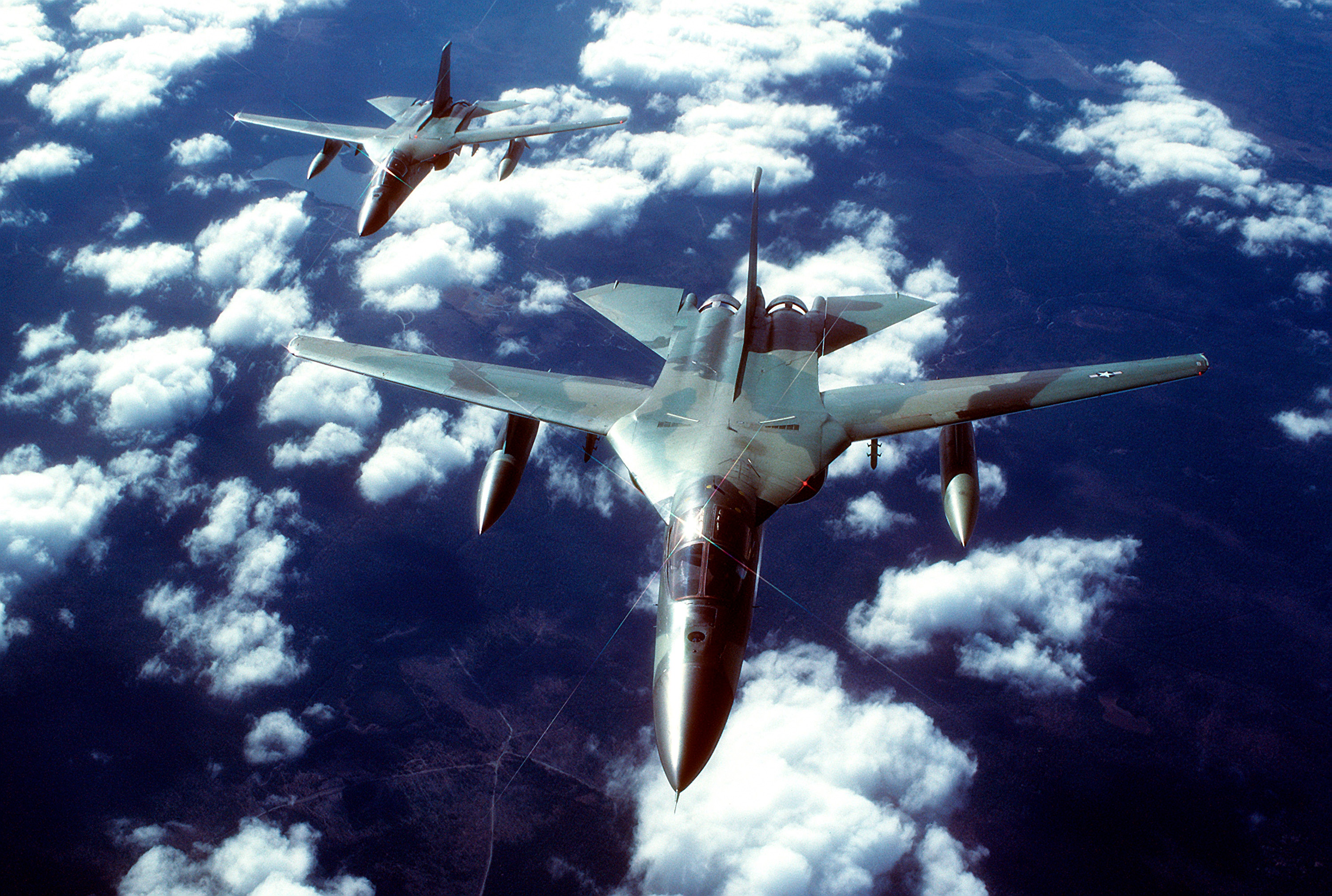
Medium Range Bombers – 56 x FB-111A

On order – 18 x B-1B bombers (100 planned.)

.
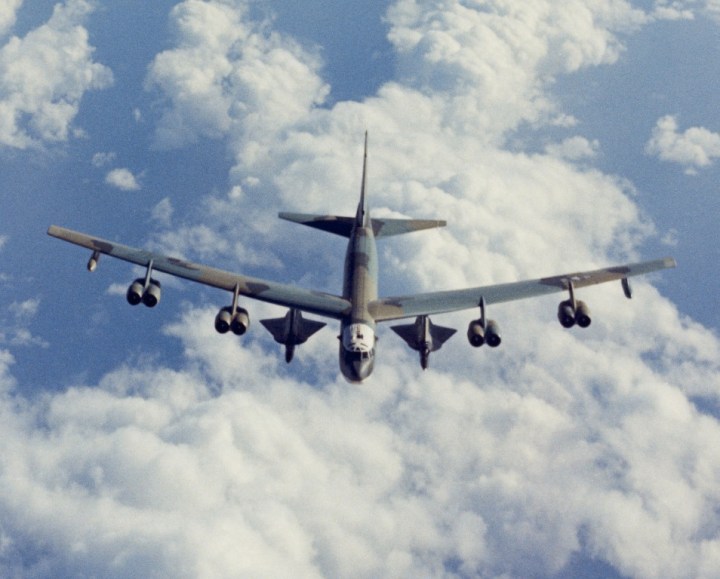
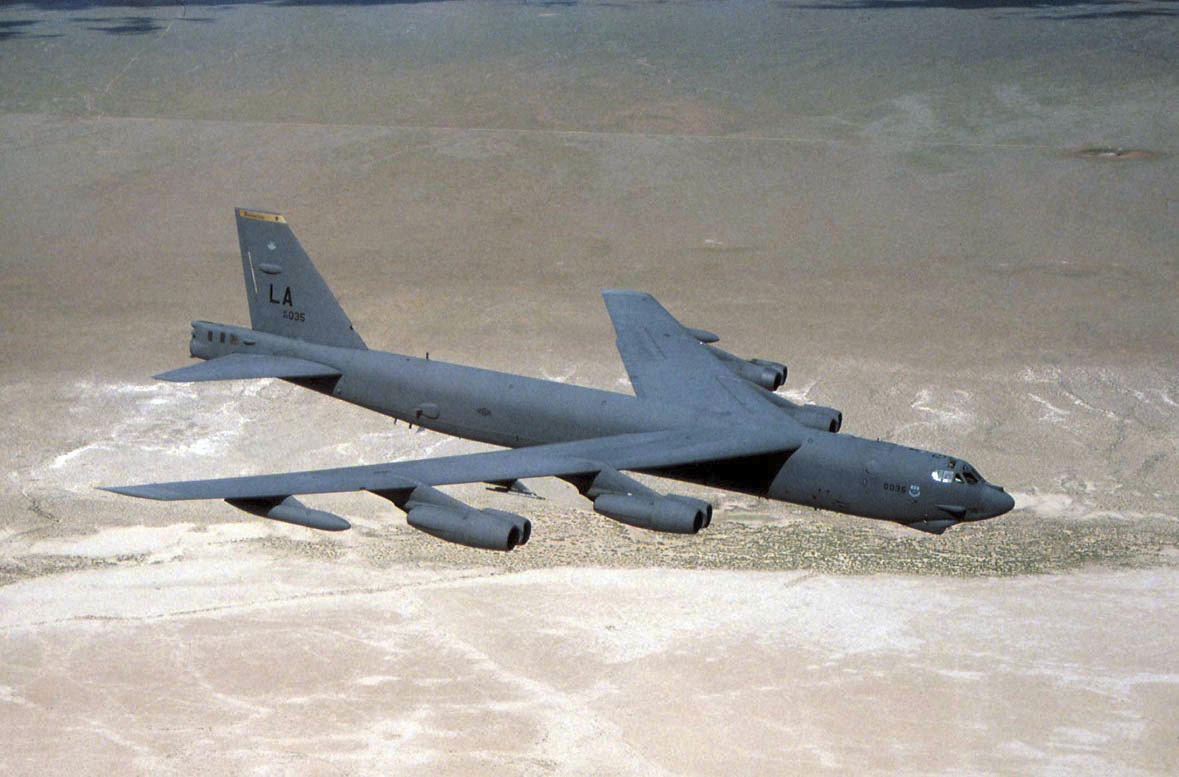
Boeing B-52 Stratofortress, with underslung drones.

.
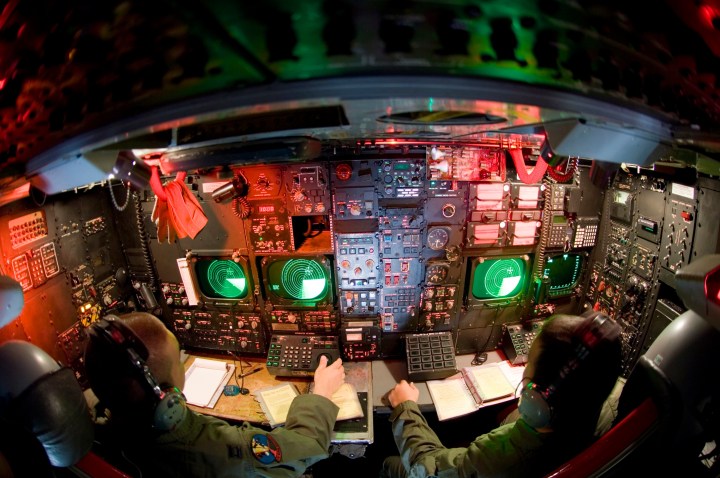
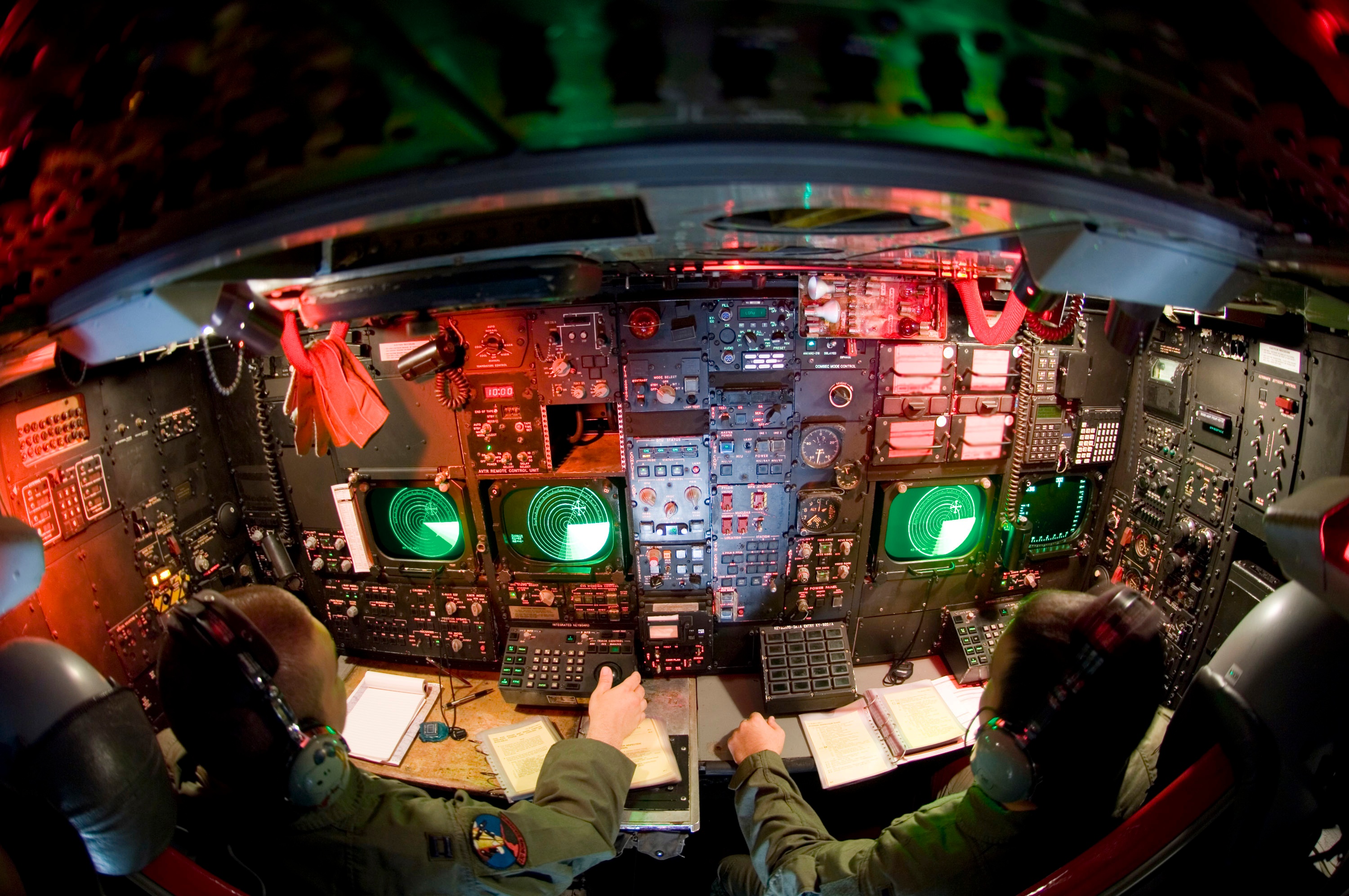
Lower deck of the B-52, dubbed the battle-station.

.
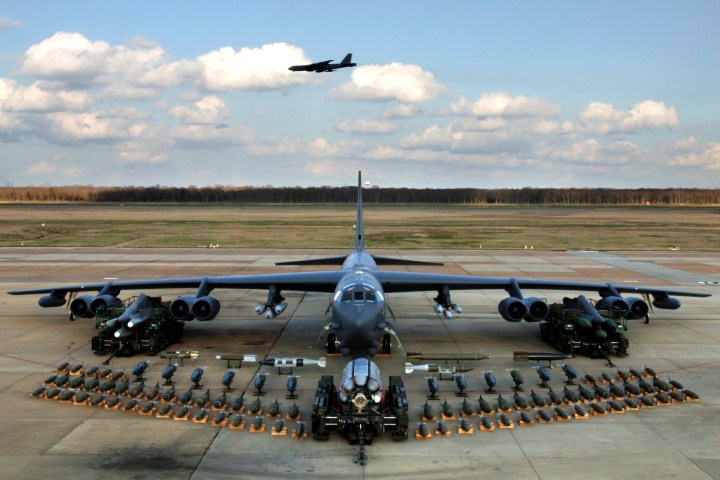
B-52H. Payload of 31,500 kilograms of mixed ordnance. 1 x 20mm M61 Vulcan cannon mounted in remote-control tail turret. The B-28 nuclear bomb could be set for an air or ground burst with a yield of up to 1.45 megaton.

.

Maximum speed of 650 mph, with a range of 3,980 miles.

.
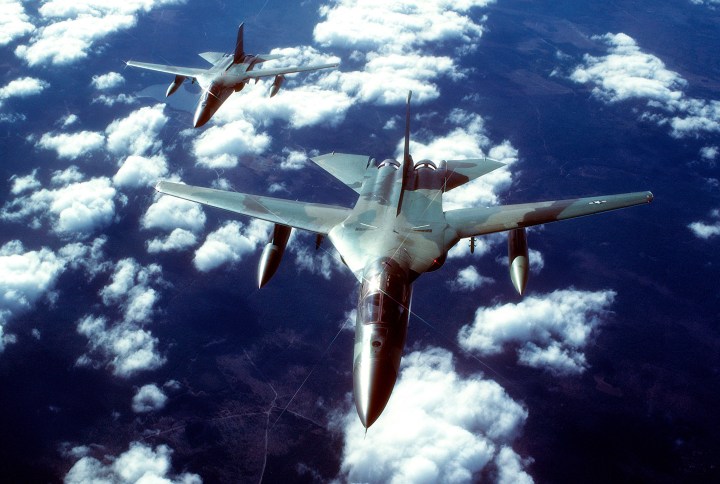
FB-111A, long range bomber. It could carry the AGM-69 SRAM, Short Range Attack Missile (Nuclear). Speed of 1,650 mph with a range of 1,160 nautical miles.

.

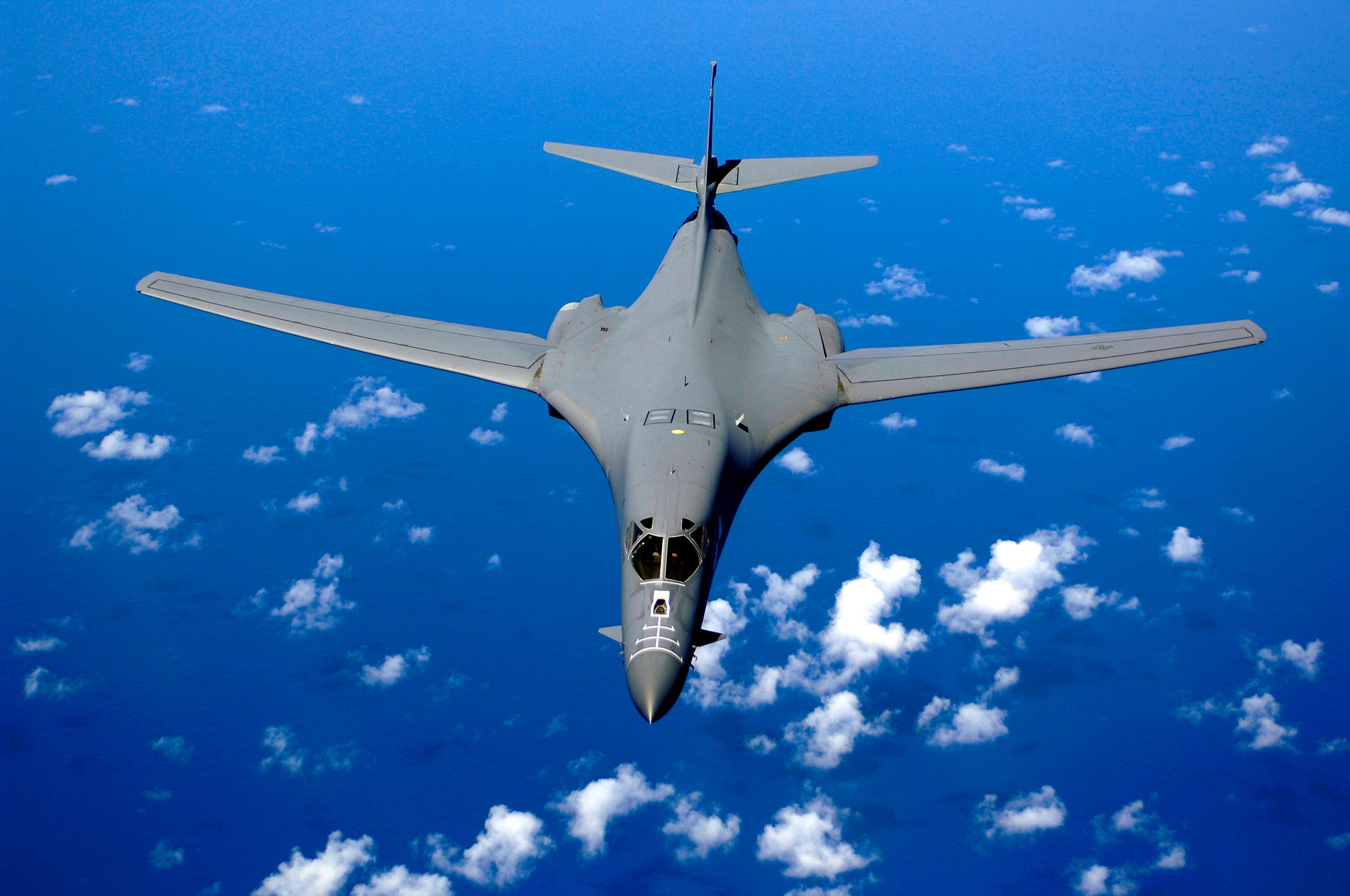
Rockwell B-1 Lancer, a four engined, variable-sweep winged strategic bomber. The planned replacement for the B-52. Maximum speed of 830 mph, with a range of 7,456 miles. Can carry 24 x B61 (Max 340 kilotons) or B63 (Max 1.2 megatons) nuclear gravity bombs.

.

B-28 nuclear bomb.

.

United Kingdom

Strategic Long Range Bombers – 130 x Avro Vulcan.B2

.
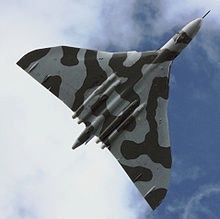
Delta Wing Strategic Bomber

.
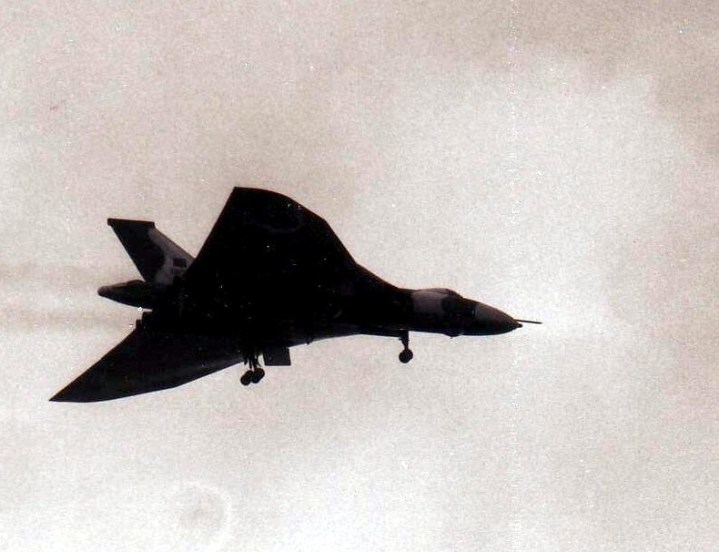
Armament: 21 x 454 kilograms of conventional bombs or 1 x free-fall nuclear bomb/1 x Blue Steel missile (1.1 megaton).

.
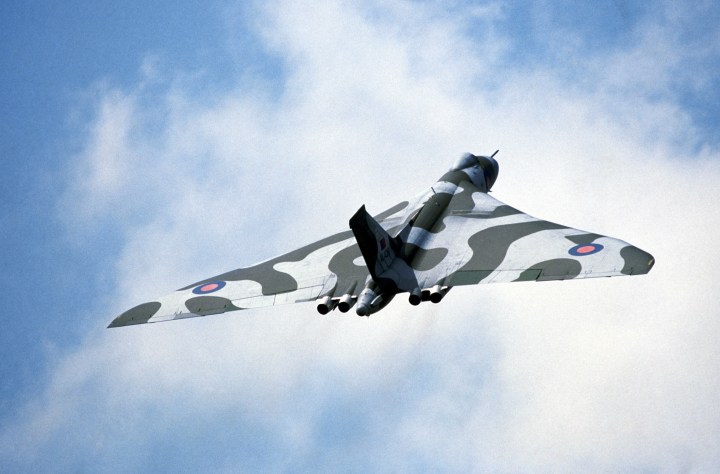
Maximum speed of 607 mph with a range of 2,600 miles.

.
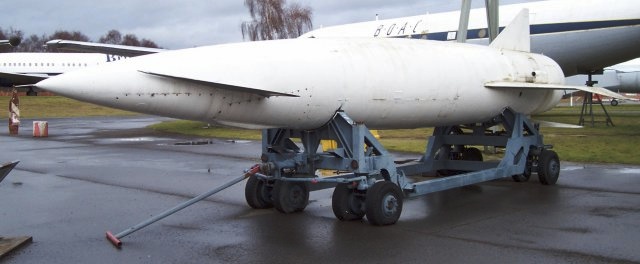
Blue Steel – Air Launched Cruise Missile.

.

France

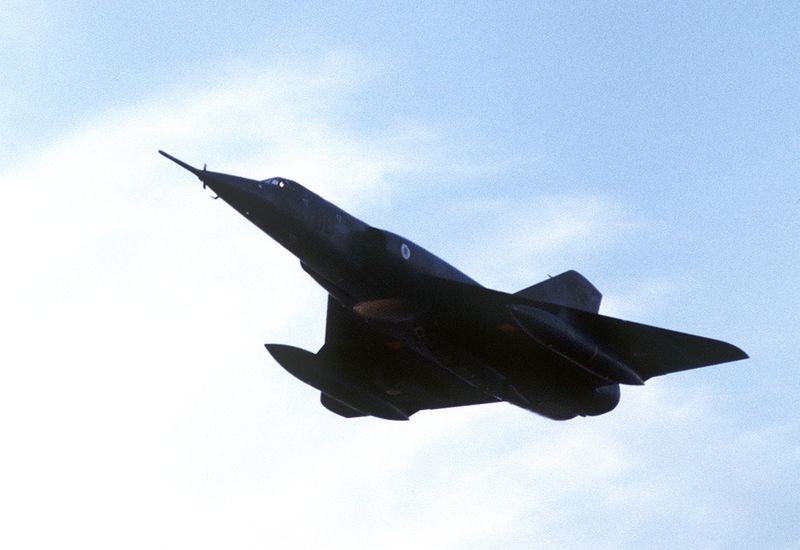
Supersonic Strategic Bombers – 28 x Mirage IVA

.
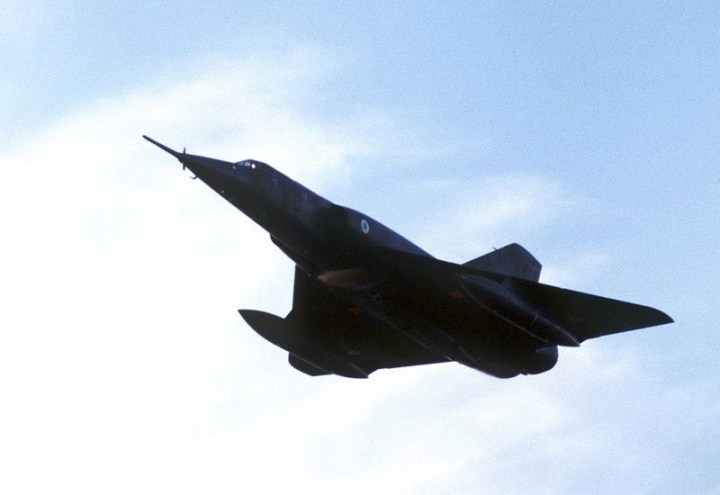
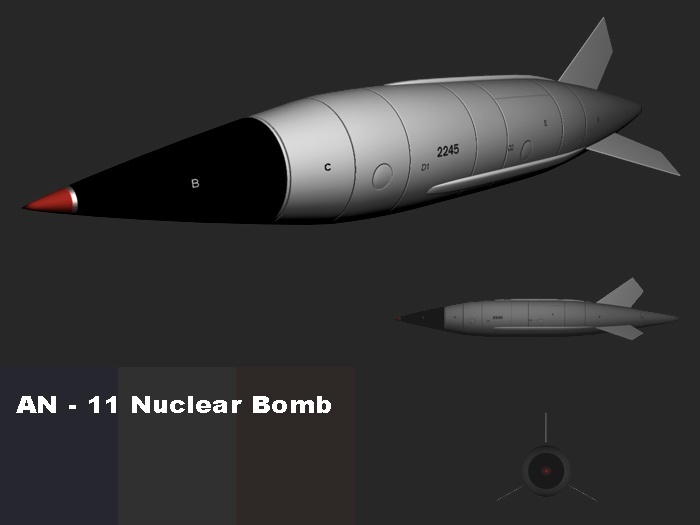
Maximum speed of 1,454 mph and a range of 775 miles. Carries 1 x AN-11 or 1 x AN-22 nuclear bomb (70 kilotons).

.

AN-11 Nuclear Bomb

.

There were also the conventional forces lined up along the Inner German Border, the visible barrier between the Federal Republic of Germany (FRG) and the German Democratic Republic (GDR), or better known as West and East Germany. I shall be covering their organisation and equipment over the coming months.

.

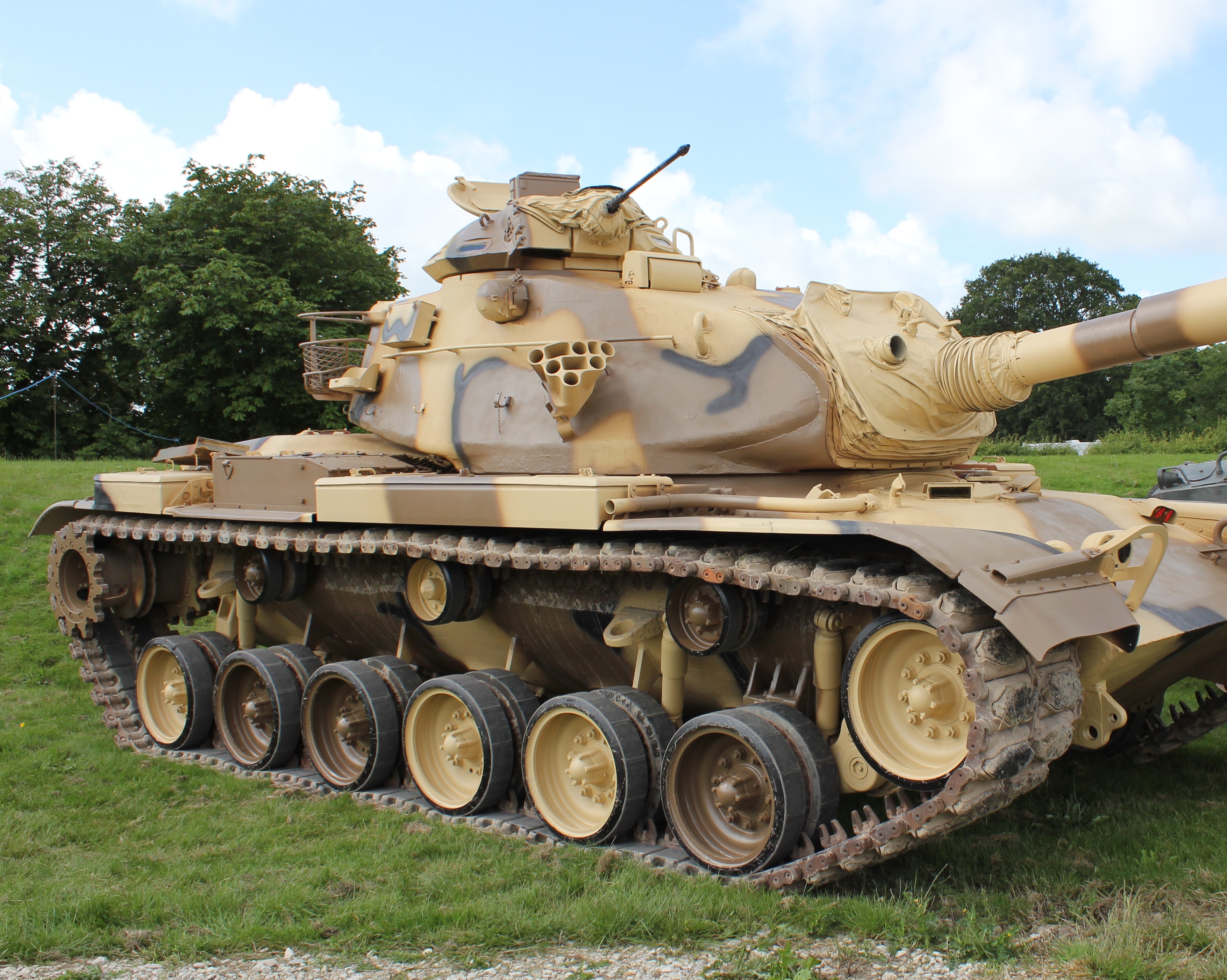
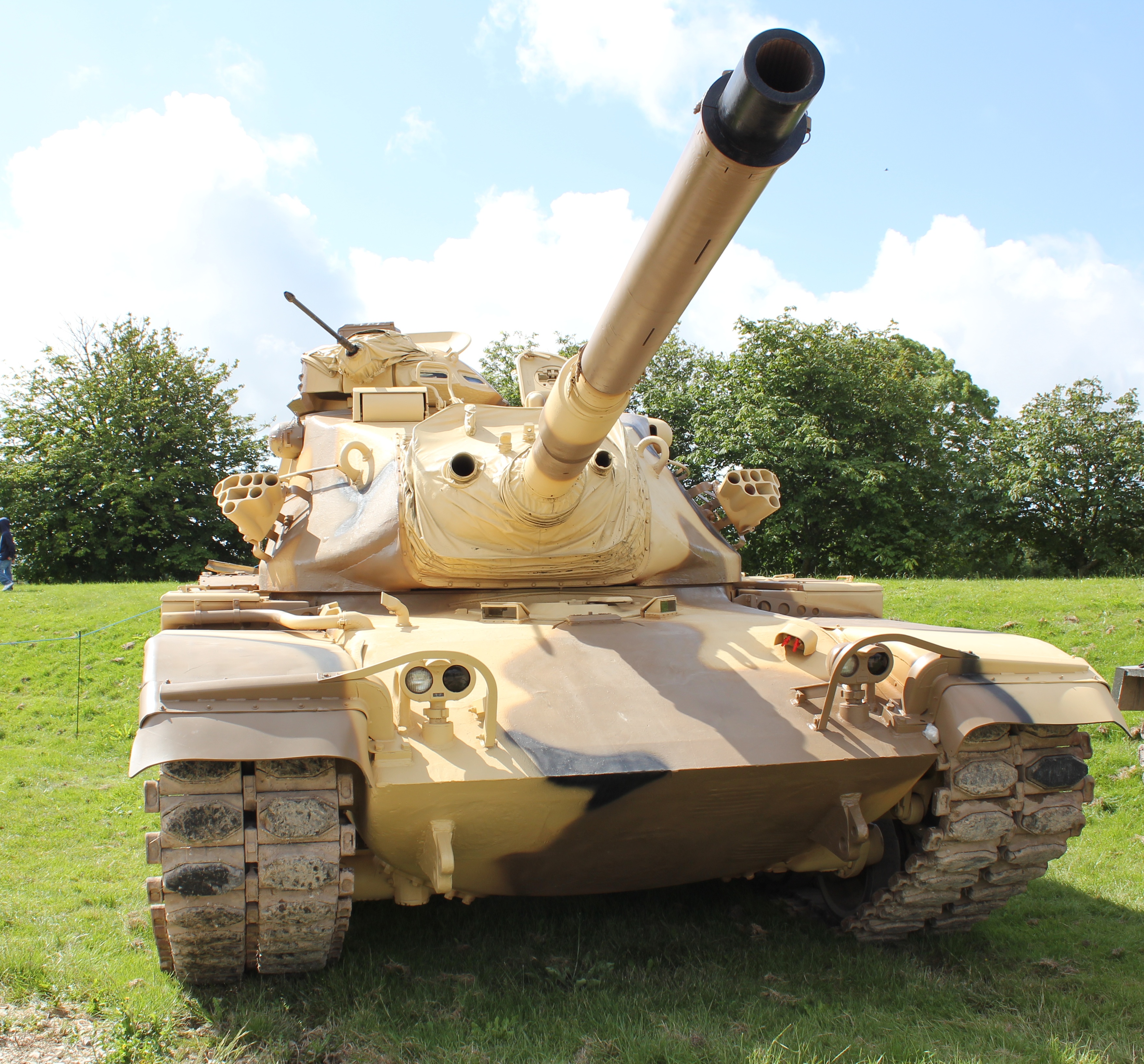
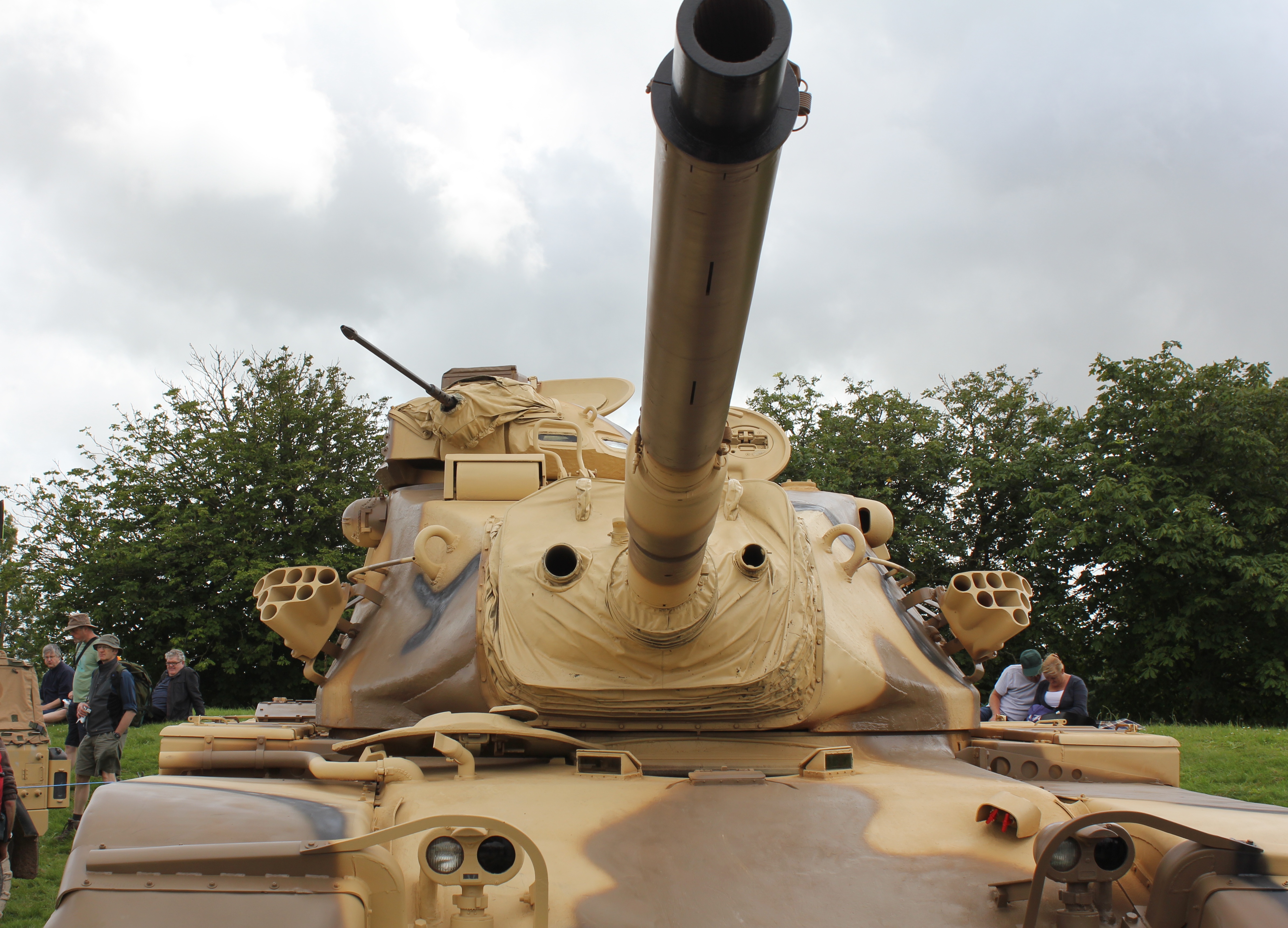
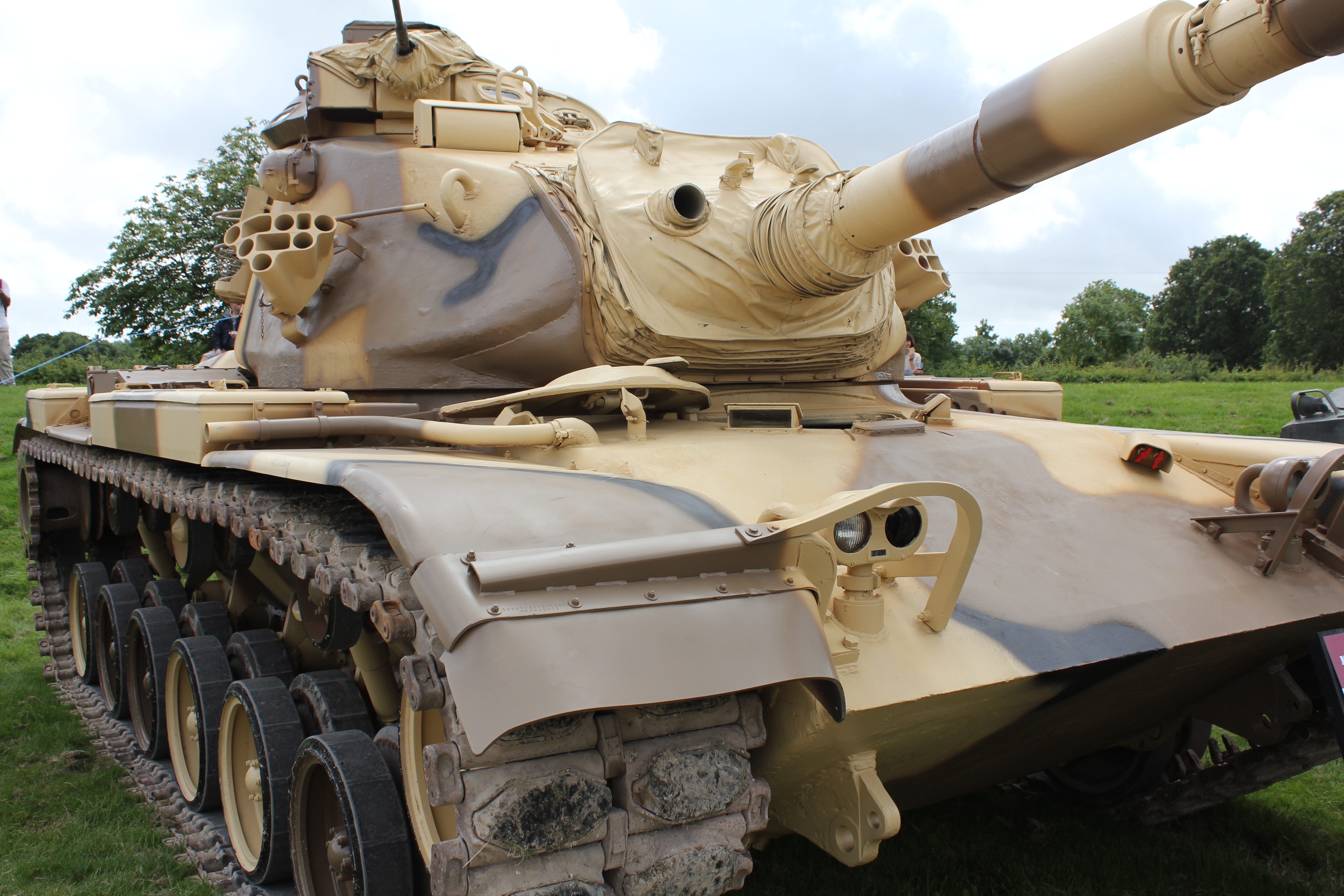
M-60, or Patton Tank.

.

Maximum speed of 30 mph

.

A first generation Main Battle Tank.

.

Main armament is the British 105mm, M68 gun.

.
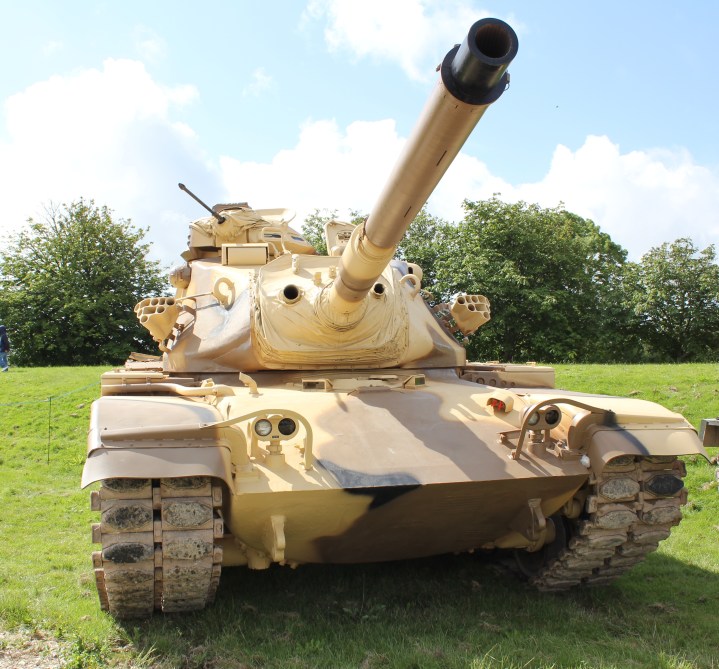
45 tons with an armour thickness of 155.6mm.

.

V-12, air-cooled Twin-turbo diesel engine.

.
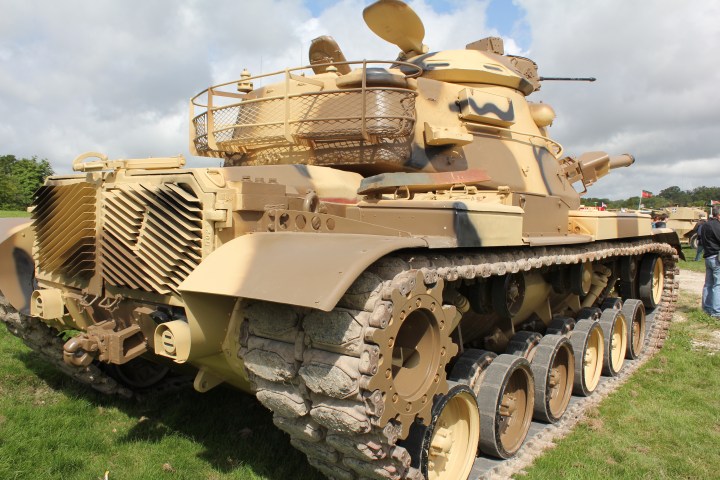
Top speed of 30mph.

.

Introduced in 1960.

.
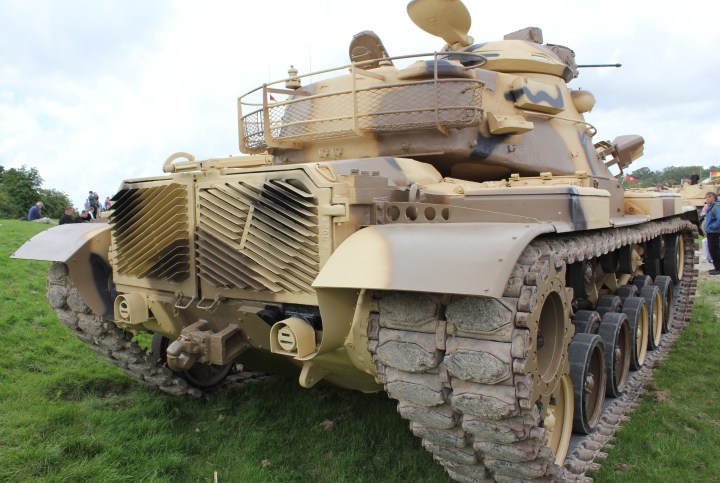
Saw service in the Gulf War.

.

M-60 Patton,  over 15,000 built.

.
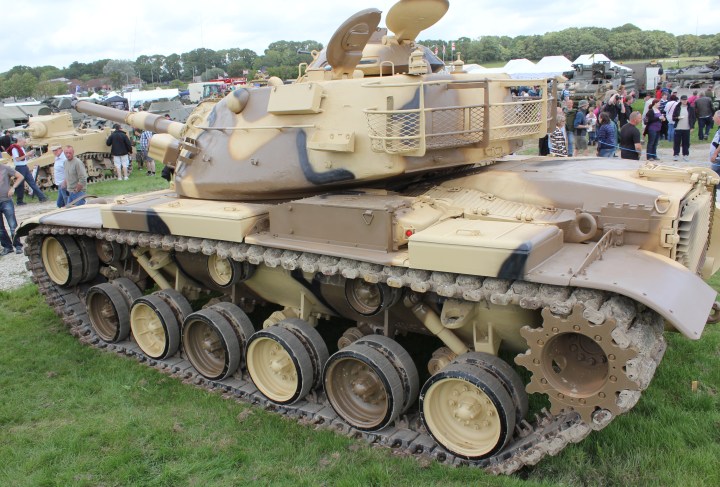
M-60

.

Carries a .50 calibre gun

.

M-60

.

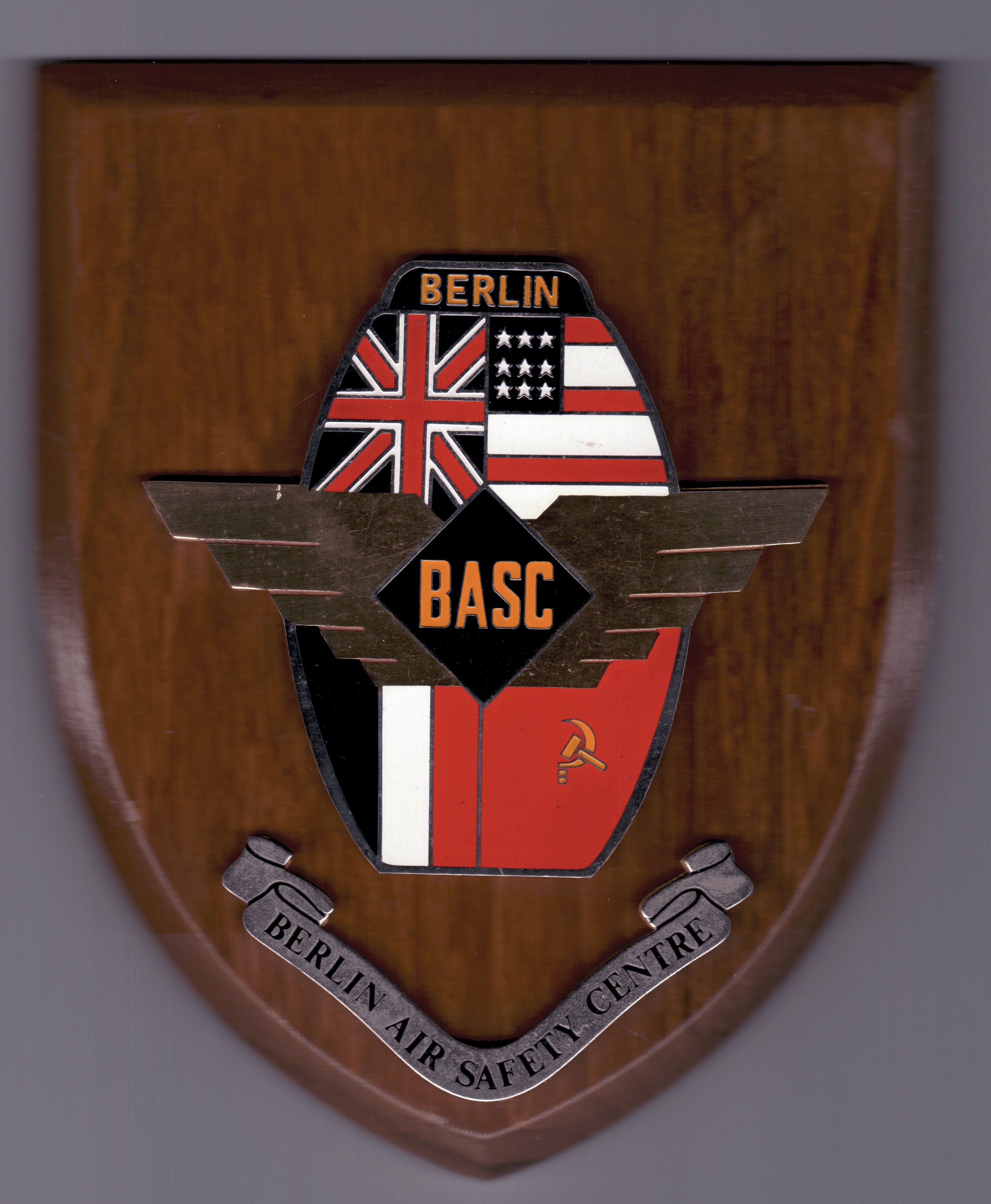
Berlin Air Safety Centre controlled all aircraft in and out of Berlin, including the Air Corridors that transited East Germany.

.

.

Berlin Air Safety Centre controlled all aircraft in and out of Berlin, including the Air Corridors that transited East Germany.

My intention is not to portray a particular message, but just share some of my research and experiences with you.  This is the first of my new ‘Cold War’ series, supporting the writing of my new ‘Cold War’ series of novels, covering the hypothetical invasion of West Germany by the Warsaw Pact in the 80’s. ‘The Red Effect’. so keep your eyes peeled.

.
HarveyBlack-Red Effect150313

Photographs and Blog are copyrighted to Harvey Black