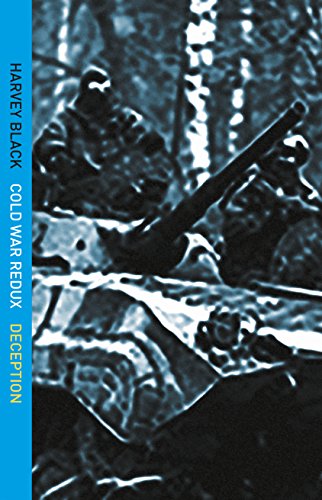
The Cold War Years. A Hot War in reality. Part 6.

My ‘Cold War’ trilogy is complete. I enjoyed writing it and the empty space it has left will be filled with a new set of books, based on the outcome of a strategic nuclear exchange. An Apocalyptic trilogy, survival at its worst.

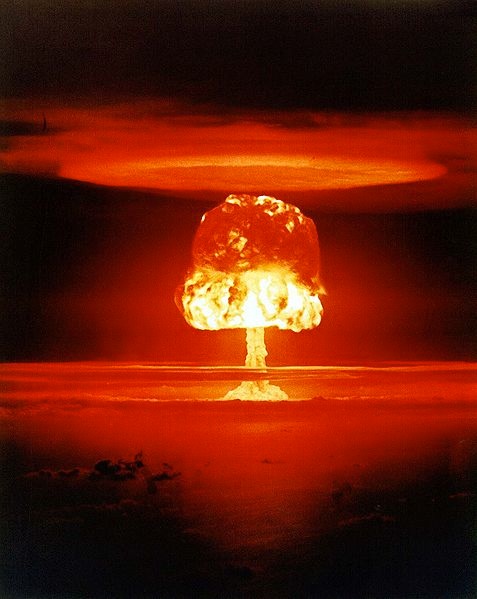
The Cold War era started very soon after the end of the second world war, when the communist east, led by the Soviet Union, and the Western world, led by the United States and its NATO allies, faced each across what became known as the ‘Iron Curtain’.

.
.

The capital of Germany, Berlin, was divided into four Sectors. The consequence being, that the three Western Allied powers now controlled territory deep within the Soviet Union Zone of Germany.

Over time, the tensions between the four Allied powers increased, eventually resulting in the Berlin blockade in 1948, when the Soviets attempted to starve West Berlin into submission and force the other three Allied powers out. This failed and the Soviets eventually relented, but an ever-increasing number of East Germans fled to the West; between 150,000 and 300,000 a year during 1951-1953. As a consequence restrictions were placed on movement between the divided country. From 1961, the border was closed and Berlin completely encircled, first by barbed wire, then bricks and finally a concrete wall, along with the infamous ‘death strip’.

Access was now restricted between Berlin and the West. A wall, 124 mile miles in length, was placed around the three sectors of West Berlin, cutting off the city from the rest of the world.
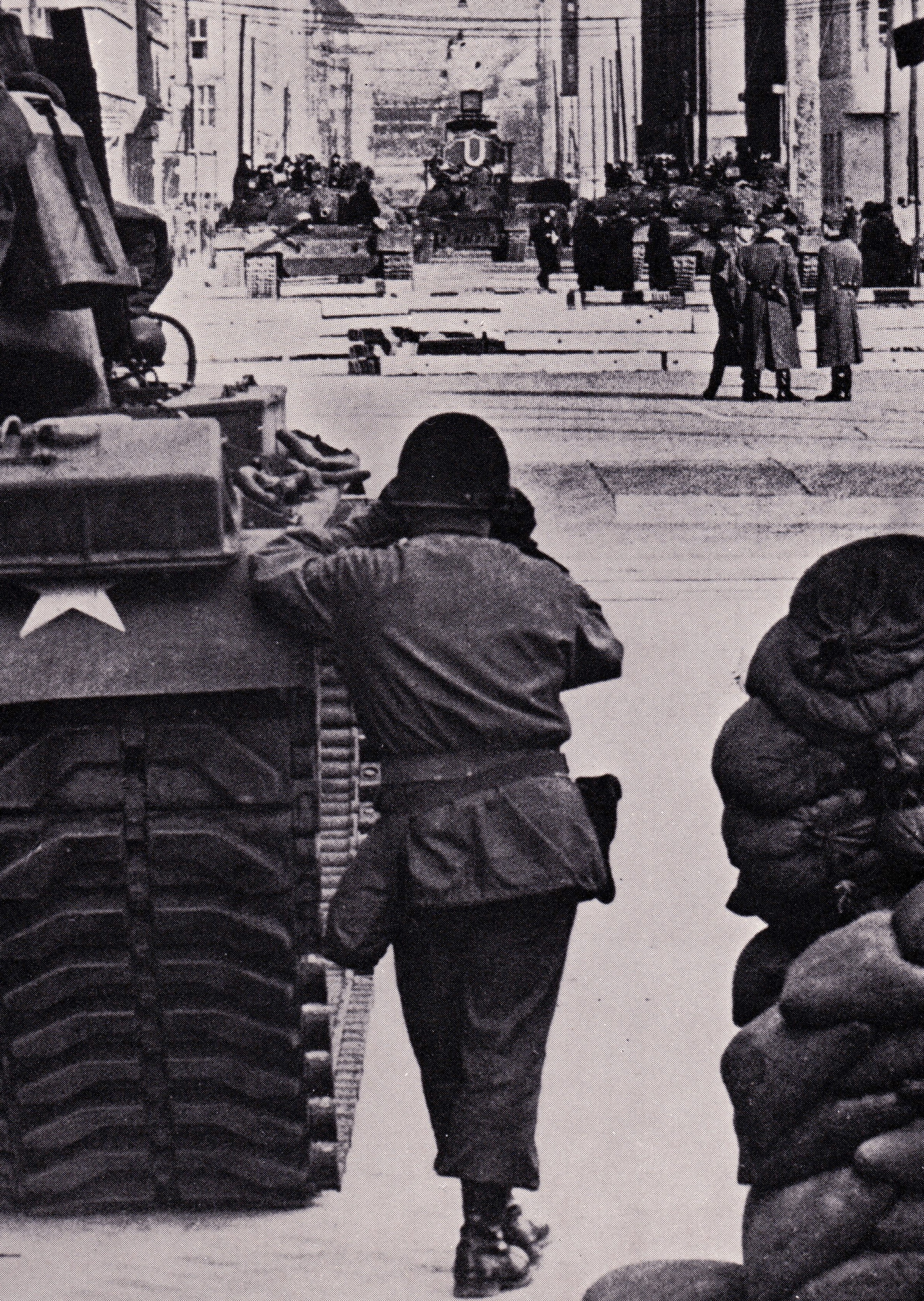
An Iconic picture of the face-off between the West and the East.  The Cold War truly starts – October 1961.

.
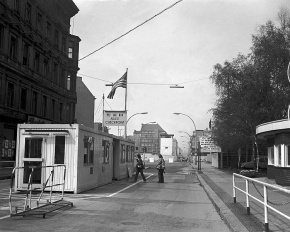
Checkpoint Charlie – American Sector of West Berlin 1981

I shall cover various aspects of the two opposing forces, providing the backdrop and background information for my trilogy.

In 1984/85, the Warsaw Pact was already a significant force, the Soviet Union in particular. To counter this NATO, the North Atlantic Treaty Organisation, assembled its own force of arms along the Iron Curtain. Not just as a show force against the communist ideals purported by the East, but because the likelihood of Warsaw Pact troops, led by the Soviet Union, crossing the Inner German Border was a real possibility.


Allied Forces Central Europe, AFCENT, would have to take the brunt of any attack by the Warsaw Pact forces. With responsibility for Parts of Europe stretching from Denmark to the borders of Austria, it had three subordinate commands. The two key ones, Northern Army Group, NORTHAG, and Central Army Group, CENTAG. For this and the next Post, I will concentrate on NORTHAG.

.
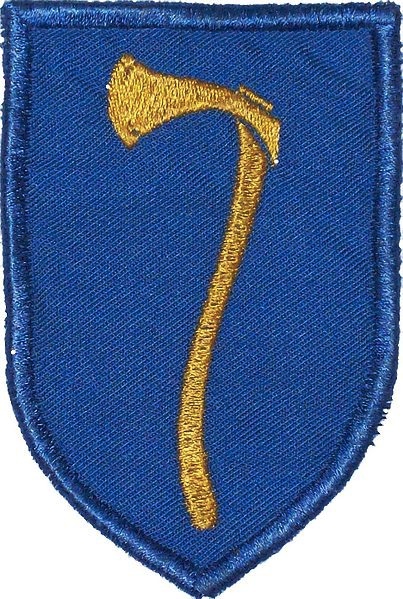
Northern Army Group Insignia. During the building of the Joint Headquarters, a Frankish battle axe was discovered and subsequently used as their emblem. They chose it because the Franks were a West-European tribe defending against attackers from the East.

.
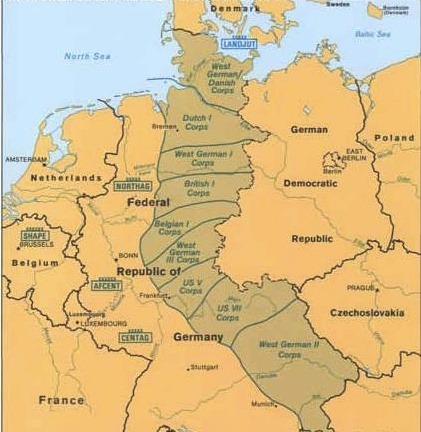
For the defence of the Federal Republic of Germany, NATO used a ‘layer-cake’ principle. The country was sectioned into layers, with a designated Army Corps taking responsibility for its defence. Northag had 1 Dutch, 1 German, 1British and 1 Belgium Corps. Once Reforger was enacted, a US Corps would provide additional reinforcements along with additional troops from Britain.

.

Northern Army Group consisted of four Army Corps; 1 Dutch Corps in the north, beneath that 1 German Corps, 1 British Corps and 1 Belgian Corps. NORTHAG’s area of responsibility ran from the North German Plains, south of the river Elbe, to the city of Kassel. Below Kassel was the responsibility of CENTAG and north of the Elbe was the responsibility of Allied Land Forces Command. 1 British Corps, 1 BR Corps, was a key part of Northag’s defence of the northern part of Germany.

.
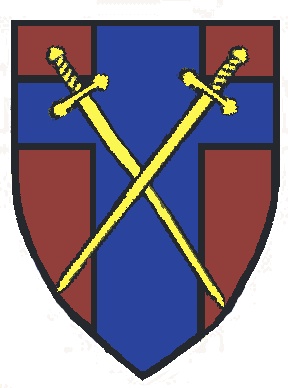
Insignia of the British Army of the Rhine.

.

1 (BR) Corps – 1984/85

Britain

1st Armoured Division (Federal Republic of Germany)

3 x Armoured Brigades

22nd Armoured Brigade

  • 2 x Armoured Regiments (14/20th Kings Hussars & 2nd Royal Tank Regiment) 56 Chieftain Tanks each.

.
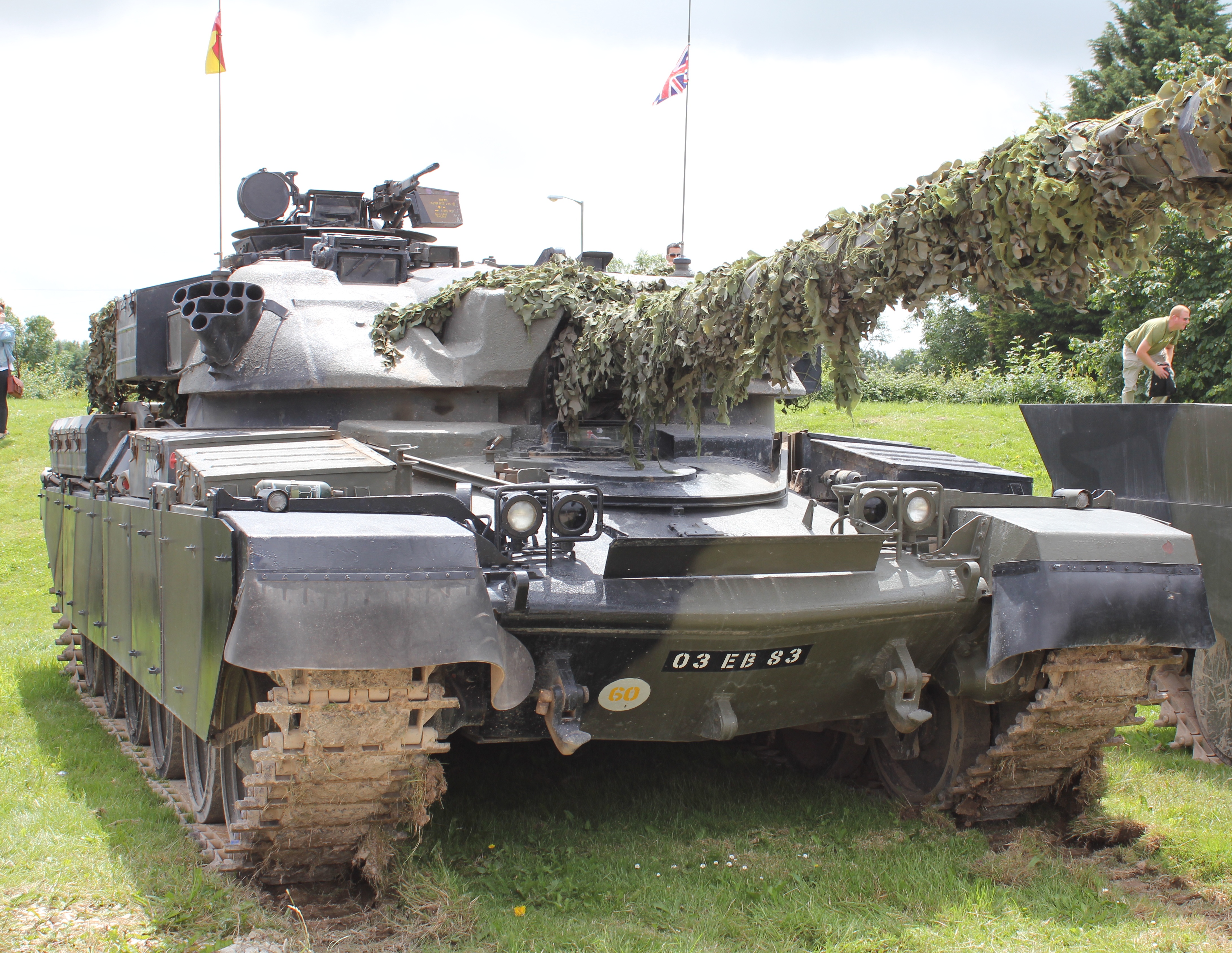
Chieftain Mark 10/11

  • 1 x Mechanised Infantry Battalion (1st Battalion Royal Green Jackets). A battalion of around 600 Infantry, carried into battle by 71 x FV432’s.

.
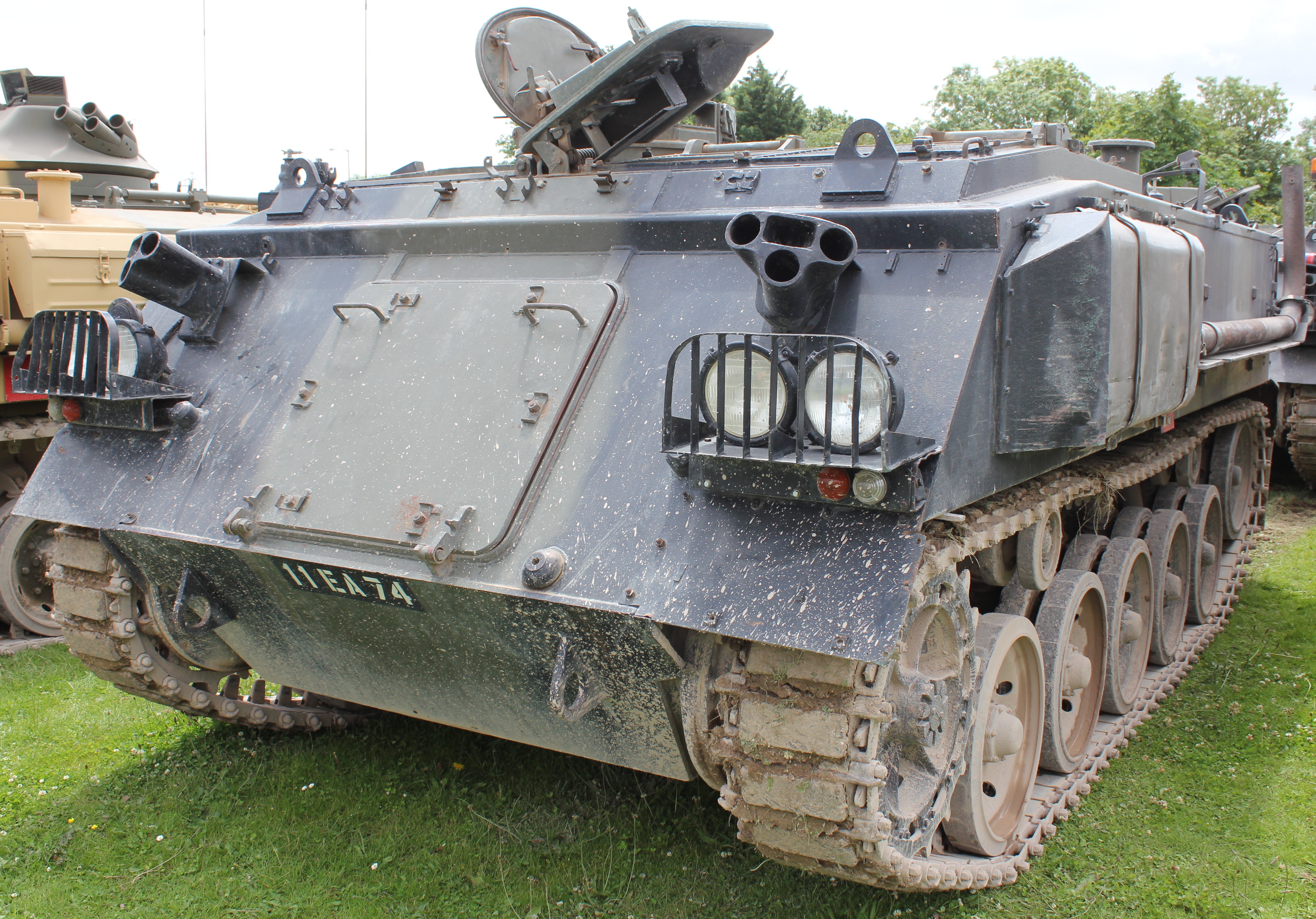
FV432 – armoured personnel carrier. The Mark 1 had a petrol engine, Mark 2 a Rolls-Royce multi-fuel engine and the Mark 3 with a diesel engine. It had a speed of up to 30mph.

.
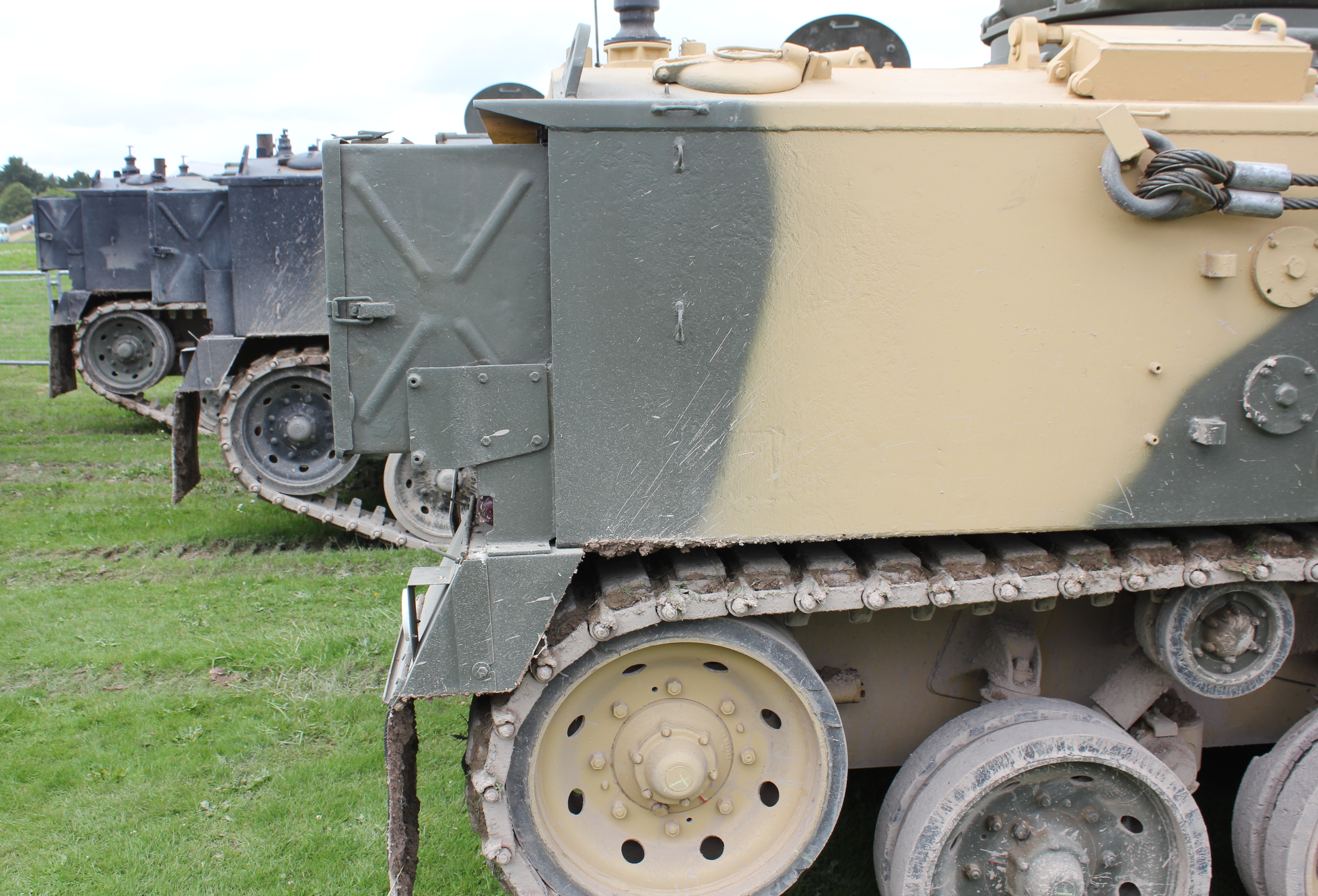
FV432. Its key role was that of a troop carrier, but there were other variants – such as  a command vehicle, recovery vehicle, Wombat recoilless rifle carrier, a 81mm mortar on a turntable in the rear of the hull, a Peak Engineering turret with the L37A1 variant of the 7.62mm GPMG, a 30mm Rarden-Gun, night surveillance ZB-298 radar and a MILAN, anti-tank missile carrier.

.

7th Armoured Brigade

  • 2 x Armoured Regiments (Royal Hussars & 14th/20th Hussars) 56 Challenger Tanks each.

.
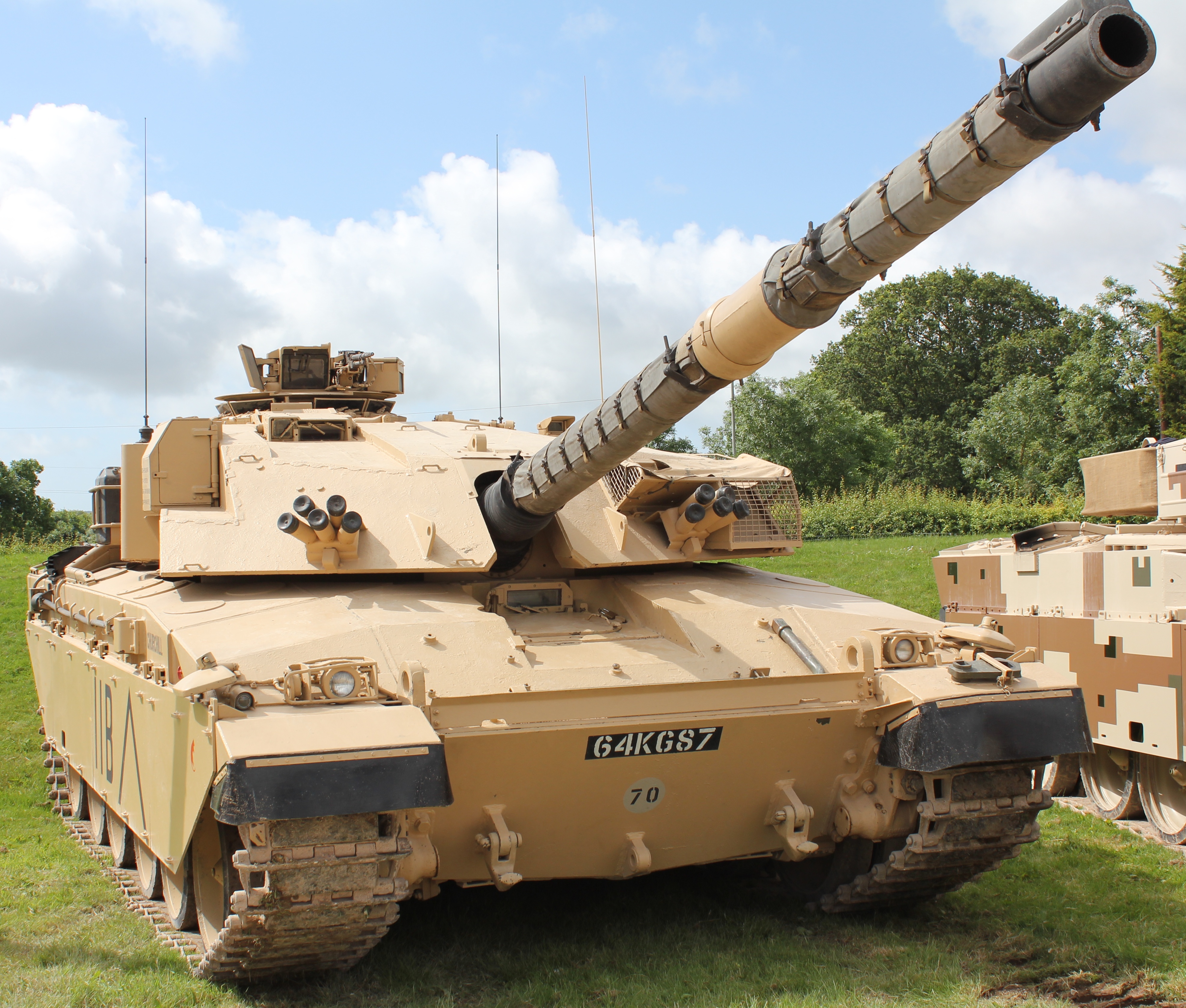
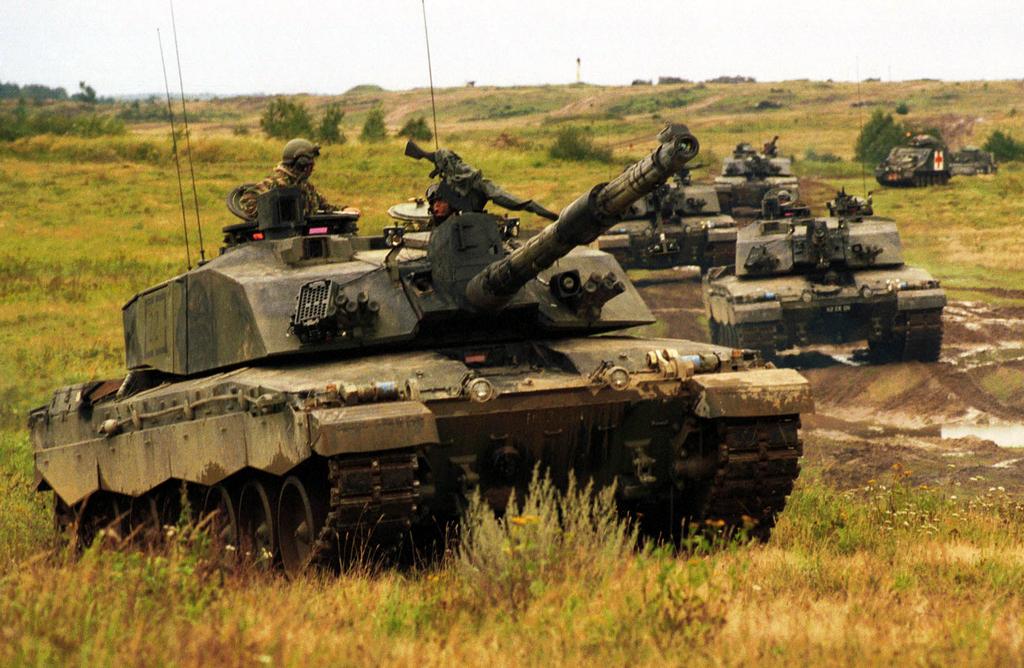
Challenger 1. The 62 ton Main battle Tank is capable of a speed of up to 35mph. Its armour, still classified, and 120mm gun make this a formidable opponent.

  • 1 x Mechanised Infantry Battalion (3rd Battalion, Queen’s Regiment). A battalion of around 600 Infantry carried into battle by 71 x FV432’s.

12th Armoured Brigade

  • 1 x Armoured Regiment (5th Royal Inniskilling Dragoon Guards) 56 x Chieftain Tanks
  • 2 x Mechanised Infantry Battalions (1st Battalion Kings Regiment & 1st Battalion Green Howards). 71 x FV432’s per battalion.

.
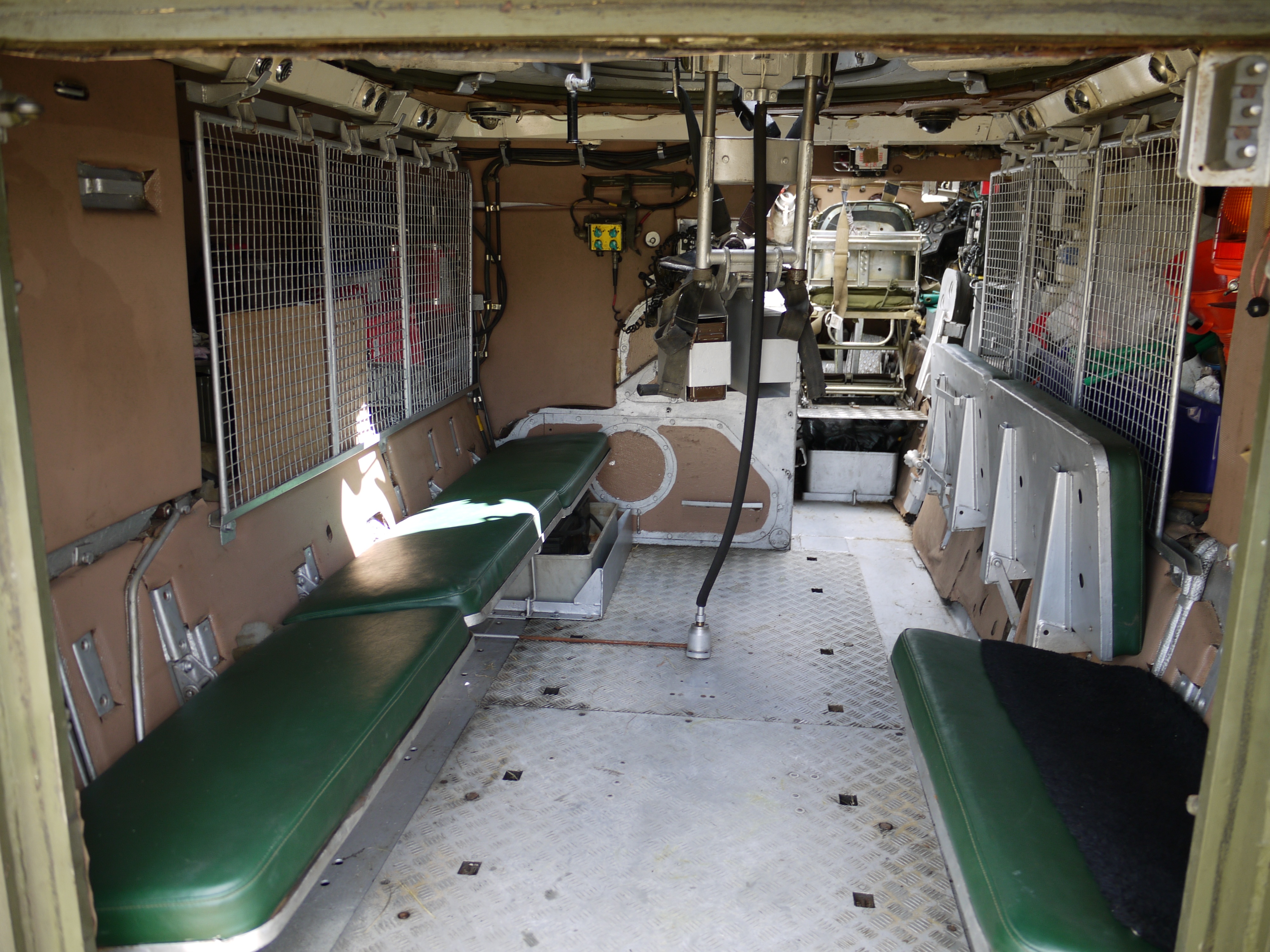
Inside an FV432 armoured personnel carrier. Usually a crew of 3, with  7 Infantry in the back. Closed down, at speed across rough country, you will soon find out if you suffer from travel sickness.

.

Additional Forces

  • 1st Queen’s Dragoon Guards. 48 x FV107 Scimitar.
  • 1st Regiment Royal Horse Artillery (24 x Abbot).
  • 40th Field Regiment Royal Artillery (24 x M109).
  • 4th Field Regiment Royal Artillery (24 x M109).
  • 10th Air Defence Battery Royal Artillery (Blowpipe).
  • 21 Engineer Regiment
  • 1 Regiment Army Air Corps

.

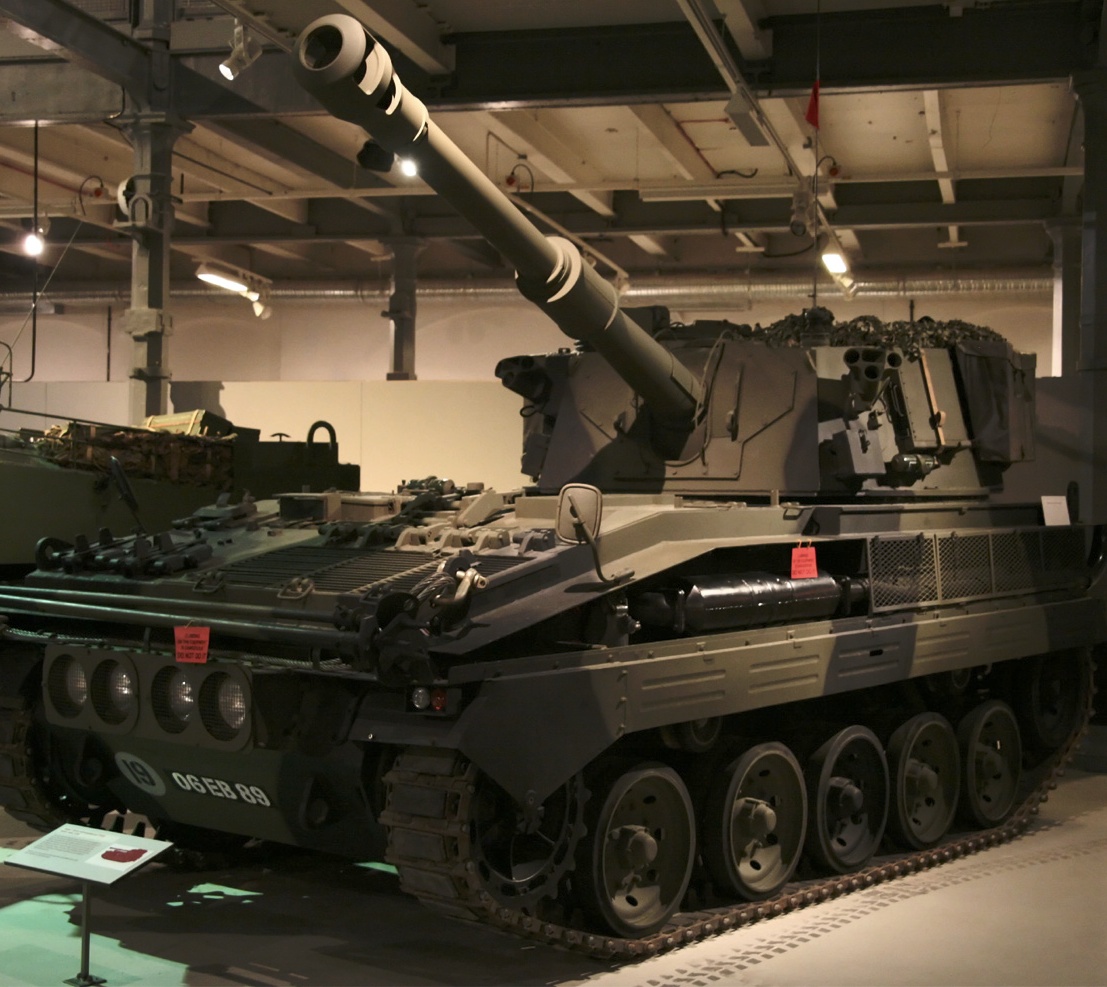
FV433 Abbot, Self Propelled Gun. 105mm L109 Gun.

.
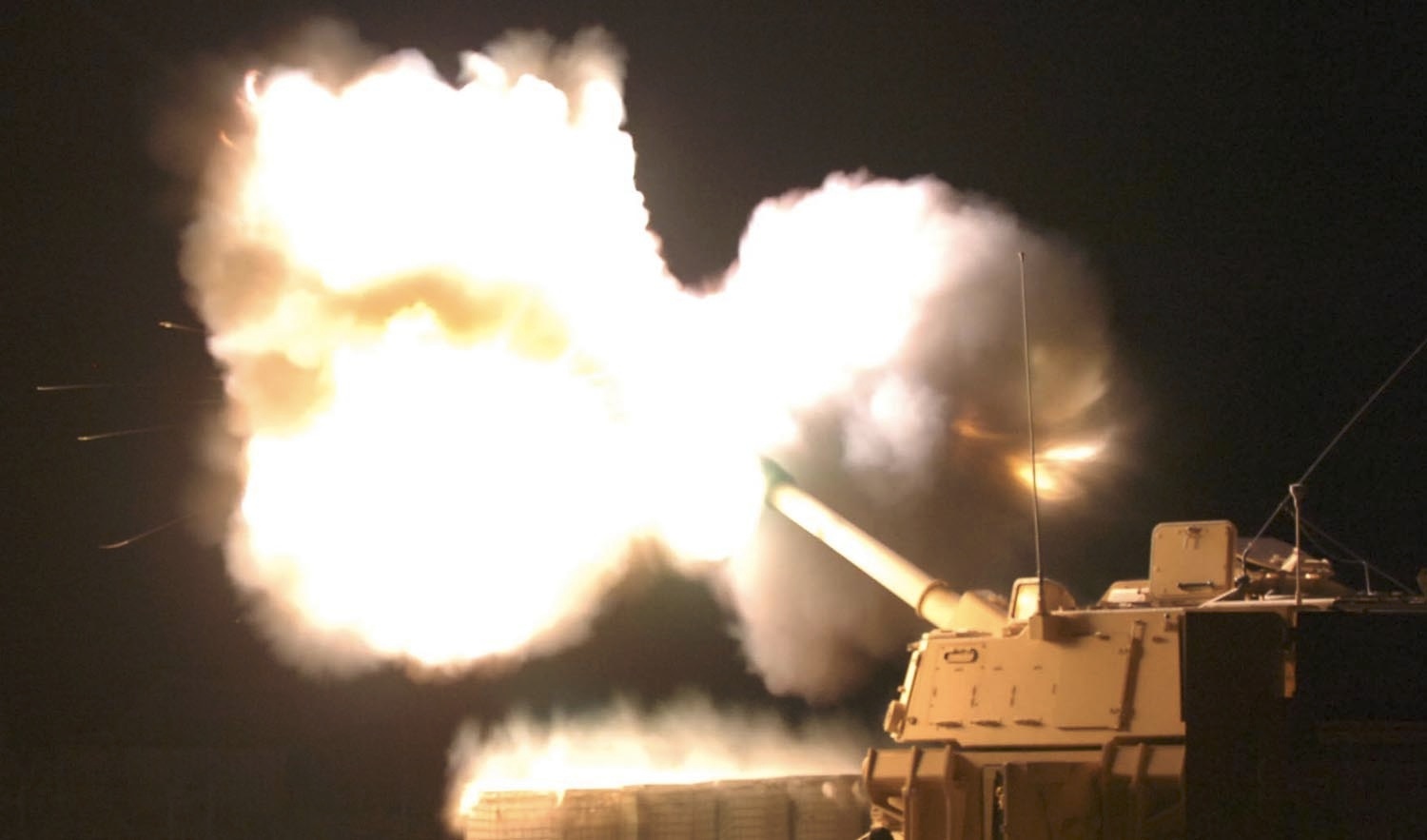
M109 Self Propelled Howitzer, 155mm

.
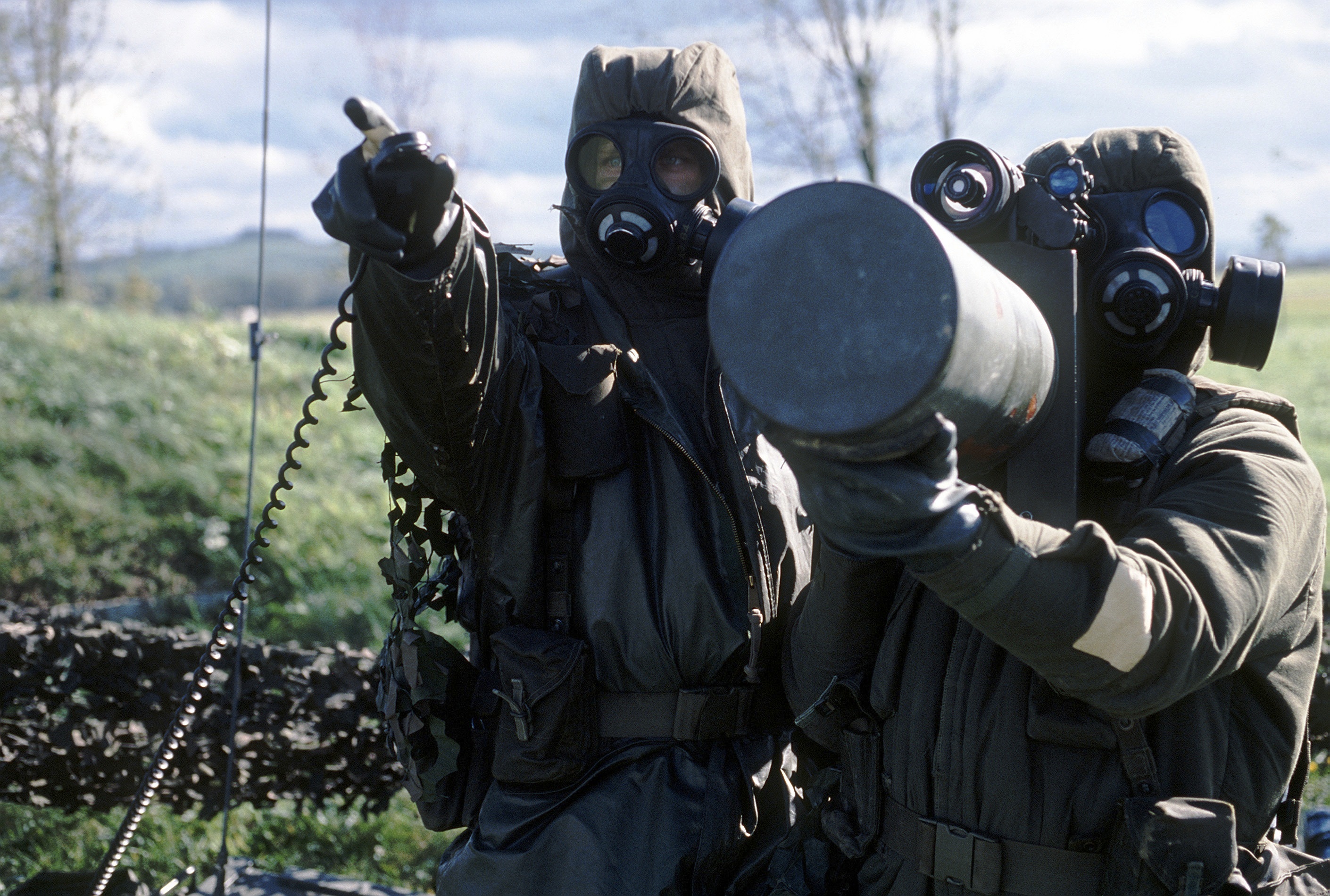
Blowpipe anti-aircraft missile system

2nd Infantry Division (Great Britain)

24th Infantry/Airmobile Brigade

  • 1st Battalion Duke of Wellington’s Regiment & 1st Battalion Kings Own Royal Border Regiment.

15th (North East) Infantry Brigade

  • Queens Own Yeomanry (Fox and Spartan) & 5 Infantry battalions.

49th (East) Infantry Brigade

  • The Royal Yeomanry (Fox and Spartan) & 5 x Infantry battalions.

Additional Forces

  • 49th Field Regiment Royal Artillery FH-70
  • 100th (Yeomanry) Field Regiment 24 x FH-70
  • 101st (Northumbrian) Field Regiment Royal Artillery (V) 24 x FH-70
  • 15 x (Territorial Army) Infantry Battalions

.

3rd Armoured Division (Federal Republic of Germany).

4th Armoured Brigade

  • 2 x Armoured Regiments (Queen’s Royal Irish Hussars & 17th/21st Lancers) 56 x Chieftain Tanks each.
  • 1 x Mechanised Infantry Battalion (1st Battalion Irish Guards) 71 x FV432’s.

6th Airmobile Brigade

  • 2 x Infantry battalions (1st Battalion Worcestershire & Sherwood Foresters Regiment & 1st Battalion Light Infantry).

19th Infantry Brigade (Colchester)

  • 1st Battalion Kings Own Scottish Borderers, 2nd Battalion Royal Anglian Regiment and 1st Battalion Staffordshire Regiment.

Additional Forces

  • 9th/12th Lancers 48 x FV107 Scimitar
  • 19th Field Regiment Royal Artillery (24 x Abbot).
  • 2nd Field Regiment Royal Artillery (24 x M109)
  • 45th Field Regiment Royal Artillery (24 x M109)
  • 46th Air Defence Battery Royal Artillery (Blowpipe).
  • 26 Engineer Regiment
  • 3rd Regiment Army Air Corps

.

4th Armoured Division Federal Republic of Germany.

11th Armoured Brigade

  • 1 x Armoured Regiment (3rd Royal Tank Regiment) 56 x Chieftain
  • 2 x Mechanised Infantry Battalions (1st Battalion Royal Regiment of Fusiliers & 2nd Battalion Royal Green Jackets) 71 FV432’s each

20th Armoured Brigade

  • 2 x Armoured Regiments (Blues and Royals & 4th/7th Royal Dragoon Guards) 56 x Chieftain each.
  • 1 x Mechanised Infantry Battalion (1st Battalion Royal Regiment of Wales) 71 x FV432.

33rd Armoured Brigade

  • 1 x Armoured Regiment (Royal Scotts Dragoon Guards) 56 x Chieftain
  • 2 x Mechanised Infantry Battalions (1st Battalion Royal Highland Fusiliers & 1st Battalion Black Watch) 71 x FV432 each.

Additional Forces

  • 15th/19th Hussars 48 x FV 107 Scimitar
  • 3rd Regiment Royal Horse Artillery (24 x Abbot).
  • 27h Field Regiment Royal Artillery (24 x M109)
  • 47th Field Regiment Royal Artillery (24 x M109)
  • C Battery Royal Horse Artillery (FV438 Swingfire).
  • 43rd Air Defence Battery Royal Artillery (Blowpipe).
  • 35th Engineer Regiment
  • 4th Regiment Army Air Corps

1 BR Corps – 1st Artillery Brigade

  • 50th Missile Regiment Royal Artillery – 12 x Lance Missile Launchers
  • 5th Heavy Regiment Royal Artillery – 24 x M110
  • 32nd Heavy Regiment Royal Artillery – 24 x M107
  • 39th Heavy Regiment 24 x M107
  • 16th Air Defence Regiment Royal Artillery – Rapier
  • 22nd Air Defence regiment Royal Artillery – Rapier

During the early 80’s, 1 Br Corps operated in ‘Battlegroup’ and ‘Combat Team’ formations.

22nd Armoured Brigade, 1st Armoured Division would be made up of three Battlegroups’ (BG).

14th/20th Hussars BG

Combat Team A – 1 Squadron Chieftain Tanks.

Combat Team B – 1 Squadron Chieftain Tanks.

Combat Team C – 1 Squadron Chieftain Tanks.

Combat Team  D – 1 Squadron Chieftain Tanks.

2nd Royal Tank Regiment BG

Combat Team A – 2 troops Chieftain Tanks, 1 Mechanised Infantry Platoon

Combat Team B – 1 troops Chieftain Tanks, 2 Mechanised Infantry Platoons

Combat Team C – 2 troops Chieftain Tanks, 1 Mechanised Infantry Platoon

Combat Team  D – 1 troops Chieftain Tanks, 2 Mechanised Infantry Platoons

1st Battalion Welsh Guards BG

Combat Team A – 2 troops Chieftain Tanks, 1 Mechanised Infantry Platoon

Combat Team B – 1 troops Chieftain Tanks, 2 Mechanised Infantry Platoon

Combat Team C – 2 troops Chieftain Tanks, 1 Mechanised Infantry Platoon

Combat Team  D – 1 troops Chieftain Tanks, 2 Mechanised Infantry Platoon

The above is just a rough outline. Each battlegroup would be allocated elements of the Infantry battalions Weapons company and other anti-tank elements of the Brigade or Division, depending on their specific task.

.

Once NATO was warned, or had an indication, of a potential attack by the Warsaw Pact it would deploy as quickly as possible. Among other forces, a thin reconnaissance screen would be sent out seeking enemy break through points across the Inner German Border and monitoring the enemies advancing armies. One of those reconnaissance assets was the Combat Vehicle Reconnaissance (Tracked), CVRT series, the Scorpion and Scimitar.

.
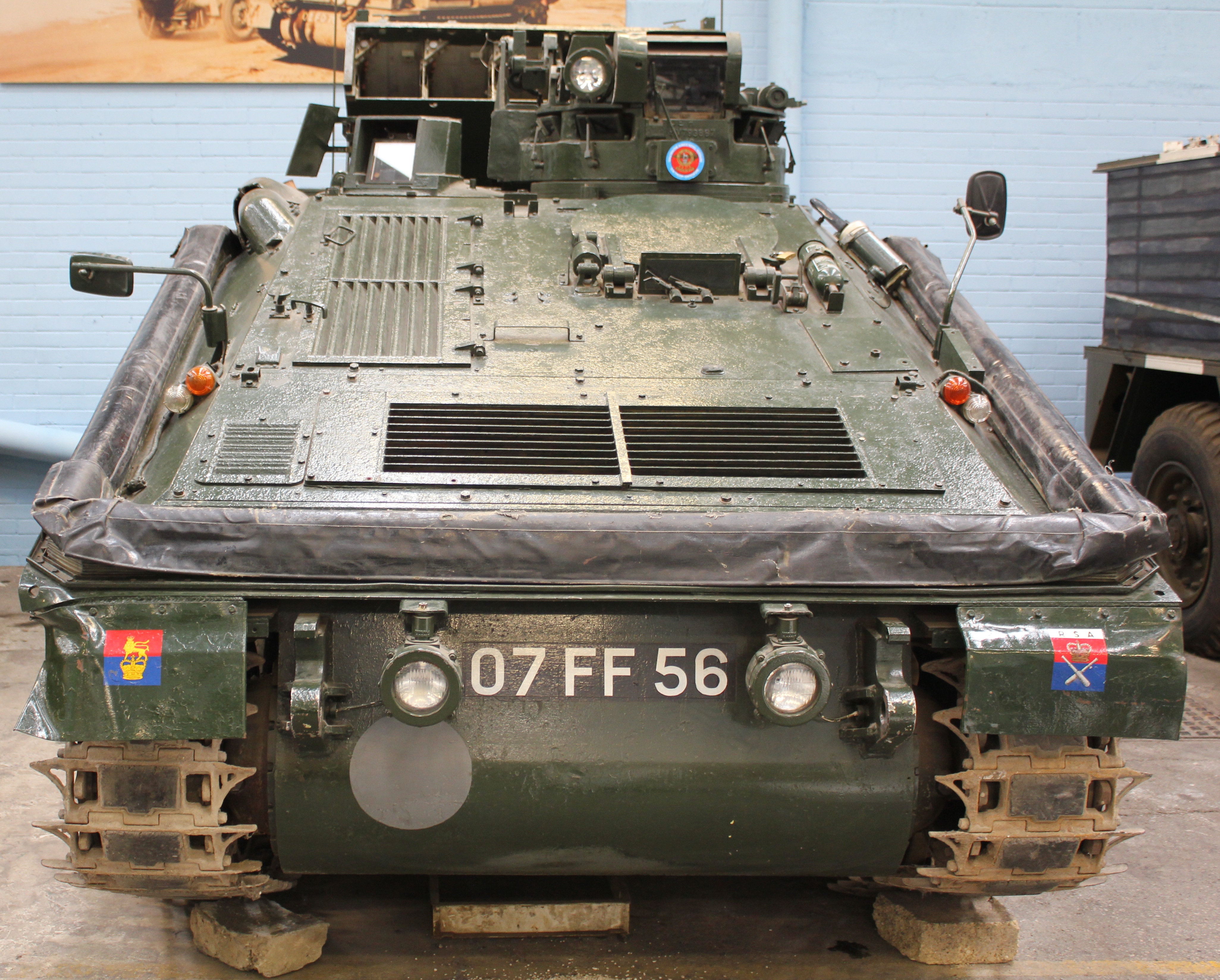
FV-102, Striker. A light weight, anti-tank missile carrier. Entered service in 1976. Weighing 8.3 tons, a crew of three, it has a top speed of 50 mph. Floatation skirt is visible, used for swimming in still water. The markings are for L Battery, Royal Horse Artillery.

.
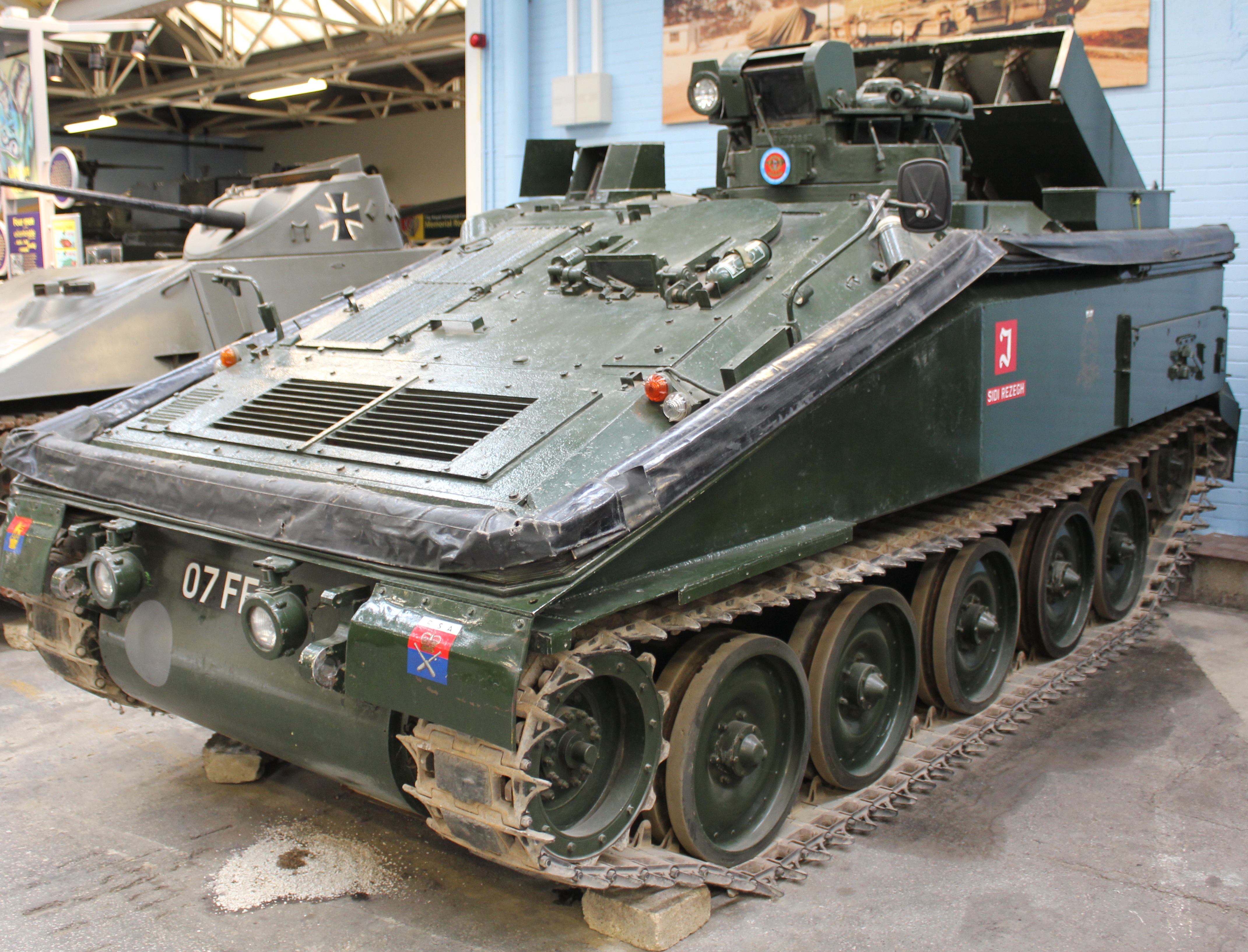
Powered by a Jaguar 4.2 litre engine. It employs aluminium armour and is designed to fight from cover.

.
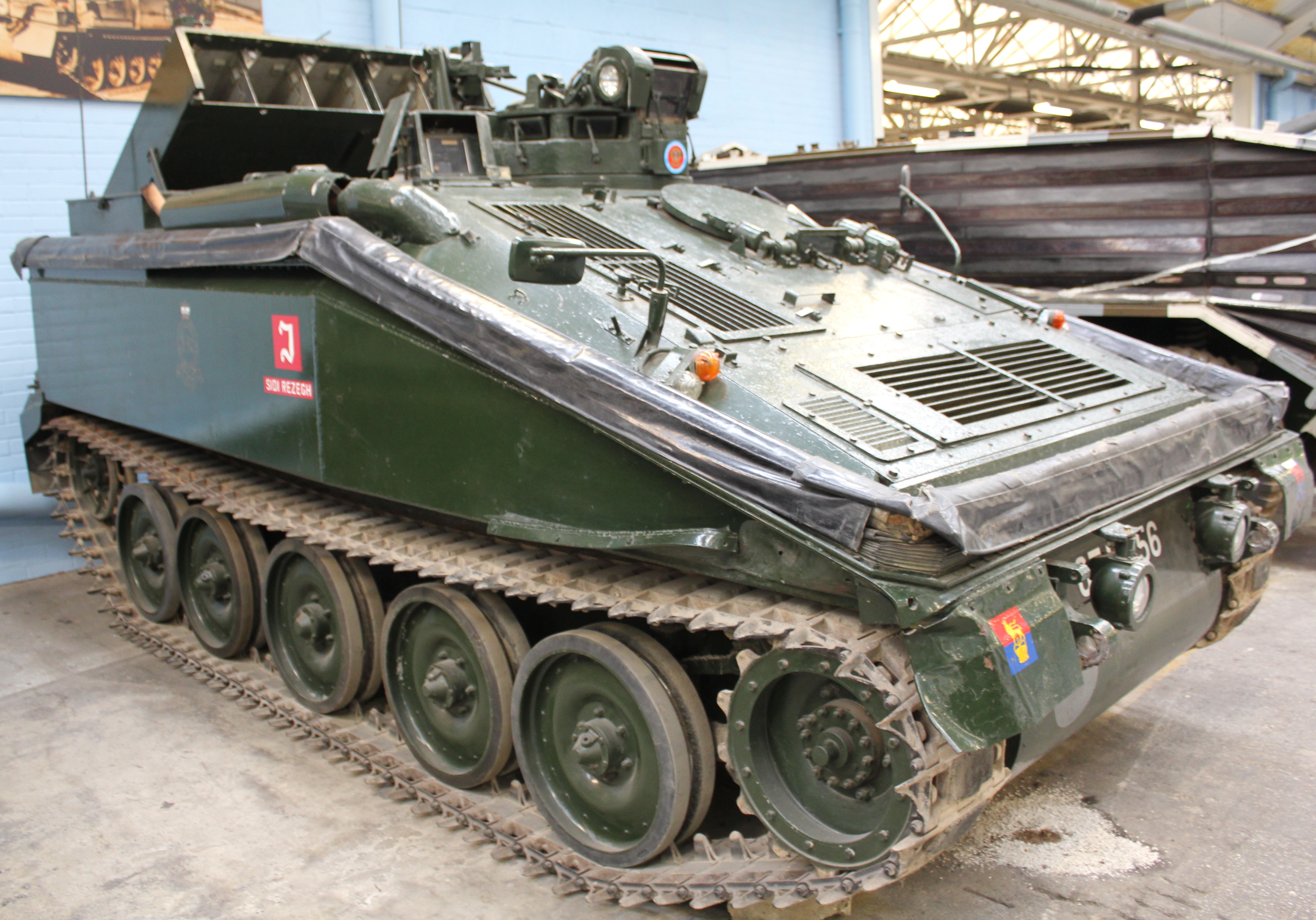
Striker is armed with the Swingfire anti-tank wire-guided missile. Five are carried in the hinged launcher at he back, a further five stowed inside.

.
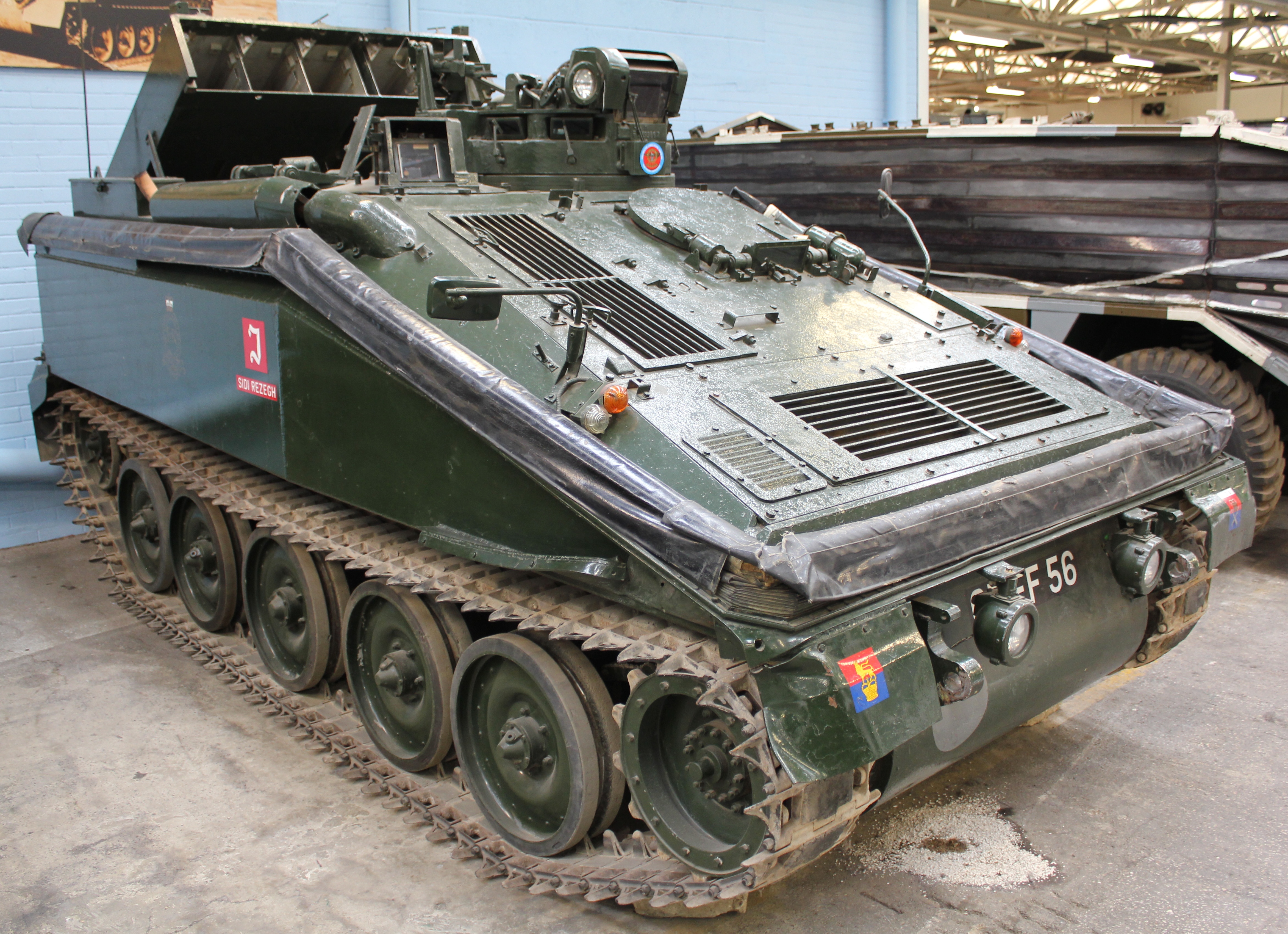
Swingfire has a maximum range of 4,000 metres and a minimum range of 150 metres. The operator has to steer the missile onto the target.

.
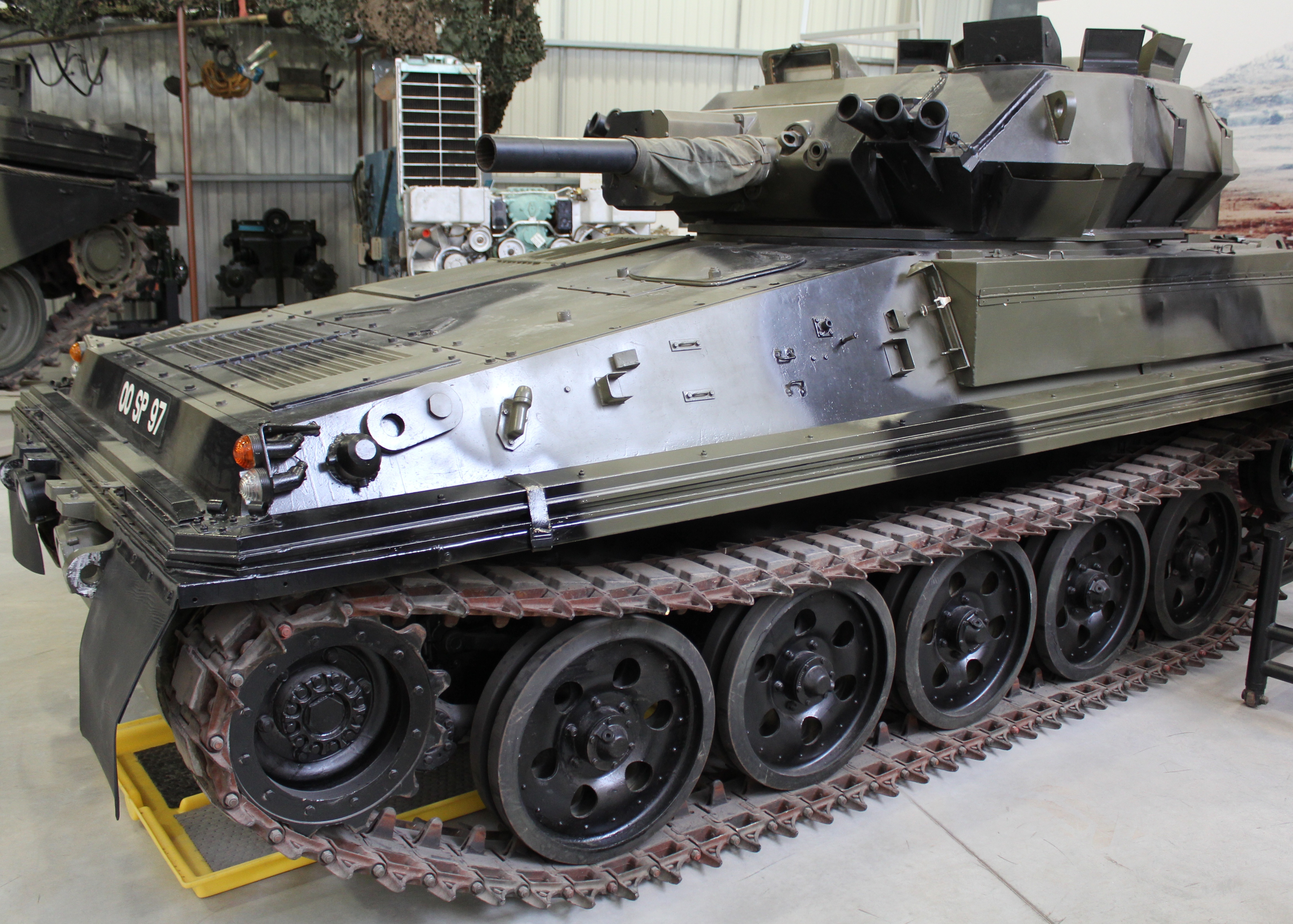
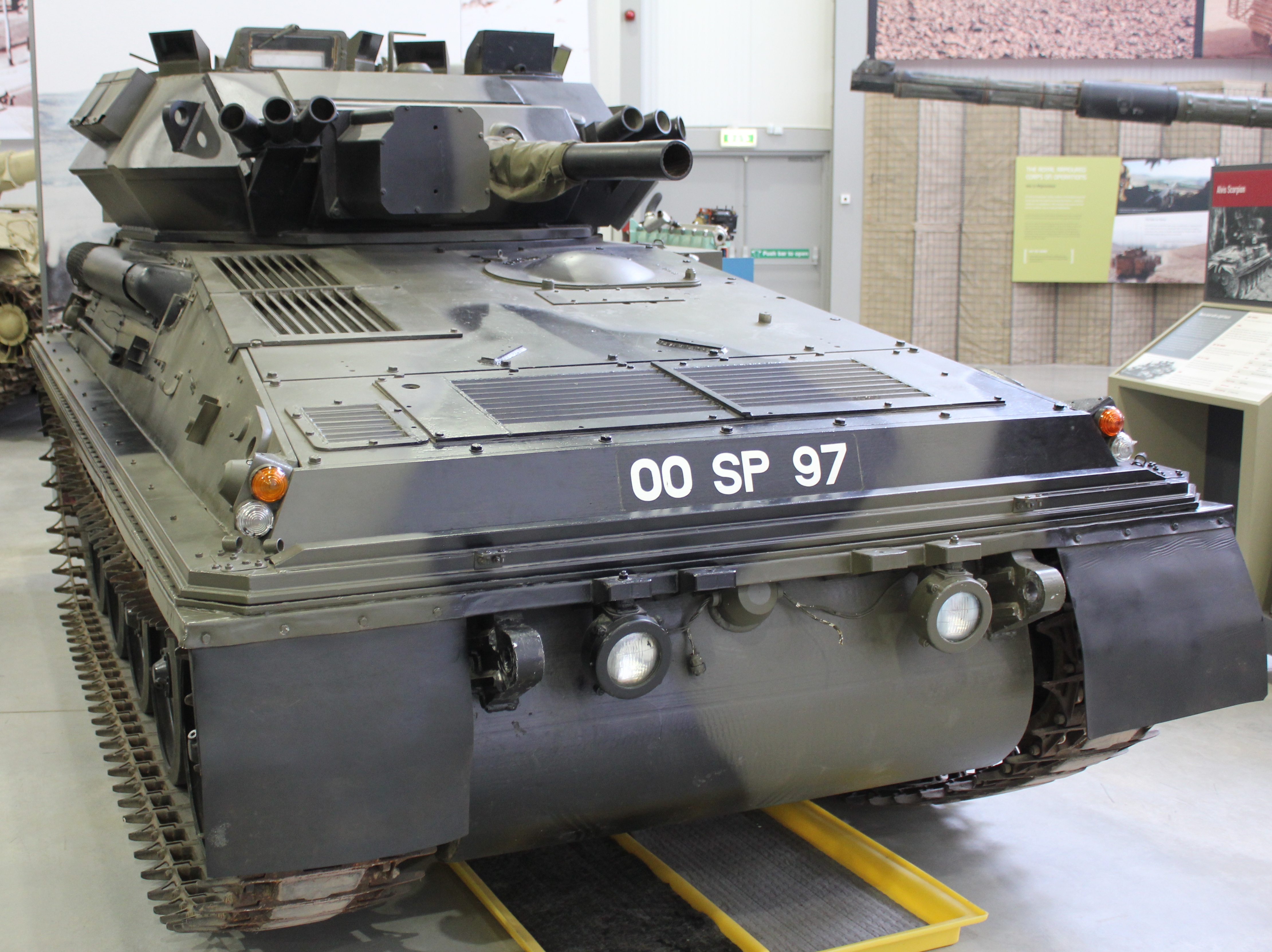
Scorpion reconnaissance tank, was the fastest tank in the world when it was introduced in 1973..

.
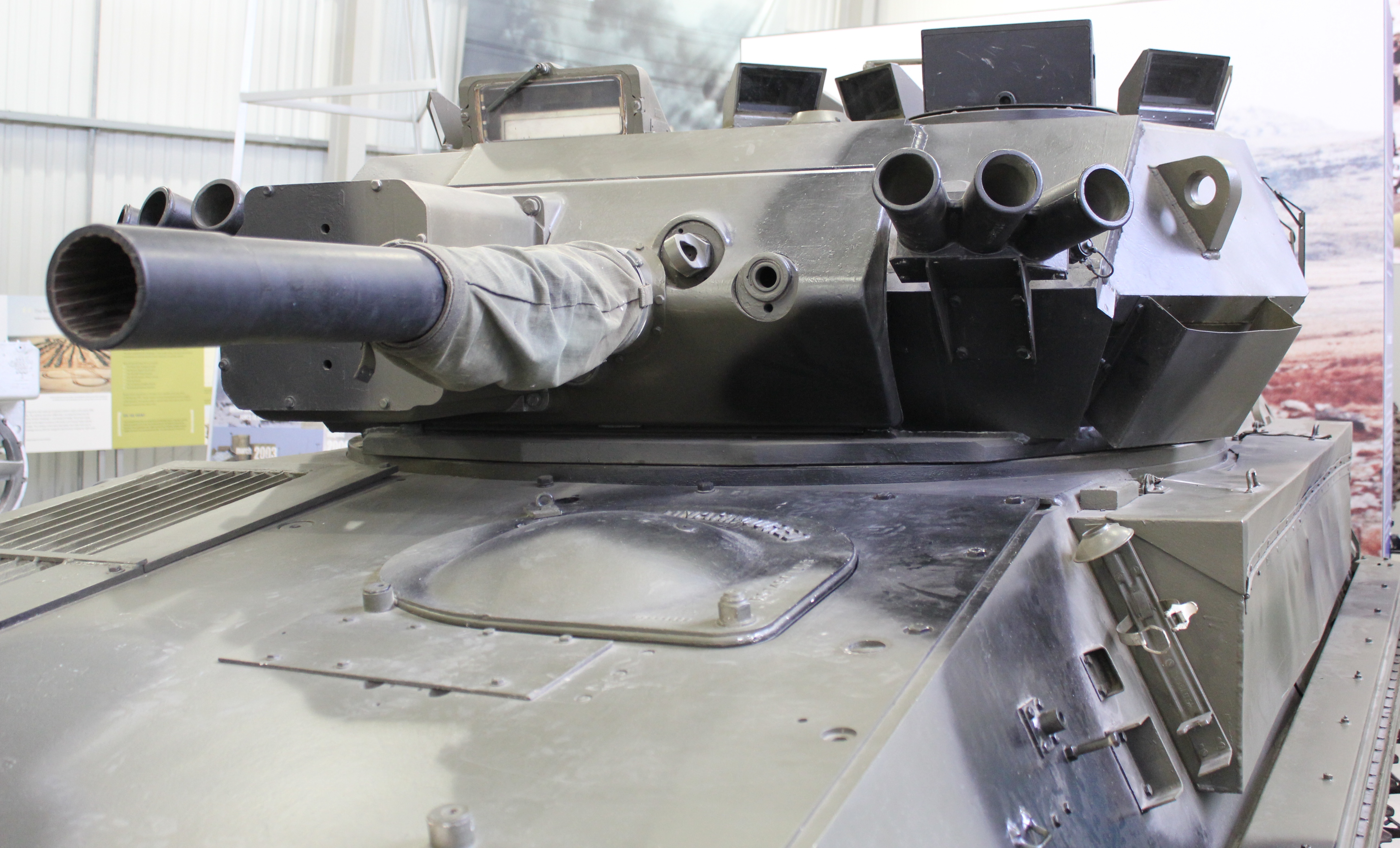
Its light-weight aluminium armour meant it was able to travel over very soft ground and could be carried by a Chinook helicopter.
.

It is armed with a 76mm main gun.

.

A top speed of 50 mph..

.
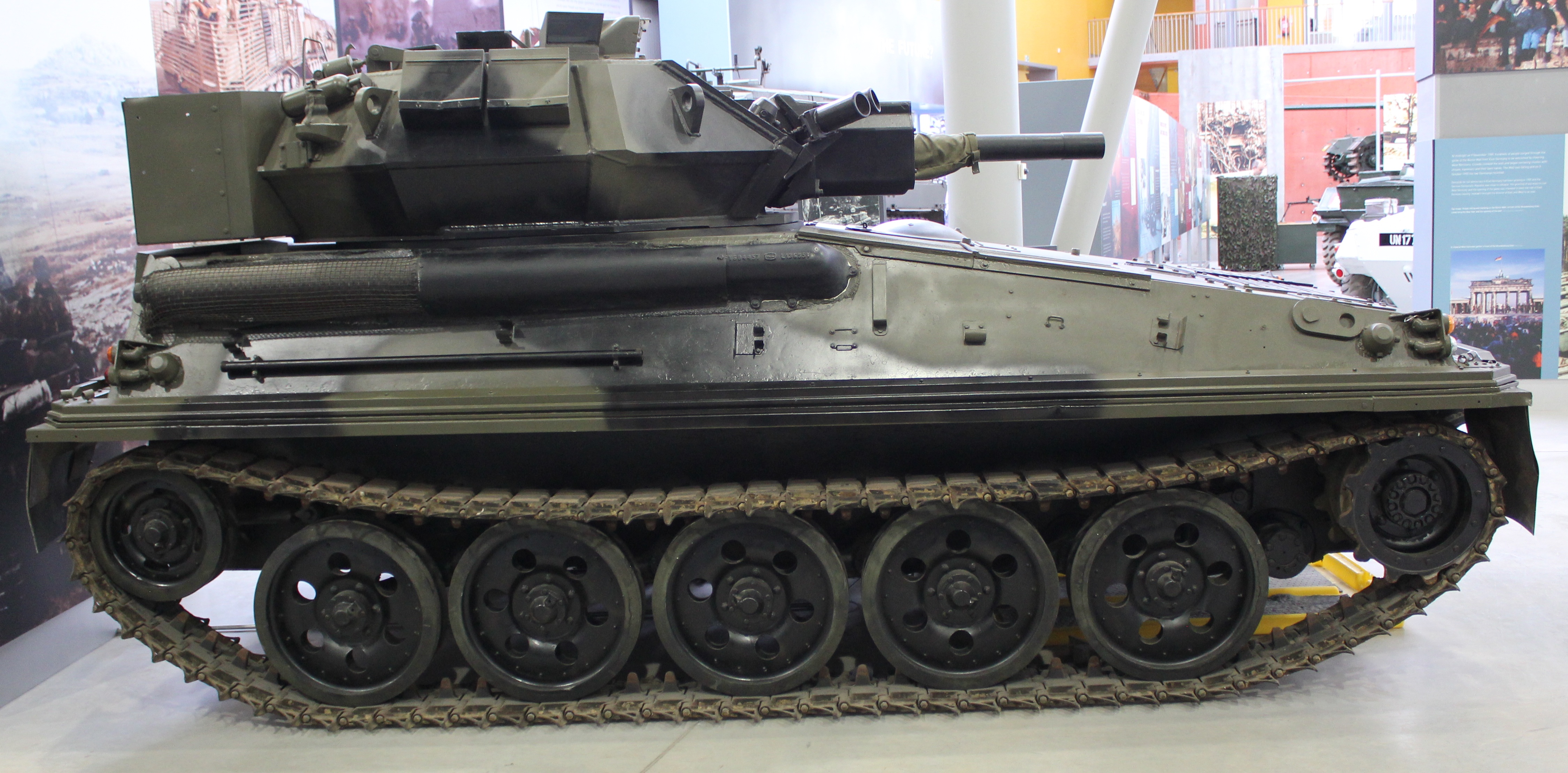
Twin wheels in six bogies.

.
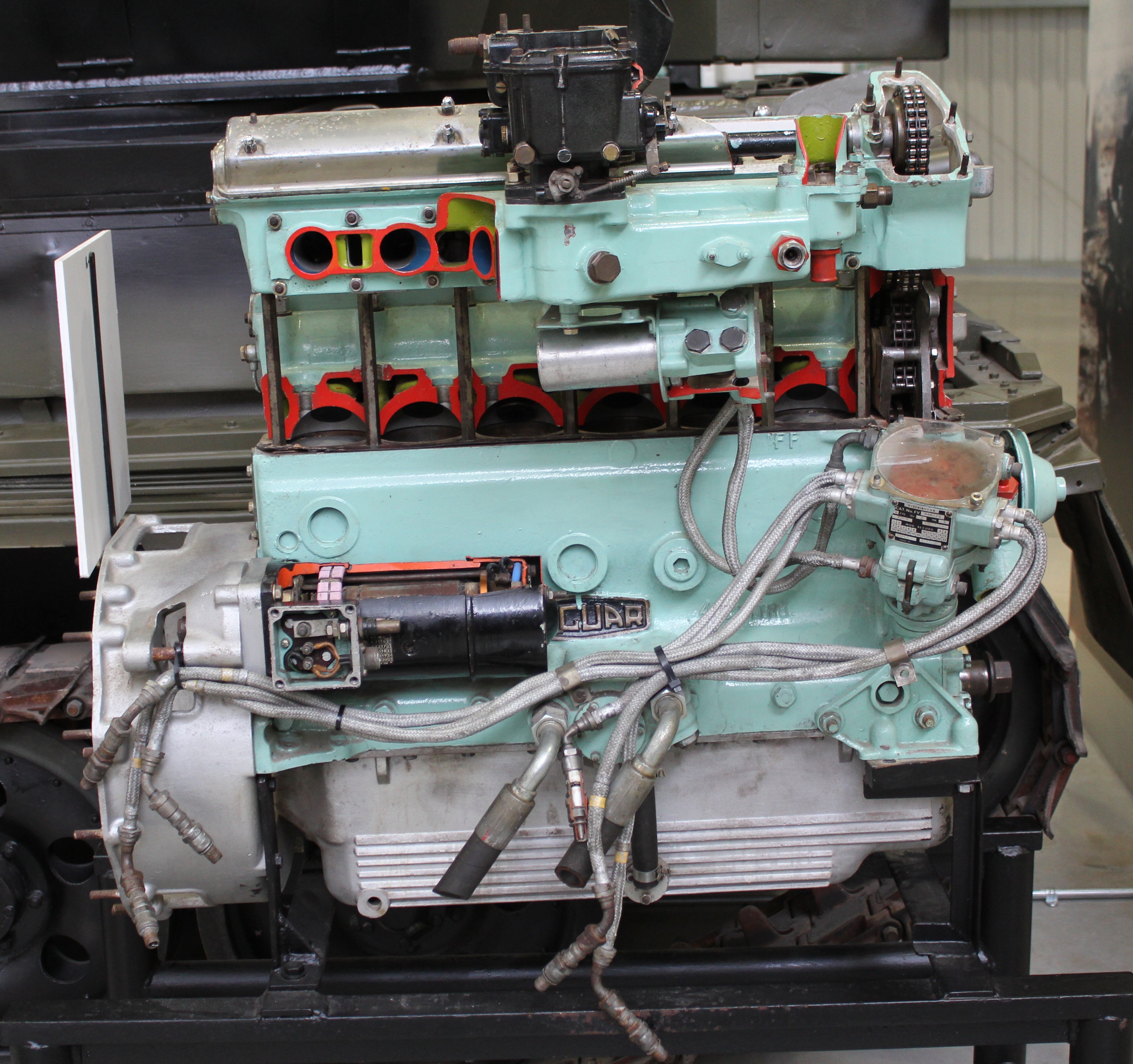
The 4.2 litre Jaguar engine  

.
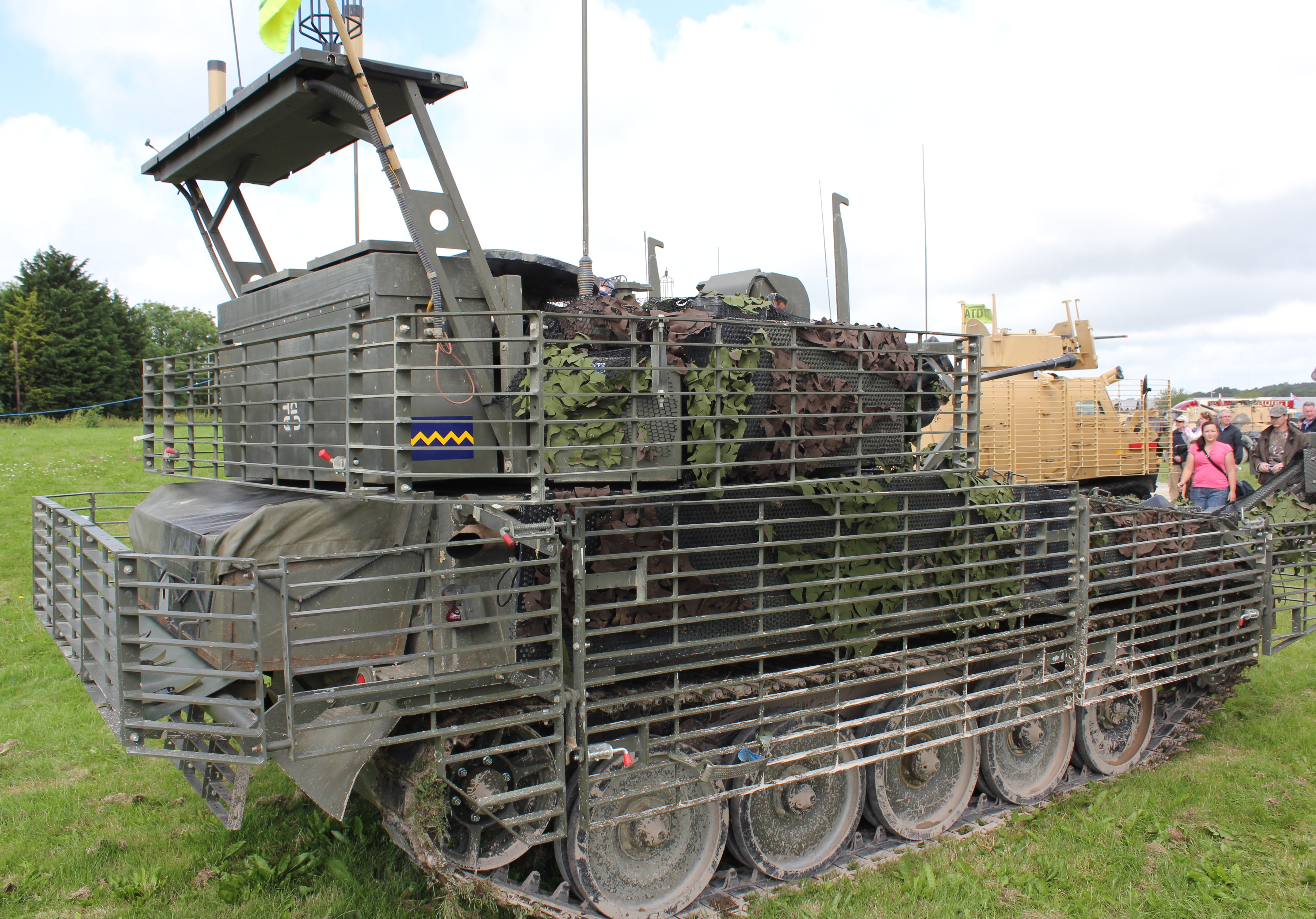
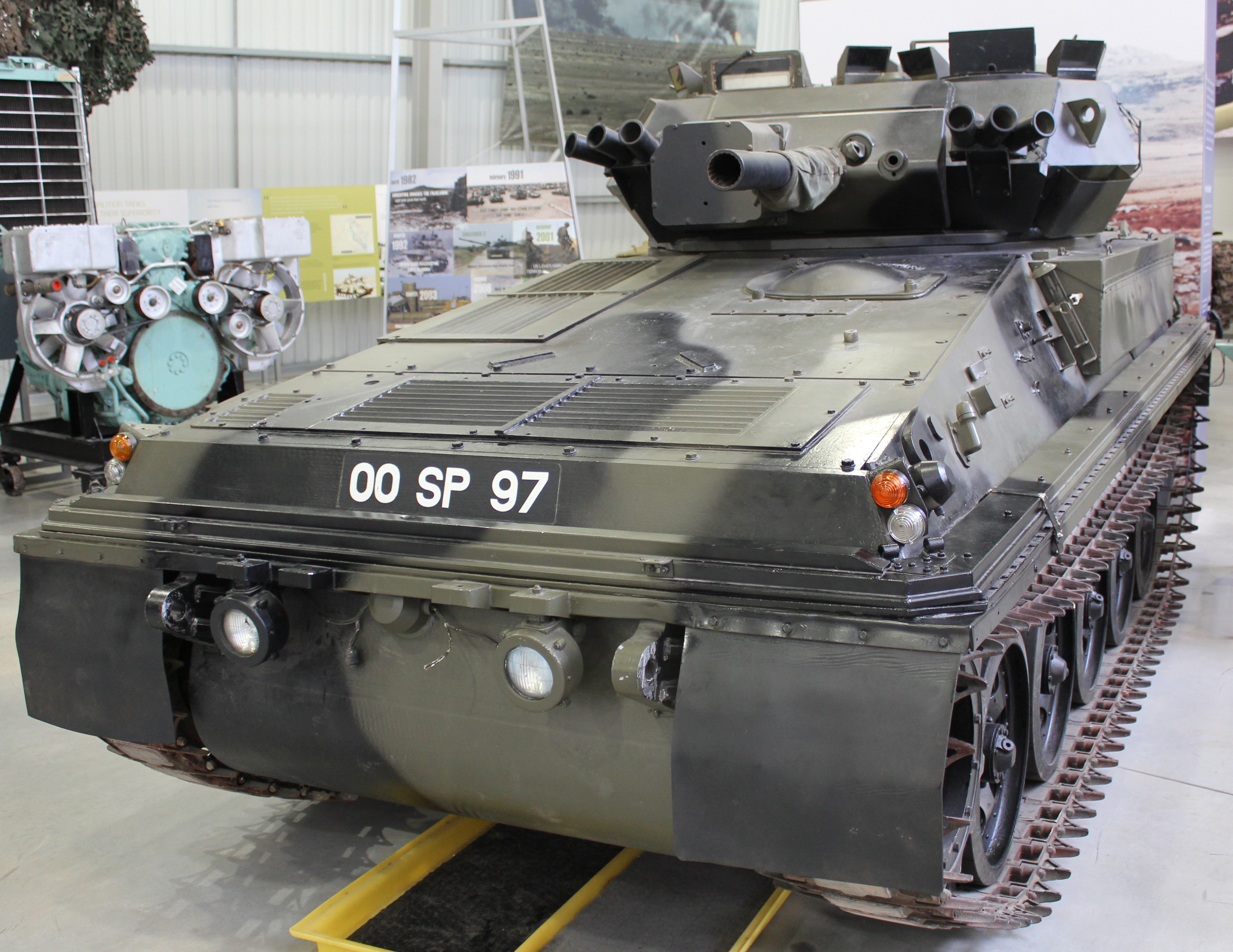
FV-107, Scimitar. Another member of the CVR(T) series. This is the later model currently used by the Army. On this version, the latest protection has been added. Ceramic ballistic armour and bar armour around the hull to increase protection against RPG attacks.

.
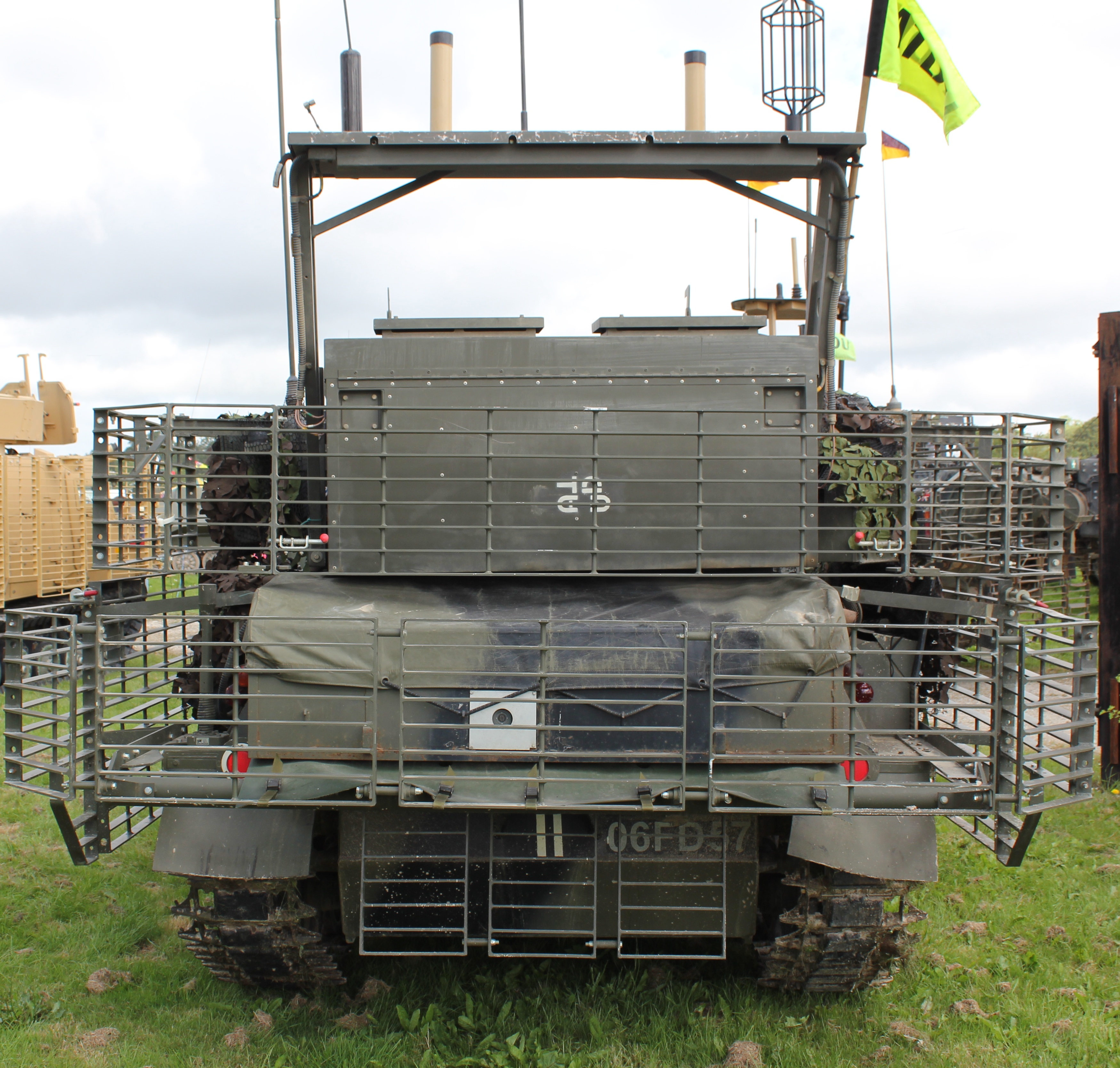
It also has mine blast protection and electronic countermeasures IDED, mounted at the top of the turret and to the front of the turret. Under the CVR(T) Life Extension Program (LEP), the Jaguar engine was changed to a Cummins BTA 5.9 diesel engine.

.
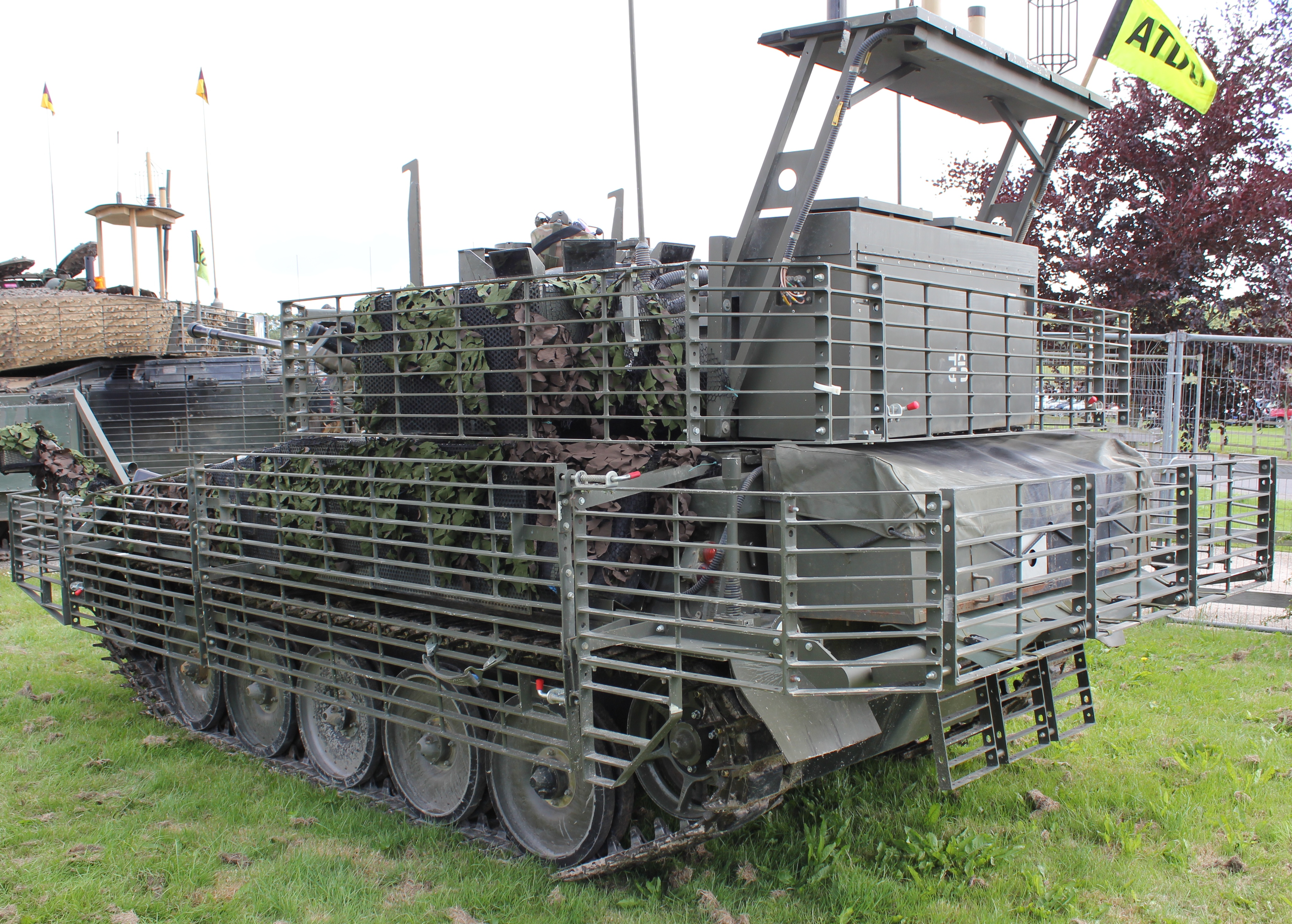
An on-road speed of nearly 60mph.

.
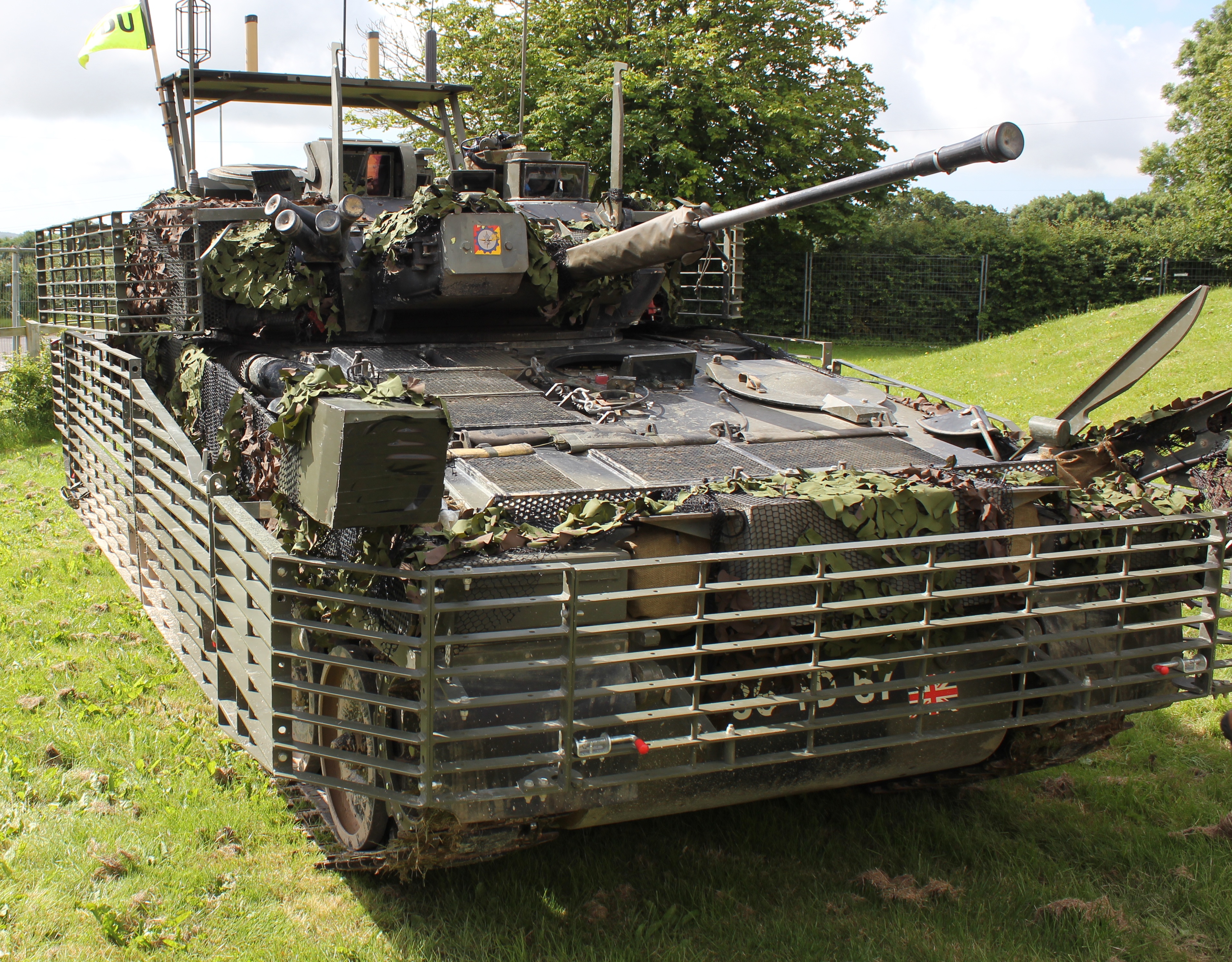
The Scimitar is armed with a 30mm L21 Rarden cannon, firing up to 90 rounds per minute.

.
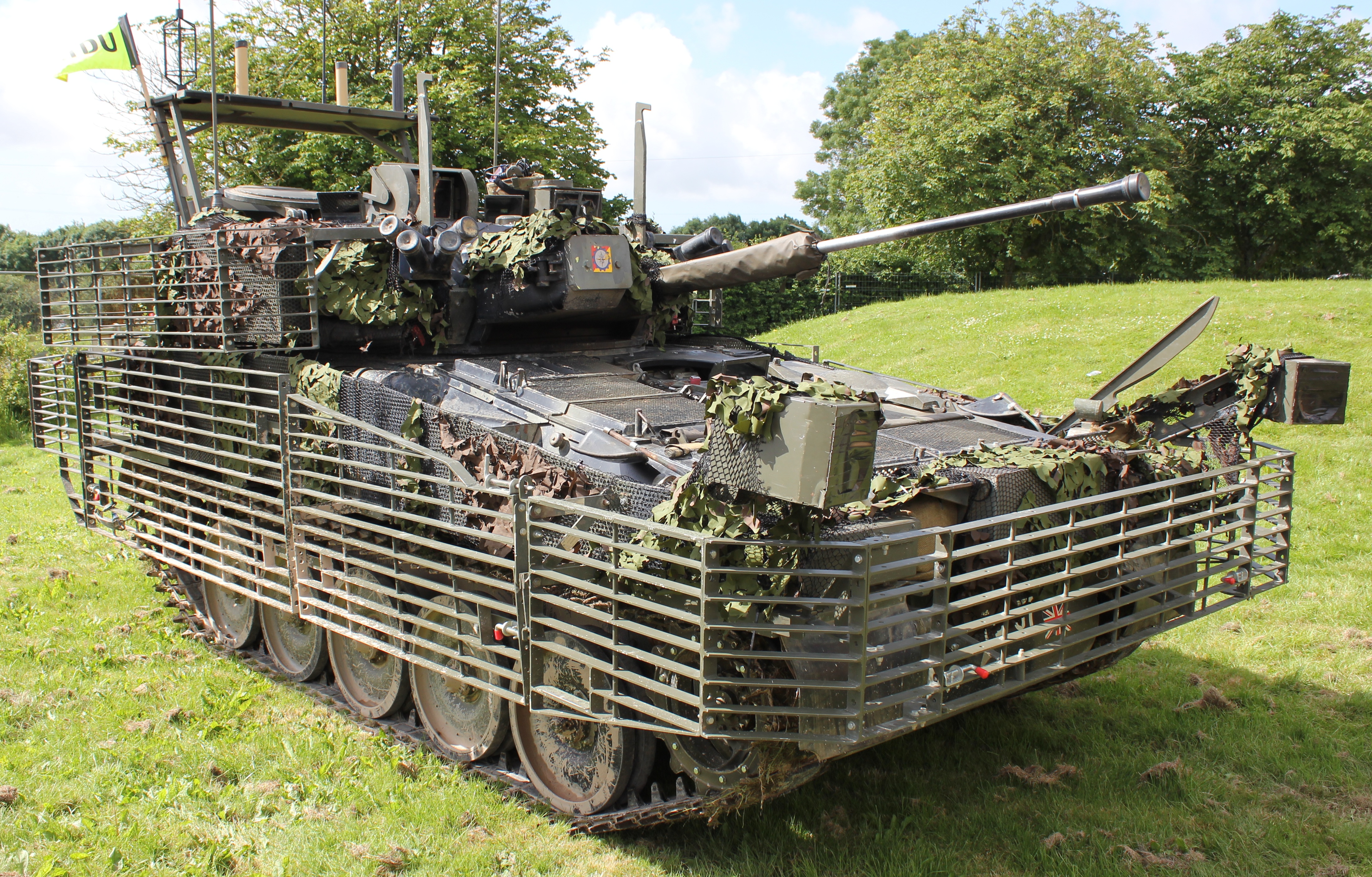
It can fire HEI, High Explosive Incendiary, HE, High Explosive, AP, Armoured Piercing, and APDS-T, Armour Piercing Discarding Sabot-Tracer.

.

My intention is not to portray a particular message, but just share some of my research and experiences with you.  This is the first of my new ‘Cold War’ series, supporting the writing of my new ‘Cold War’ series of novels, covering the hypothetical invasion of West Germany by the Warsaw Pact in the 80’s.

.
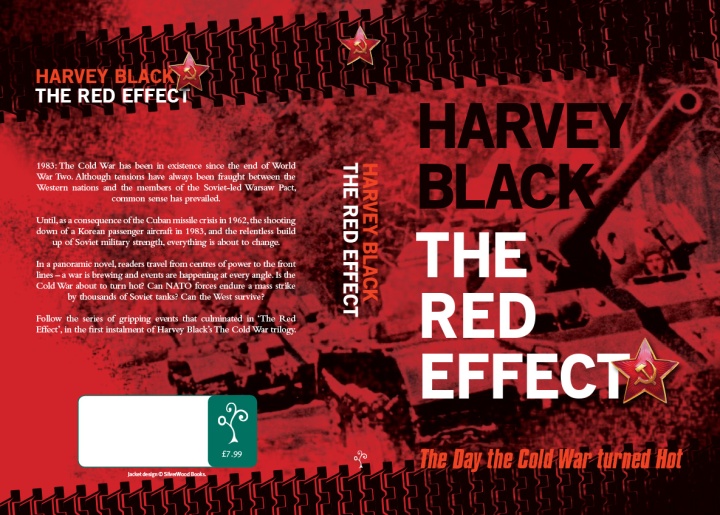
HarveyBlack-Red Effect150313

The equipment Photographs and Blog are copyrighted to Harvey Black
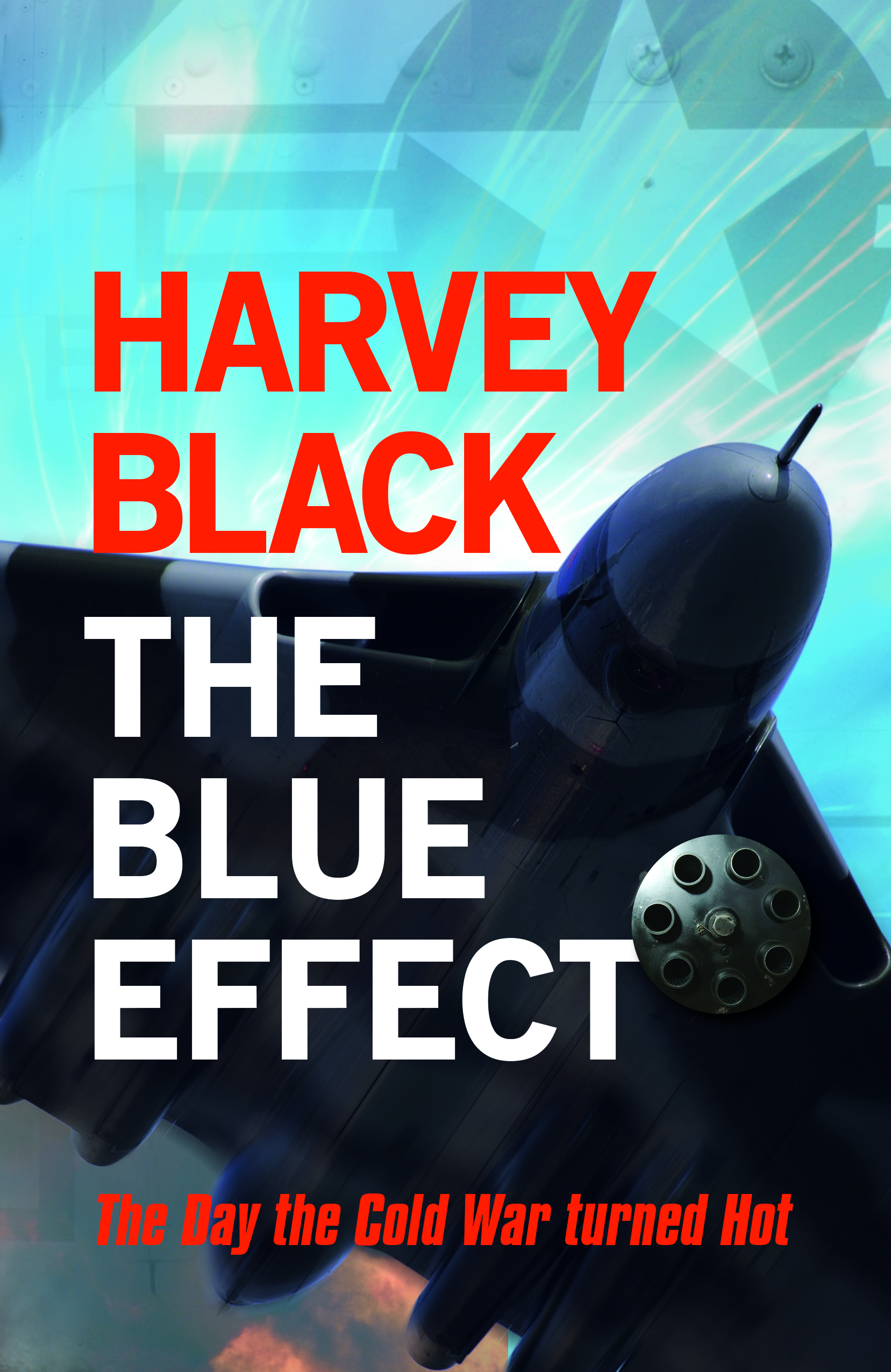
The Blue Effect. The latest Review.

.

Your Weekend Read: The Blue Effect
Written by Mad Duo on 25 April, 2014.

.

Reforger-tanks

Reforger – tanks

.
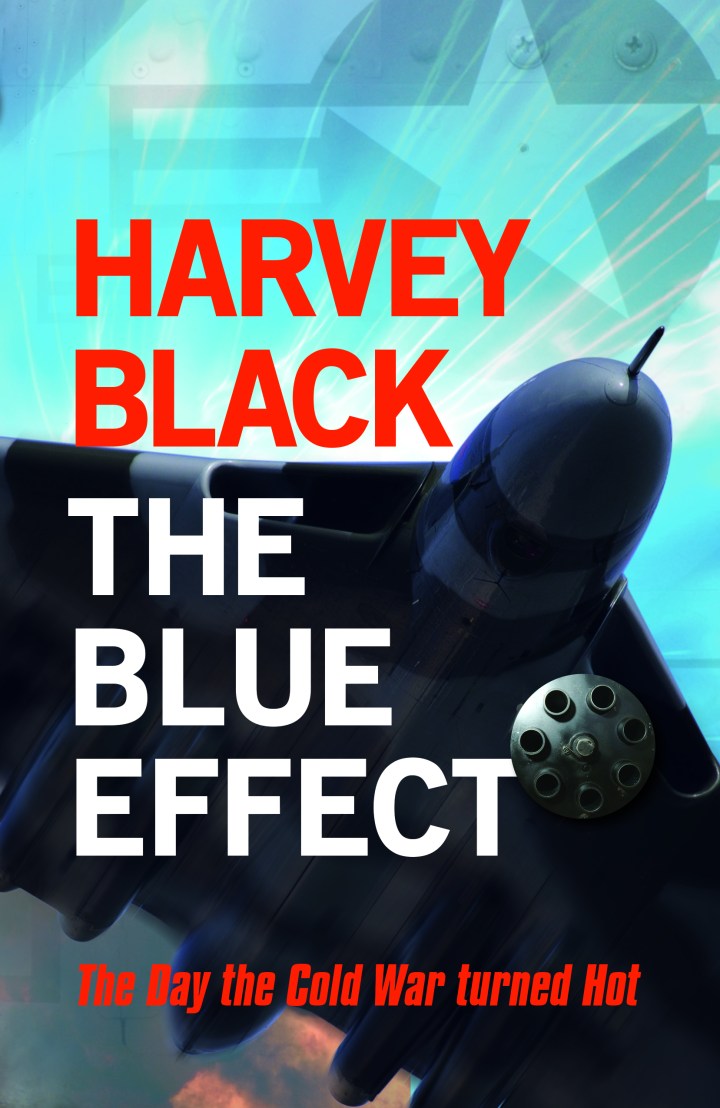
If you are one of those who’ve read the first and second installments of Harvey Blacks’s Cold War Series, be advised: the wait is over. The third and final installment is out. The Blue Effect is now available on Kindle and having started reading it I can say it was worth the wait. In this final installment we will find out if NATO’s plan to trade space for time to execute Reforger (allowing reinforcement of the Europe) will work.
Warning: spoilers
We find NATO forces struggling to consolidate their defenses after Soviet chemical weapon strikes. To compound this, the Soviets have executed a large scale airborne operation in the NATO rear area. The Warsaw Pact is now attempting an encirclement of British Army of the Rhine (BOAR) forces. As the novel begins, the Soviet 3rd Shock Army is pushing beyond the River Leine. This is forcing decimated British battle groups back into the Soviet Airborne task force attacking their flanks and rear.

.

The Blue Effect_high resolution-2

.
Harvey Black – the Blue Effect

This passage gives you an idea about NATO’s precarious situation:
“With the River Leine breached, the Soviet air-to-ground strikes increased in intensity, and armour and infantry flooded across. Elements of the battered 10th Guards Tank Division had created a bridgehead before releasing elements to strike south increasing the pressure on the British 22nd Armoured Brigade who were desperately attempting to hold back the deluge that was building up to their front. In the meantime, the three battalions of the 108th Air Assault Regiment continued to expand their own bridgehead, creating space and passage through which 12th Guards Tank Division of 3 Shock Army could transit, quickly overpowering the NATO defence, getting behind them, and cutting them off from their higher command. Once complete, they would push west, at speed, giving the British 1st Armoured Division little time to reform their defence lines. The intermediate objective of the 12th was to link up with 247th Caucasian Cossacks Air Assault Regiment near the Mittellandkanal. The 247th was commanded by Colonel Vydina who had conducted a descent, a parachute assault, further west, securing the western end of the gap. Together, the 12th and the 247th would ensure a crossing of the River Weser before 1st British Corps could complete their Defensive preparations.

.
2000 8 JULY 1984. COMBAT TEAM DELTA. ROYAL HUSSARS.
DITTERKE, WEST GERMANY.
THE BLUE EFFECT -3 DAYS
Corporal Mason helped drag Trooper Mann from the damaged Challenger Tank. The crewman had a minor wound to his head from a ricochet, and a more serious wound; a smashed shoulder. The other two men were safe, ensconced with an infantry section. A mere 500 metres away, the BMD, responsible for the tank’s demise after hitting it with a Sagger missile, was still smoldering, an airborne soldier broken and battered lay close to the rear hatch, the rest of the soldiers blackened and unrecognizable in the troop compartment to the rear. After a HESH round had demolished the airborne infantry vehicle and crew, those who had been able to escape the inferno inside, had been immediately cut down by a pintle-mounted Gympy on top of a British 432. The infantry were from 3rd Battalion, the Queen’s Regiment, having got separated from their parent unit, and seeking support and protection from their much larger cousins. A second BMD was burning furiously a further 100 metres east. Clouds of thick, black, oily smoke funneled upwards, an advert to anyone watching that there had been a clash between opposing forces.”

.

YWR | The Blue Effect

.
If you enjoyed the first two novels this one is a must buy. It launches the reader back into the melee of a Cold War gone hot. I have found my productivity has dropped to zero since purchasing this novel [Note: much to the Mad Duo’s annoyance.] as I’ve again been sucked into Black’s bleak alternate history universe. For those of you as depressed as I was by this story arch coming to a finale, do not fret. Harvey is beginning work on a new even more apocalyptic series.

.
Read my review of the first two books in the series here: http://www.breachbangclear.com/your-weekend-read-harvey-black/

Have a good weekend and enjoy Your Weekend Read.
Groz
images_mad_duo_Over_Duo

.

9781781322215-PerfectCOVER.indd

.

Now available on Kindle.

.

.

.

The Blue Effect_high resolution-2

.

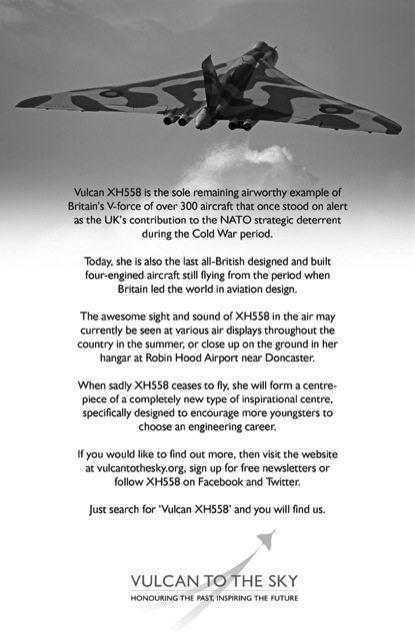
More about the Avro Vulcan in future Posts and of the great work being done to keep this particular aircraft flying.

And a big thank you XH558 team for allowing me to use the above photograph 

Cover image (C) of Andrew Brown and the Vulcan to the Sky Trust – image of XH558

Now available.  I would like to take this opportunity to thank everyone for their support in reading the first two novels in the series, it is really appreciated. HB

.

9781781322215-PerfectCOVER.indd

.

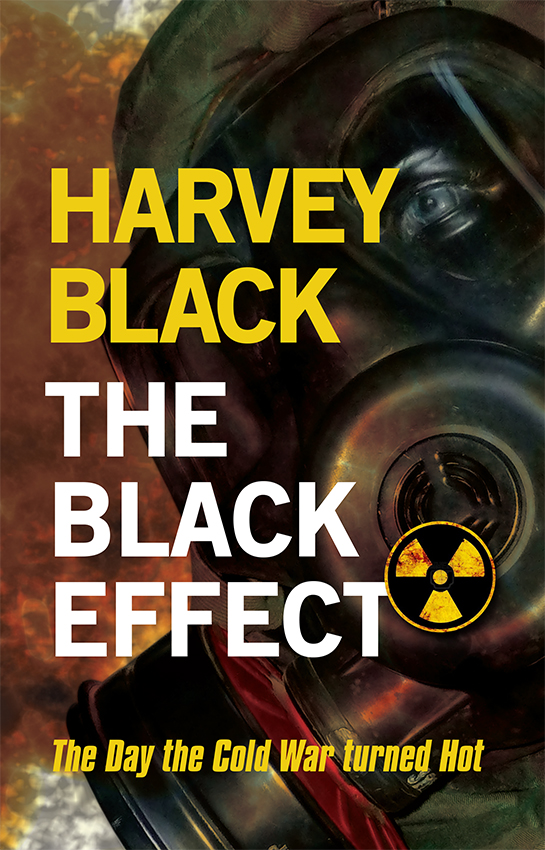
‘The Black Effect’ – Available on Kindle.

.

TBE revised - FOR SCREEN-1

The Black Effect

An economy on the verge of collapse, demands from their allies for funding to continue the expansion of communism, and a conventional Army, Navy and Air Force costing the country 20% of its GDP… The Soviet Union is in trouble. Where should they turn for a solution?

Their answer: the capitalist West. On the 4th July 1984, the Soviet Union and the Warsaw Pact launched a massive preemptive conventional strike against the West, sending the NATO forces reeling.

Follow Jacko and Bradley and their allies as they fight off the Soviet Union. Can the NATO forces recover and hold their ground? Will the Soviet Union succeed? Or will it end in an outright defeat? Follow the series of gripping events in The Black Effect, the second installment in Harvey Black’s Cold War trilogy.

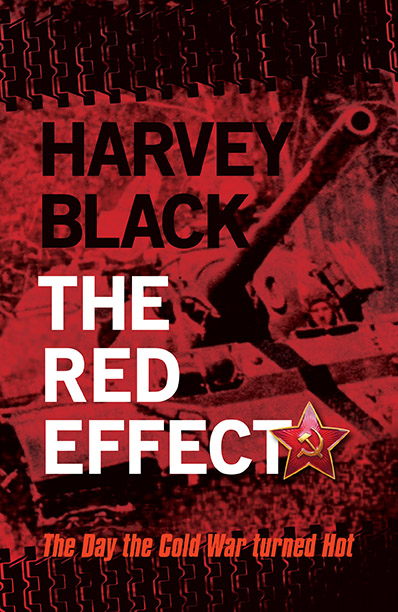
The first novel in my ‘Cold War’ trilogy, The Red Effect, published by SilverWood Books, is now available. Thoroughly enjoyed writing it, as i do with all my novels. There will be three books in total, covering the hypothetical invasion of West Germany, the Federal Republic of Germany, by the Warsaw Pact in the mid 1980’s. Book 1, ‘The Red Effect’, encompasses part of the intelligence build up leading to the initial Warsaw Pact strike against the NATO forces lined up against them. The purpose of the next few posts is to give the reader some additional background information to enhance their reading experience.

.

RedEffect72dpi-4

.

‘The Red Effect’ by Harvey Black – Available now. The Cold War that became a Hot War.

Site and content is copyrighted to Harvey Black.


The Blue Effect. The day the Cold War turned Hot. Part 2.

.

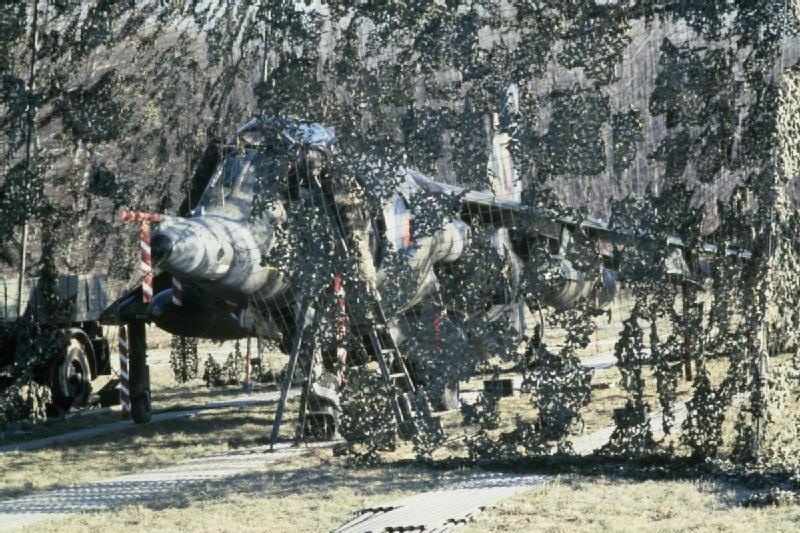
Should the Cold War have turned Hot, it was expected that NATO would lose a number of airfields to attacks by missiles, ground to air strikes and ground assaults from Spetsnaz forces. To counter this, a number of Autobahns, German Motorways, were flagged to be used as potential runways.

.

Harvey Black (5)
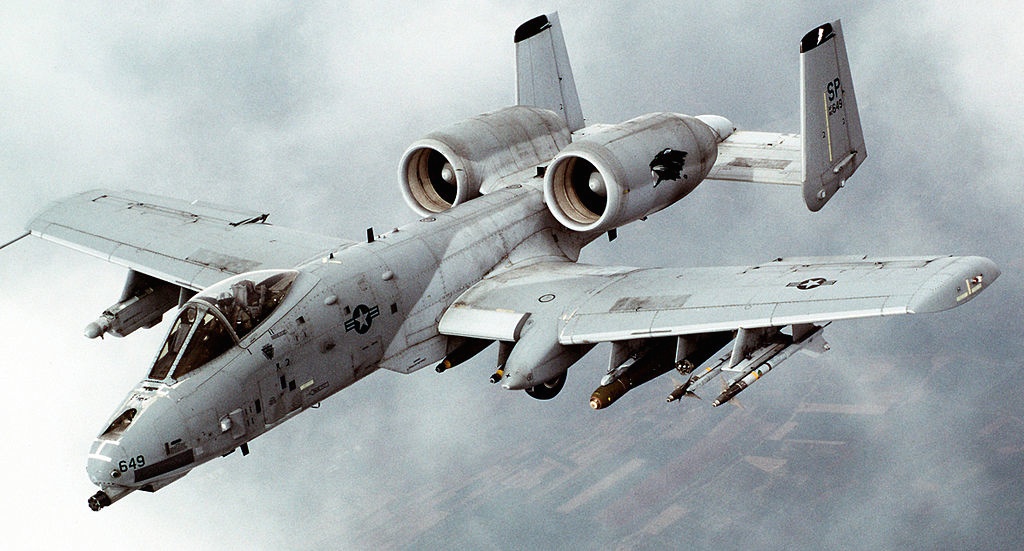
The A-10 Thunderbolt, affectionatly known as the ‘Warthog’. The Warthog was a fixed-wing, close air support, ground attack aircraft. Designed around the GAU-8 Avenger, 30mm rotary cannon, the airframe protected by titanium armour. The aircraft was designed to fly with one engine, one tail, one elevator and one half of a wing missing.  it was a foe to be reckoned with.

.

Harvey Black (6)

The A-10 was envisioned to fly from forward airbases and semi-prepared runways.

.

Harvey Black (7)
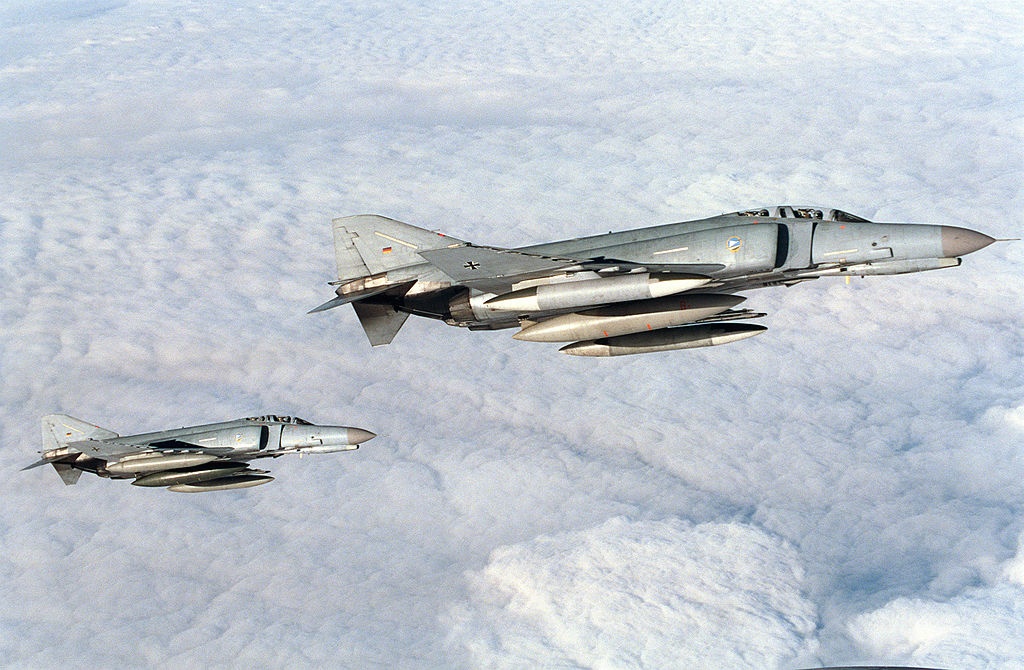
Phantoms (wood burners) would also play an active role in the defence of NATO during any attack by the Warsaw Pact.

.

Harvey Black (8)
They too had been successfuly tested taking off and landing on German Motorways.

.

Harvey Black (9)

Even lumbering giants such as the Hercules transport aircraft could fly from selected sections of Motorway.

.

Harvey Black (10)
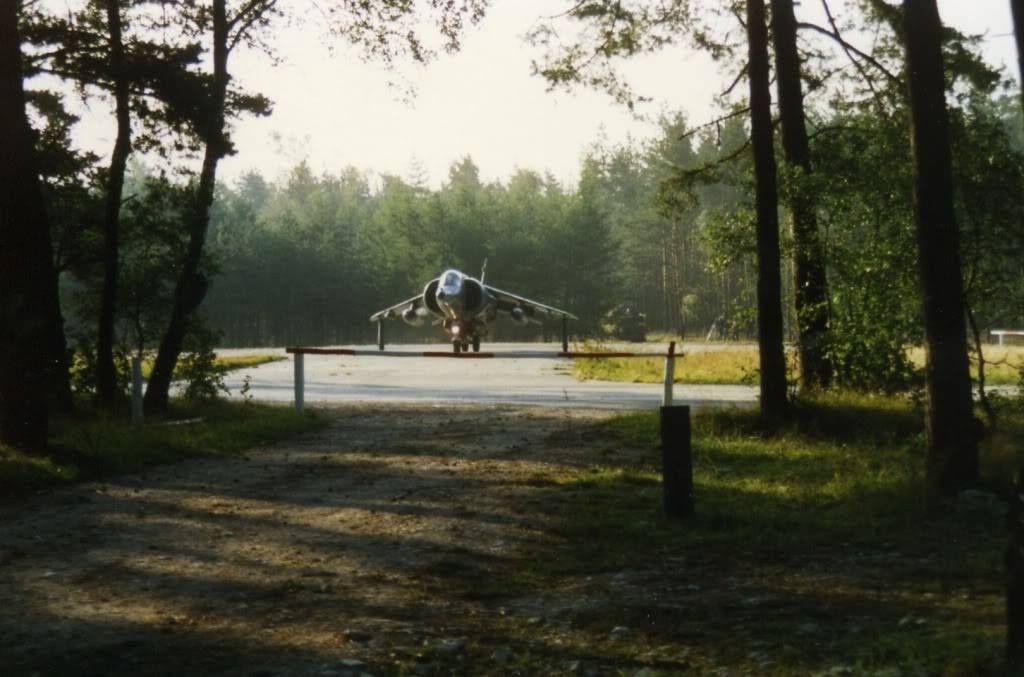
One aircraft was even more versatile.

.

Harvey Black (11)
Our very own Harrier Jump-jet.

.

Harvey Black (13)

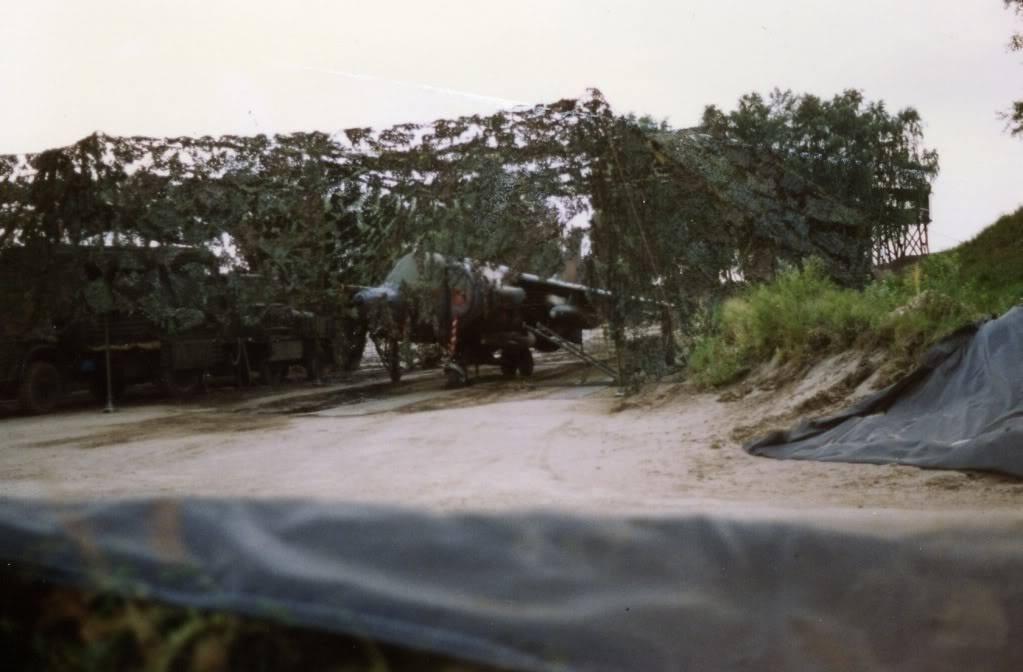
The Harrier could be maintained in the field.

.

Harvey Black (14)

The Harrier’s VTOL (Vertical Take Off and Landing) capability allowed it to be deployed from very small prepared clearings or helipads.

.

Harvey Black (12)

It was believed that, in a high-intensity conflict, air bases would be extremely vulnerable. The capability to scatter Harrier squadrons out to small ‘alert pads’ would allow the sir force to continue close support operations.

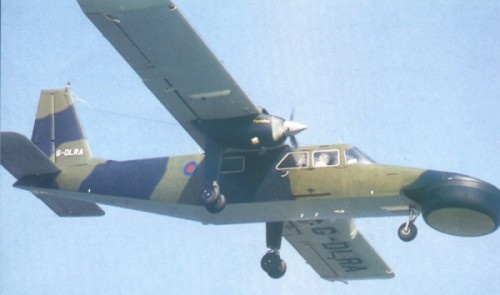
One other aircraft I have included, is the MODs BN-2T Islander, which was converted to carry a multi-mode all weather radar linked, to two workstations inside the cabin

.

Harvey Black (15)
Nicknamed the ‘Flying Platypus’ due to its flattened, circular nose.

.

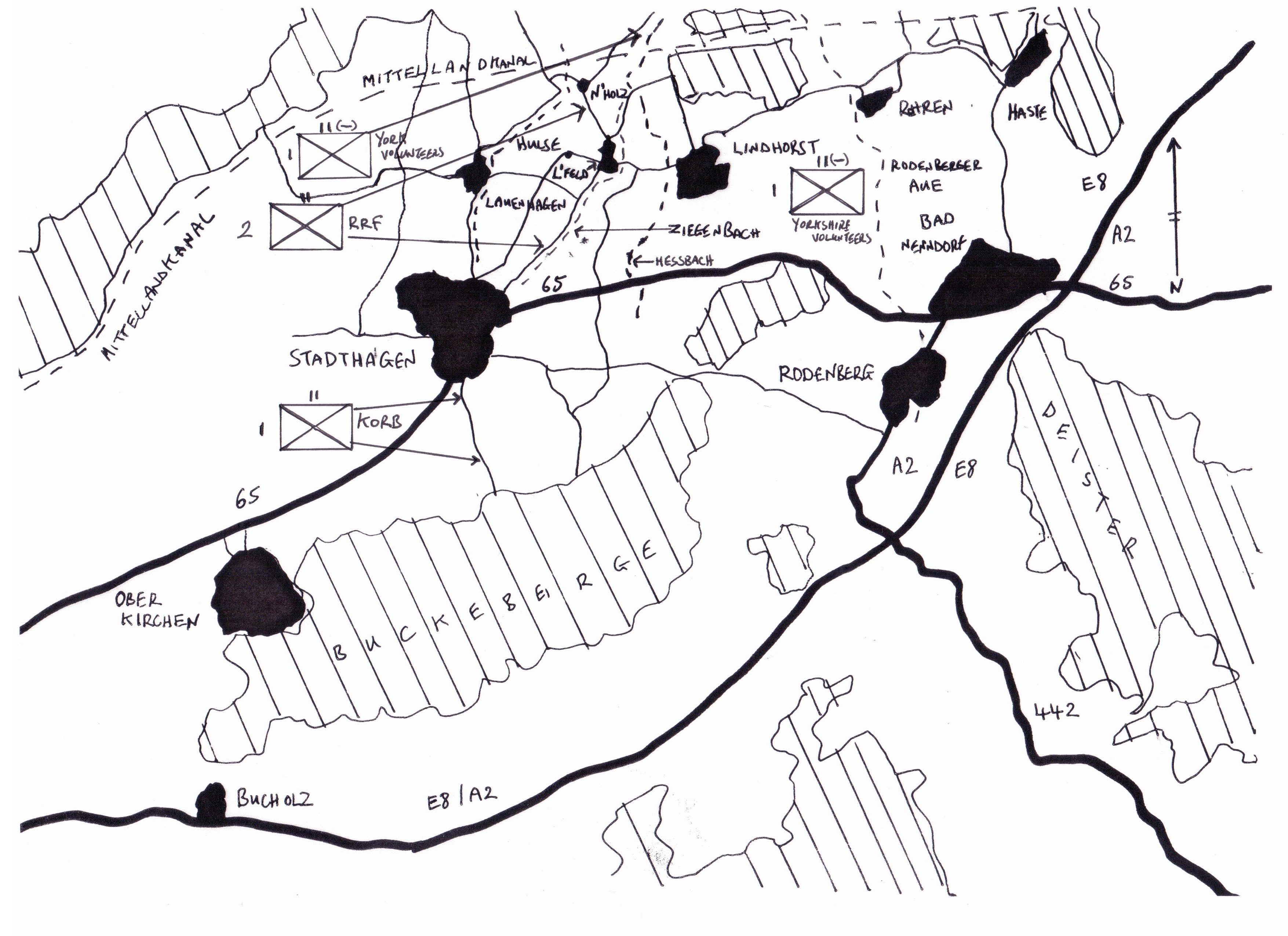
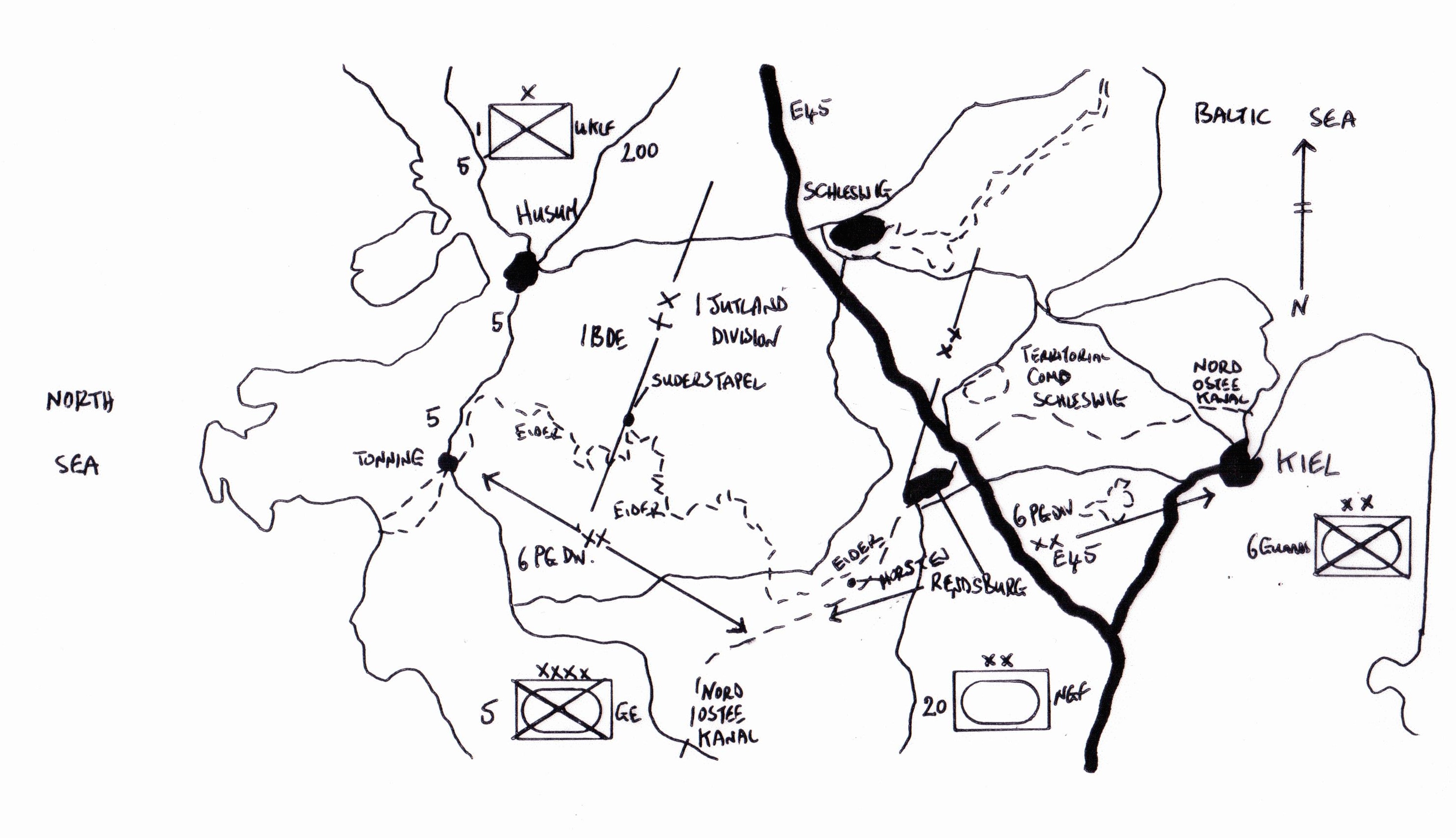
To finish off this post, I have attached the maps that are included in the novel, The Blue Effect. These can be printed and used as guides whilst reading. The maps can act as SPOILERS, so only refer to them in conjunction with the relevant sections of the book.

.

Harvey Black (16)

The ‘Layer Cake’ deployment of NORTHAG and CENTAG Forces

.

Harvey Black (17)

Stadthagen – 24th Brigade, 1 British Corps

.

Harvey Black (18)

Schleswig Holstein – Landjut Forces

.

Harvey Black (19)

Gomfritz – 3rd Brigade/3rd US Armoured Division

.

Harvey Black (20)

River Weser – 1 British Corps Counter Attack

.

.

9781781322215-PerfectCOVER.indd

.

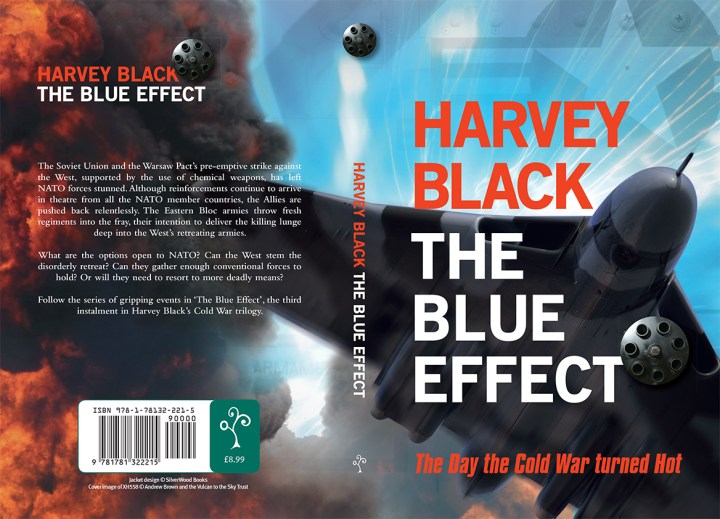
The Soviet Union and the Warsaw Pact’s pre-emptive strike against the West, supported by the use of chemical weapons, has left NATO forces stunned. Although reinforcements continue to arrive in theatre from all the NATO member countries, the Allies are pushed back relentlessly. The Eastern Bloc armies throw fresh regiments into the fray, their intention to deliver the killing lunge deep into the West’s retreating armies.

.

What are the options open to NATO? Can the West stem the disorderly retreat? Can they gather enough conventional forces to hold? Or will they need to resort to more deadly means?

.
Follow the series of gripping events in ‘The Blue Effect’, the third instalment in Harvey Black’s Cold War trilogy.

.

Vulcan

.

The Blue Effect_high resolution-2

.

Cover image (C) of Andrew Brown and the Vulcan to the Sky Trust – image of XH558

I would like to take this opportunity to thank everyone for their support in reading the first two novels in the series, it is really appreciated. For the next Post, I will include the maps that can be seen at the beginning of The Blue Effect. This enable readers to print them as reference. HB

.

9781781322215-PerfectCOVER.indd

.

‘The Black Effect’ – Available on Kindle.

.

TBE revised - FOR SCREEN-1

The Black Effect

An economy on the verge of collapse, demands from their allies for funding to continue the expansion of communism, and a conventional Army, Navy and Air Force costing the country 20% of its GDP… The Soviet Union is in trouble. Where should they turn for a solution?

Their answer: the capitalist West. On the 4th July 1984, the Soviet Union and the Warsaw Pact launched a massive preemptive conventional strike against the West, sending the NATO forces reeling.

Follow Jacko and Bradley and their allies as they fight off the Soviet Union. Can the NATO forces recover and hold their ground? Will the Soviet Union succeed? Or will it end in an outright defeat? Follow the series of gripping events in The Black Effect, the second installment in Harvey Black’s Cold War trilogy.

The first novel in my ‘Cold War’ trilogy, The Red Effect, published by SilverWood Books, is now available. Thoroughly enjoyed writing it, as i do with all my novels. There will be three books in total, covering the hypothetical invasion of West Germany, the Federal Republic of Germany, by the Warsaw Pact in the mid 1980’s. Book 1, ‘The Red Effect’, encompasses part of the intelligence build up leading to the initial Warsaw Pact strike against the NATO forces lined up against them. The purpose of the next few posts is to give the reader some additional background information to enhance their reading experience.

.

RedEffect72dpi-4

.

‘The Red Effect’ by Harvey Black – Available now. The Cold War that became a Hot War.

Site and content is copyrighted to Harvey Black.


The Blue Effect. The day the Cold War turned Hot. Part 1.

.

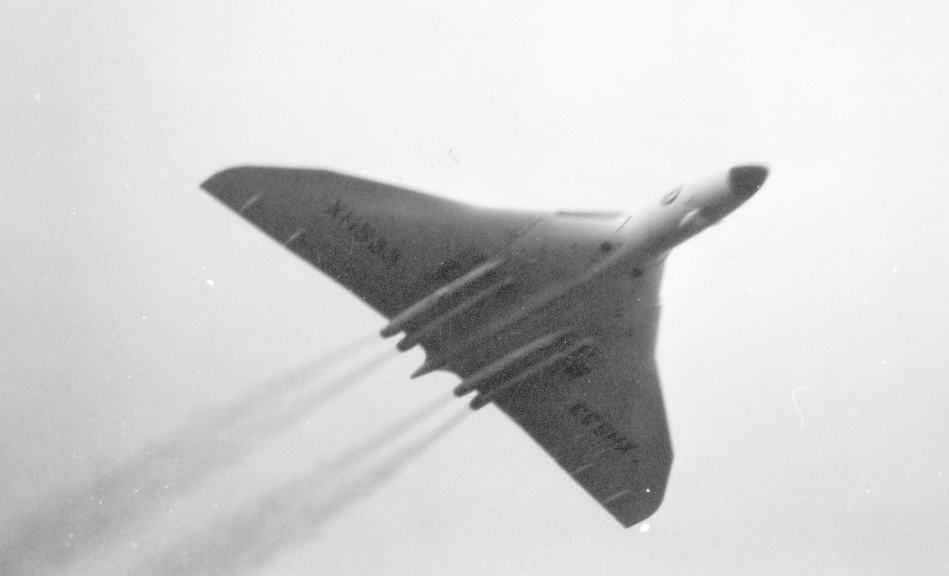
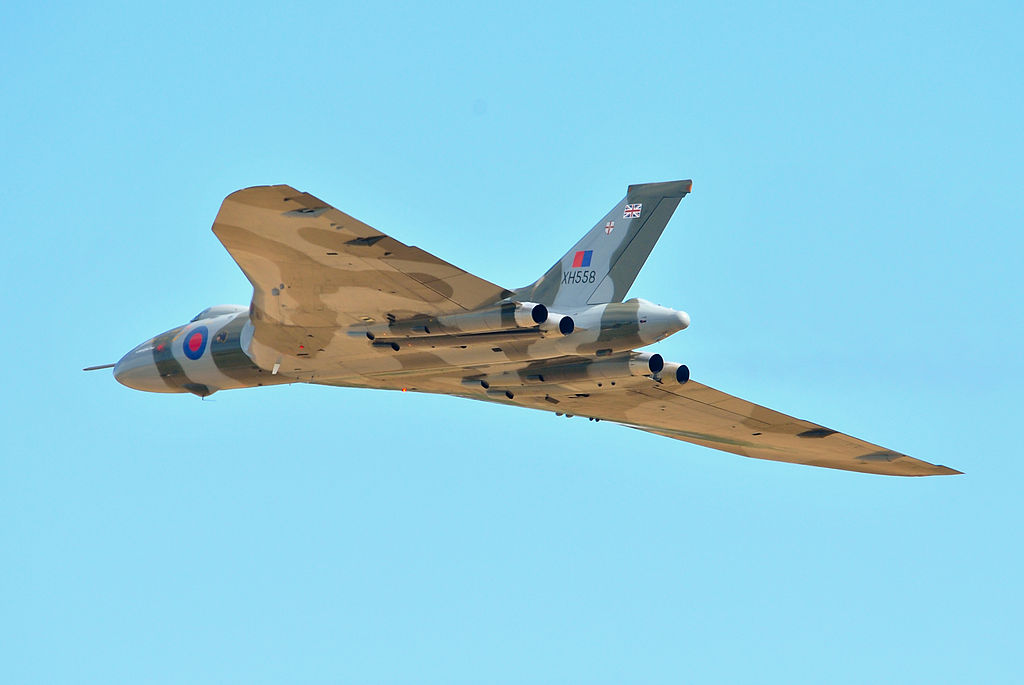
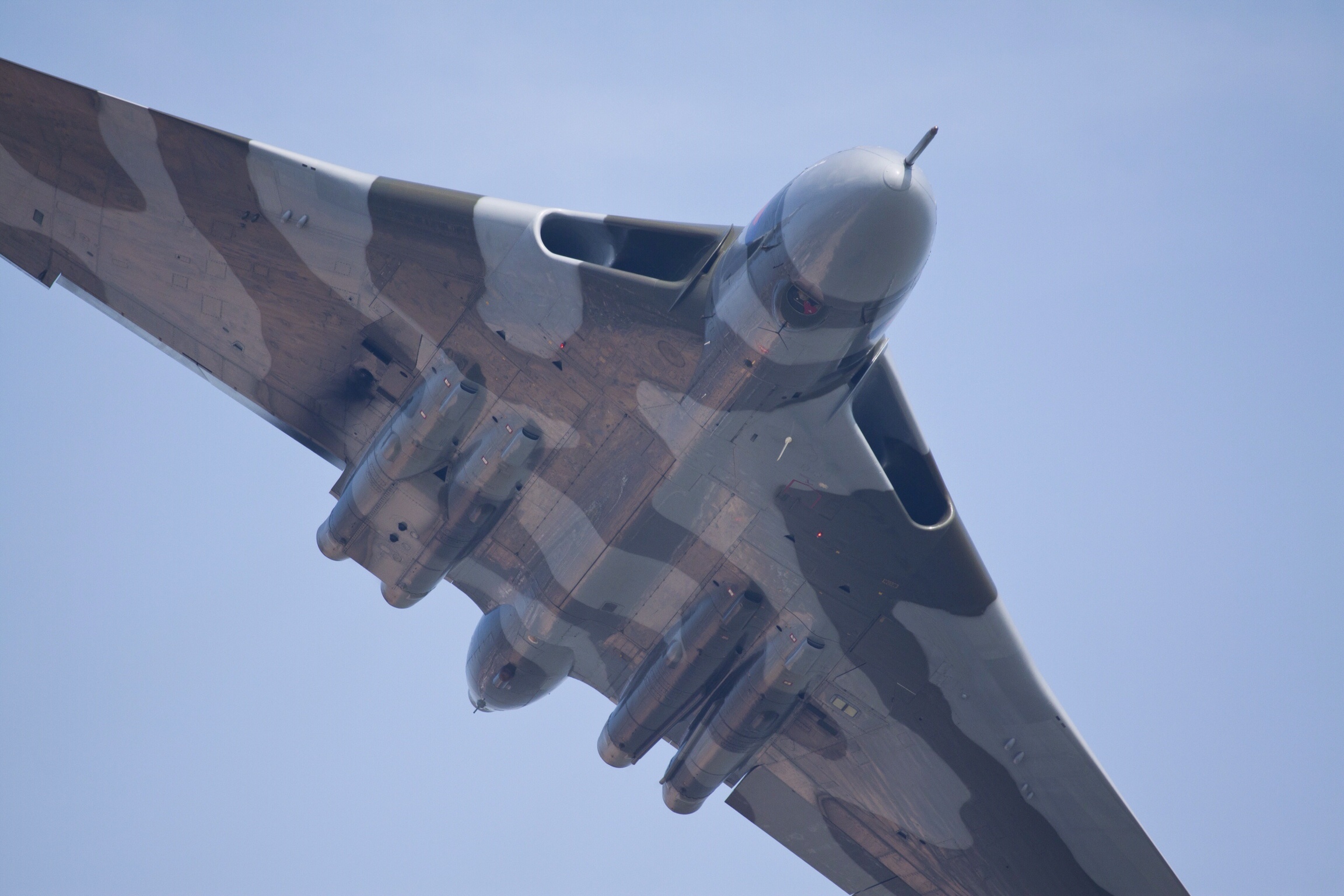
The Avro Vulcan Bomber is an Iconic jet-propelled delta wing strategic bomber.  It was operated by the Royal Air Force (RAF) from 1956 until 1984.

.

SBAC58_Vulcan

The first Avro Vulcan B.2, XH533, flying at Farnborough, 1958.

.

Harvey Black (1)

Its delta wingspan was in excess of 30 metres

.

Harvey Black (4)

The Vulcan B.1, was first delivered to the RAF in 1956. The XH558, shown above, was the first Vulcan B.Mk2 to be delivered to the RAF in 1960. Its original colour on delivery was ‘anti-flash’ white.

.

Harvey Black (3)

Powered by 4 x Bristol-Siddeley Olympus engines.  It had a cruising speed of Mach .86 and a top speed of Mach .92/3. It could fly to a height of between 45,000 feet/56,000 feet (14,000/17000 metres).

.

Harvey Black

The Vulcan, as part of the V-Force, was the backbone of the United Kingdom’s airborne nuclear deterrent during much of the Cold War. Originally designed to carry either a single ‘Blue Steel’ nuclear missile or a single free-fall nuclear bomb, its role as a strategic nuclear asset changed in 1970. British Polaris Submarines assumed that role. The Vulcan continued to carry the WE.177B in a tactical nuclear strike role as part of the country’s contribution to NATO. It could also carry a standard bomb load of 21 x 1,000 lb (450kg) iron bombs.

.

1024px-Avro_Vulcan_XH558_Duxford_Airshow_2012_(7977149648)

Avro Vulcan XH558 at Duxford Airshow 2012

.

Vulcan_bomber_18_May_1982

A Vulcan flying over Ascension Island in May 1982. The only combat missions involving the Vulcan bomber took place in 1982, during the Falklands War. The missions, known as the Black Buck raids, involved a flight of 3,889 miles from Ascension Island to Stanley in the Falklands.

.

Harvey Black (2)

You might recognise this picture from the front cover of my novel, The Blue Effect. A big thank you to XH558 team for allowing me to use the above photograph. 

Cover image (C) of Andrew Brown and the Vulcan to the Sky Trust – image of XH558

.

9781781322215-PerfectCOVER.indd

.

The Soviet Union and the Warsaw Pact’s pre-emptive strike against the West, supported by the use of chemical weapons, has left NATO forces stunned. Although reinforcements continue to arrive in theatre from all the NATO member countries, the Allies are pushed back relentlessly. The Eastern Bloc armies throw fresh regiments into the fray, their intention to deliver the killing lunge deep into the West’s retreating armies.

.

What are the options open to NATO? Can the West stem the disorderly retreat? Can they gather enough conventional forces to hold? Or will they need to resort to more deadly means?

.
Follow the series of gripping events in ‘The Blue Effect’, the third instalment in Harvey Black’s Cold War trilogy.

.

Vulcan

.

The Blue Effect_high resolution-2

.

Cover image (C) of Andrew Brown and the Vulcan to the Sky Trust – image of XH558

I would like to take this opportunity to thank everyone for their support in reading the first two novels in the series, it is really appreciated. For the next Post, I will include the maps that can be seen at the beginning of The Blue Effect. This enable readers to print them as reference. HB

.

9781781322215-PerfectCOVER.indd

.

‘The Black Effect’ – Available on Kindle.

.

TBE revised - FOR SCREEN-1

The Black Effect

An economy on the verge of collapse, demands from their allies for funding to continue the expansion of communism, and a conventional Army, Navy and Air Force costing the country 20% of its GDP… The Soviet Union is in trouble. Where should they turn for a solution?

Their answer: the capitalist West. On the 4th July 1984, the Soviet Union and the Warsaw Pact launched a massive preemptive conventional strike against the West, sending the NATO forces reeling.

Follow Jacko and Bradley and their allies as they fight off the Soviet Union. Can the NATO forces recover and hold their ground? Will the Soviet Union succeed? Or will it end in an outright defeat? Follow the series of gripping events in The Black Effect, the second installment in Harvey Black’s Cold War trilogy.

The first novel in my ‘Cold War’ trilogy, The Red Effect, published by SilverWood Books, is now available. Thoroughly enjoyed writing it, as i do with all my novels. There will be three books in total, covering the hypothetical invasion of West Germany, the Federal Republic of Germany, by the Warsaw Pact in the mid 1980’s. Book 1, ‘The Red Effect’, encompasses part of the intelligence build up leading to the initial Warsaw Pact strike against the NATO forces lined up against them. The purpose of the next few posts is to give the reader some additional background information to enhance their reading experience.

.

RedEffect72dpi-4

.

‘The Red Effect’ by Harvey Black – Available now. The Cold War that became a Hot War.

Site and content is copyrighted to Harvey Black.