The Red Effect. The Cold War hots up. Part 5.
The first novel in my ‘Cold War’ trilogy, The Red Effect, published by SilverWood Books, is now available. Thoroughly enjoyed writing it, as i do with all my novels. There are three books in total, covering the hypothetical invasion of West Germany, the Federal Republic of Germany, by the Warsaw Pact in the mid 1980′s. Book 1, ‘The Red Effect’, encompasses part of the intelligence build up leading to the initial Warsaw Pact strike against the NATO forces lined up against them. The purpose of the posts is to give the reader some additional background information to enhance their reading experience.
.  .
.
‘The Red Effect’ by Harvey Black – Available now. The Cold War that became a Hot War.
The Cold War era started very soon after the end of the second world war, when the communist east, led by the Soviet Union, and the Western world, led by the United States and its NATO allies, faced each across what became known as the ‘Iron Curtain’.
The perception of a potential Third World War, was generally one of a nuclear war. It may have come to that. In reality we will never know. But, one scenario is that of a conventional war. The massed forces of the Warsaw Pact against the supposedly technically superior, but weaker, NATO armies, that may well have escalated into a nuclear exchange.
.
Allied Forces Central Europe, AFCENT
Allied Forces Central Europe, AFCENT, would have to take the brunt of any attack by the Warsaw Pact forces. With responsibility for Parts of Europe stretching from Denmark in the north to the borders of Austria in the south, it had three subordinate commands. The two key ones, Northern Army Group, NORTHAG, and Central Army Group, CENTAG. For this and the next Post, I will concentrate on CENTAG:
.
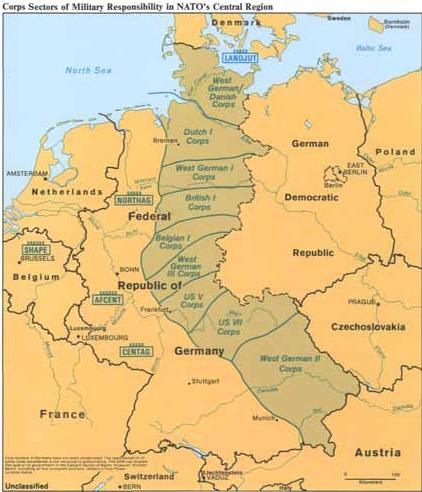
The Corps sectors of responsibility for NATO forces in the 80s. The layer cake principle was used.
CENTAG, Central Army Group, had four powerful frontline Corps to defend its sector from just south of Kassel to the border with Austria. III German Corps in the north, then the V and VII US Corps with II German Corps in the south. For this Post I will focus on V US Corps, who had the prime responsibility for defending the well known Fulda-Gap.
.

V Corps shoulder badge insignia.
V US Corps had three key units to provide the defence of the Fulda Gap. More on the Fulda-Gap later.
V US Corps. HQ – Frankfurt
3rd (US) Armoured (Spearhead) Division (Frankfurt-am-Main
1st Brigade – Kirchgoens
- 2nd and 4th Battalion, 32nd Armoured Regiment (Abrams-M1)
- 2nd and 3rd mechanised Infantry Battalion, 5th Cavalry Regiment
2nd Brigade
- 3rd and 4th Battalion, 8th Cavalry Regiment (Abrams-M1)
- 1st Battalion, 48th Mechanised Infantry Regiment
3rd Brigade
- 2nd and 4th Battalion, 67th Cavalry Regiment (Abrams-M1)
- 1st Battalion, 36th Infantry Regiment.
.

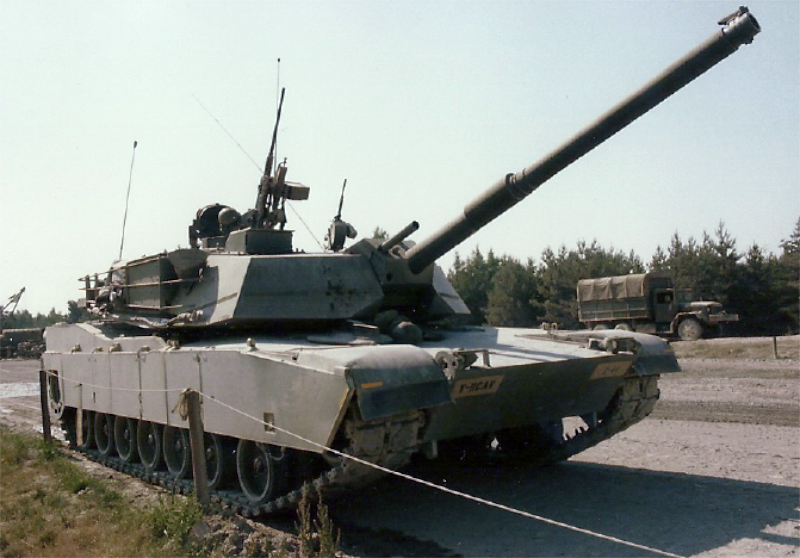
An XM1 at Fort Knox, Kentucky in 1969
.

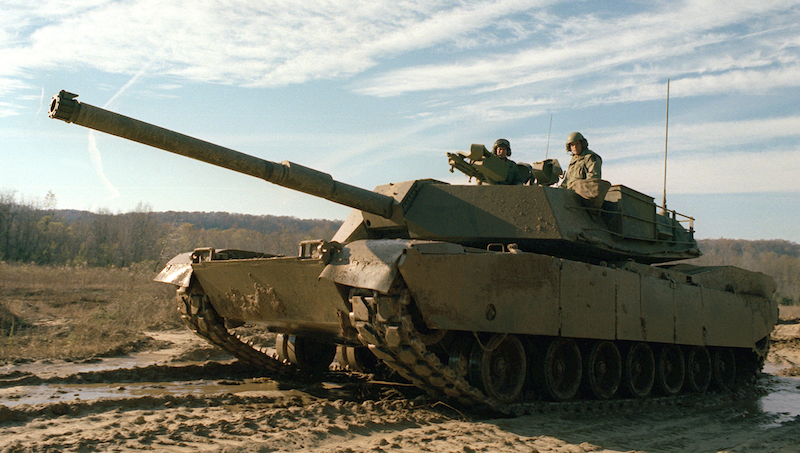
105mm M1 Abrams of the 11th Armoured Cavalry Regiment at a training area, Germany, 1986. First introduced in in 1980, it was the replacement for the ageing M-60. Armed with the licence-built version of the 105mm Royal Ordnance L7 gun.
.

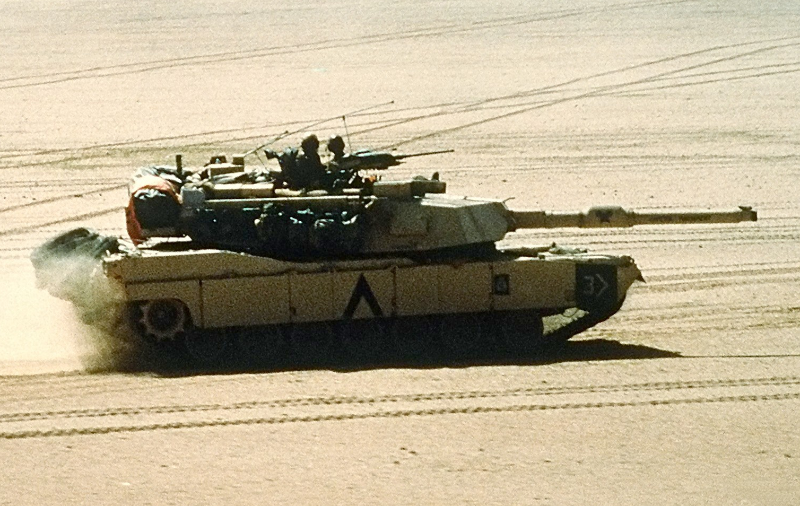
Abrams during desert Storm in 1991. Honeywell AGT1500C multi-fuel turbine engine powering the 60+ ton tank to speeds up 40mph.
.

M1A1 in Iraq, September 2004.
.
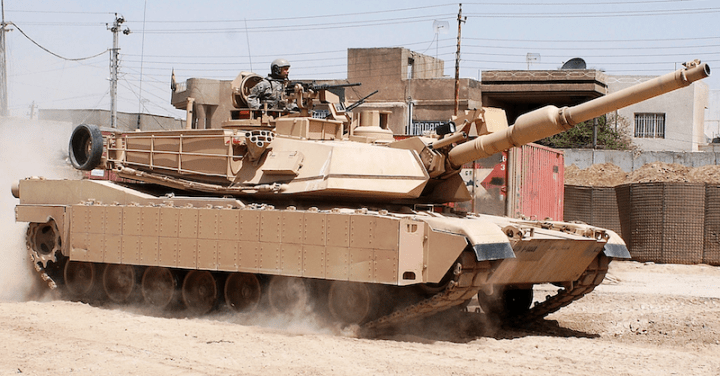
US Army M1A2 Abrams
.
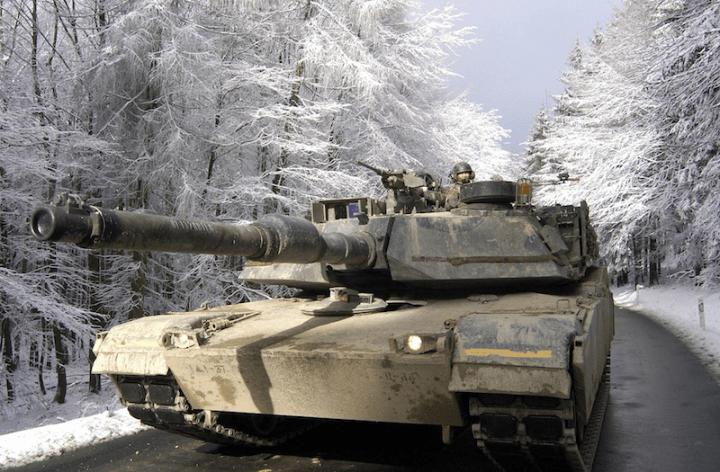
M1A1 Abrams, Germany 2005.
3rd Combat Aviation Brigade
- 2nd Battalion, 227th Attack Helicopter Regiment (21 x AH1F, 13 x OH58C, 3 x UH60A)
- 3rd battalion, 227th Attack Helicopter Regiment (18 x AH64A, 13 x OH58C, 3 x UH60A)
- G Company, 227th Attack Helicopter Regiment (6 x UH1H, 6 x OH58A, 6 x OH58D, 3 x EH60)
- H Company, 227th Attack Helicopter Regiment (15 x UH60A)
.

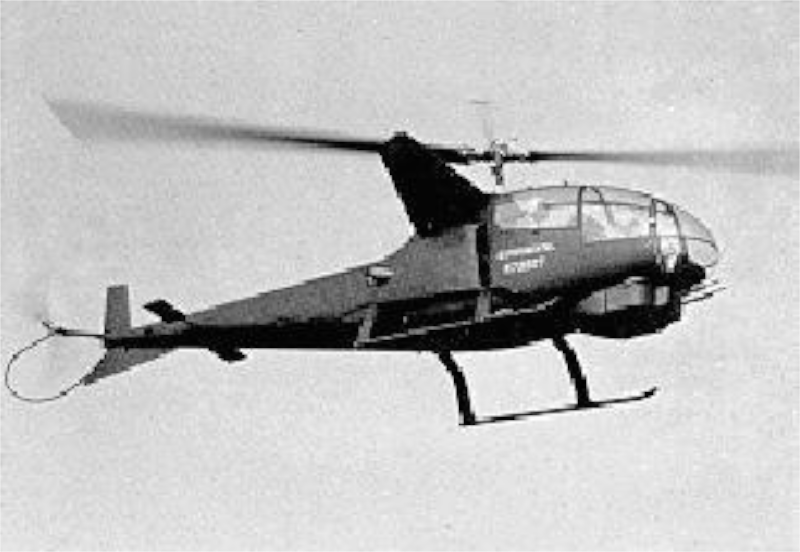
Bell 207 Sioux Scout. A mockup of Bell’s D-255 helicopter gunship concept, named Iroquois Warrior.
.

Israeli AH-1F Cobras. Crew of 2. 20mm M197 3-barreled gatling cannon, 70mm rockets and 4 or 8 TOW anti-tank missiles.
3rd Artillery Division.
8th Infantry Division
1st Brigade
- 1st Armoured Battalion, 68th Armoured Regiment (Abrams-M1)
- 4th Armoured Battalion, 69th Armoured Regiment (Abrams-M1)
- 3rd and 5th Mechanised Infantry Battalion.
2nd Brigade
- 2nd Armoured Battalion, 69th Armoured Regiment (Abrams-M1)
- 1st Battalion, 13th Mechanised Infantry Regiment
- 1st Battalion, 39th Mechanised Infantry Regiment
3rd Brigade
- 5th Armoured Battalion, 68th Armoured Regiment (Abrams-M1)
- 5th Armoured Battalion, 77th Armoured Regiment (M60A3)
- 4th Mechanised Infantry Battalion.
8th Infantry Division Artillery.

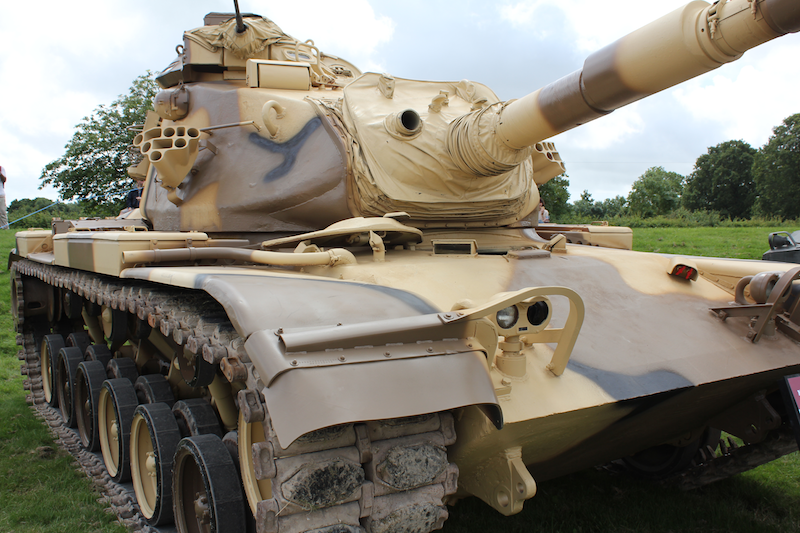
M-60 tank. Slowly being replaced by the M1 Abrams
8th Combat Aviation Brigade
- 3rd Squadron, 7th Cavalry Regiment (M60A3)
- 2nd Battalion, 4th Attack Helicopter Regiment (21 x AH1F, 13 x OH58C, 3 x UH60A)
- 3rd battalion, 4th Attack Helicopter Regiment (21 x AH1F, 13 x OH58C, 3 x UH60A)
- G Company, 4th Attack Helicopter Regiment (6 x UH1H, 6 x OH58A, 6 x OH58D, 3 x EH60)
- H Company, 4th Attack Helicopter Regiment (15 x UH60A)
.

OH-58 Kiowa.
.
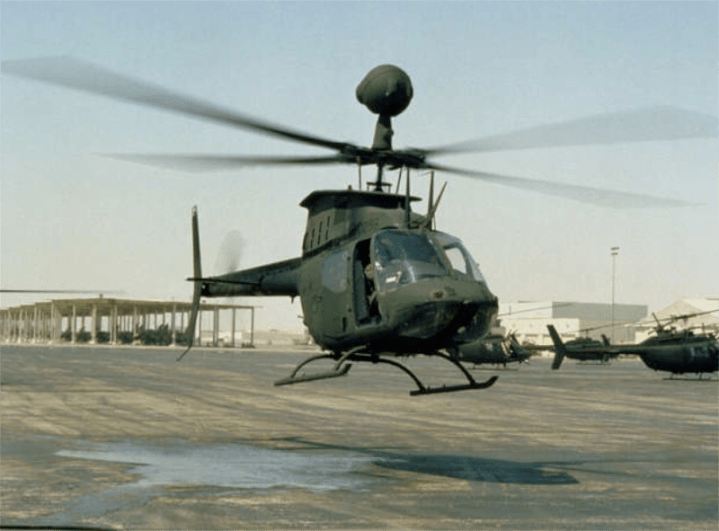
OH-58D Kiowa. Unique IR suppression systems mounted on its turbine exhaust. Scout helicopters, some armed with AIM-92 air-to-air Stinger missiles.
.

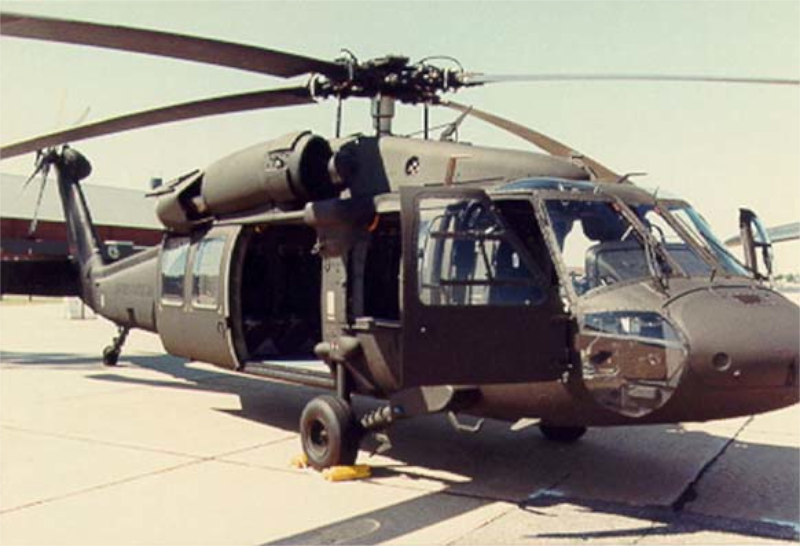
UH-60A Black Hawk. Troop carrier, minelayer and medical evacuation.
.

UH-60A’s over Port Salinas during the invasion of Grenada, 1983. The first use of the Black-Hawk in a conflict.
11th Armoured Cavalry Regiment
- 1st, 2nd and 3rd Cavalry Squadrons (Abrams-M1)
- 4th Air Cavalry Squadron (26 x AH1F, 27 x OH58C, 3 x UH60, 18 x UH60A
.

M2A2 Bradley Infantry Fighting Vehicle. Main armament is a 25mm M242 Chain Gun. TOW anti-tank missiles.
.

Top speed of 40mph on roads. Six troops could be carried in the passenger compartment.
.
i hope this has given you a further insight into what NATO, in particular the US Army, had in its arsenal. Going forward I will add more information in support of my Cold War trilogy, including maps and photographs.
The Blog is copyrighted to Harvey Black.
. 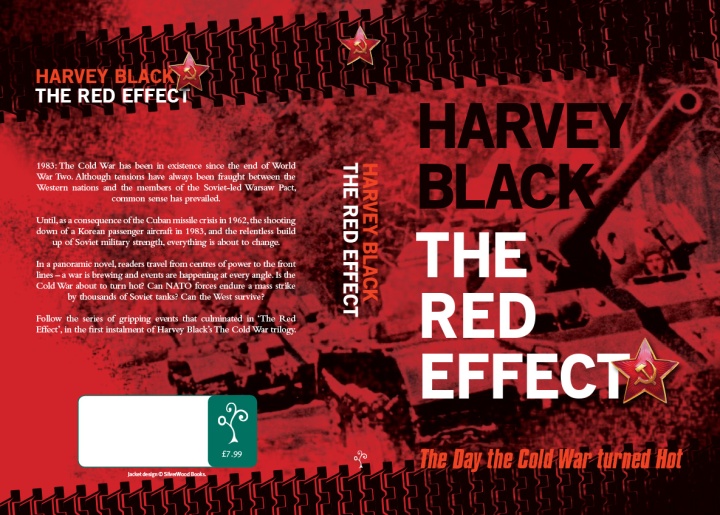
‘The Red Effect’ by Harvey Black – Kindle and Paperback version out now! The Cold War that became a Hot War.
.



 .
.














 harveyblackauthor