The Cold War Years. A Hot War in reality. Part 5.

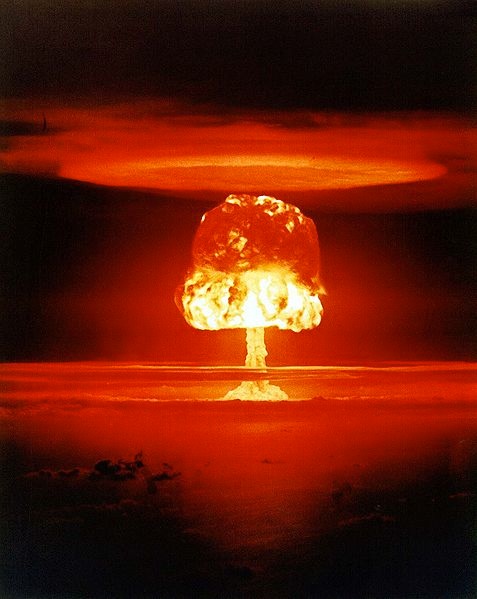
My ‘Cold War’ trilogy is complete. I enjoyed writing it and the empty space it has left will be filled with a new set of books, based on the outcome of a strategic nuclear exchange. An Apocalyptic trilogy, survival at its worst.

The Cold War era started very soon after the end of the second world war, when the communist east, led by the Soviet Union, and the Western world, led by the United States and its NATO allies, faced each across what became known as the ‘Iron Curtain’.

.
.

The capital of Germany, Berlin, was divided into four Sectors. The consequence being, that the three Western Allied powers now controlled territory deep within the Soviet Union Zone of Germany.

Over time, the tensions between the four Allied powers increased, eventually resulting in the Berlin blockade in 1948, when the Soviets attempted to starve West Berlin into submission and force the other three Allied powers out. This failed and the Soviets eventually relented, but an ever-increasing number of East Germans fled to the West; between 150,000 and 300,000 a year during 1951-1953. As a consequence restrictions were placed on movement between the divided country. From 1961, the border was closed and Berlin completely encircled, first by barbed wire, then bricks and finally a concrete wall, along with the infamous ‘death strip’.

Access was now restricted between Berlin and the West. A wall, 124 mile miles in length, was placed around the three sectors of West Berlin, cutting off the city from the rest of the world.
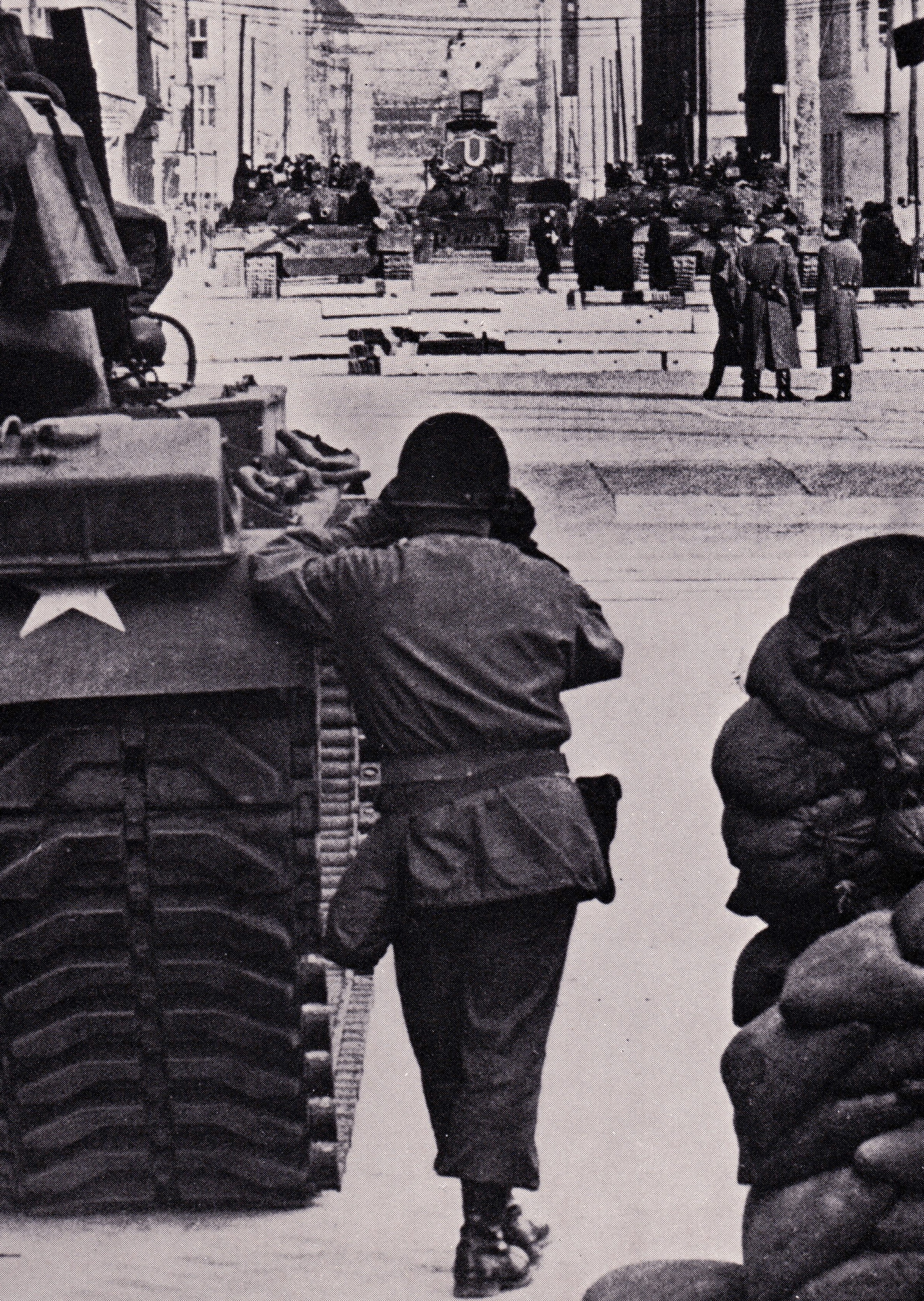
An Iconic picture of the face-off between the West and the East.  The Cold War truly starts – October 1961.

.

I shall cover various aspects of the two opposing forces, providing the backdrop and background information for my three novels.

In 1984/85, the Warsaw Pact was already a significant force, the Soviet Union in particular. To counter this NATO, the North Atlantic Treaty Organisation, assembled its own force of arms along the Iron Curtain. Not just as a show force against the communist ideals purported by the East, but because the likelihood of Warsaw Pact troops, led by the Soviet Union, crossing the Inner German Border was a real possibility.

Although SHAPE, Supreme Headquarters Allied Powers Europe, was referenced to Europe for legal reasons, its activities were extended beyond those borders in 2003. SHAPE’s motto is Vigilia Pretium Liberatis, Latin for ‘The Price of Freedom is Vigilance’. In 1951, General Eisenhower signed the activation order for ACE, Allied Command Europe. The key subordinate commands being Allied Forces Northern Europe, AFNORTH, Allied Forces Central Europe, AFCENT, the commands I shall be covering in this and future posts, and AFSOUTH, Allied Forces Southern Europe.


.
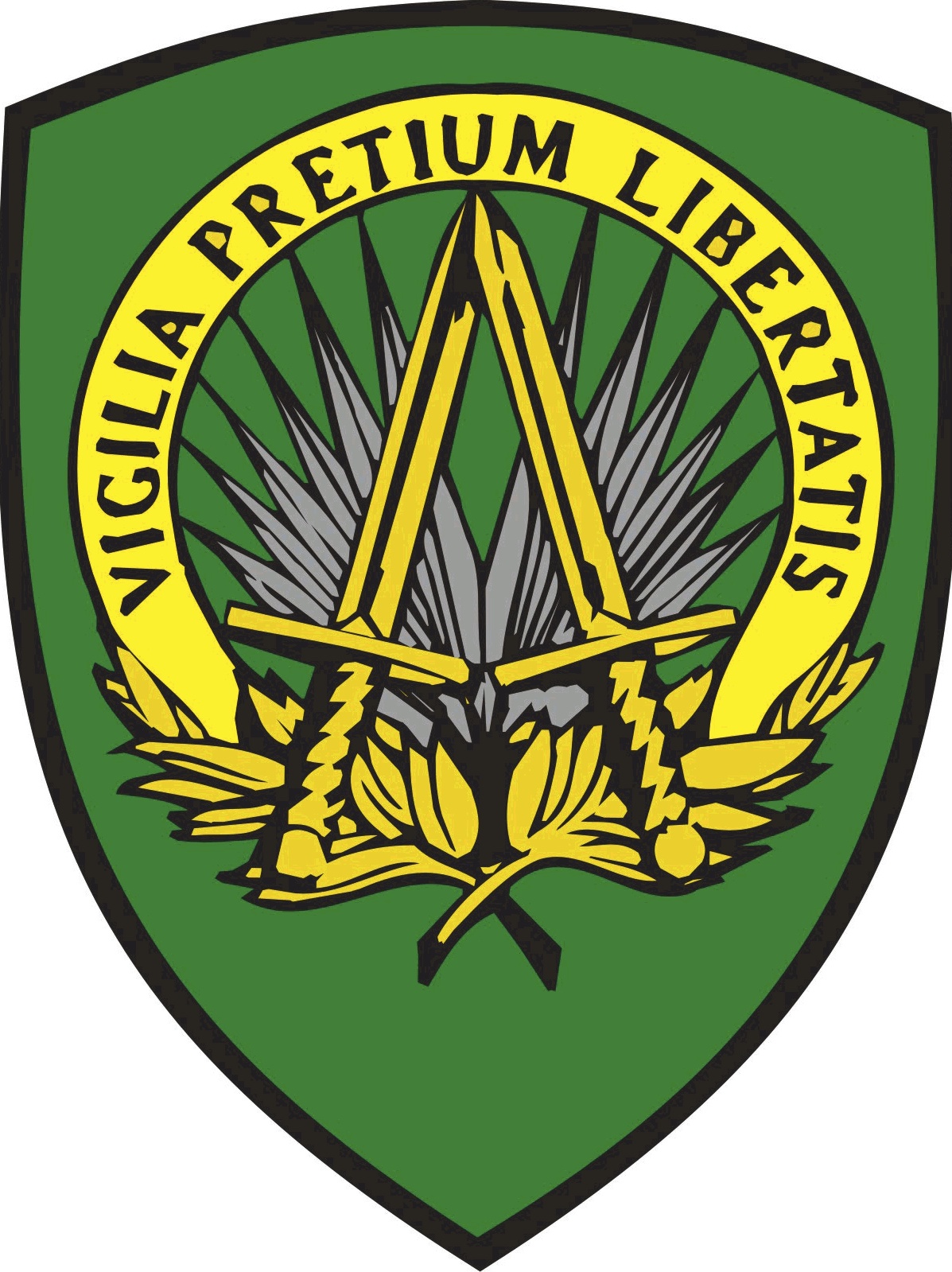
Supreme Headquarters Allied Powers Europe – Emblem

.
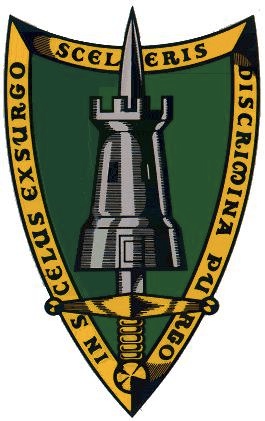
Allied Forces Central Europe.

.

Allied Forces Central Europe, AFCENT, would have to take the brunt of any attack by the Warsaw Pact forces. With responsibility for Parts of Europe stretching from Denmark to the borders of Austria, it had three subordinate commands. The two key ones, Northern Army Group, NORTHAG, and Central Army Group, CENTAG. For this and the next Post, I will concentrate on NORTHAG.

.
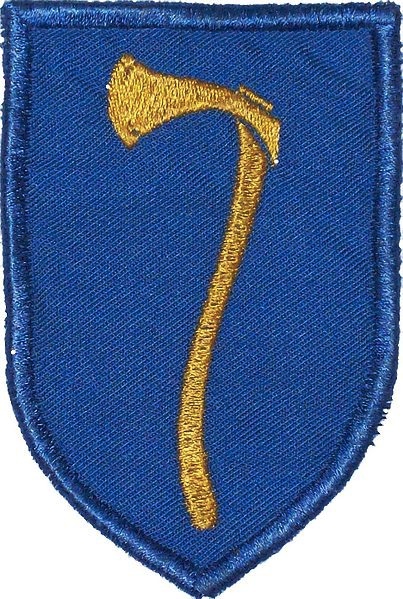
Northern Army Group Insignia. During the building of the Joint Headquarters, a Frankish battle axe was discovered and subsequently used as their emblem. They chose it because the Franks were a West-European tribe defending against attackers from the East.

.
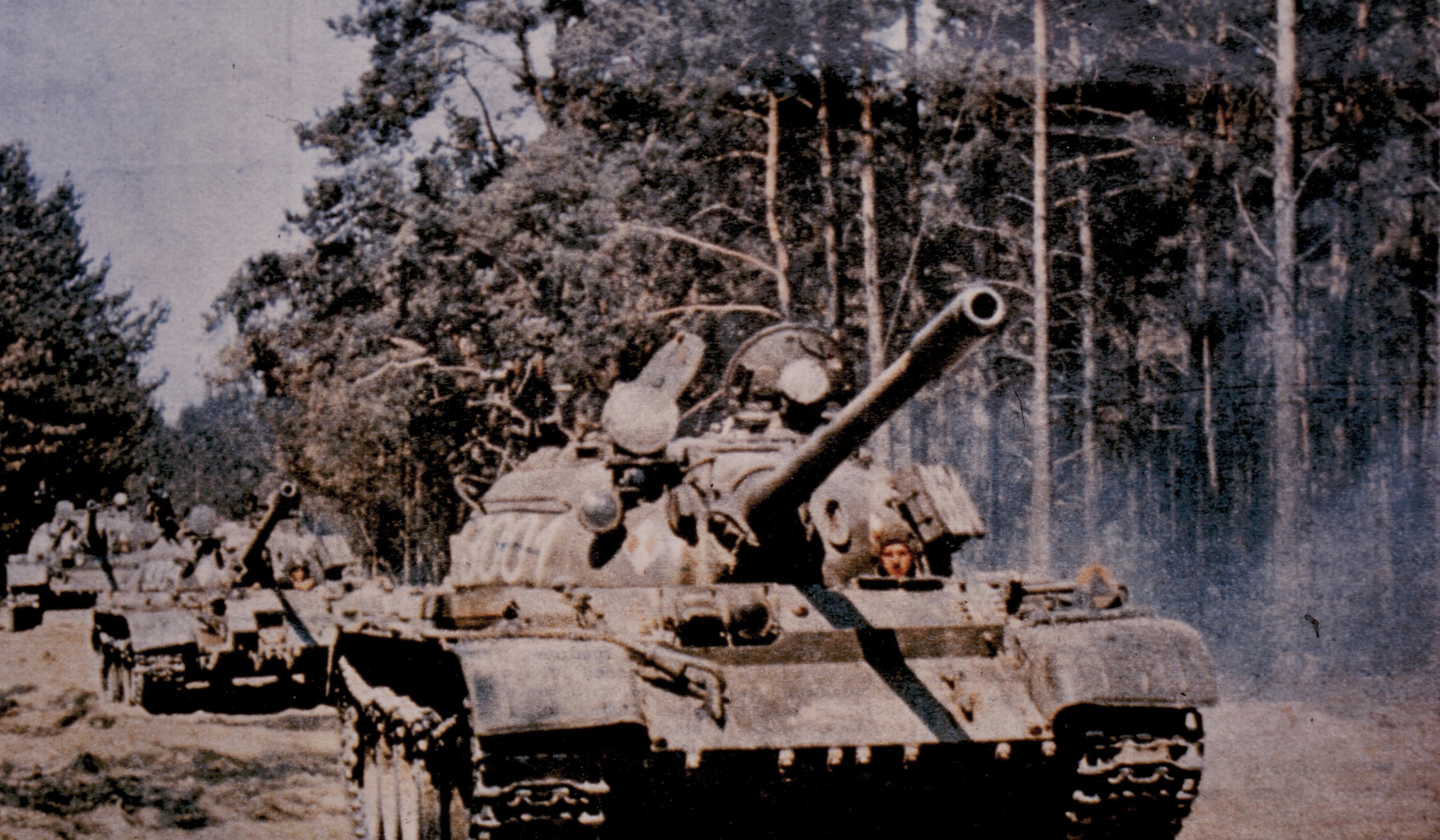
During the 1980’s there was a genuine fear that the Warsaw Pact would come storming across the Inner German Border.

.
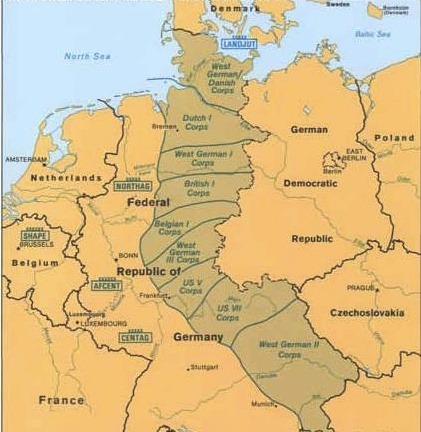
For the defence of the Federal Republic of Germany, NATO used a ‘layer-cake’ principle. The country was sectioned into layers, with a designated Army Corps taking responsibility for its defence.

.

Northern Army Group consisted of four Army Corps; 1 Dutch Corps in the north, beneath that 1 German Corps, 1 British Corps and 1 Belgian Corps. NORTHAG’s area of responsibility ran from the North German Plains, south of the river Elbe, to the city of Kassel. Below Kassel was the responsibility of CENTAG and north of the Elbe was the responsibility of Allied Land Forces Command.

.
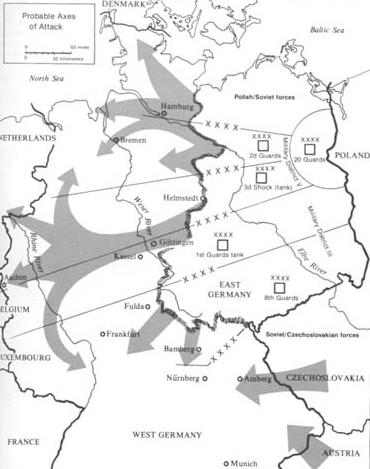
Crossing the Inner German Border, the Warsaw Pact was expected to attack on possibly two key fronts. The ‘North German Plains’, ideal terrain for their particularly large tank forces, and from the ‘Thurungian Bulge’, punching through the ‘Fulda Gap’, Frankfurt a mere 62 miles from the Inner German Border at that point.

.

In the 1950’s, NATO supported the ‘Rhine Defence Concept’, using the wide river as a major barrier to an invading army. The defence line would be along the Rhine and east of the Rhine would be used as a ‘delaying zone’, enabling NATO to pull in reinforcements and reserves. In the late 1950’s, the defence line moved closer to the Inner German Border, the concept of ‘Defence in Depth’. By the 1960’s, West Germany, by now more of an ally than a conquered country, had major concerns about German Cities being left undefended and open to Soviet Occupation. So, by the 1970’s, the concept of a ‘Forward Defence’ was born. Northern Army Group had a tough task. Each of their Army Corps would have a ‘covering force area’, where they would delay the enemy while they moved their forces into position, and  a ‘main battle area’, where the bulk of their forces would dig in. Behind them, in the Corps rear area, they would also have to find the forces to defend against Warsaw Pact Assault Brigades,  Airborne Divisions dropping behind their lines to secure bridges and attack key nuclear weapons stocks and communications centres. Not forgetting Spetsnaz activity.

.
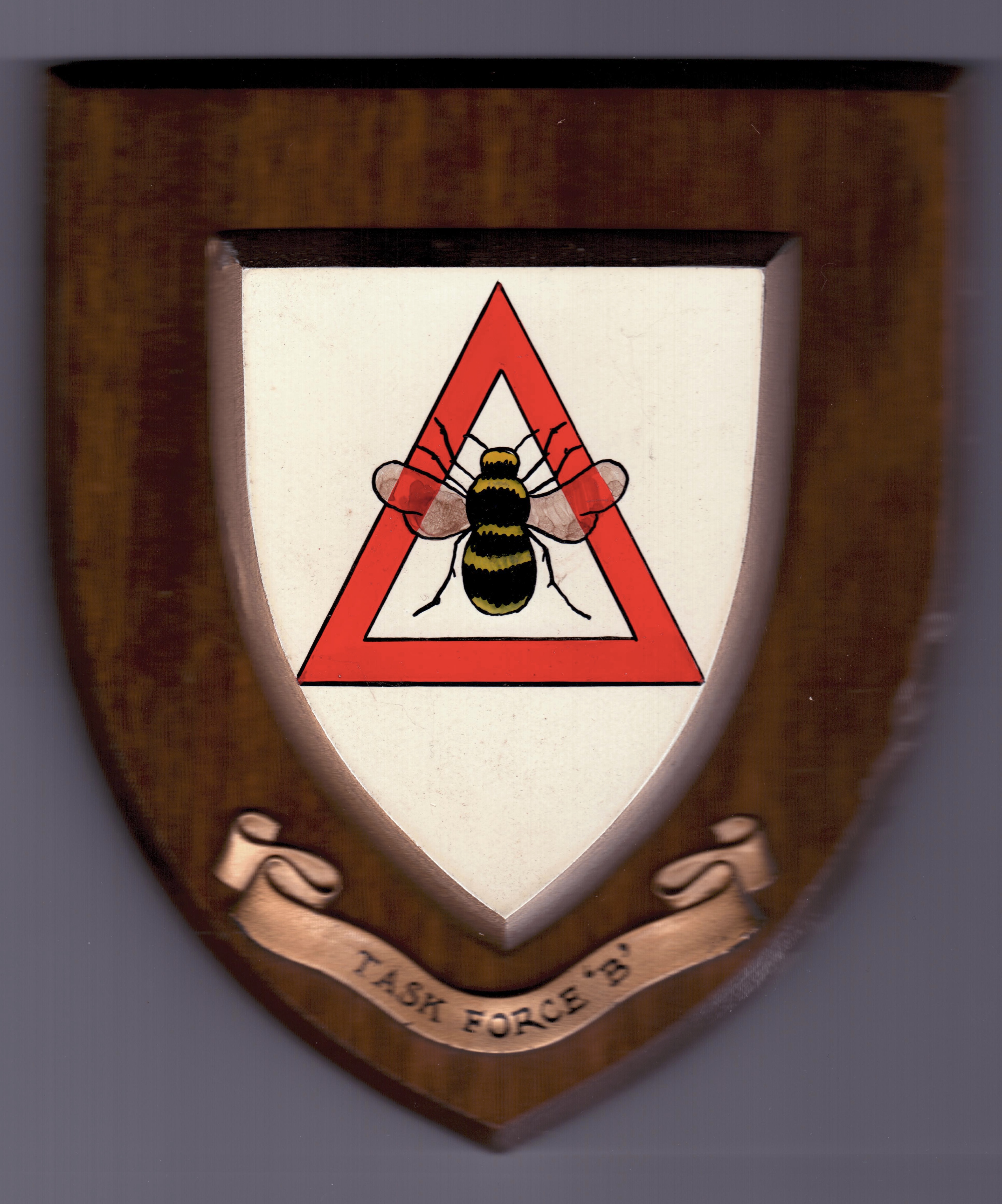
Task Force Bravo, later re-designated 22 Armoured Brigade, its Headquarters in Bergen-Hohne, was part of 1st Armoured Division.

NORTHAG had four Army Corps in its lineup (1980’s).

.

I (NL) Corps

Netherlands

1e Devisie (mechanised division).

  • 1 x Panzer Brigade and 2 x Mechanised Brigades
  • Divisional Artillery Group
  • Approximately 245 x Leopard  1v
  • 5 x Mechanised Infantry Infantry Battalions
  • 60 x M109A3

4e Devisie (mechanised division)

  • 1 x Panzer Brigade and 2 x Mechanised Brigades
  • Divisional Artillery Group
  • 244 x Leopard 2A4
  • 5 x Mechanised Infantry Battalions
  • 60 x M109A3

5e Devisie

  • 1 x Panzer Brigade and 2 x Mechanised Brigades
  • Divisional Artillery Group
  • 140 x Leopard 1v and 104 Leopard 2A4
  • 5 x Mechanised Infantry Battalions

101e Infantry Brigade (reserve)

  • 2 x Mechanised Infantry Battalions and 2 x Infantry Battalions.

1 (NL) Corps Artillery

  • 22 x M270 MRLS
  • 6 x Lance Missile Launchers
  • 48 x M110A2
  • 20 x M109A2

1 (NL) Corps also had integral reconnaissance and Air Defence units.

1 (NL) Corps, also potentially had the German 3rd Panzer Division as part of their Corps. 13 x Leopard 1A5 and 220 x Leopard 2. 5 x Panzer Grenadier Battalions and a Divisional Artillery Group. 18 x M110A2, 18 x FH-70, 16 x LARS and 16 x MLRS

.

1 (GE) Corps

Germany

1st Panzer Division

  • 2 x Panzer Brigades and  1 x Panzer Grenadier Brigade.
  • 1 x Artillery Regiment
  • 261 x Leopard 2 and 13 x Leopard 1A5
  • 5 x Grenadier Battalions
  • 18 x M110A2, 18 x FH-70, 16 x LARS and 16 x MLRS

7th Panzer Division

  • 2 x Panzer Brigades and 1 x Panzer Grenadier Brigade
  • 1 x Artillery Regiment
  • 261 x Leopard 2 and 13 x Leopard 1A5
  • 5 x Panzer Grenadier Battalions
  • 18 x M110A2, 18 x FH-70, 16 x LARS and 16 x MLRS

11th Panzer Grenadier Division

  • 1 x Panzer Brigade and 2 x Panzer Grenadier Brigades
  • 1 x Artillery Regiment
  • 192 x Leopard 2 and 26 x Leopard 1
  • 7 x Panzer Grenadier Battalions
  •  18 x M110A2, 18 x FH-70, 16 x LARS and 16 x MLRS

27th Airborne Brigade

  • 4 x Airborne Battalions

Each 1 (GE) Corps Brigade, also had integral armoured reconnaissance and Air Defence. Also artillery,  in the form of M109A3G.

.

1 (BR) Corps

Britain

1st Armoured Division

  • 3 x Armoured Brigades
  • Parachute Regiment Group
  • Divisional Artillery Group
  • 168 x Challenger 1 and 114 x Chieftain
  • 5 x Mechanised Infantry Battalions
  • 3 x Parachute Battalions
  • 48 x M109A2 and 24 x Abbot

2nd Infantry Division

  • 2 x Infantry Brigades and 1 x Airmobile Brigade
  • Divisional Artillery Group
  • 15 x Infantry Battalions
  • 60 x FH-70

3rd Armoured Division

  • 3 x Armoured Brigades
  • Divisional Artillery Group
  • 224 x Challenger 1
  • 5 x Mechanised Infantry Battalions
  • 24 x M109A2 and 48 x Abbot

4th Armoured Division

  • 2 x Armoured Brigades and 1 x Infantry Brigade
  • Divisional Artillery Group
  • 171 x Chieftain
  • 5 x Mechanised Infantry Battalions
  • 6 x Infantry Battalions
  • 48 x M109A2 and 24 x FH-70

1st Artillery Brigade

  • 3 x Heavy Artillery Regiments and 1 x Missile Regiment.
  • 24 x M107, 24 x M270 MLRS and 12 x Lance Missile Launchers.
  • .

1 (BE) Corps

Belgium

1er Infantry Division

  • 3 x Armoured Mechanised Brigades
  • Divisional Artillery Group
  • 120 x Leopard 1
  • 6 x Mechanised Infantry Battalions
  • 54 x M109A2

16de Panzer Division

  • 1 x Panzer Brigade and 2 x Armoured  Mechanised Brigades
  • Divisional Artillery Group
  • 160 x Leopard 1
  • 6 x Mechanised Infantry Battalions
  • 54 x M109A2

Corps Artillery

  • 36 x M109A2, 12 x M110A2 and 4 x Lance Missile Launchers.

On the face of it, quite a significant force. Over 2,000 tanks. There were also light tanks for reconnaissance and anti-tank systems in support. But, when you consider that NORTHAG could potentially be up against 3 Shock Army and 20 Guards Tank Army, the 1st Strategic Echelon of the Soviet Union from the Group of Soviet Forces Germany, which had over  2,000 main battle tanks, it would be a testing time. Then you would need to consider the 2nd Strategic Echelon, followed by the Strategic Reserves. On top of that, NORTHAG would probably have to contend with at least 2 Airborne Division drops behind the lines and numerous Airborne Brigade Assaults, along with numerous Spetsnaz operations. But, don’t forget the other Warsaw Pact members, Poland, Hungary, Czechoslovakia and Poland.

.

I shall cover the Chieftain Main Battle Tank for the rest of  this Post, but future Posts will look at more of 1 BR Corps, CENTAG and the Group of Soviet Forces Germany. Although Challenger 1, was slowly being introduced, the Chieftain was the mainstay of the British forces for most of the early to mid 80’s.

.
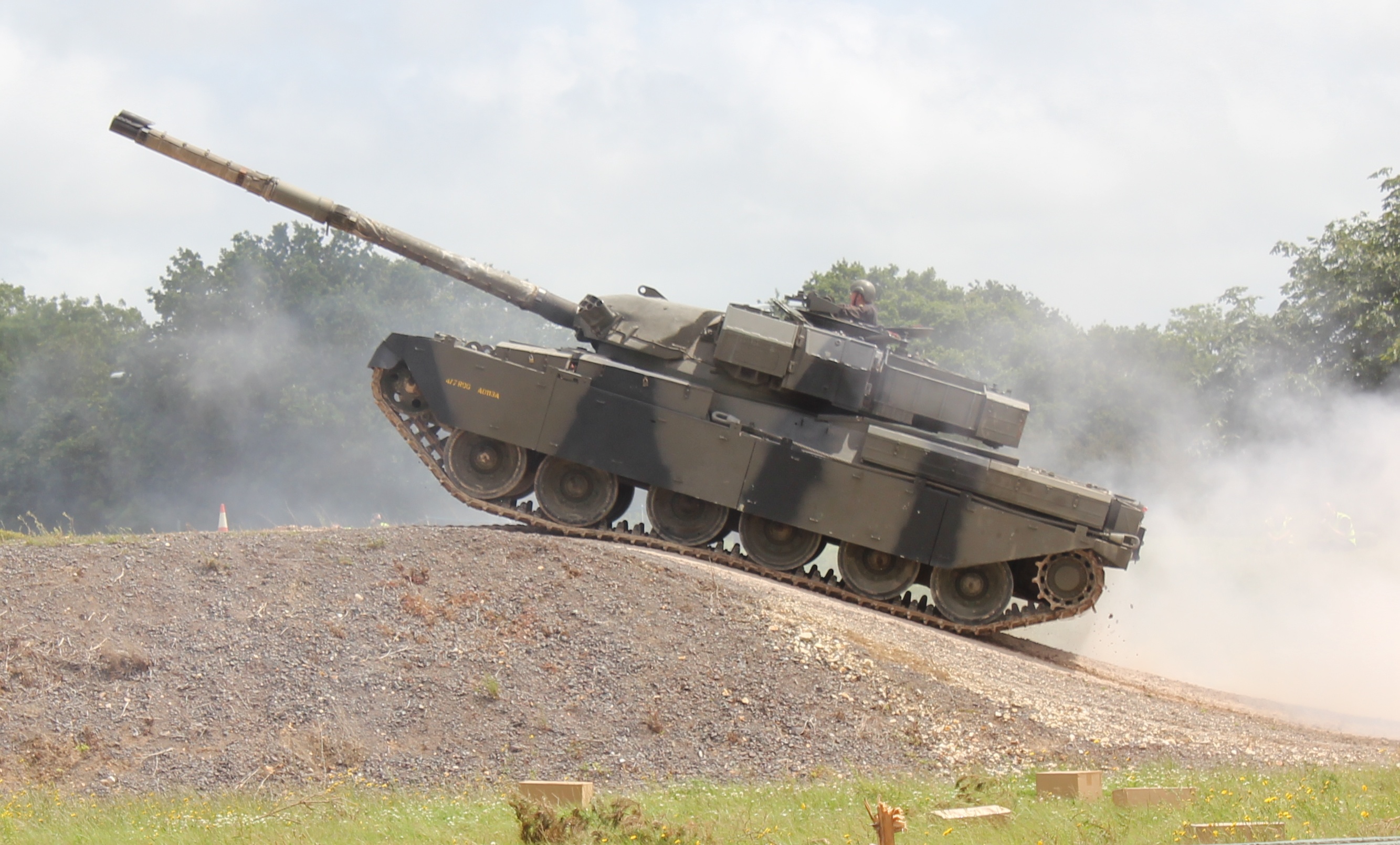
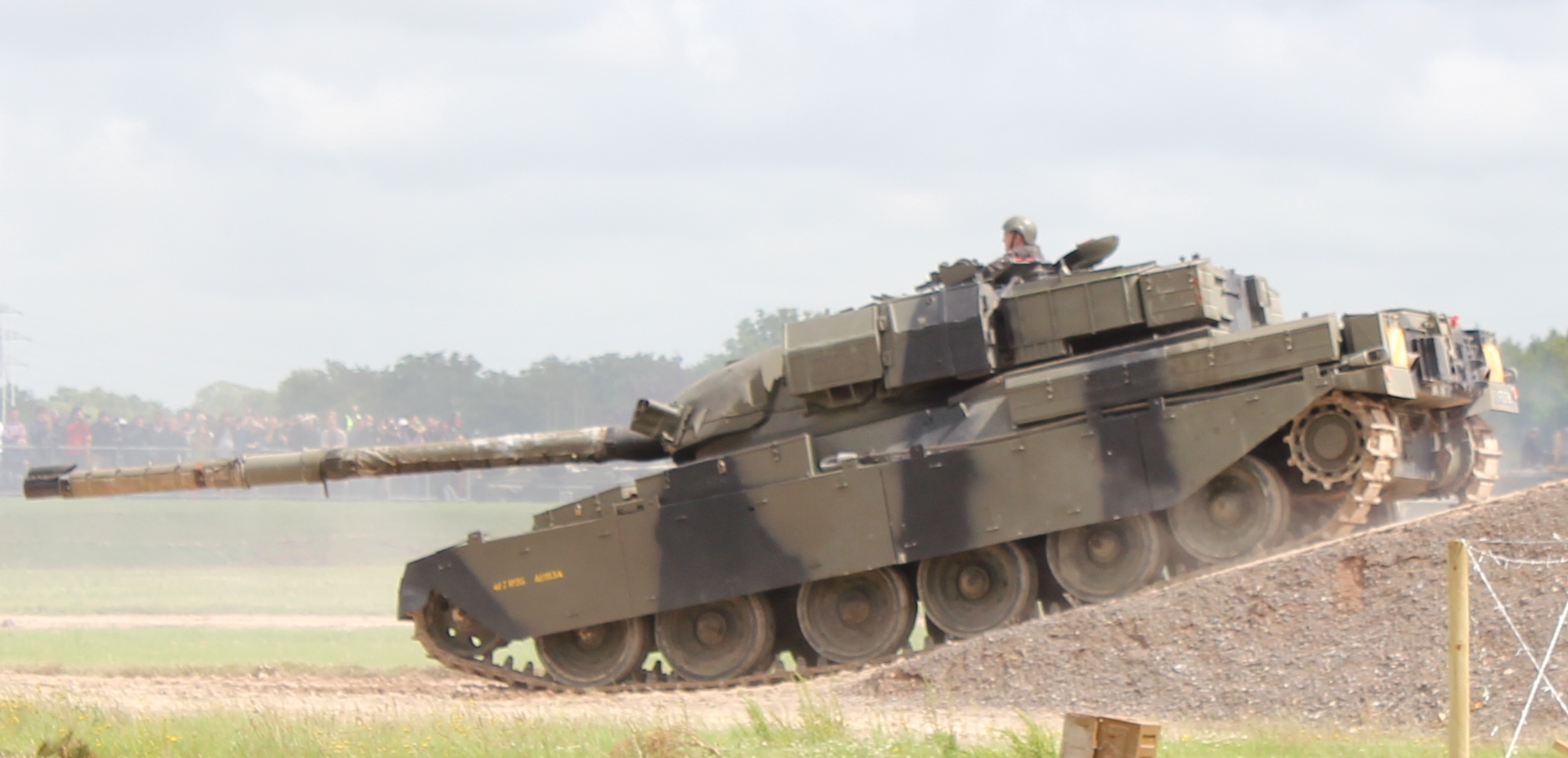
Chieftain Mark 10.

.
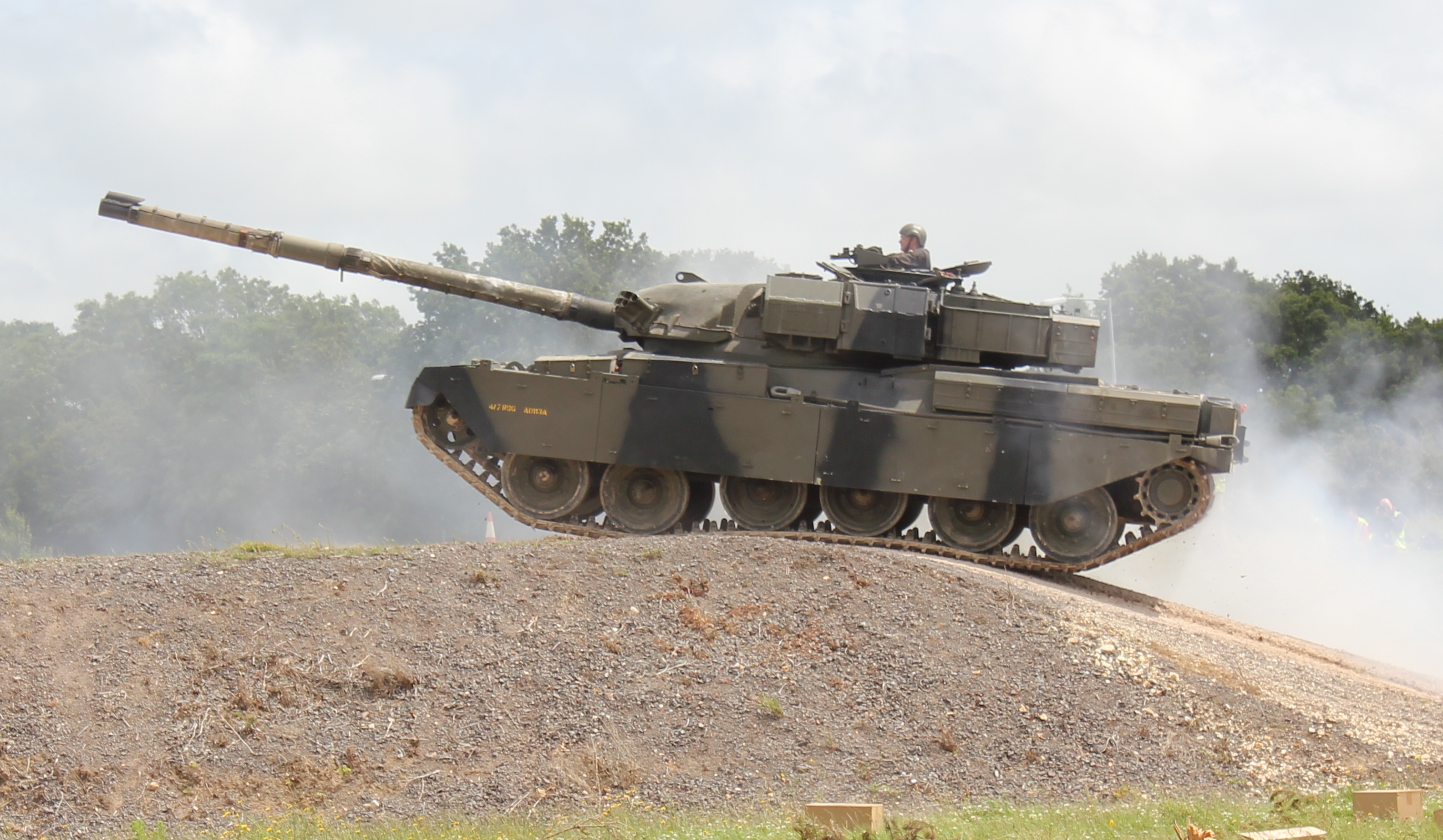
The L11A5, 120mm, high-velocity rifled tank  gun prominent.

.
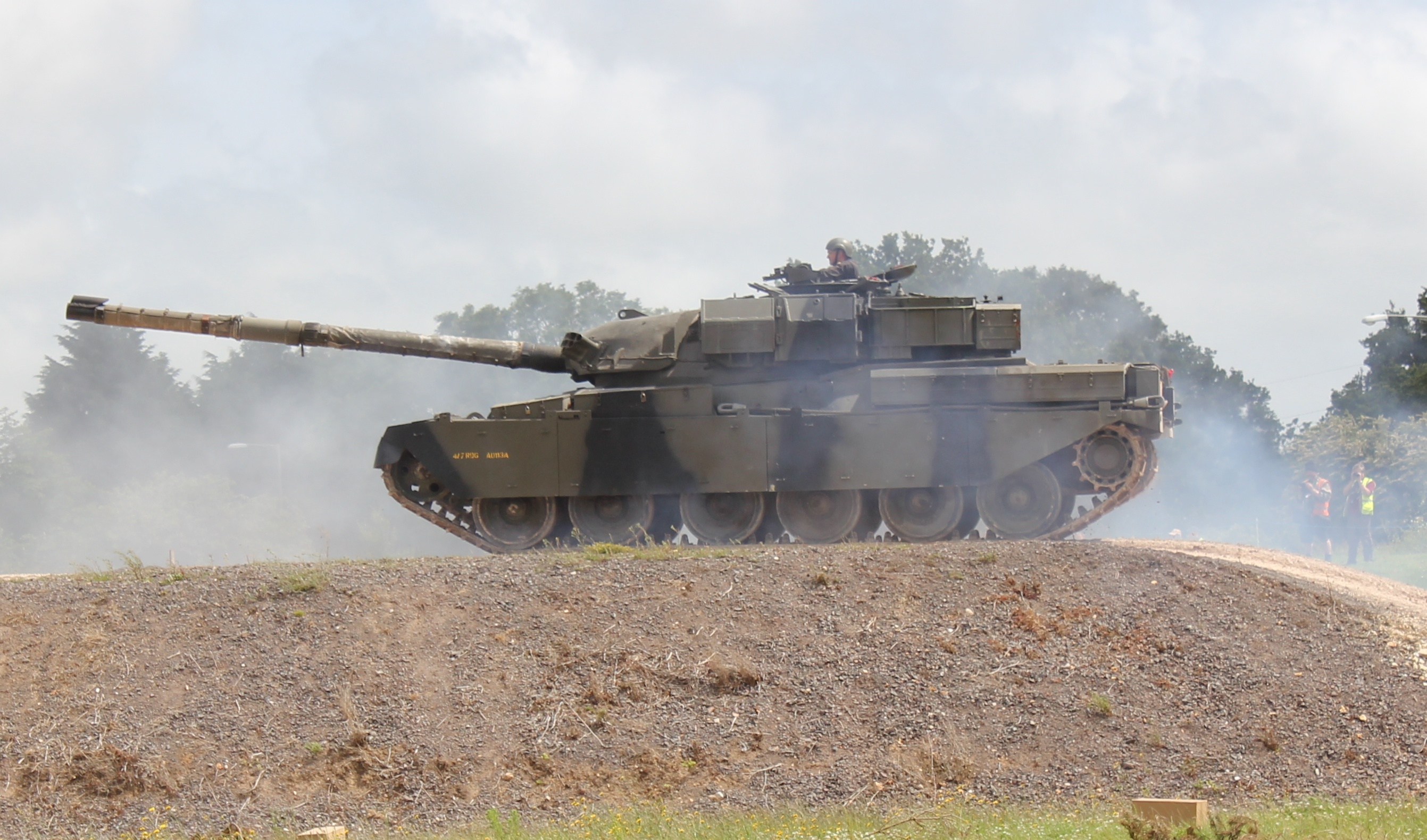
The fume extractor can be seen half way down the barrel which is also wrapped in thermal sleeve to minimise distortion of the tube. Otherwise, loss of accuracy would occur at long ranges due to the differential heating or cooling.

.
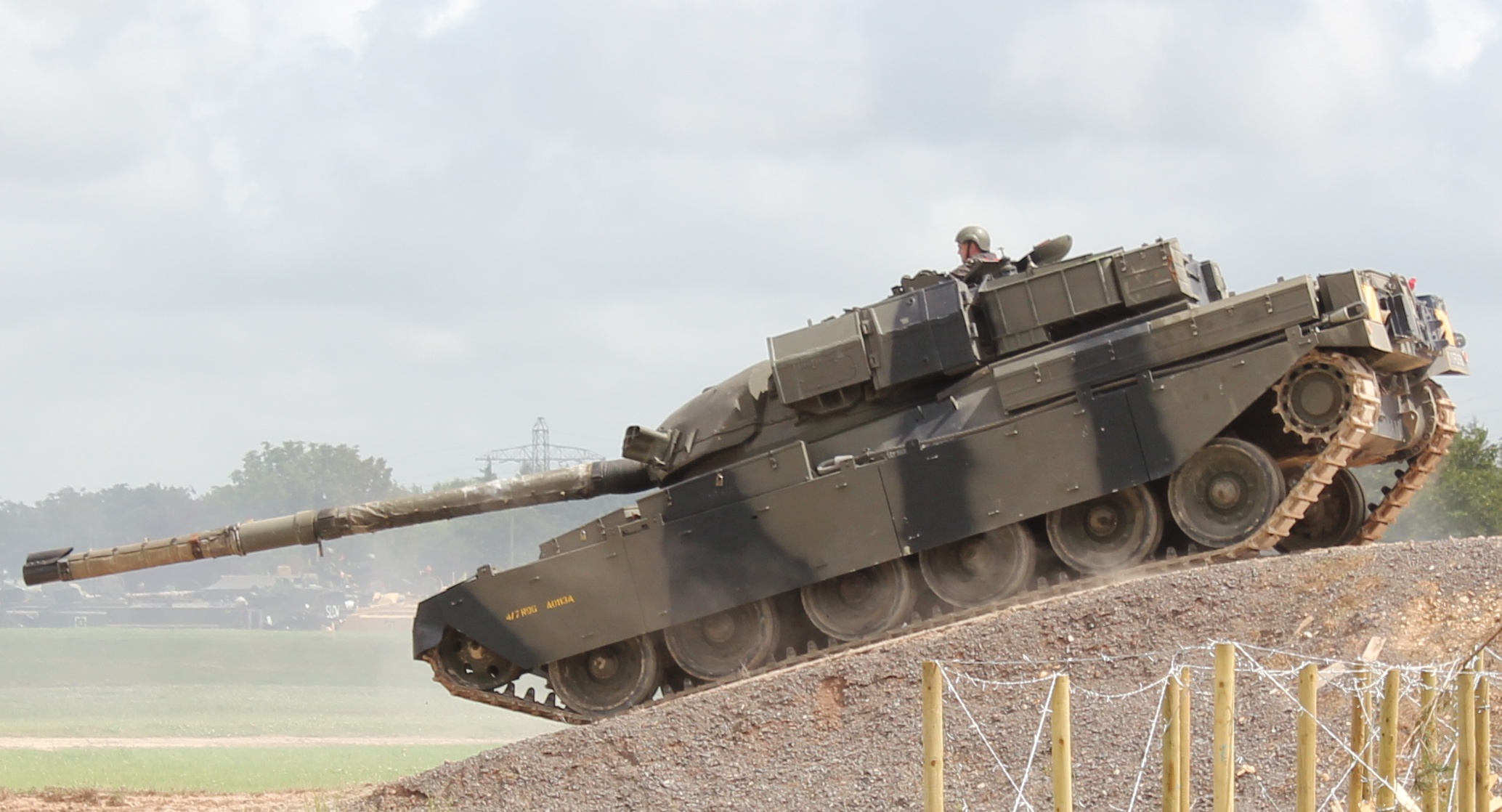
Hortsmann suspension with 12 pairs of twin wheels in six bogies.

.
The tracks are Dry pin, rubber padded with 96 links per track.

.
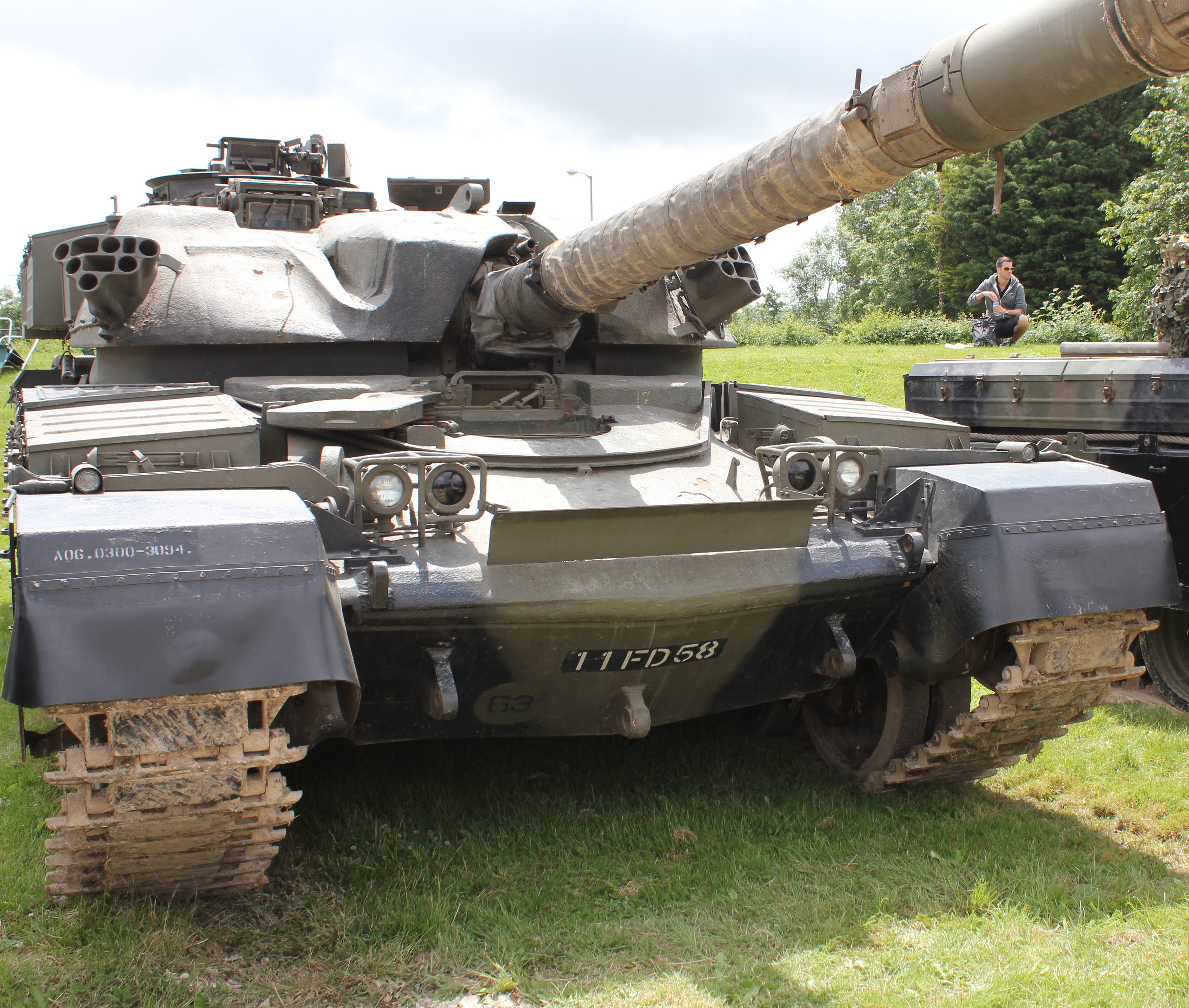
The Mark 10/11 had stillbrew passive armour added to the frontal aspect of the turret and around the driver’s position. It gave added protection against Hollow Charged Weapons such as the Sagger Anti-Tank Missile and the RPG-7, but with very little additional weight for the already 56 ton tank.

.
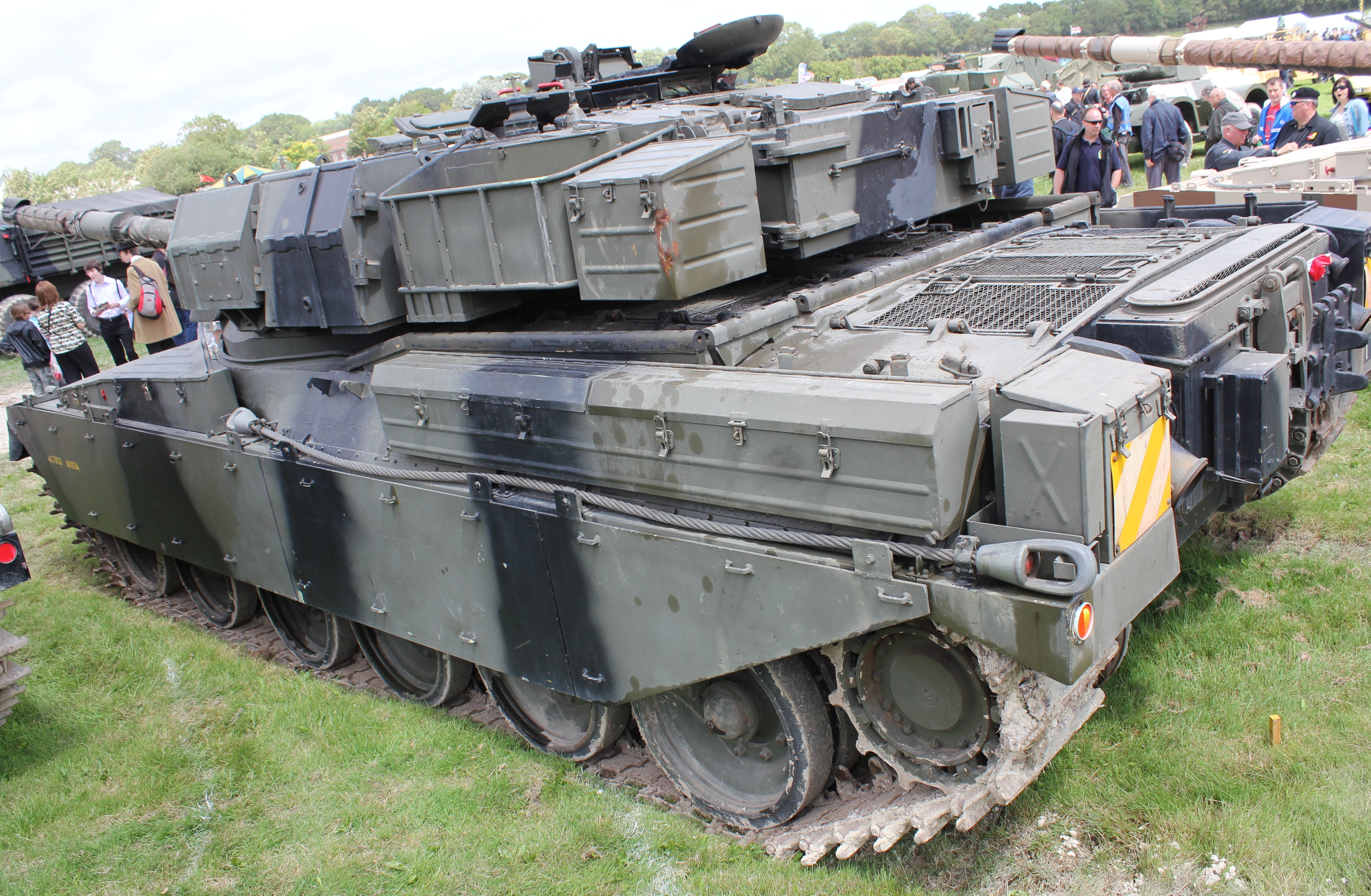
On the right hand side of the turret, as you are facing the tank, and on the left in this picture, you can see part of the TOGS, Thermal Observation and Gunnery System.

.
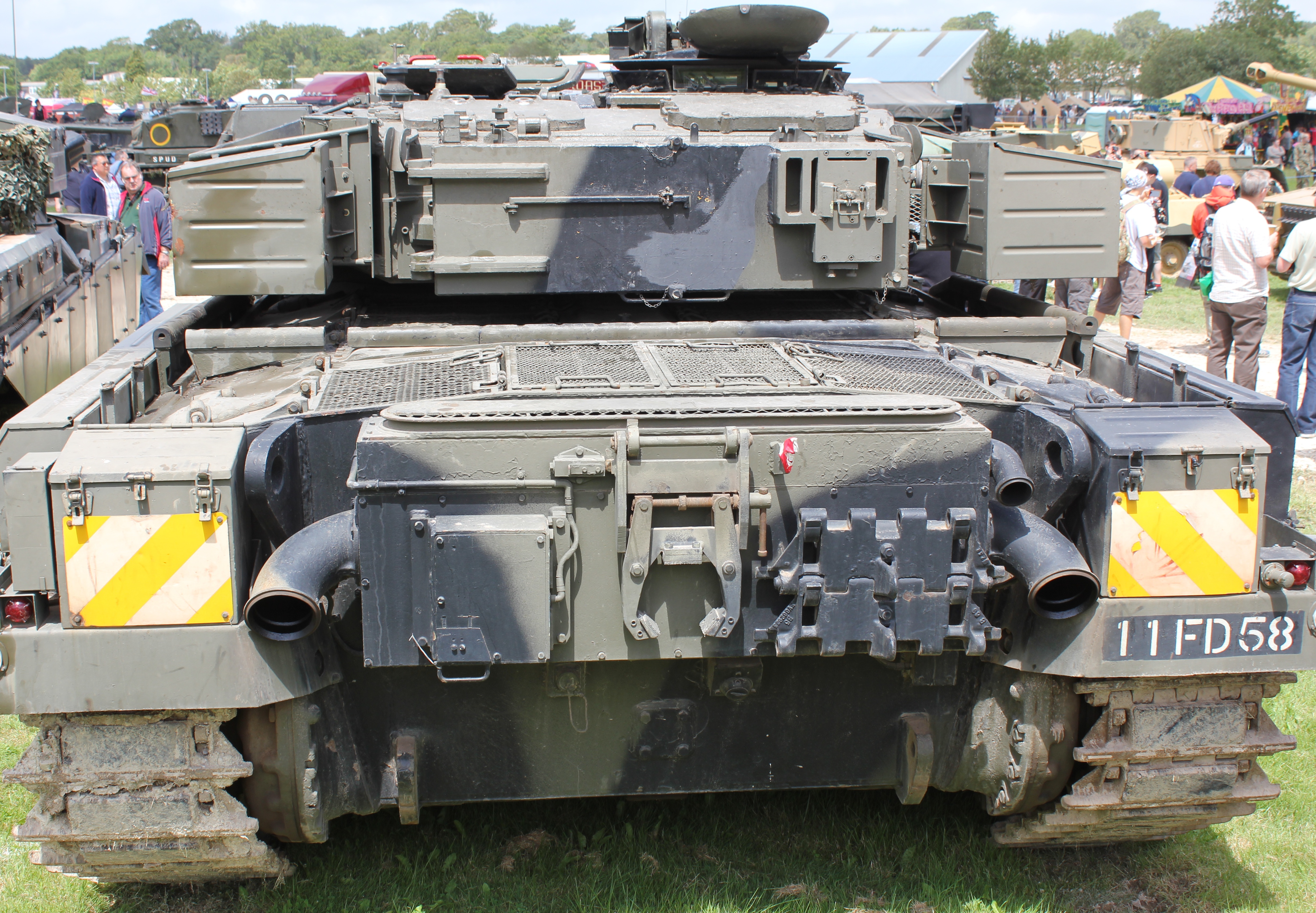
The upgraded Nuclear, Biological, Chemical (NBC) Filtration system can be seen on the back of the turret.


.
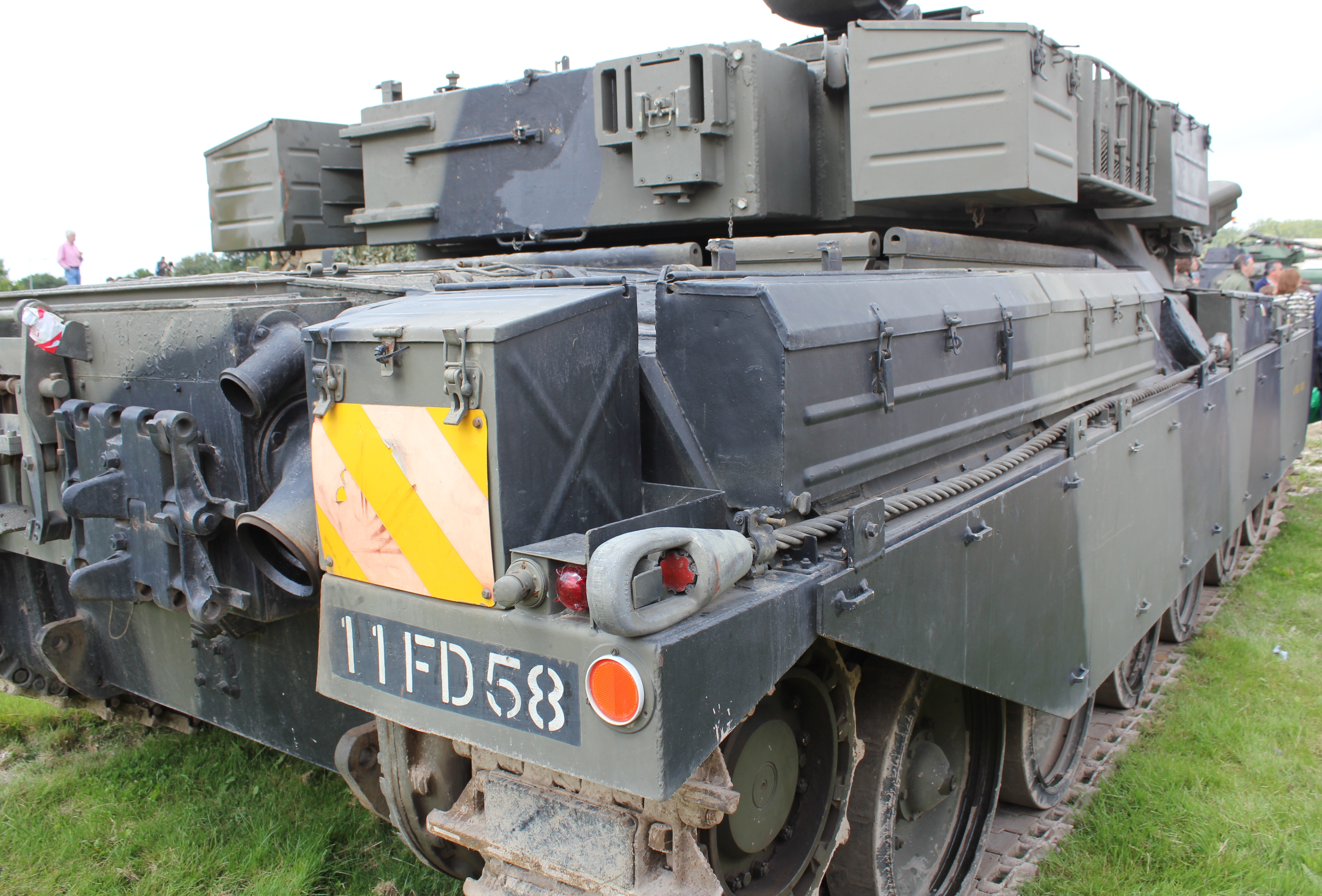
Steel towing cable lashed to the side.

.
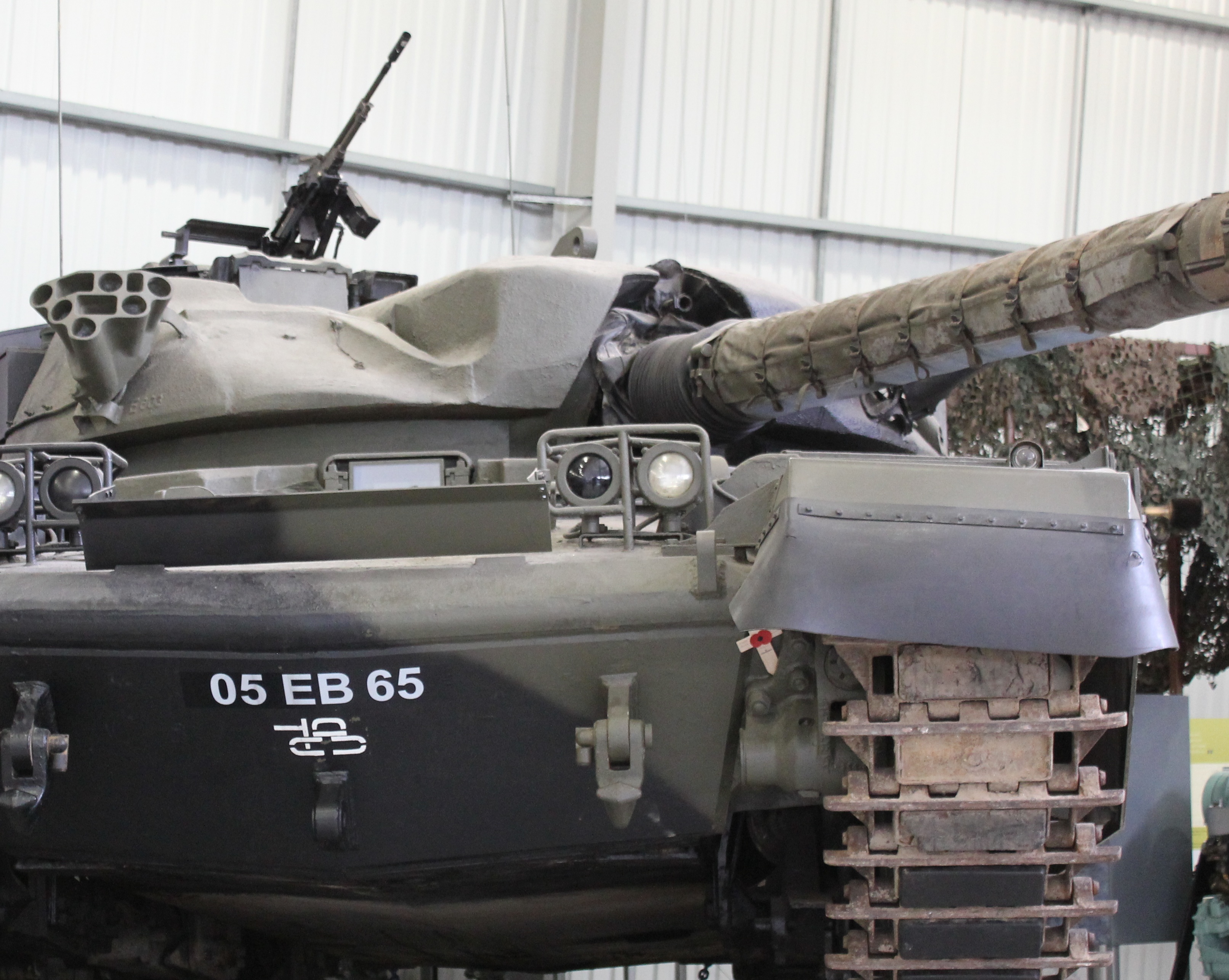
Stillbrew armour clearly visible on this Mark 11.

.
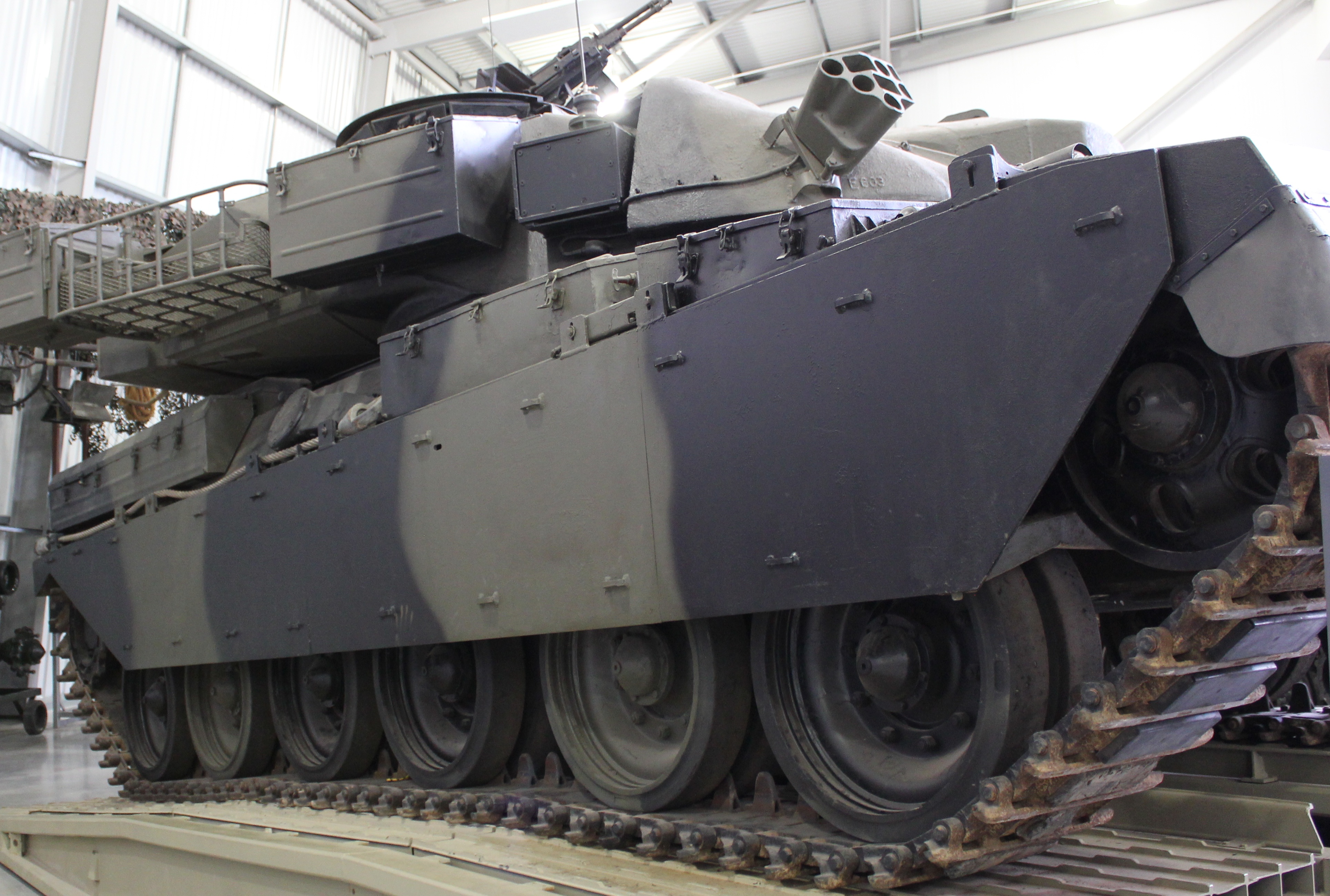
Twin wheels in six bogies.

.
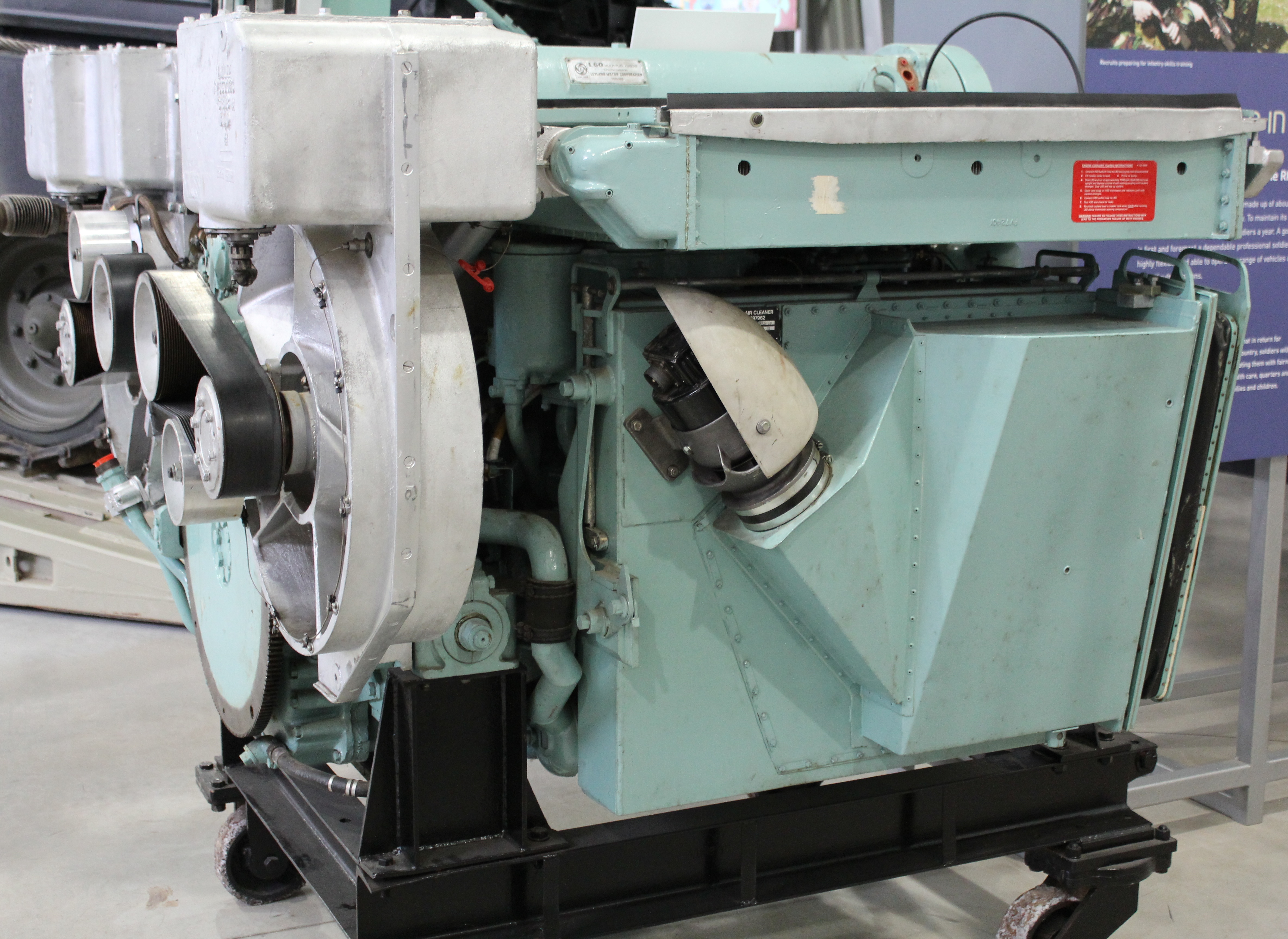
The Leyland L60 Engine power-pack for the Chieftain 

.
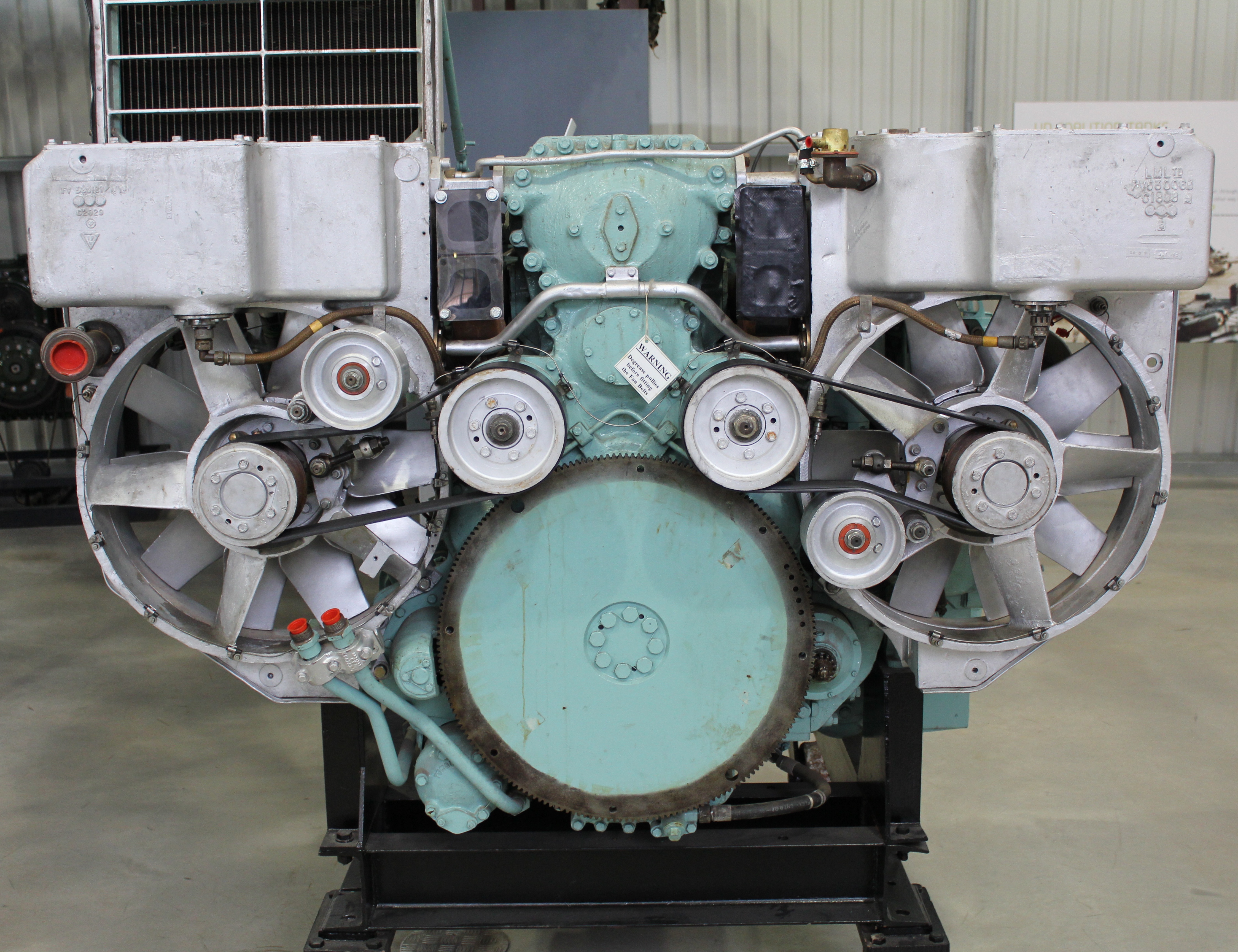
6-cylinder (12-piston) liquid-cooled two-stroke, multi-fuelled engine producing 750bhp at 2100rpm.

.
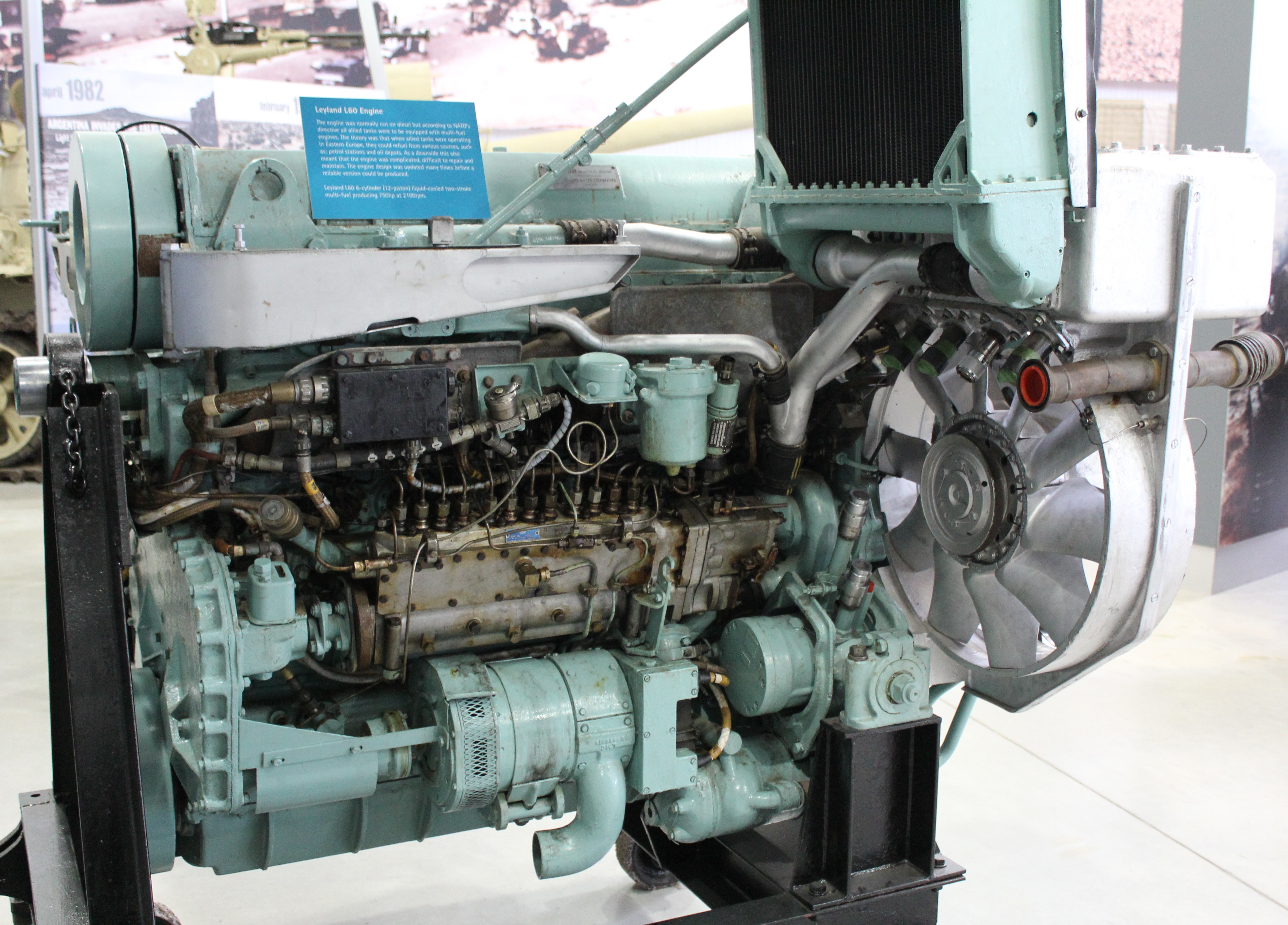
The multi-fuel element, a NATO directive, meant that the engine was complicated and difficult to maintain. It was plagued with problems in the early days.

.
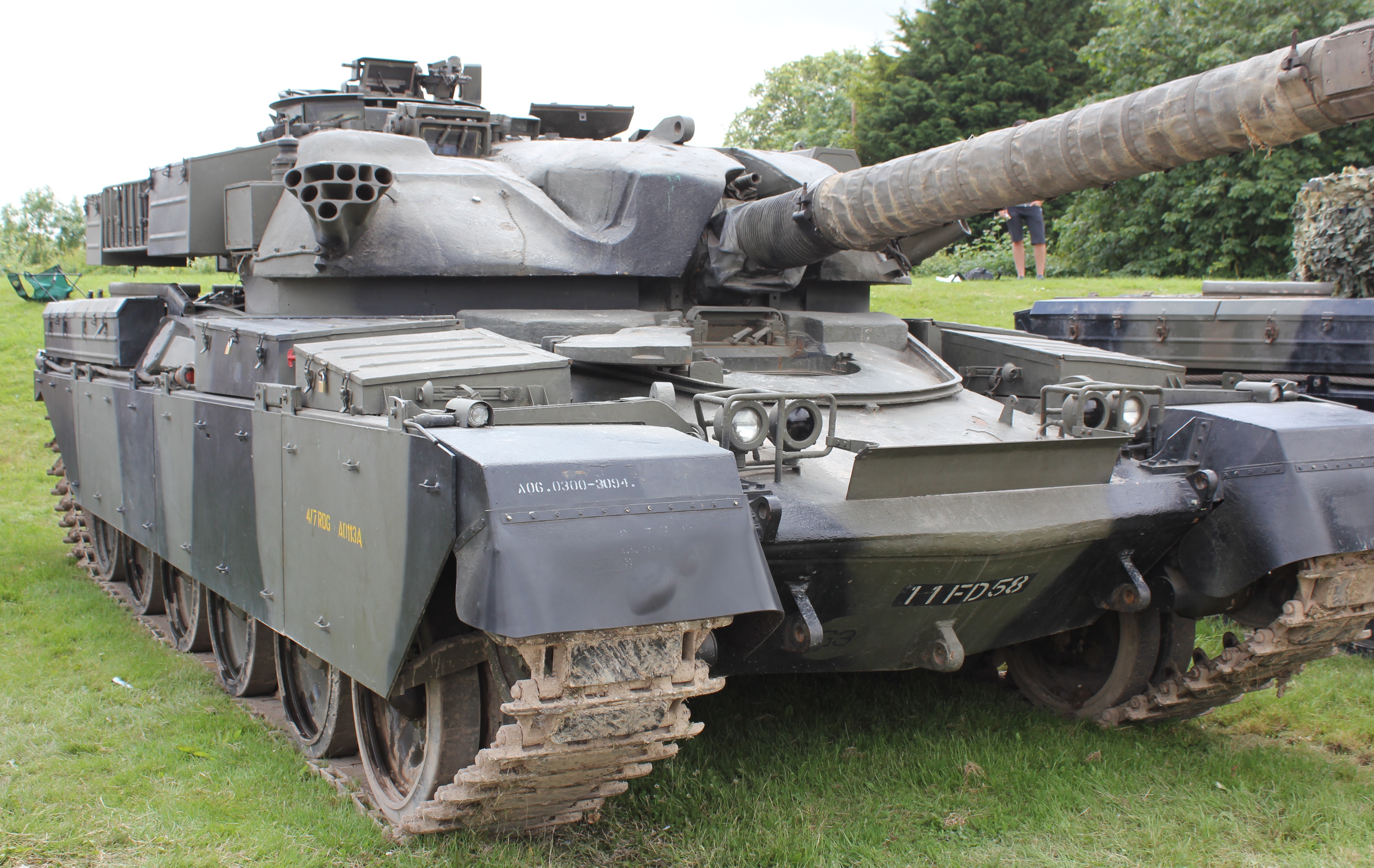
Smoke projectors, six each side of the turret.

.
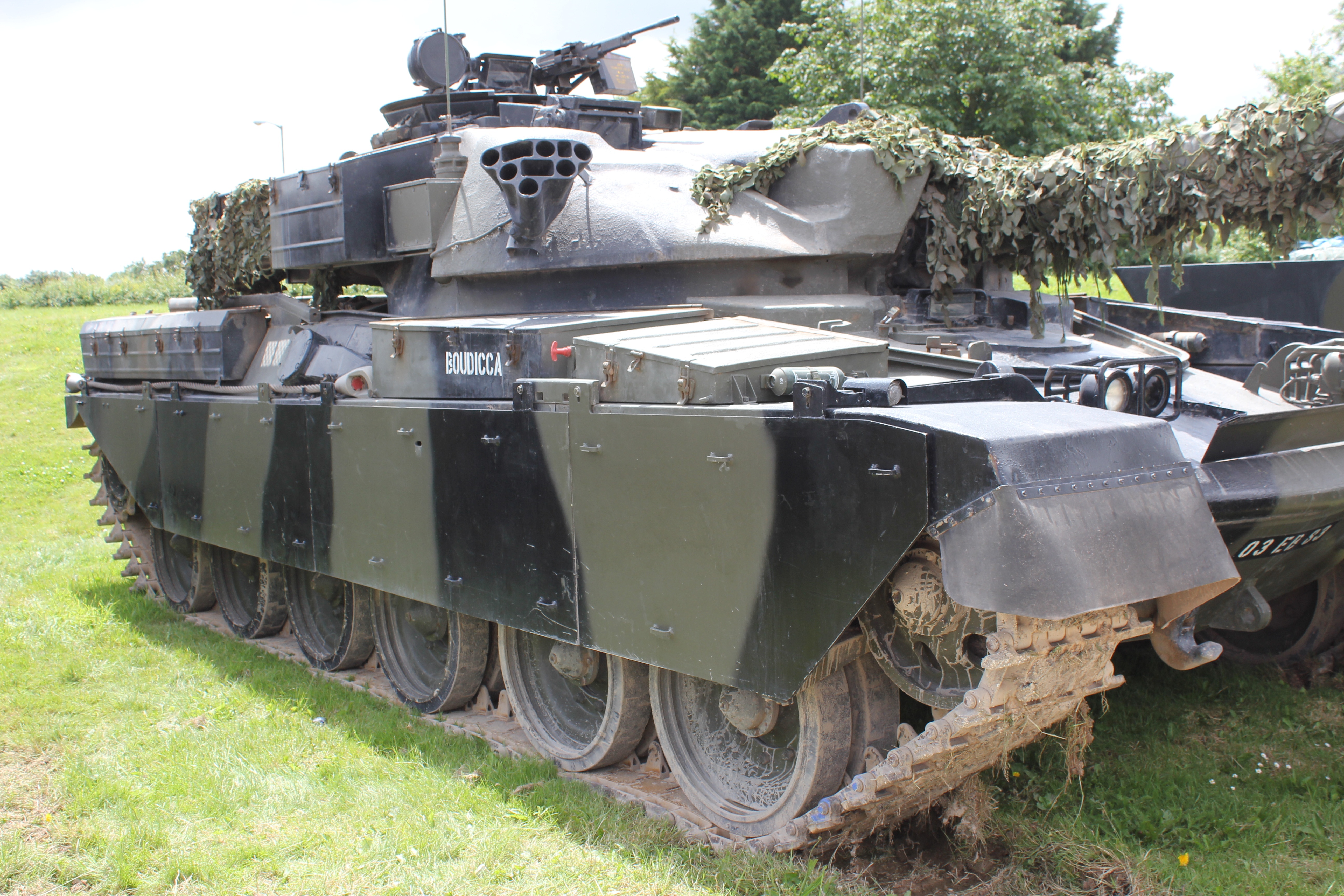
Weighing in at 56 tons, it could still reach a speed of 20mph off road and 30mph on road

.
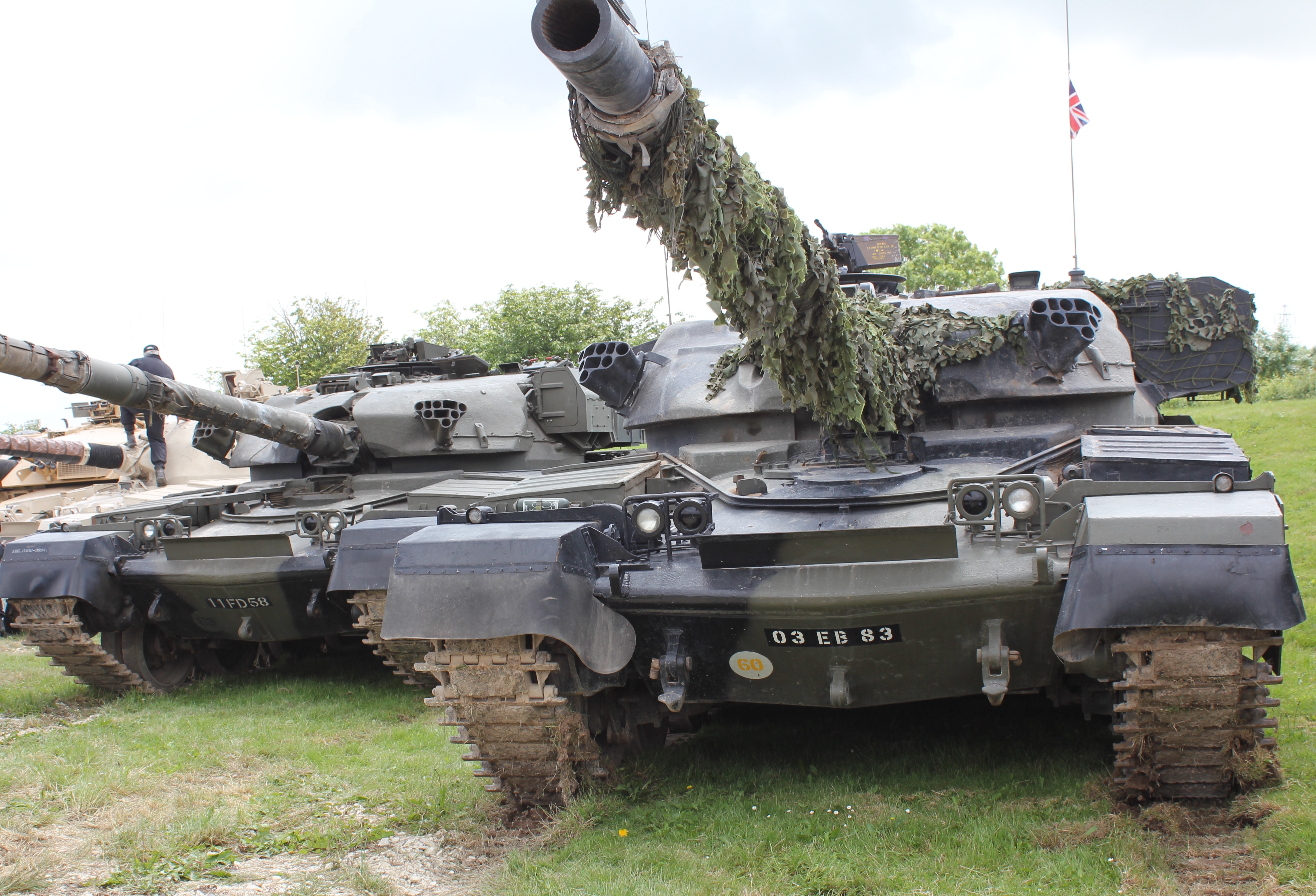
Mark 11 on the left and Mark 10 on the right.

.
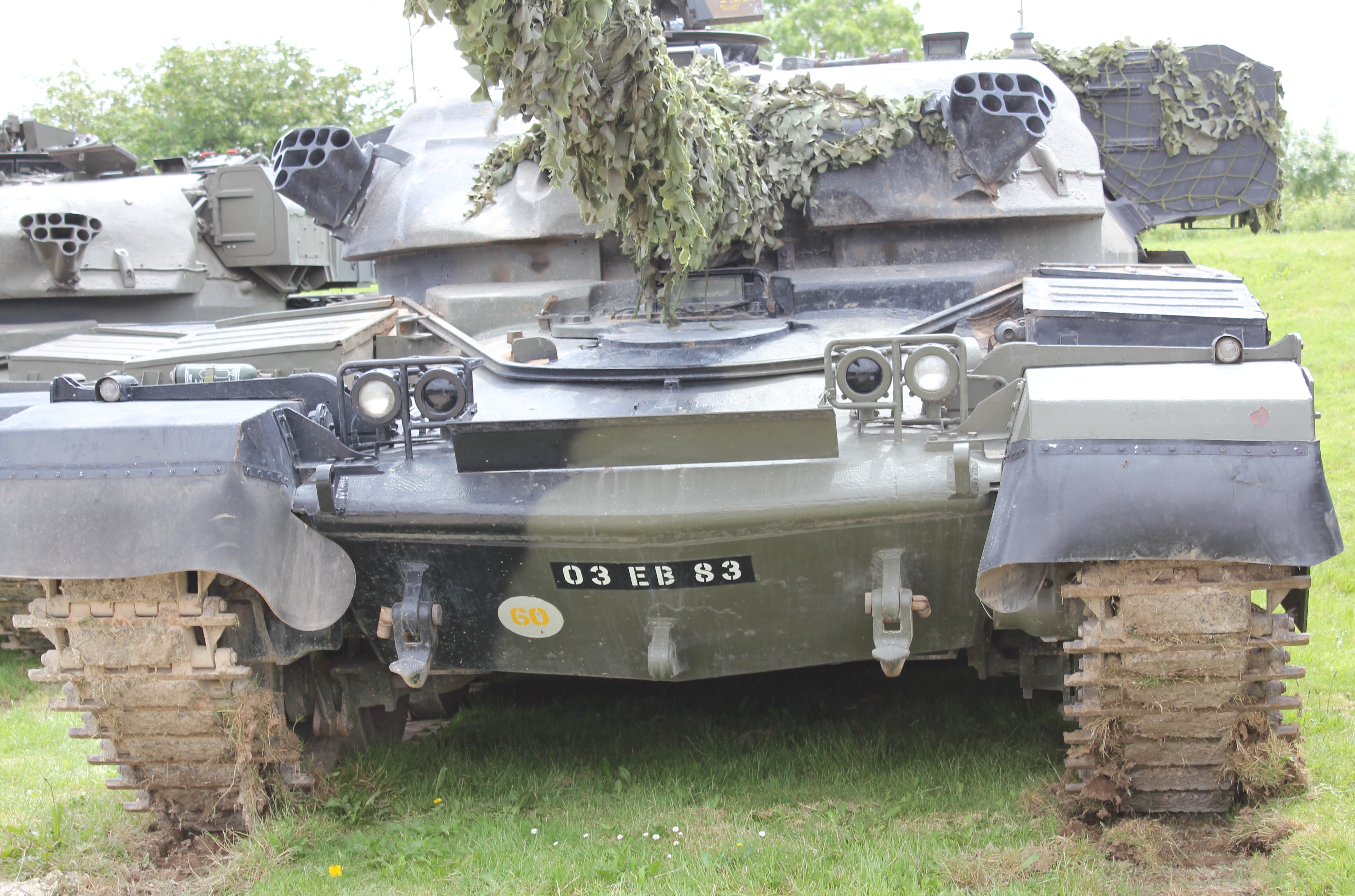
The Chieftain carried 64 rounds of 120mm and  6,800 rounds of 7.62mm.

.
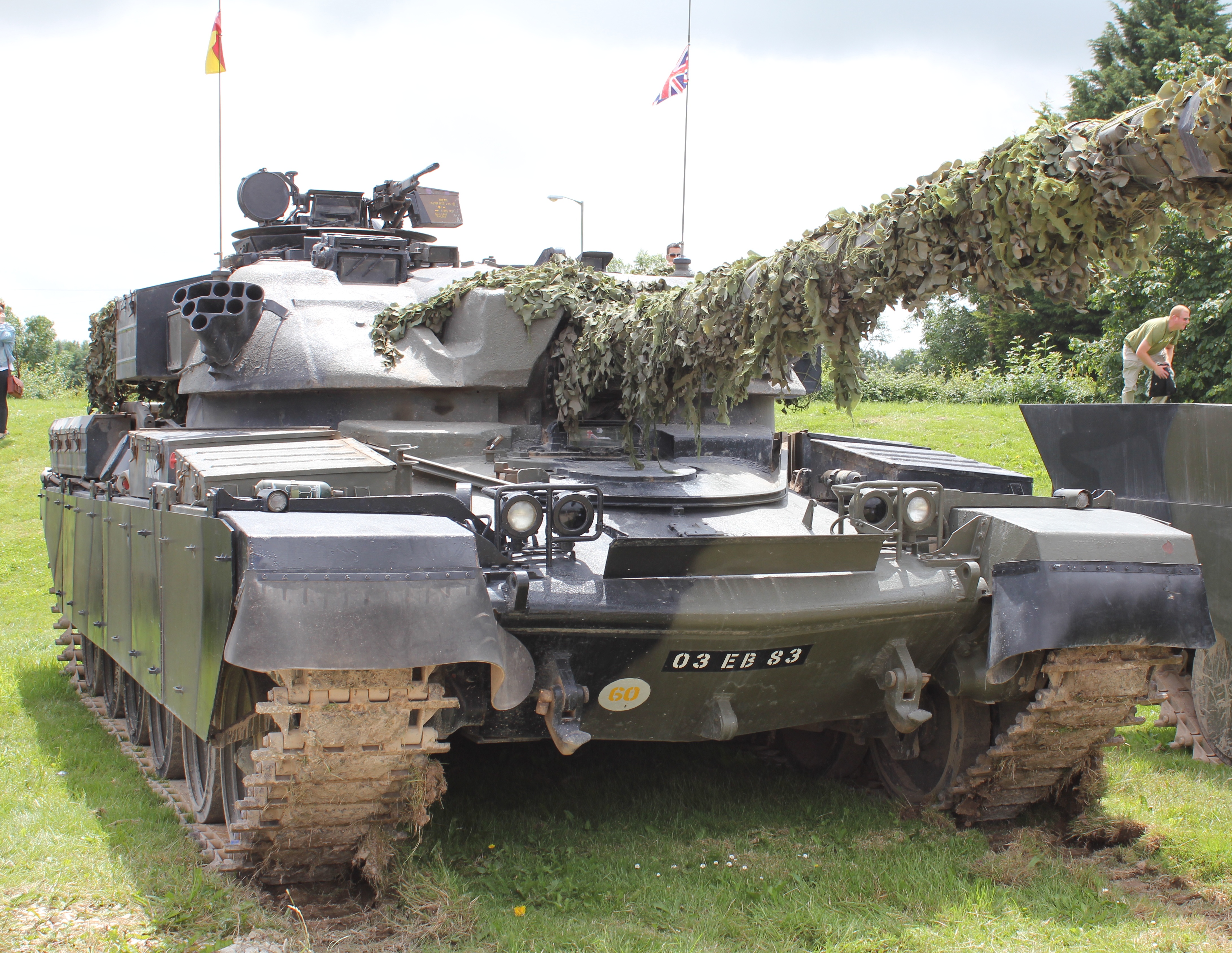
The L11 series 120mm rifled tank gun could fire a variety of projectiles, including the L23A1 ADFSDS-T (Armour Piercing Fin Stabilised Discarding Sabot Tracer) and L31 HESH (High Explosive Squash Head).

.
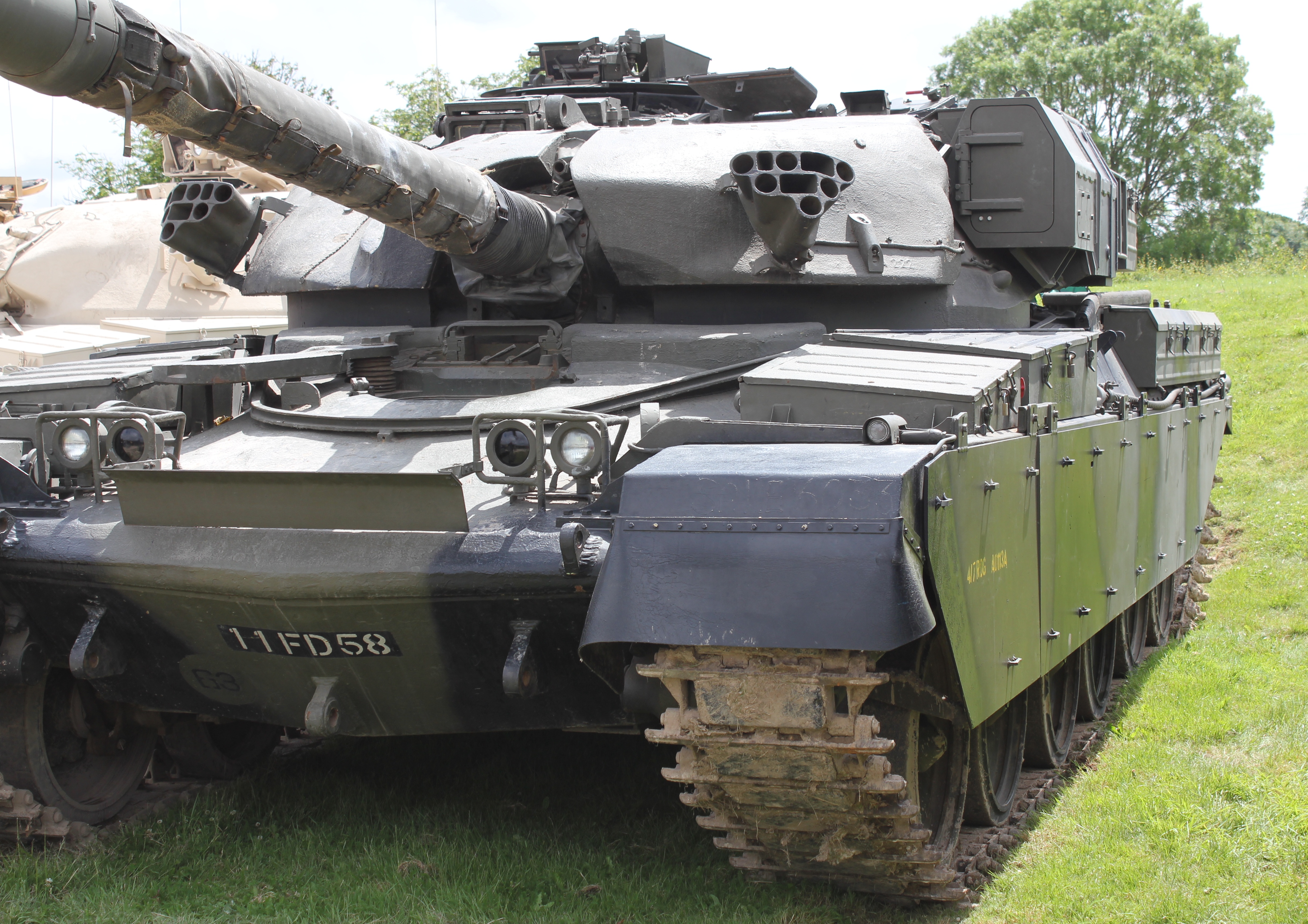
The Glacis armour was 120mm thick.

.

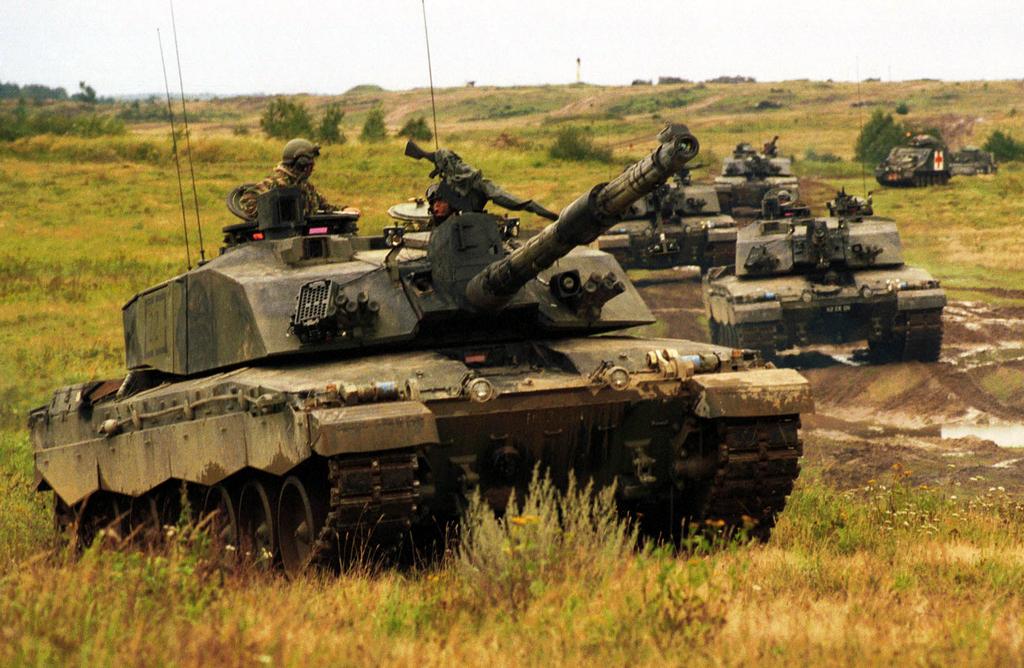
Chieftains in motion.

My intention is not to portray a particular message, but just share some of my research and experiences with you.  This is the fifth of my new ‘Cold War’ series, supporting the writing of my new ‘Cold War’ series of novels, covering the hypothetical invasion of West Germany by the Warsaw Pact in the 80’s. ‘The Red Effect’.

.
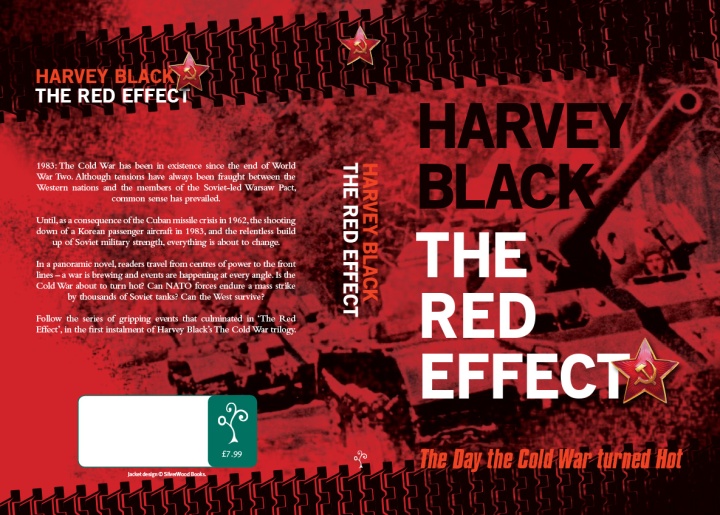
HarveyBlack-Red Effect150313

The equipment Photographs and Blog are copyrighted to Harvey Black
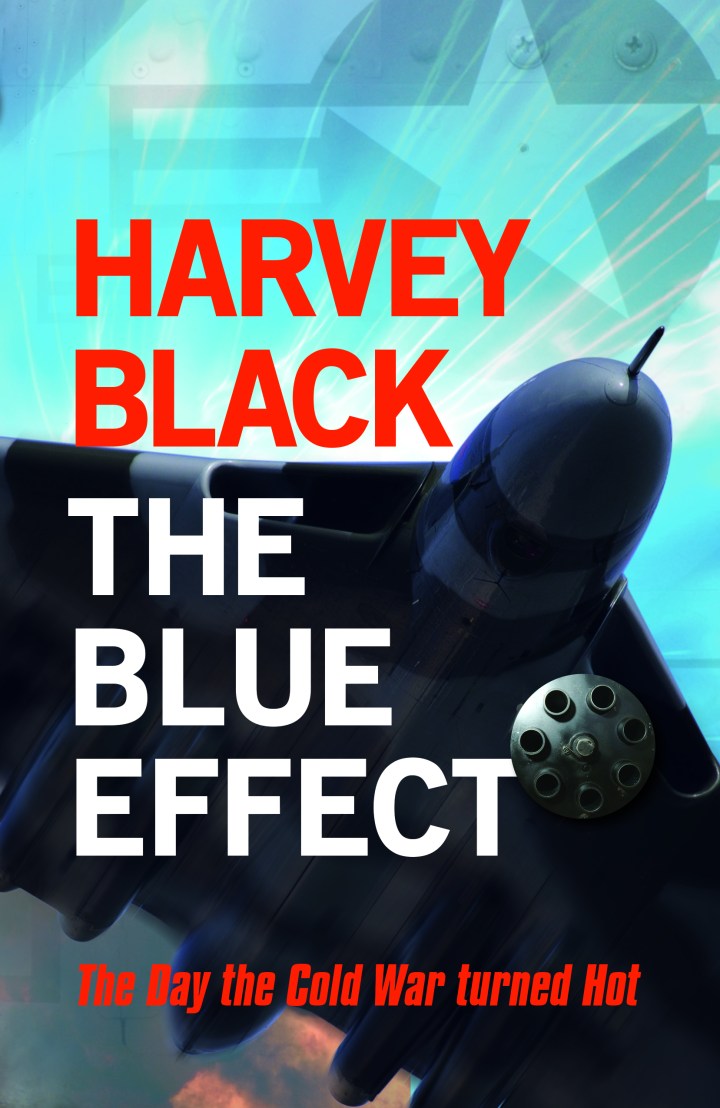
The Blue Effect. The latest Review.

.

Your Weekend Read: The Blue Effect
Written by Mad Duo on 25 April, 2014.

.

Reforger-tanks

Reforger – tanks

.
If you are one of those who’ve read the first and second installments of Harvey Blacks’s Cold War Series, be advised: the wait is over. The third and final installment is out. The Blue Effect is now available on Kindle and having started reading it I can say it was worth the wait. In this final installment we will find out if NATO’s plan to trade space for time to execute Reforger (allowing reinforcement of the Europe) will work.
Warning: spoilers
We find NATO forces struggling to consolidate their defenses after Soviet chemical weapon strikes. To compound this, the Soviets have executed a large scale airborne operation in the NATO rear area. The Warsaw Pact is now attempting an encirclement of British Army of the Rhine (BOAR) forces. As the novel begins, the Soviet 3rd Shock Army is pushing beyond the River Leine. This is forcing decimated British battle groups back into the Soviet Airborne task force attacking their flanks and rear.

.

The Blue Effect_high resolution-2

.
Harvey Black – the Blue Effect

This passage gives you an idea about NATO’s precarious situation:
“With the River Leine breached, the Soviet air-to-ground strikes increased in intensity, and armour and infantry flooded across. Elements of the battered 10th Guards Tank Division had created a bridgehead before releasing elements to strike south increasing the pressure on the British 22nd Armoured Brigade who were desperately attempting to hold back the deluge that was building up to their front. In the meantime, the three battalions of the 108th Air Assault Regiment continued to expand their own bridgehead, creating space and passage through which 12th Guards Tank Division of 3 Shock Army could transit, quickly overpowering the NATO defence, getting behind them, and cutting them off from their higher command. Once complete, they would push west, at speed, giving the British 1st Armoured Division little time to reform their defence lines. The intermediate objective of the 12th was to link up with 247th Caucasian Cossacks Air Assault Regiment near the Mittellandkanal. The 247th was commanded by Colonel Vydina who had conducted a descent, a parachute assault, further west, securing the western end of the gap. Together, the 12th and the 247th would ensure a crossing of the River Weser before 1st British Corps could complete their Defensive preparations.

.
2000 8 JULY 1984. COMBAT TEAM DELTA. ROYAL HUSSARS.
DITTERKE, WEST GERMANY.
THE BLUE EFFECT -3 DAYS
Corporal Mason helped drag Trooper Mann from the damaged Challenger Tank. The crewman had a minor wound to his head from a ricochet, and a more serious wound; a smashed shoulder. The other two men were safe, ensconced with an infantry section. A mere 500 metres away, the BMD, responsible for the tank’s demise after hitting it with a Sagger missile, was still smoldering, an airborne soldier broken and battered lay close to the rear hatch, the rest of the soldiers blackened and unrecognizable in the troop compartment to the rear. After a HESH round had demolished the airborne infantry vehicle and crew, those who had been able to escape the inferno inside, had been immediately cut down by a pintle-mounted Gympy on top of a British 432. The infantry were from 3rd Battalion, the Queen’s Regiment, having got separated from their parent unit, and seeking support and protection from their much larger cousins. A second BMD was burning furiously a further 100 metres east. Clouds of thick, black, oily smoke funneled upwards, an advert to anyone watching that there had been a clash between opposing forces.”

.

YWR | The Blue Effect

.
If you enjoyed the first two novels this one is a must buy. It launches the reader back into the melee of a Cold War gone hot. I have found my productivity has dropped to zero since purchasing this novel [Note: much to the Mad Duo’s annoyance.] as I’ve again been sucked into Black’s bleak alternate history universe. For those of you as depressed as I was by this story arch coming to a finale, do not fret. Harvey is beginning work on a new even more apocalyptic series.

.
Read my review of the first two books in the series here: http://www.breachbangclear.com/your-weekend-read-harvey-black/

Have a good weekend and enjoy Your Weekend Read.
Groz
images_mad_duo_Over_Duo

.

9781781322215-PerfectCOVER.indd

.

Now available on Kindle.

.

.

.

The Blue Effect_high resolution-2

.

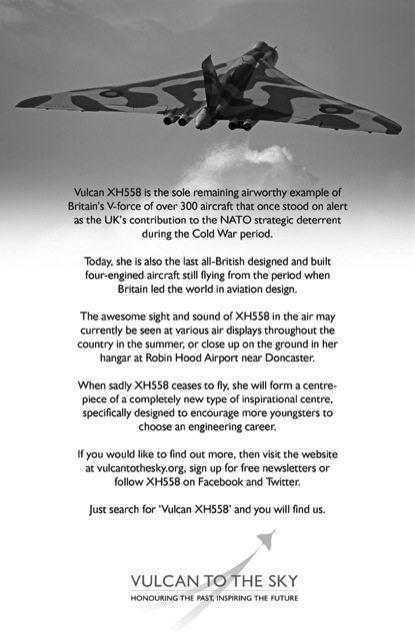
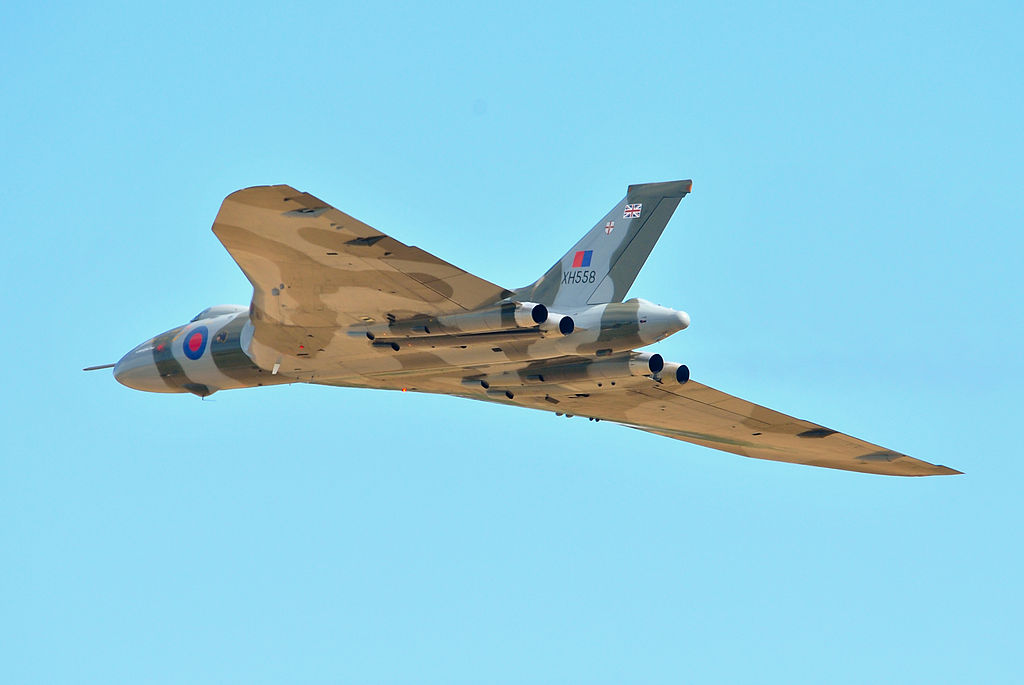
More about the Avro Vulcan in future Posts and of the great work being done to keep this particular aircraft flying.

And a big thank you XH558 team for allowing me to use the above photograph 

Cover image (C) of Andrew Brown and the Vulcan to the Sky Trust – image of XH558

Now available.  I would like to take this opportunity to thank everyone for their support in reading the first two novels in the series, it is really appreciated. HB

.

9781781322215-PerfectCOVER.indd

.

‘The Black Effect’ – Available on Kindle.

.

TBE revised - FOR SCREEN-1

The Black Effect

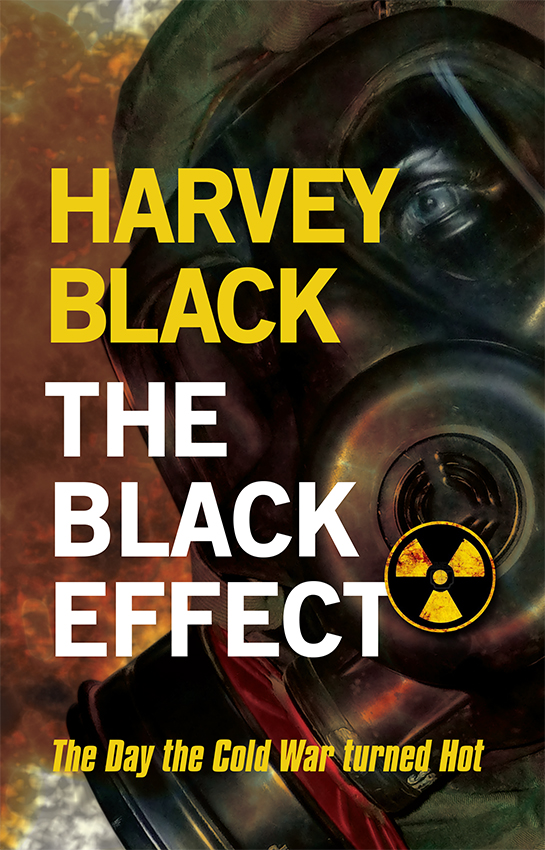
An economy on the verge of collapse, demands from their allies for funding to continue the expansion of communism, and a conventional Army, Navy and Air Force costing the country 20% of its GDP… The Soviet Union is in trouble. Where should they turn for a solution?

Their answer: the capitalist West. On the 4th July 1984, the Soviet Union and the Warsaw Pact launched a massive preemptive conventional strike against the West, sending the NATO forces reeling.

Follow Jacko and Bradley and their allies as they fight off the Soviet Union. Can the NATO forces recover and hold their ground? Will the Soviet Union succeed? Or will it end in an outright defeat? Follow the series of gripping events in The Black Effect, the second installment in Harvey Black’s Cold War trilogy.

The first novel in my ‘Cold War’ trilogy, The Red Effect, published by SilverWood Books, is now available. Thoroughly enjoyed writing it, as i do with all my novels. There will be three books in total, covering the hypothetical invasion of West Germany, the Federal Republic of Germany, by the Warsaw Pact in the mid 1980’s. Book 1, ‘The Red Effect’, encompasses part of the intelligence build up leading to the initial Warsaw Pact strike against the NATO forces lined up against them. The purpose of the next few posts is to give the reader some additional background information to enhance their reading experience.

.

RedEffect72dpi-4

.

‘The Red Effect’ by Harvey Black – Available now. The Cold War that became a Hot War.

Site and content is copyrighted to Harvey Black.


The Blue Effect. The day the Cold War turned Hot. Part 2.

.

Should the Cold War have turned Hot, it was expected that NATO would lose a number of airfields to attacks by missiles, ground to air strikes and ground assaults from Spetsnaz forces. To counter this, a number of Autobahns, German Motorways, were flagged to be used as potential runways.

.

Harvey Black (5)

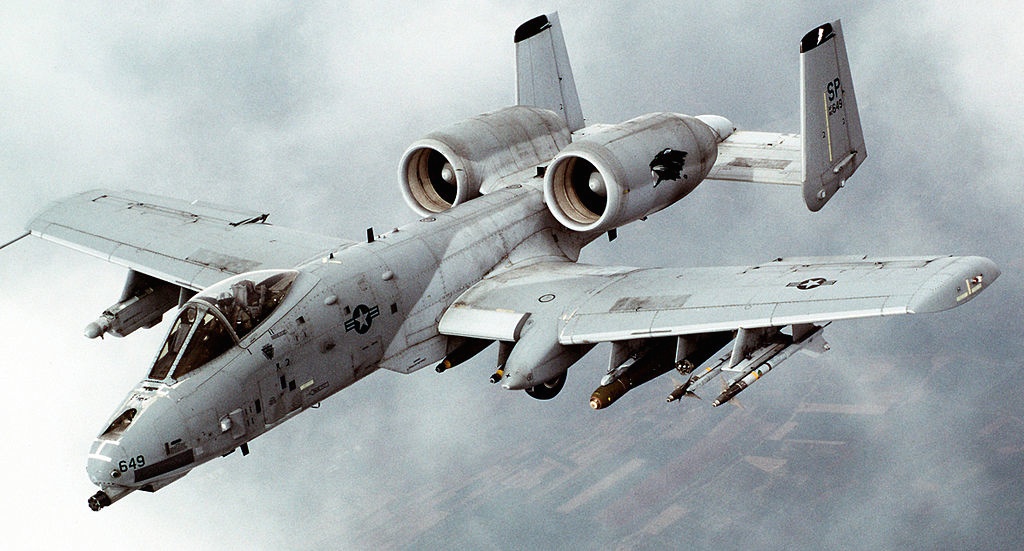
The A-10 Thunderbolt, affectionatly known as the ‘Warthog’. The Warthog was a fixed-wing, close air support, ground attack aircraft. Designed around the GAU-8 Avenger, 30mm rotary cannon, the airframe protected by titanium armour. The aircraft was designed to fly with one engine, one tail, one elevator and one half of a wing missing.  it was a foe to be reckoned with.

.

Harvey Black (6)

The A-10 was envisioned to fly from forward airbases and semi-prepared runways.

.

Harvey Black (7)
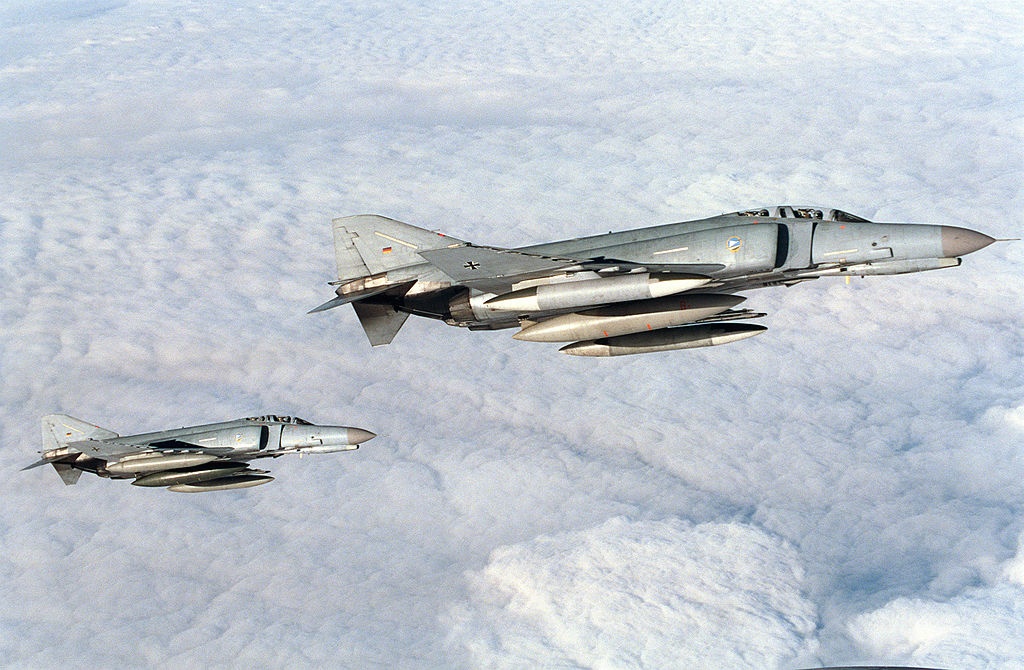
Phantoms (wood burners) would also play an active role in the defence of NATO during any attack by the Warsaw Pact.

.

Harvey Black (8)

They too had been successfuly tested taking off and landing on German Motorways.

.

Harvey Black (9)
Even lumbering giants such as the Hercules transport aircraft could fly from selected sections of Motorway.

.

Harvey Black (10)
One aircraft was even more versatile.

.

Harvey Black (11)
Our very own Harrier Jump-jet.

.

Harvey Black (13)

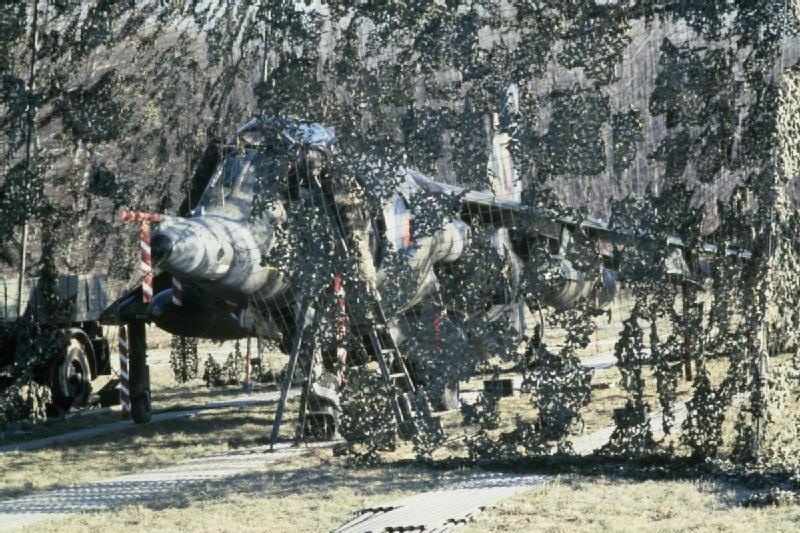
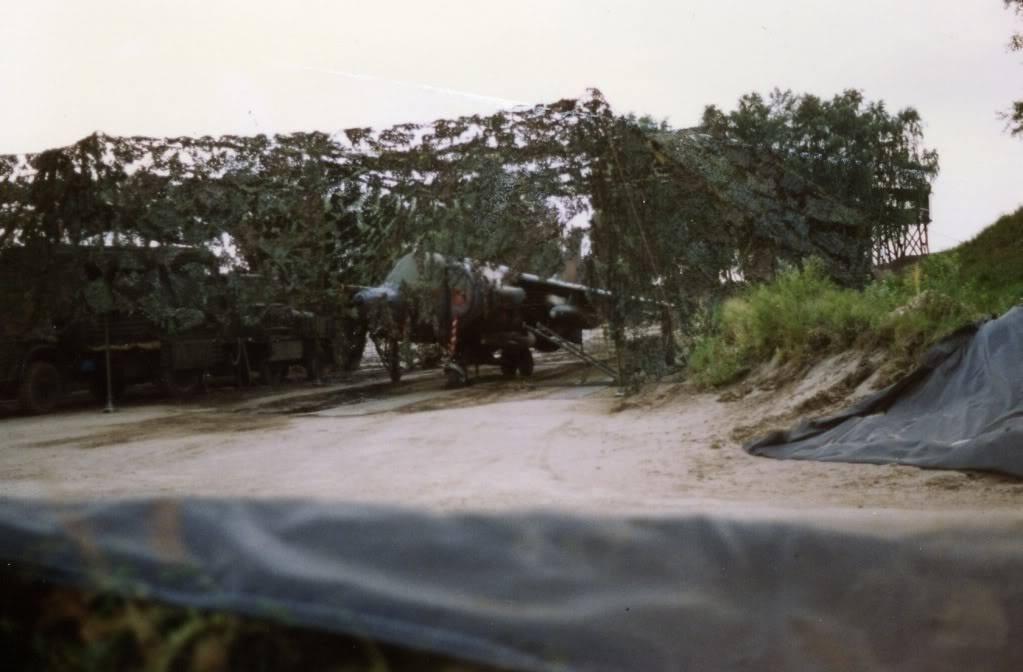
The Harrier could be maintained in the field.

.

Harvey Black (14)
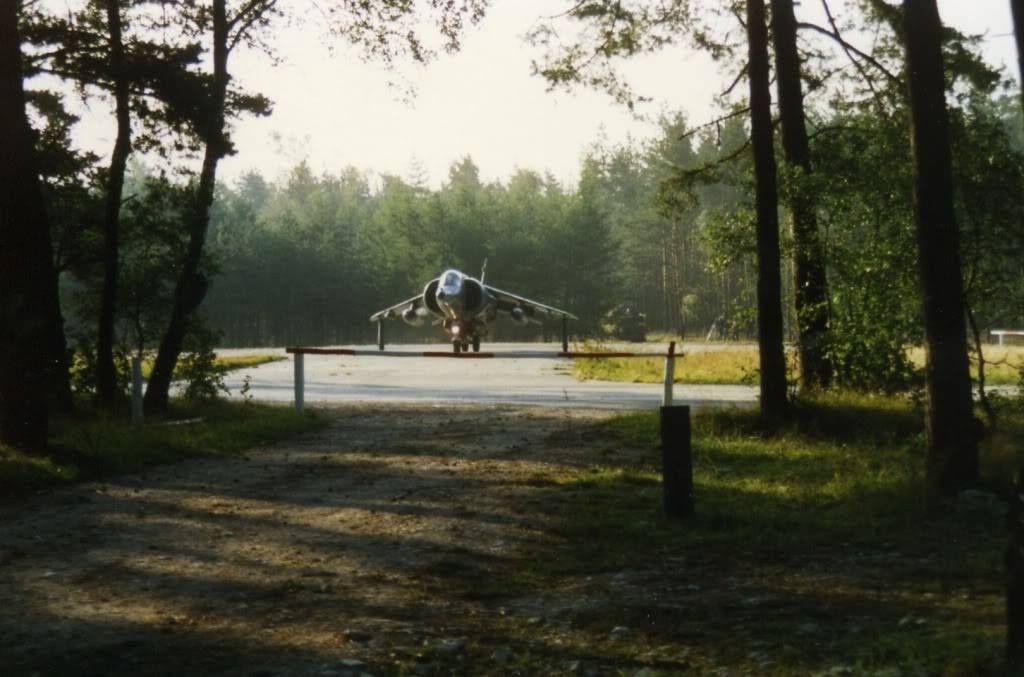
The Harrier’s VTOL (Vertical Take Off and Landing) capability allowed it to be deployed from very small prepared clearings or helipads.

.

Harvey Black (12)

It was believed that, in a high-intensity conflict, air bases would be extremely vulnerable. The capability to scatter Harrier squadrons out to small ‘alert pads’ would allow the sir force to continue close support operations.

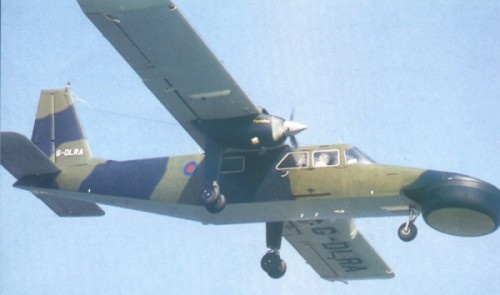
One other aircraft I have included, is the MODs BN-2T Islander, which was converted to carry a multi-mode all weather radar linked, to two workstations inside the cabin

.

Harvey Black (15)

Nicknamed the ‘Flying Platypus’ due to its flattened, circular nose.

.

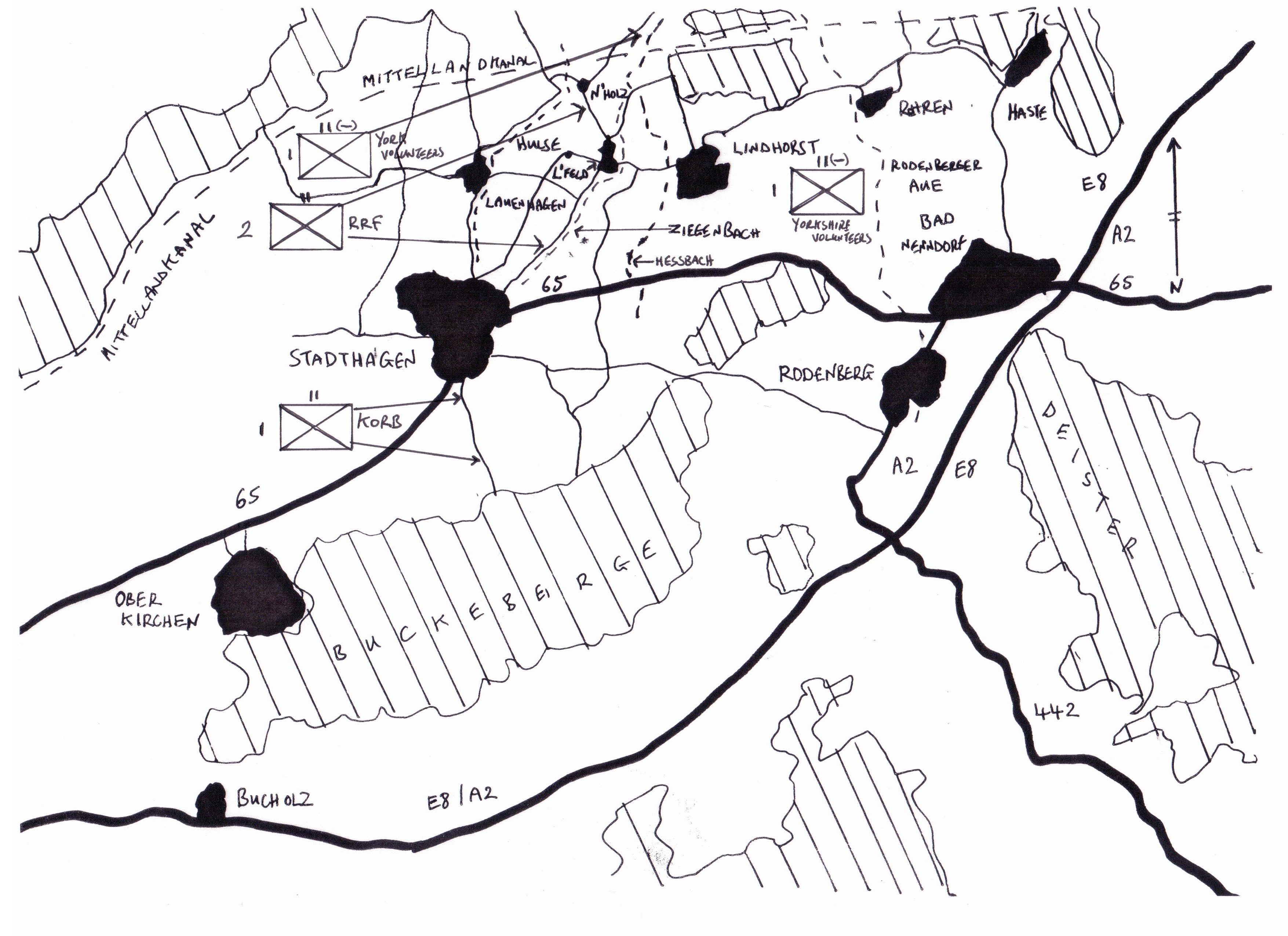
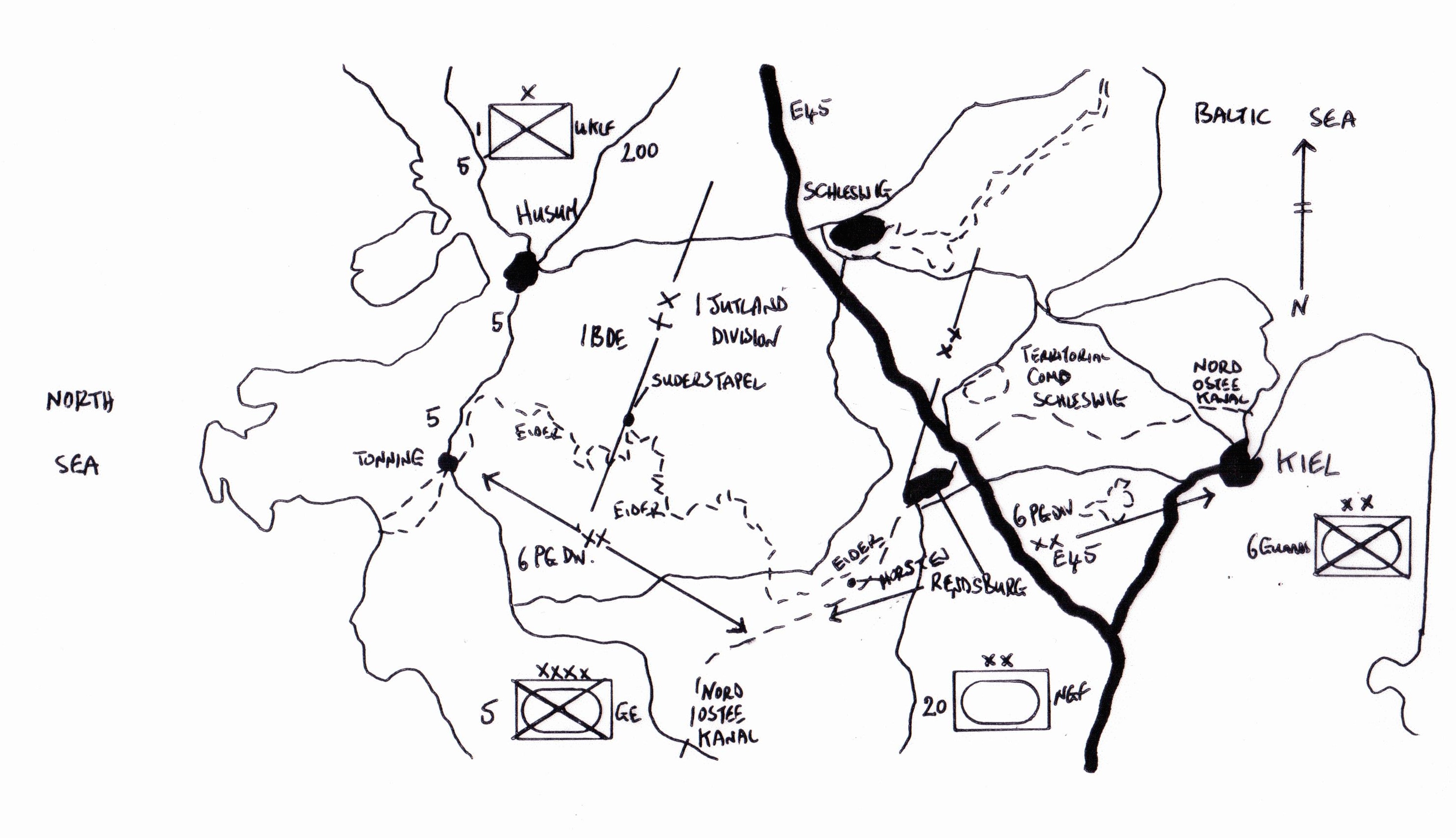
To finish off this post, I have attached the maps that are included in the novel, The Blue Effect. These can be printed and used as guides whilst reading. The maps can act as SPOILERS, so only refer to them in conjunction with the relevant sections of the book.

.

Harvey Black (16)

The ‘Layer Cake’ deployment of NORTHAG and CENTAG Forces

.

Harvey Black (17)

Stadthagen – 24th Brigade, 1 British Corps

.

Harvey Black (18)

Schleswig Holstein – Landjut Forces

.

Harvey Black (19)

Gomfritz – 3rd Brigade/3rd US Armoured Division

.

Harvey Black (20)

River Weser – 1 British Corps Counter Attack

.

.

9781781322215-PerfectCOVER.indd

.

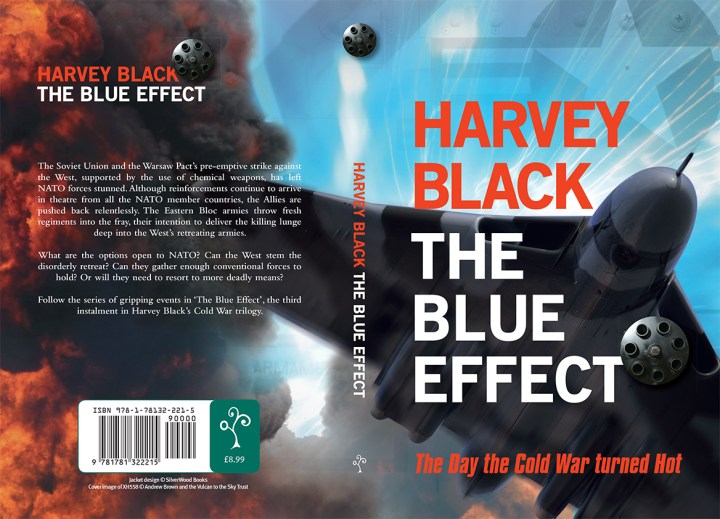
The Soviet Union and the Warsaw Pact’s pre-emptive strike against the West, supported by the use of chemical weapons, has left NATO forces stunned. Although reinforcements continue to arrive in theatre from all the NATO member countries, the Allies are pushed back relentlessly. The Eastern Bloc armies throw fresh regiments into the fray, their intention to deliver the killing lunge deep into the West’s retreating armies.

.

What are the options open to NATO? Can the West stem the disorderly retreat? Can they gather enough conventional forces to hold? Or will they need to resort to more deadly means?

.
Follow the series of gripping events in ‘The Blue Effect’, the third instalment in Harvey Black’s Cold War trilogy.

.

Vulcan

.

The Blue Effect_high resolution-2

.

Cover image (C) of Andrew Brown and the Vulcan to the Sky Trust – image of XH558

I would like to take this opportunity to thank everyone for their support in reading the first two novels in the series, it is really appreciated. For the next Post, I will include the maps that can be seen at the beginning of The Blue Effect. This enable readers to print them as reference. HB

.

9781781322215-PerfectCOVER.indd

.

‘The Black Effect’ – Available on Kindle.

.

TBE revised - FOR SCREEN-1

The Black Effect

An economy on the verge of collapse, demands from their allies for funding to continue the expansion of communism, and a conventional Army, Navy and Air Force costing the country 20% of its GDP… The Soviet Union is in trouble. Where should they turn for a solution?

Their answer: the capitalist West. On the 4th July 1984, the Soviet Union and the Warsaw Pact launched a massive preemptive conventional strike against the West, sending the NATO forces reeling.

Follow Jacko and Bradley and their allies as they fight off the Soviet Union. Can the NATO forces recover and hold their ground? Will the Soviet Union succeed? Or will it end in an outright defeat? Follow the series of gripping events in The Black Effect, the second installment in Harvey Black’s Cold War trilogy.

The first novel in my ‘Cold War’ trilogy, The Red Effect, published by SilverWood Books, is now available. Thoroughly enjoyed writing it, as i do with all my novels. There will be three books in total, covering the hypothetical invasion of West Germany, the Federal Republic of Germany, by the Warsaw Pact in the mid 1980’s. Book 1, ‘The Red Effect’, encompasses part of the intelligence build up leading to the initial Warsaw Pact strike against the NATO forces lined up against them. The purpose of the next few posts is to give the reader some additional background information to enhance their reading experience.

.

RedEffect72dpi-4

.

‘The Red Effect’ by Harvey Black – Available now. The Cold War that became a Hot War.

Site and content is copyrighted to Harvey Black.


The Cold War Years. A Hot War in reality Part 4.

My  ‘Cold War’ trilogy is complete. I enjoyed writing it and the empty space it has left will be filled with a new set of books, based on the outcome of a strategic nuclear exchange. An Apocalyptic trilogy, survival at its worst.

The Cold War era started very soon after the end of the second world war, when the communist east, led by the Soviet Union, and the Western world, led by the United States and its NATO allies, faced each across what became known as the ‘Iron Curtain’.

.

.

The capital of Germany, Berlin, was divided into four Sectors. The consequence being, that the three Western Allied powers now controlled territory deep within the Soviet Union Zone of Germany.

Over time, the tensions between the four Allied powers increased, eventually resulting in the Berlin blockade in 1948, when the Soviets attempted to starve West Berlin into submission and force the other three Allied powers out. This failed and the Soviets eventually relented, but an ever-increasing number of East Germans fled to the West; between 150,000 and 300,000 a year during 1951-1953. As a consequence restrictions were placed on movement between the divided country. From 1961, the border was closed and Berlin completely encircled, first by barbed wire, then bricks and finally a concrete wall, along with the infamous ‘death strip’.

Access was now restricted between Berlin and the West. A wall, 124 mile miles in length, was placed around the three sectors of West Berlin, cutting off the city from the rest of the world.

An Iconic picture of the face-off between the West and the East.  The Cold War starts – October 1961.

.

I shall cover various aspects of the two opposing forces, around the period of 1984, providing the backdrop and background information to support my Cold War trilogy.

In 1984/85, the Warsaw Pact was already a significant force, the Soviet Union in particular.

Although the key strategic Nuclear Forces of the Soviet Union and NATO, were either land based or submarine launched, supported by Tactical, Theatre, Nuclear weapons, they also had the use of the Air Force to deliver a nuclear strike.

Soviet Union.

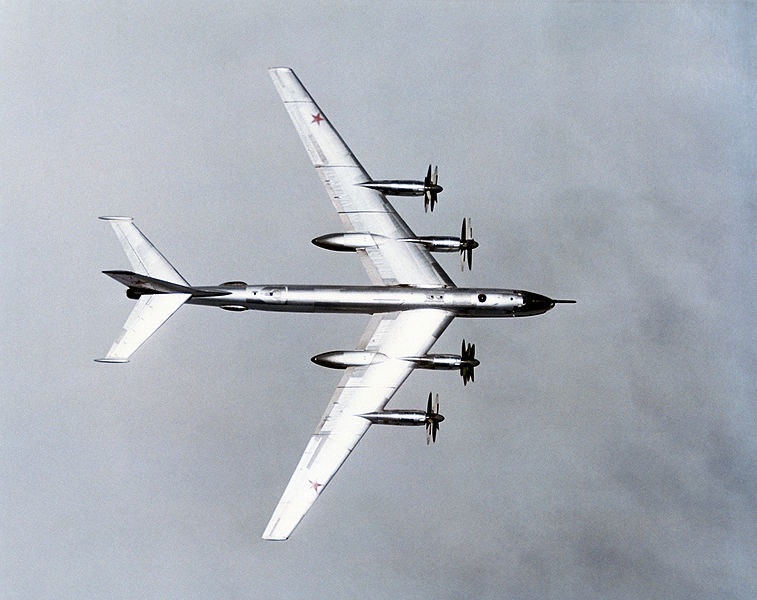
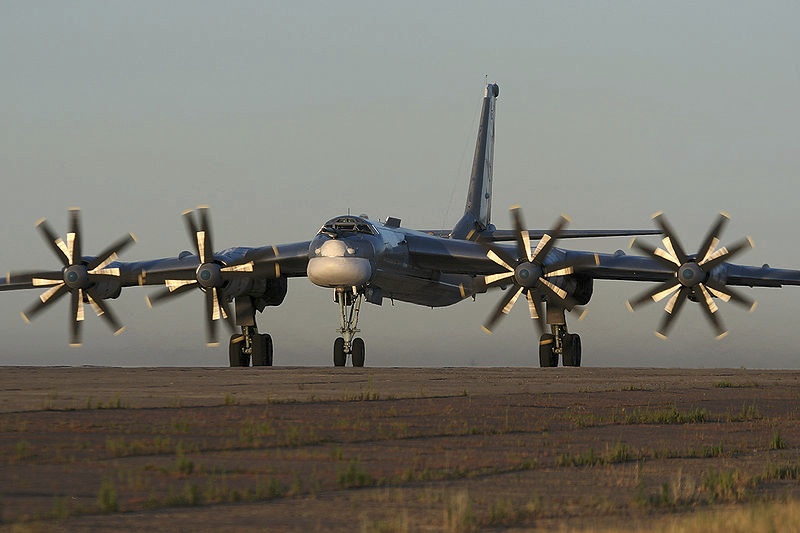
Long Range Bombers – 100 x Tu-95 (Codename Bear). Unknown number of Bear H in production, capable of carrying an air-launched cruise missile.

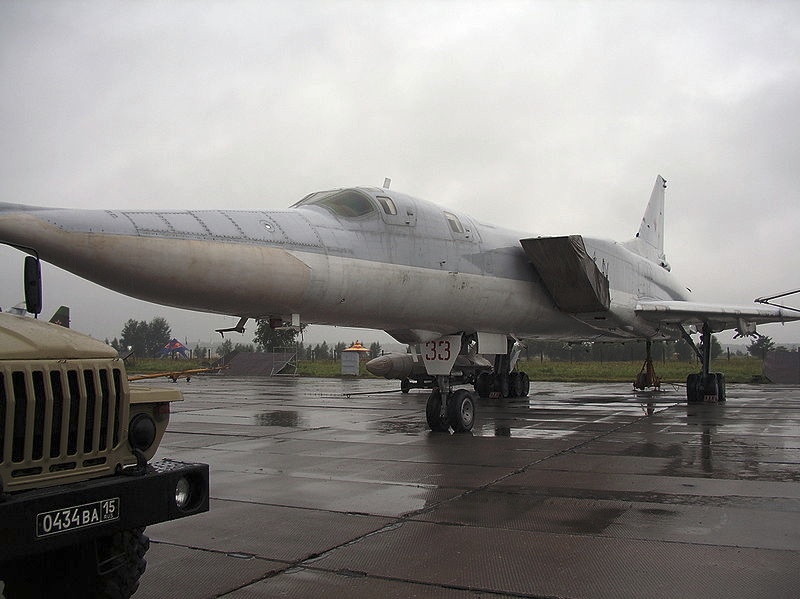
Medium Range Bombers – 220 x Tu-16 (Codename Badger), 125 x Tu-22 (Codename Blinder) and 130 x Tu-22M (codenamed Backfire).

Tu-160 (Codenamed Blackjack).

.

Tupolev Tu-95. (NATO Code Name: Bear). Claimed to be a reverse engineered B-29, Super-fortres. A long wingspan of 164 feet.

.

 Maximum speed of 575 mph with a range of 9,400 miles. Armament of 2 x 23mm AM-23, radar-controlled auto-cannon. 15,000 kilogram payload.

The Tu-95MS variant carried the Kh-55, air-launched strategic cruise missile family, one with a 200 kiloton warhead.

.

Tu-22 Blinder.  A supersonic, swing-wing, long range strategic and maritime strike bomber.

.

Tu-22. Speed of 1,240 mph with a combat radius of 1,500 miles. 1 x 23 mm GSh-23, remote-controlled cannon in tail turret. The Kh-55 nuclear cruise missile has been tested on this aircraft, but no confirmation that it is in service.

.

Tu-160 (Codename Blackjack).  Swing-wing, with a max speed 1,380 mph and a range of 7,600 miles, without in-flight refuelling. Can carry 12 x Raduga Kh-55, nuclear cruise missiles or 12 x Raduga Kh-15 short-range nuclear missiles.

.

Kh-55 Cruise Missile.

.

United States of America

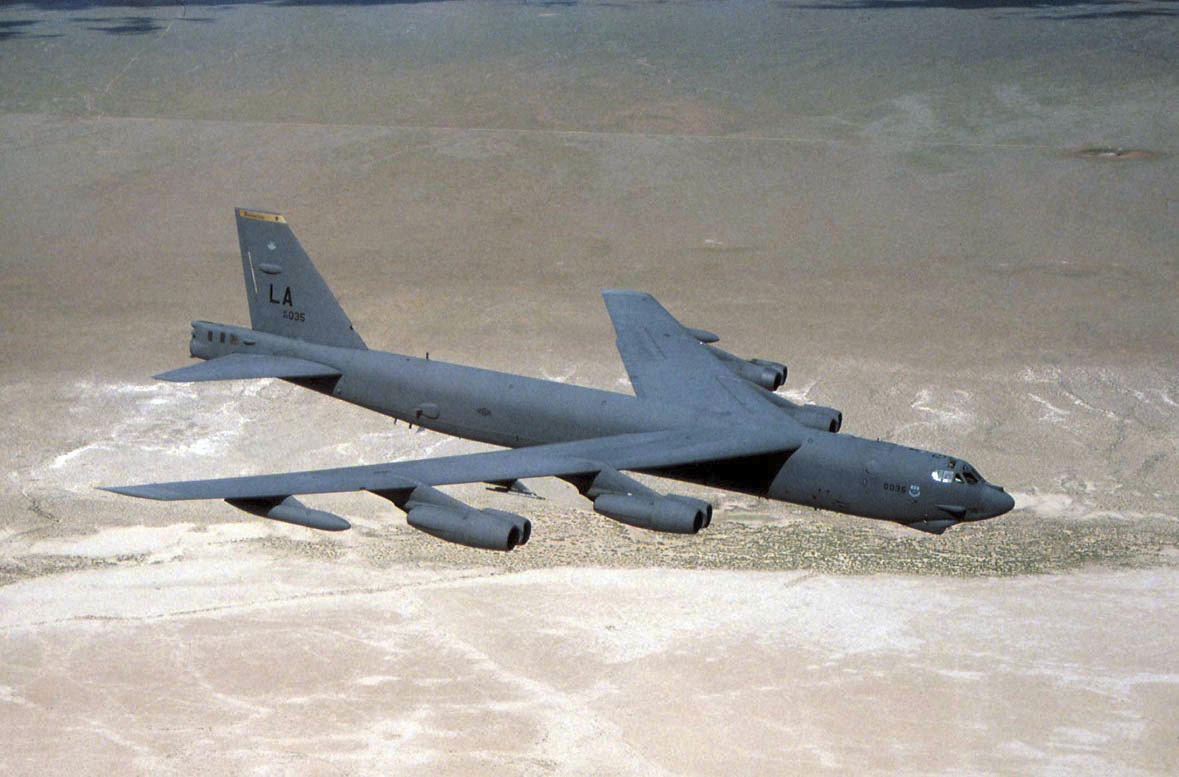
Long Range Bombers – 90 x B-52H and  84 x B-52G

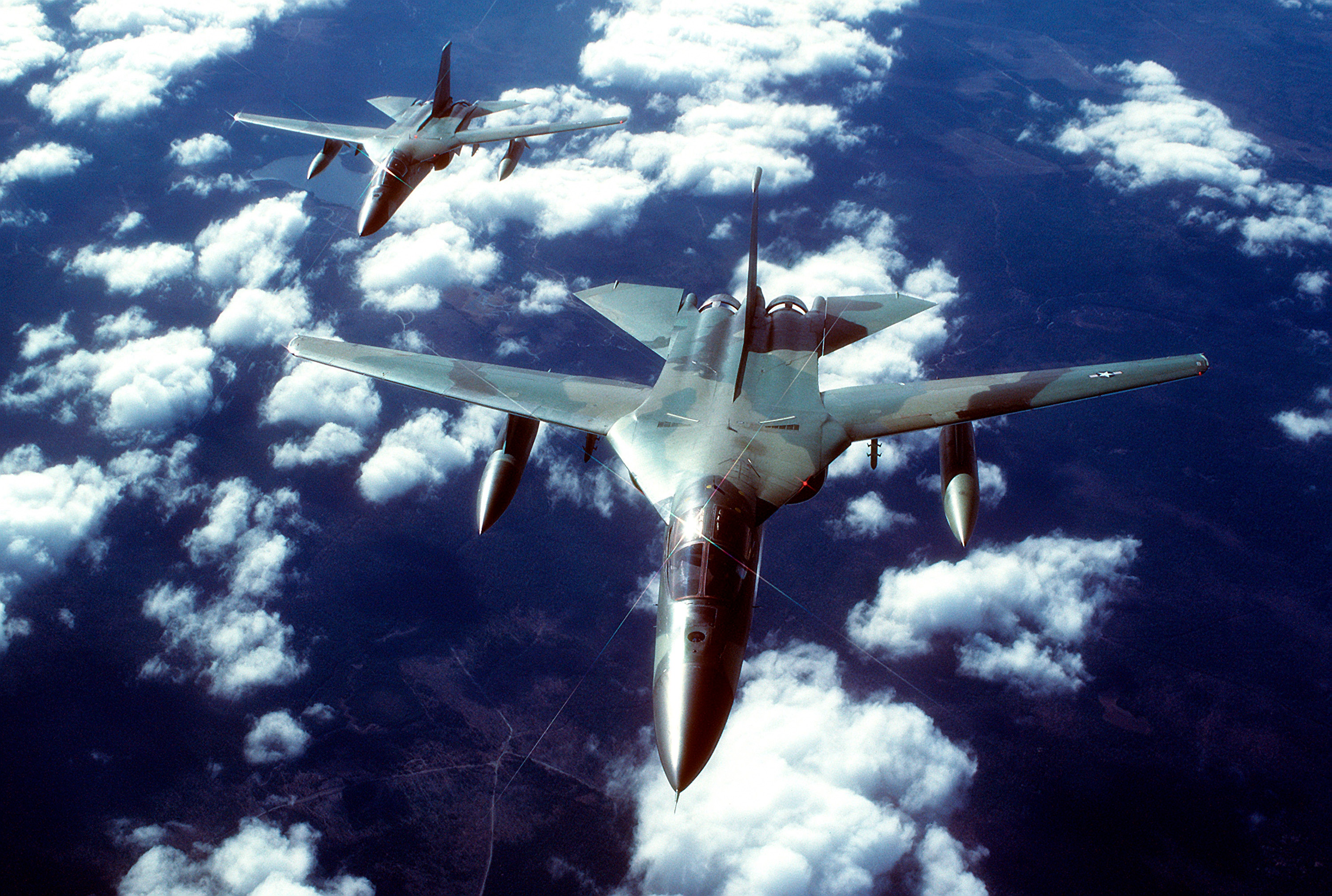
Medium Range Bombers – 56 x FB-111A

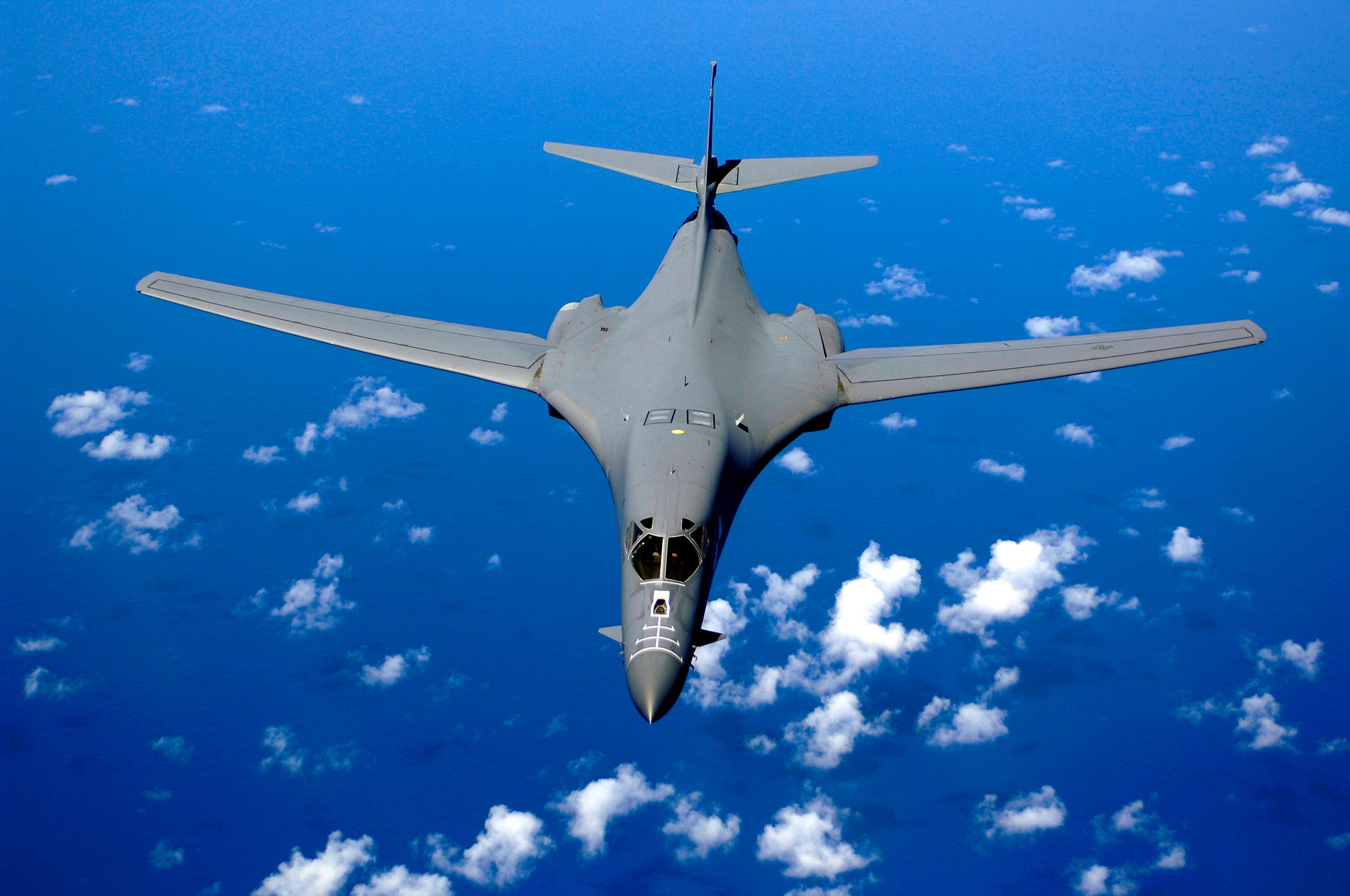
On order – 18 x B-1B bombers (100 planned.)

.

Boeing B-52 Stratofortress, with underslung drones.

.

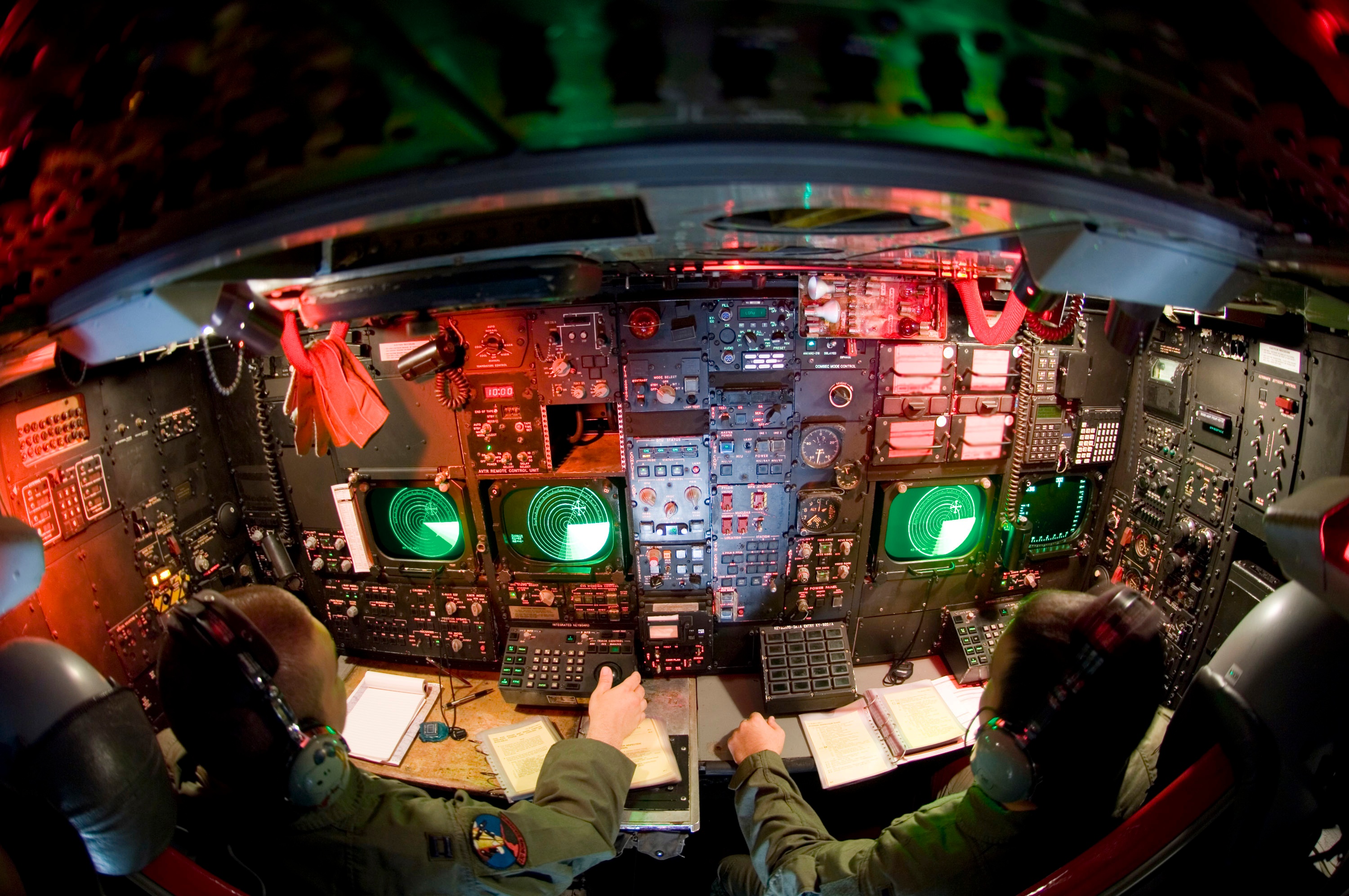
Lower deck of the B-52, dubbed the battle-station.

.

B-52H. Payload of 31,500 kilograms of mixed ordnance. 1 x 20mm M61 Vulcan cannon mounted in remote-control tail turret. The B-28 nuclear bomb could be set for an air or ground burst with a yield of up to 1.45 megaton.

.

Maximum speed of 650 mph, with a range of 3,980 miles.

.

FB-111A, long range bomber. It could carry the AGM-69 SRAM, Short Range Attack Missile (Nuclear). Speed of 1,650 mph with a range of 1,160 nautical miles.

.

Rockwell B-1 Lancer, a four engined, variable-sweep winged strategic bomber. The planned replacement for the B-52. Maximum speed of 830 mph, with a range of 7,456 miles. Can carry 24 x B61 (Max 340 kilotons) or B63 (Max 1.2 megatons) nuclear gravity bombs.

.

B-28 nuclear bomb.

.

United Kingdom

Strategic Long Range Bombers – 130 x Avro Vulcan.B2

.

1024px-Avro_Vulcan_XH558_Duxford_Airshow_2012_(7977149648)

Delta Wing Strategic Bomber

.

Armament: 21 x 454 kilograms of conventional bombs or 1 x free-fall nuclear bomb/1 x Blue Steel missile (1.1 megaton).

.

Maximum speed of 607 mph with a range of 2,600 miles.

.

Blue Steel – Air Launched Cruise Missile.

.

France

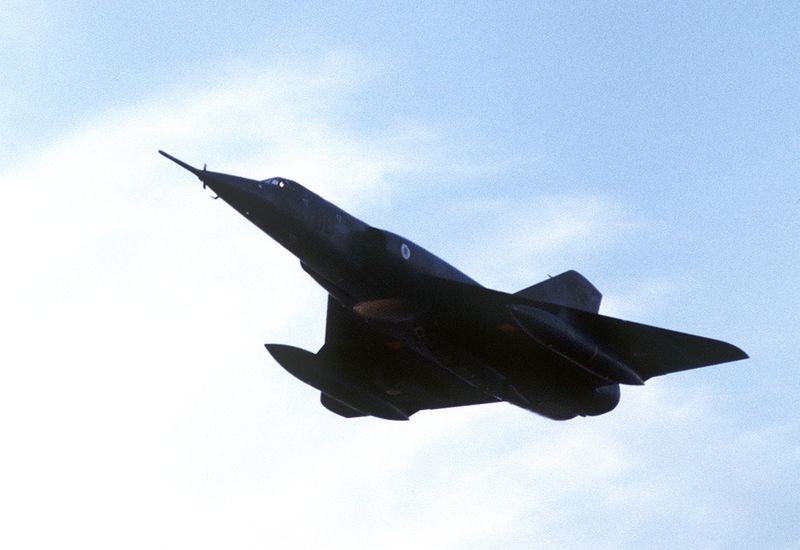
Supersonic Strategic Bombers – 28 x Mirage IVA

.

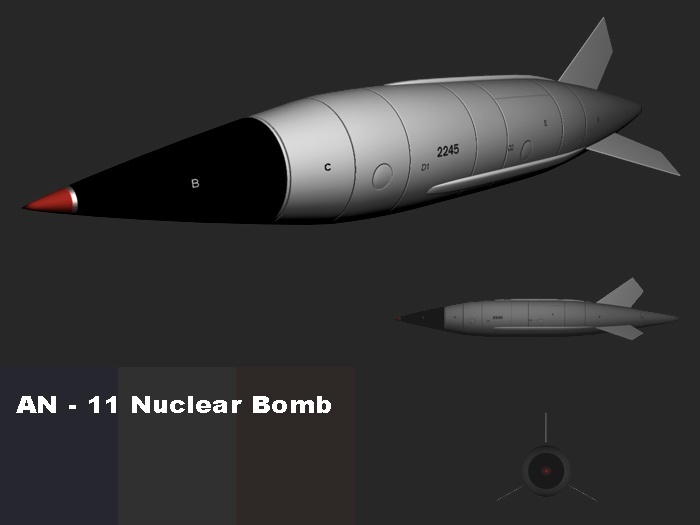
Maximum speed of 1,454 mph and a range of 775 miles. Carries 1 x AN-11 or 1 x AN-22 nuclear bomb (70 kilotons).

.

AN-11 Nuclear Bomb

.

There were also the conventional forces lined up along the Inner German Border, the visible barrier between the Federal Republic of Germany (FRG) and the German Democratic Republic (GDR), or better known as West and East Germany. I shall be covering their organisation and equipment over the coming months.

.

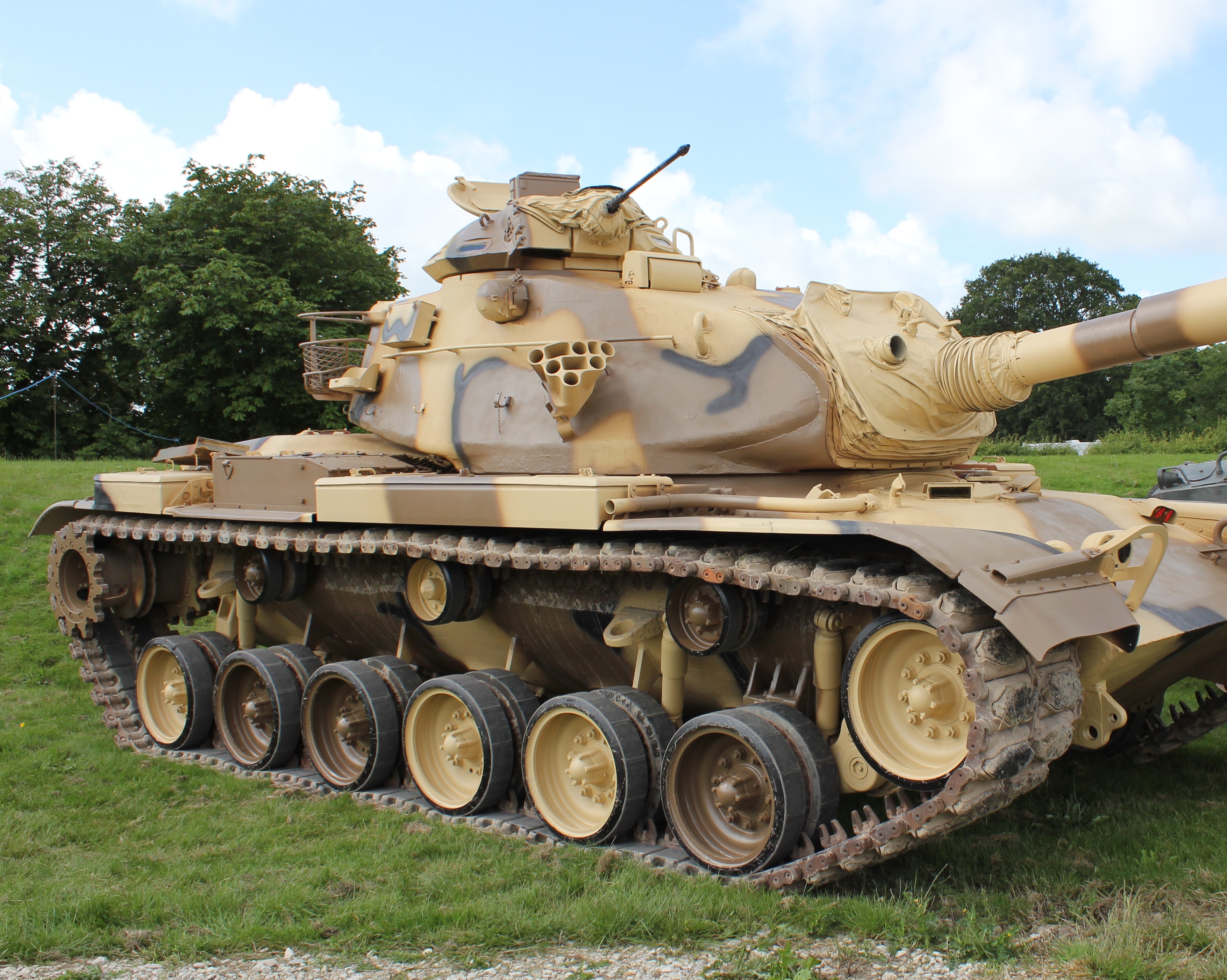
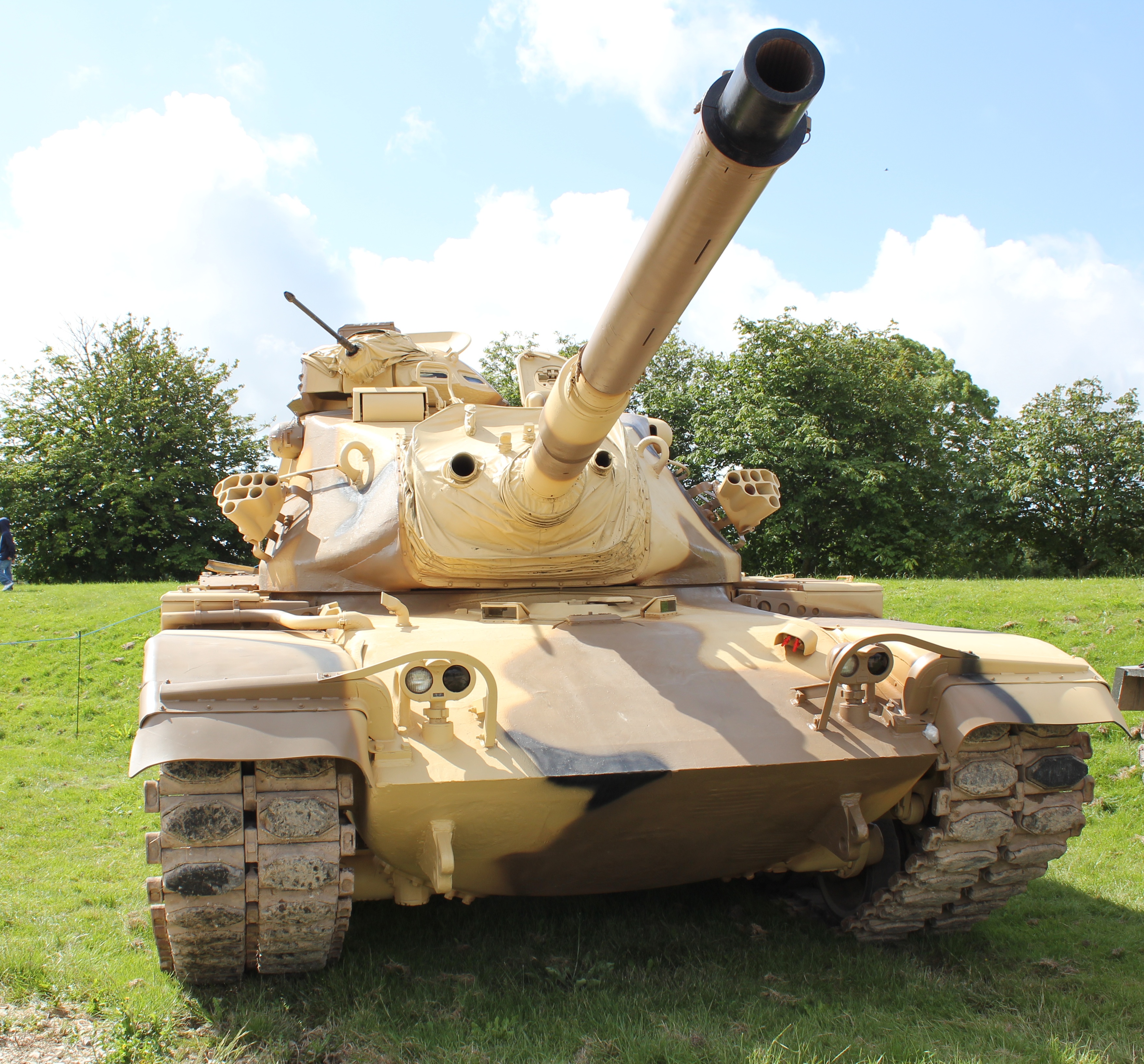
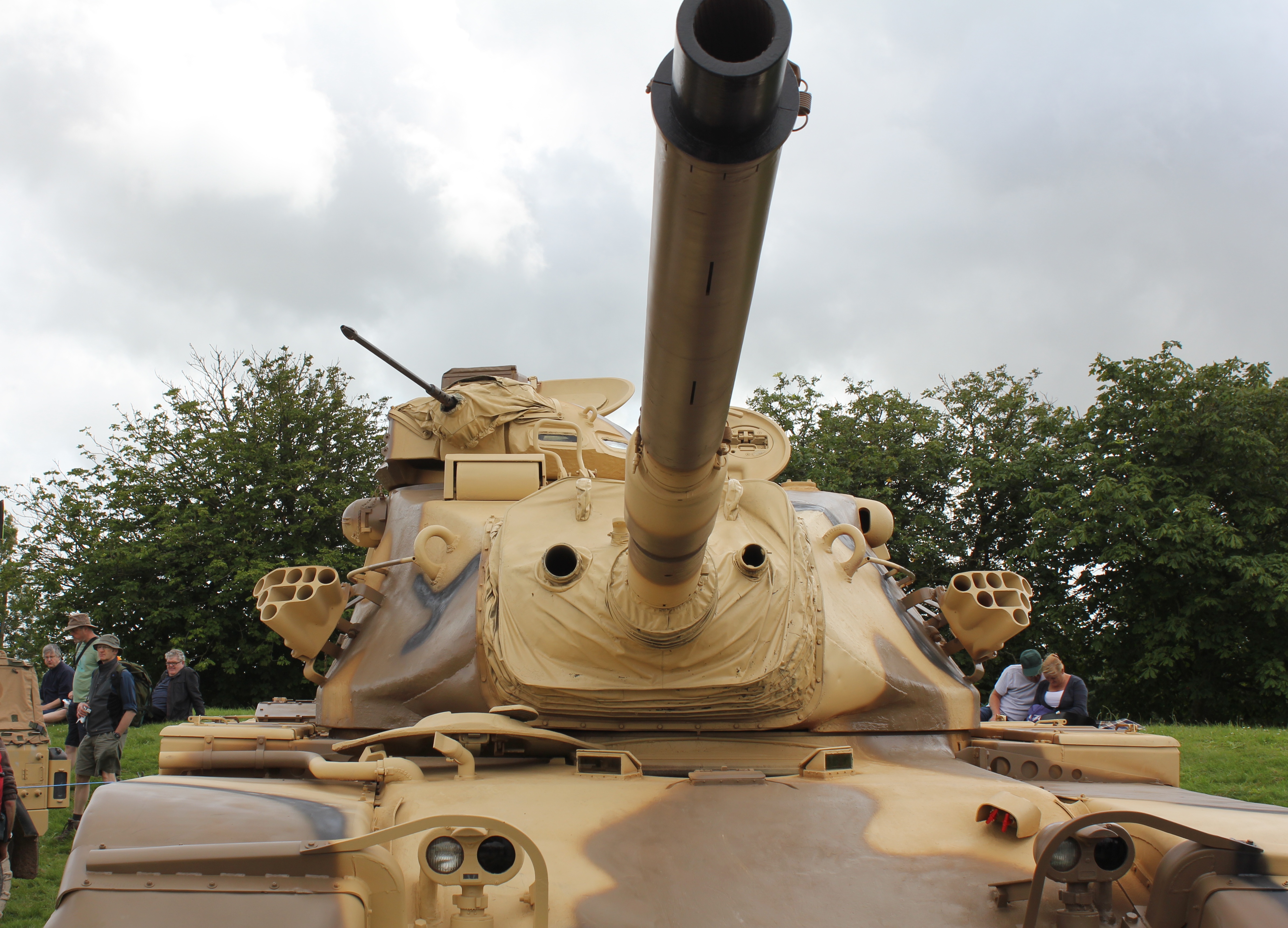
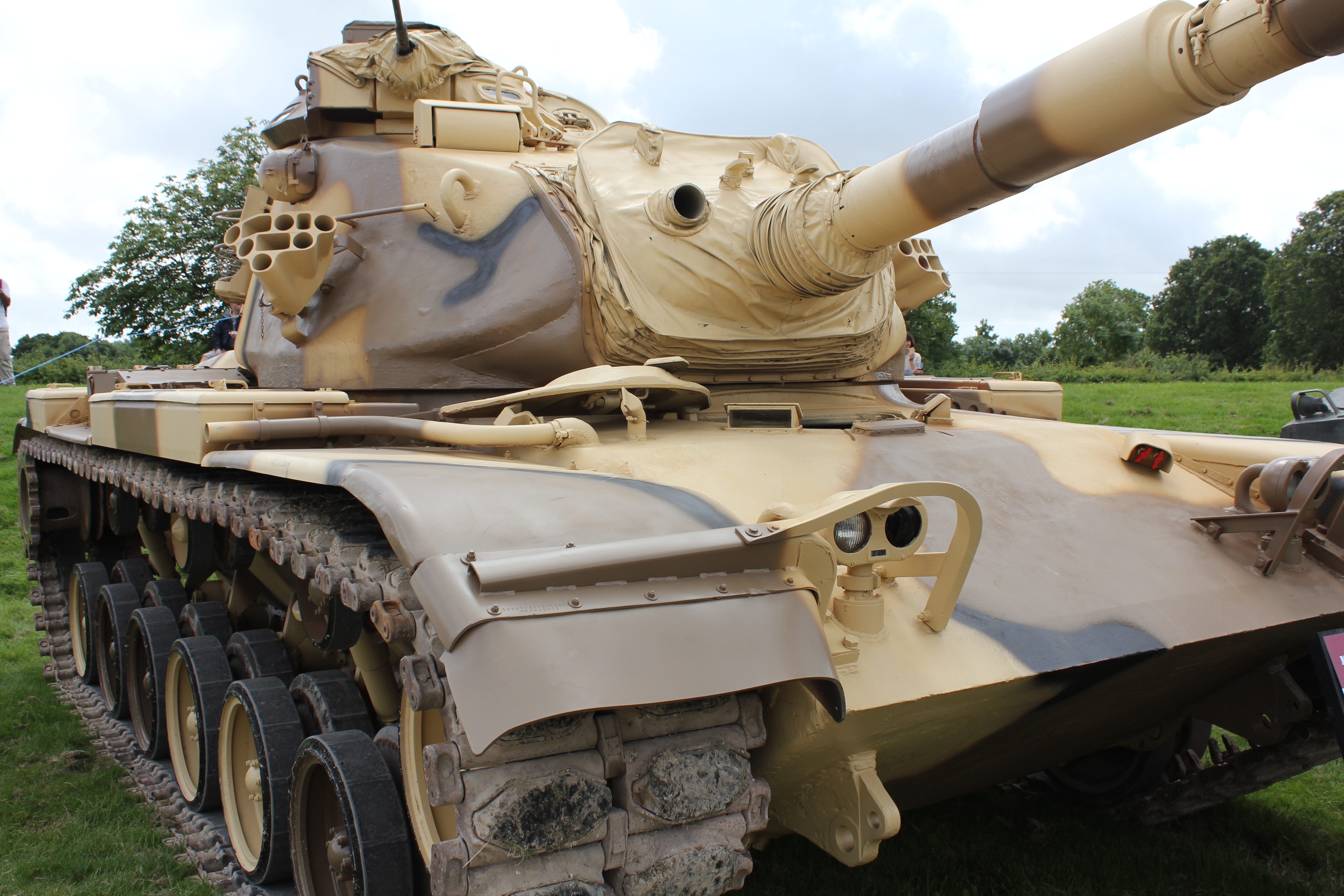
M-60, or Patton Tank.

.

Maximum speed of 30 mph

.

A first generation Main Battle Tank.

.

Main armament is the British 105mm, M68 gun.

.

45 tons with an armour thickness of 155.6mm.

.

V-12, air-cooled Twin-turbo diesel engine.

.

Top speed of 30mph.

.

Introduced in 1960.

.

Saw service in the Gulf War.

.

M-60 Patton,  over 15,000 built.

.

M-60

.

Carries a .50 calibre gun

.

M-60

.

.

M-60 on the move.

My intention is not to portray a particular message, but just share some of my research and experiences with you.  Also to support  ‘Cold War’ trilogy, covering the hypothetical invasion of West Germany by the Warsaw Pact in the 80’s.

.

HarveyBlack-Red Effect150313

Photographs and Blog are copyrighted to Harvey Black