The Cold War Years. A Hot War in reality. Part 9.

My ‘Cold War’ trilogy is complete. I enjoyed writing it and the empty space it has left will be filled with a new set of books, based on the outcome of a strategic nuclear exchange. An Apocalyptic trilogy, survival at its worst.

The Cold War era started very soon after the end of the second world war, when the communist east, led by the Soviet Union, and the Western world, led by the United States and its NATO allies, faced each across what became known as the ‘Iron Curtain’.

.
.

The capital of Germany, Berlin, was divided into four Sectors. The consequence being, that the three Western Allied powers now controlled territory deep within the Soviet Union Zone of Germany.

Over time, the tensions between the four Allied powers increased, eventually resulting in the Berlin blockade in 1948, when the Soviets attempted to starve West Berlin into submission and force the other three Allied powers out. This failed and the Soviets eventually relented, but an ever-increasing number of East Germans fled to the West; between 150,000 and 300,000 a year during 1951-1953. As a consequence restrictions were placed on movement between the divided country. From 1961, the border was closed and Berlin completely encircled, first by barbed wire, then bricks and finally a concrete wall, along with the infamous ‘death strip’.

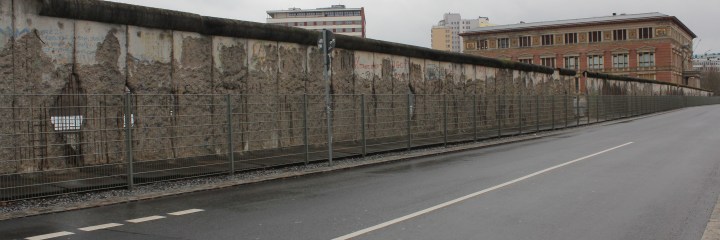
Access was now restricted between Berlin and the West. A wall, 124 mile miles in length, was placed around the three sectors of West Berlin, cutting off the city from the rest of the world.
.

Section of the  Berlin Wall – 2011

.

The Russians finally take Berlin towards the end of World War 2

.

The four zones of Berlin – 1984

.

I shall cover various aspects of the two opposing forces, providing the backdrop and background information for my trilogy.

“Today, West German imperialism is United States’ chief ally in Europe in aggravating world tension. West Germany is increasingly becoming the seat of the war danger, where revenge-seeking passions are running high… The policy pursued by the Federal Republic of Germany is being increasingly determined by the same monopolies that brought Hitler to power.

The Rhineland politicians fancy that once they get the atomic bomb, frontier posts will topple and they will be able to achieve their cherished desire of carving up the map of Europe again and taking revenge for defeat in the second world war.

One of the most ominous factors endangering peace is the bilateral military alliance that is taking shape between the ruling circles of the United States and the Federal Republic of Germany. This factor remains an objective of unflagging attention.”

Leonid Brezhnev

23rd Party Congress

March 1966

In 1984/85, the Warsaw Pact was already a significant force, the Soviet Union in particular. To counter this NATO, the North Atlantic Treaty Organisation, assembled its own force of arms along the Iron Curtain. Not just as a show force against the communist ideals purported by the East, but because the likelihood of Warsaw Pact troops, led by the Soviet Union, crossing the Inner German Border was a real possibility.

This is just a supplementary post, building up a catalogue of equipment that would have been used in the event an invasion of the Federal Republic of Germany had gone ahead in the 1980’s

.

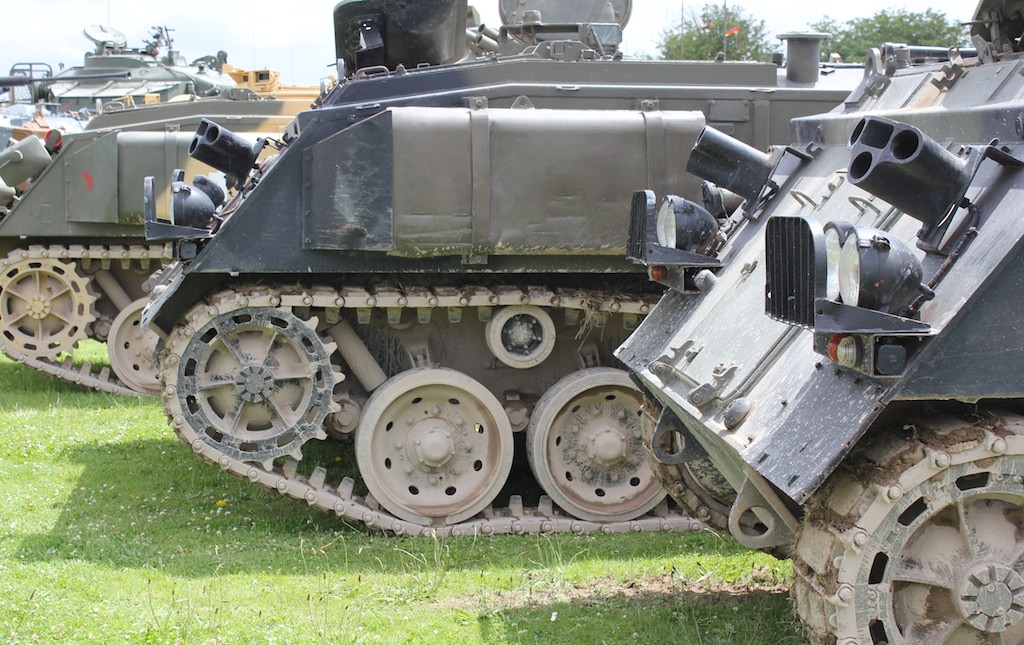
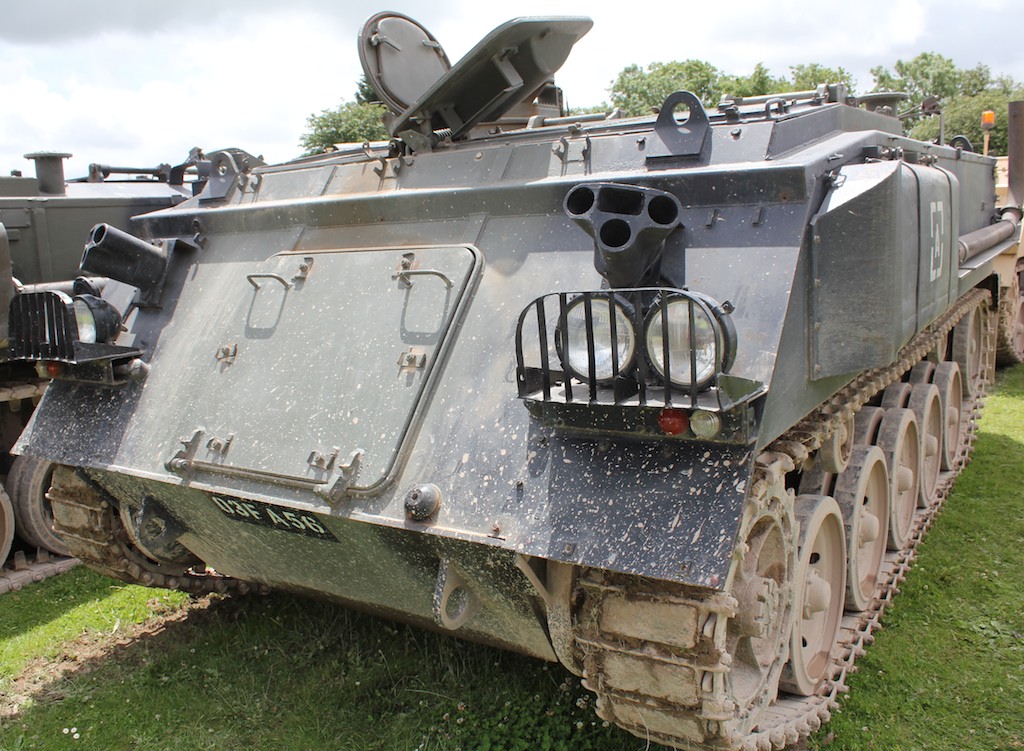
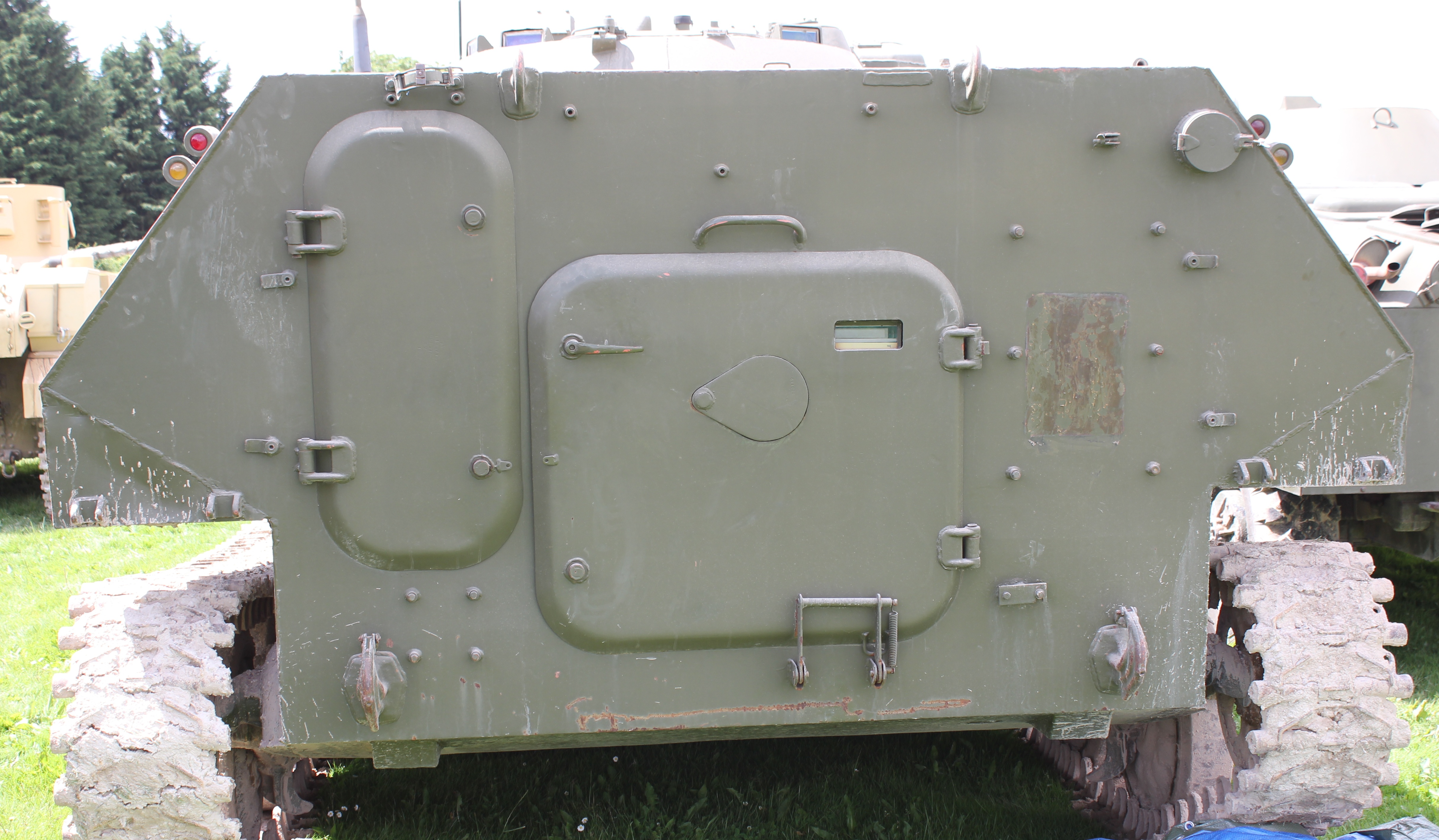
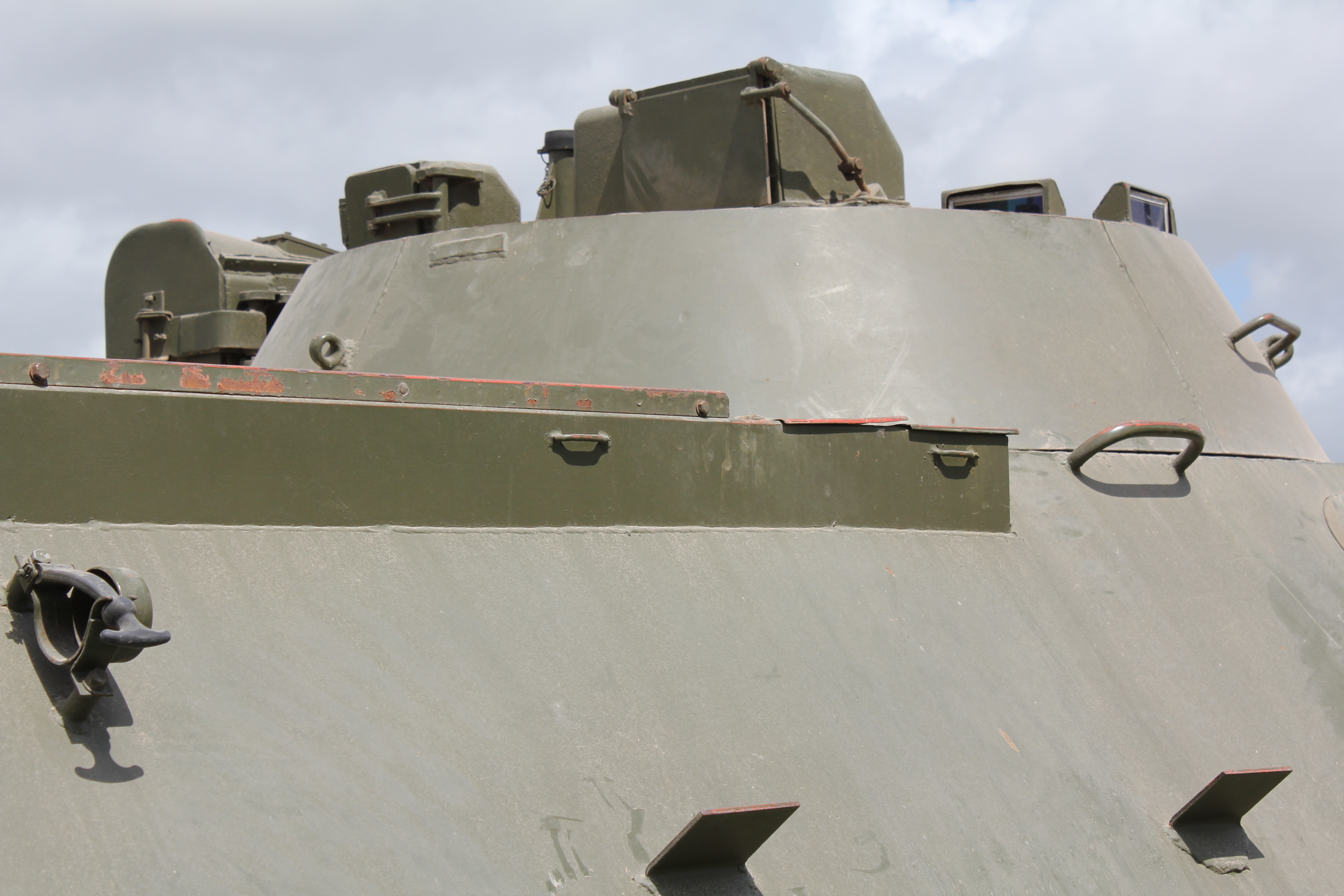
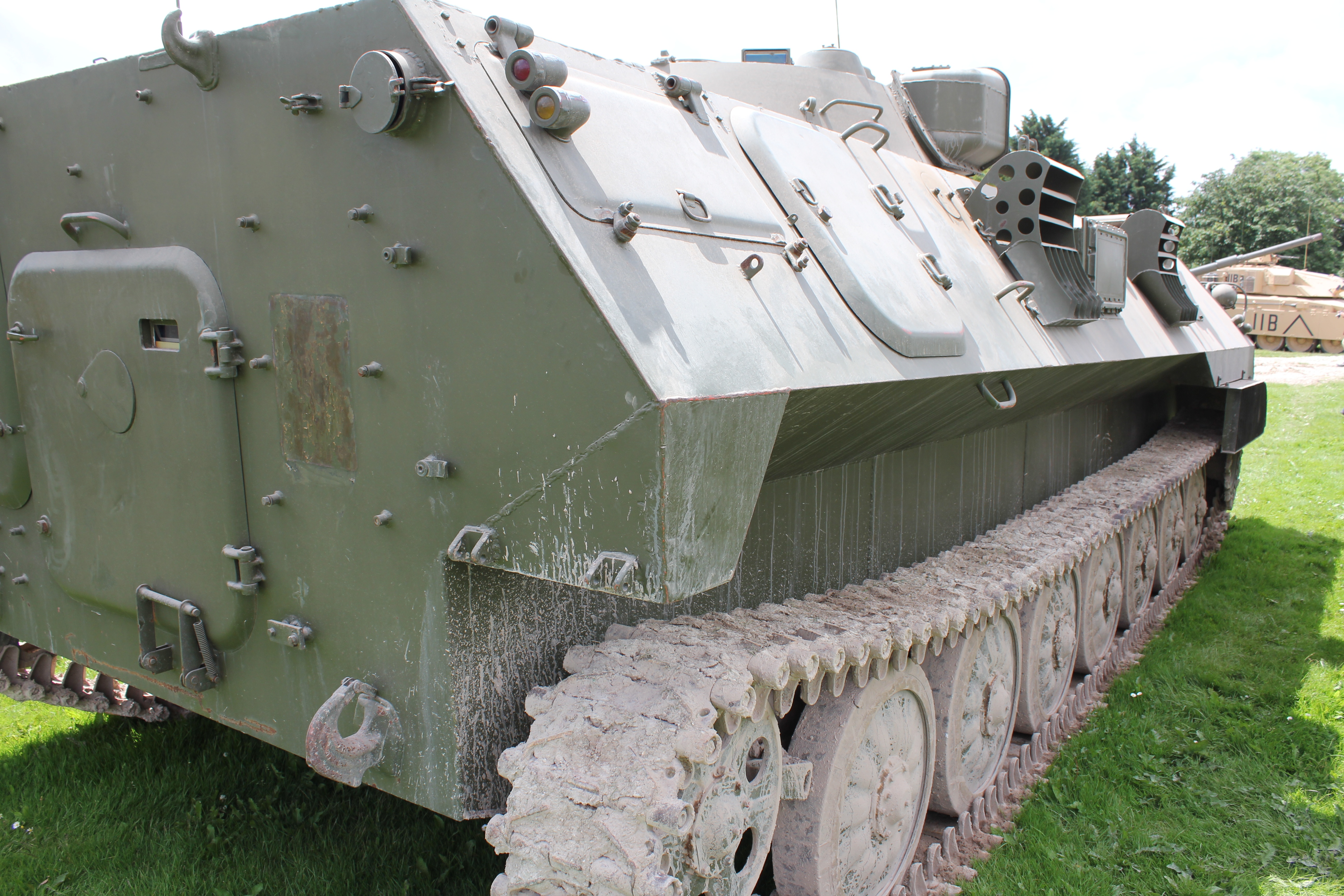
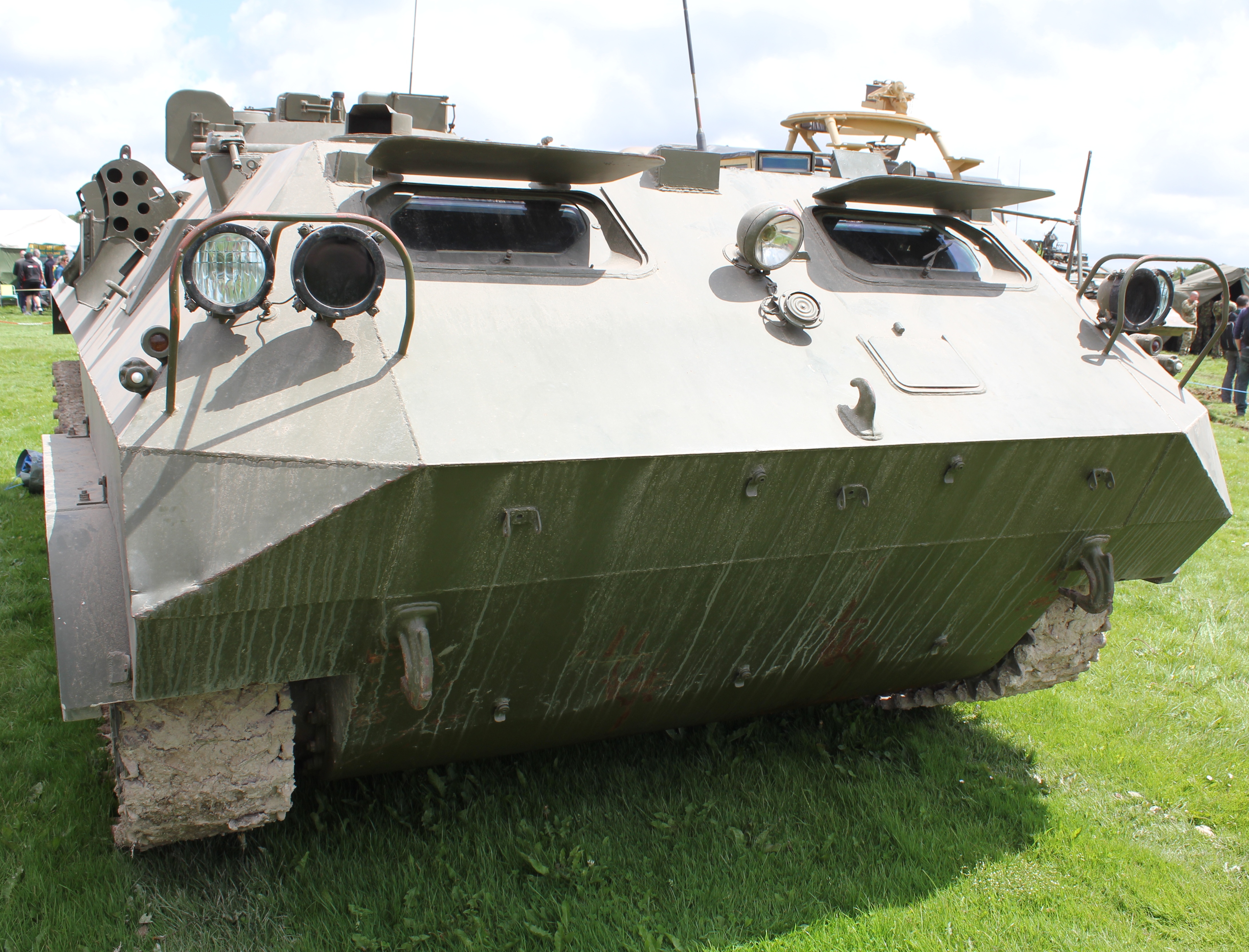
The FV432, armoured personnel carrier, was a real battle taxi. Its main role was to move troops around the battlefield, but they would always have to dismount to fight.

The FV432 was the armoured personnel carrier variant of the British Army’s FV430 series of armoured fighting vehicles.

.

Used for transporting troops on the 1980’s battlefield.

.

Steel and composite armour.

.

Weighed 15 tons 

.

Generally, in the 80’s, it carried a British mechanised infantry section of ten men, inclusive of driver and section commander.

.

Over 2,500 were in use at the time. A battlefield taxi.

.

Torsion bar suspension with 5 road wheels.

.

Powered by a Rolls-royce K60 multi-fuel 240 hp.

.

Three smoke dischargers each side 

.

Maximum of 12.7mm armour.

.

Maximum speed of 32mph.

.

Side hinged door at the rear for troops to exit.

.

An NBC, Nuclear, Biological and Chemical filtration system gave the troops inside clean, safe air.

.

Engine is at the front with the driving position on the right. Commander’s hatch is behind the drivers position and a large split-hatch opening in the passenger roof.

.


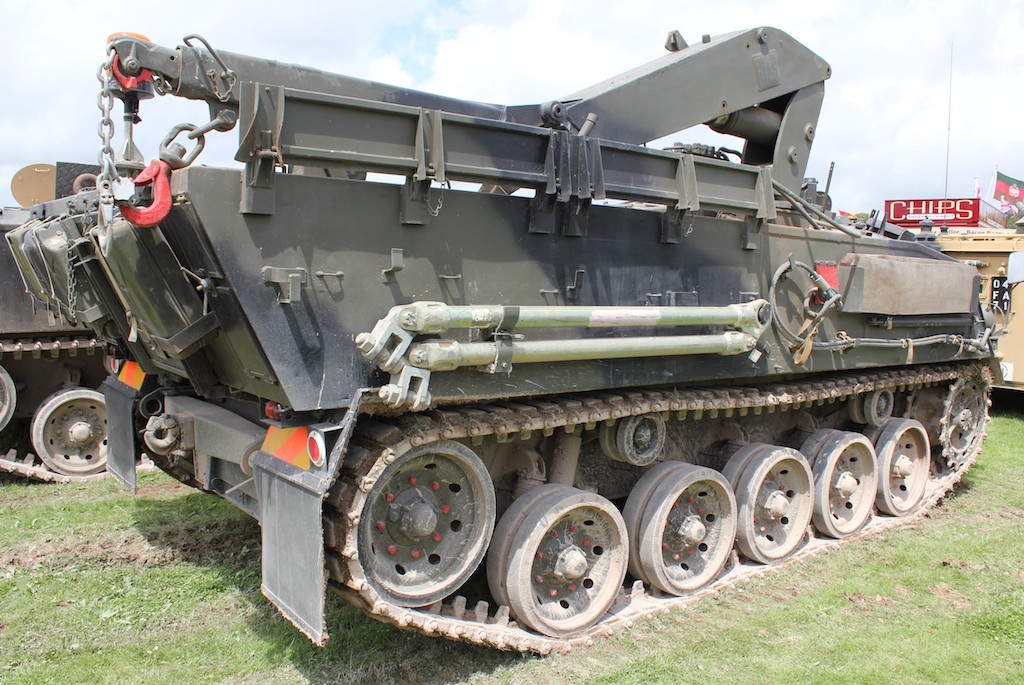
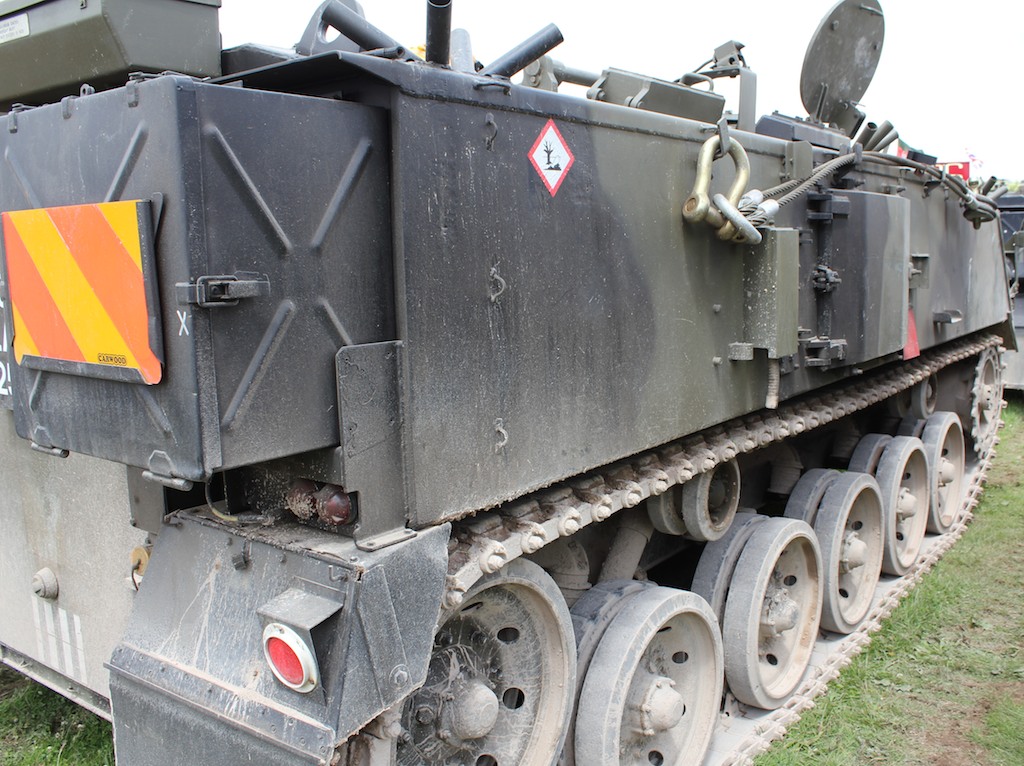
FV434, recovery vehicle, operated by the Royal Electrical and Mechanical Engineers (REME).

.

Crew of four.

.

Can tow a layer for the L9 anti-tank Bar Mine, or can tow a Giant Viper mine-clearing system.

.

Weighs 17,750 kg fully loaded.

.


.

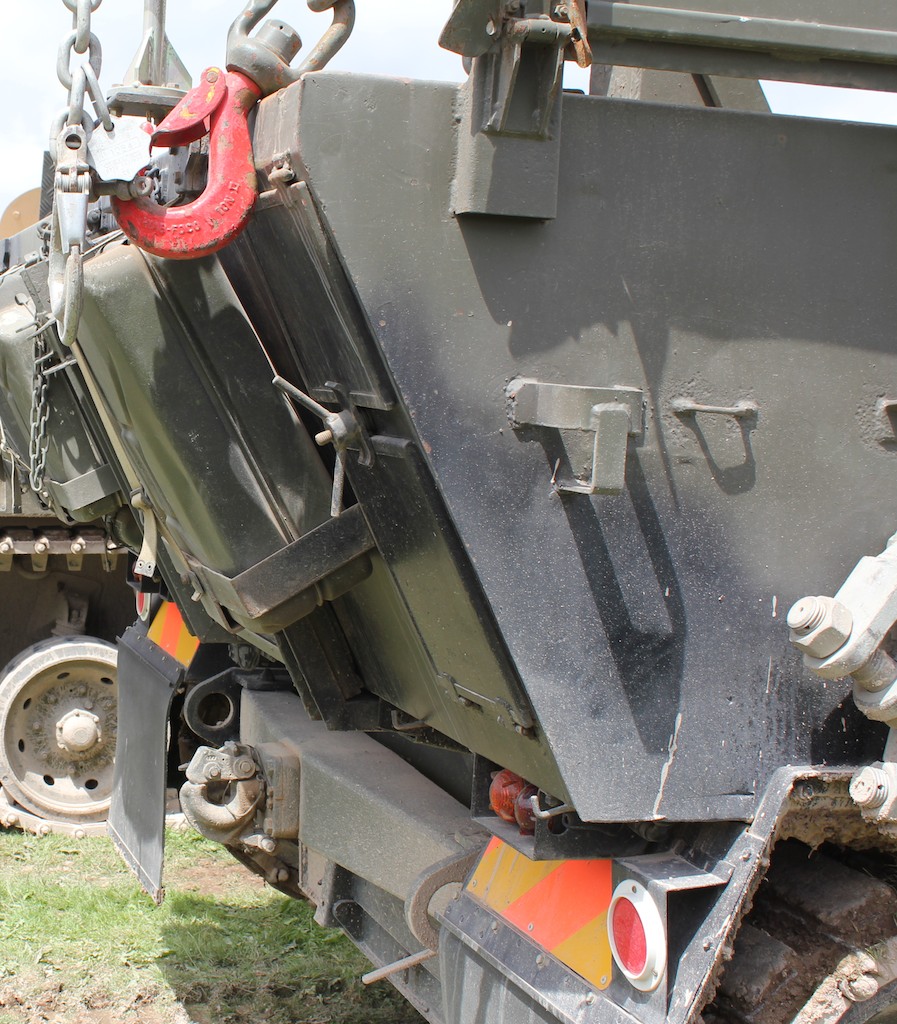
On the right hand side is an HIAB crane, a lifting capacity of 1,250 kg at 3.96m radius. Suspension can be locked when crane is being used.

.

FV432 with General Purpose Machine Gun (GPMG) turret.

.

Only a few were upgraded to mount a 7.62mm GMPG turret.

.

Powered by a diesel engine.

.

FV432 with Rarden Turret.

.

Urban camouflage, similar to that used for Berlin Brigade units.

.

The L2A1A1 Rarden 30mm weapon and its associated turret were designed to be compatible with a range of of vehicle chassis, including Fox, CVR(T) and Warrior.

.

The basic 432 chassis wasn’t really big enough to allow this weapons combination and carry all the men and equipment to carry out its Infantry Fighting Vehicle role.

.

The rate of fire was limited by the use of ammunition in three round clips, rather than belts. The 30mm calibre also limited the projectile performance, particularly the High Explosive capacity.

.

The present day Infantry Fighting Vehicle. FV510 Warrior. 25 tons, powered by a Perkins V-8 Condor Diesel 550 hp engine. Capable of 46mph.

.

Main armament, a 30mm L21A1 Rarden cannon. Capable of destroying most modern APC’s at a maximum range of 1500 metres. Secondary armament is an L94A1 Coaxial 7.62mm chain gun.

.

FV432’s on the move.

Future posts will cover the Warsaw Pact,  the Soviet likely strategy and the Airborne and Spetsnaz force.

.

HarveyBlack-Red Effect150313

My intention is not to portray a particular message, but just share some of my research and experiences with you.  This is the first of my new ‘Cold War’ series, supporting the writing of my new ‘Cold War’ series of novels, covering the hypothetical invasion of West Germany by the Warsaw Pact in the 80’s.

The equipment Photographs and Blog are copyrighted to Harvey Black

.

The Cold War Years. A Hot War in reality. Part 8.

My ‘Cold War’ trilogy is complete. I enjoyed writing it and the empty space it has left will be filled with a new set of books, based on the outcome of a strategic nuclear exchange. An Apocalyptic trilogy, survival at its worst.

The Cold War era started very soon after the end of the second world war, when the communist east, led by the Soviet Union, and the Western world, led by the United States and its NATO allies, faced each across what became known as the ‘Iron Curtain’.

.

.

The capital of Germany, Berlin, was divided into four Sectors. The consequence being, that the three Western Allied powers now controlled territory deep within the Soviet Union Zone of Germany.

Over time, the tensions between the four Allied powers increased, eventually resulting in the Berlin blockade in 1948, when the Soviets attempted to starve West Berlin into submission and force the other three Allied powers out. This failed and the Soviets eventually relented, but an ever-increasing number of East Germans fled to the West; between 150,000 and 300,000 a year during 1951-1953. As a consequence restrictions were placed on movement between the divided country. From 1961, the border was closed and Berlin completely encircled, first by barbed wire, then bricks and finally a concrete wall, along with the infamous ‘death strip’.

Access was now restricted between Berlin and the West. A wall, 124 mile miles in length, was placed around the three sectors of West Berlin, cutting off the city from the rest of the world.

Section of the Berlin Wall – October 2011.

.

Section of the  Berlin Wall – 2011

.
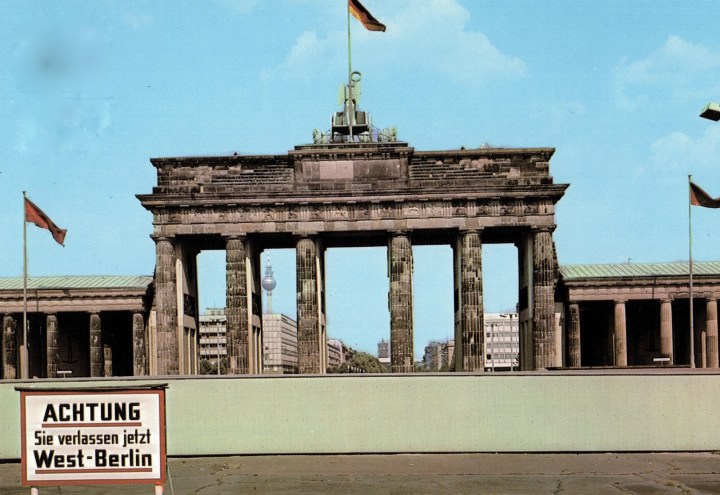
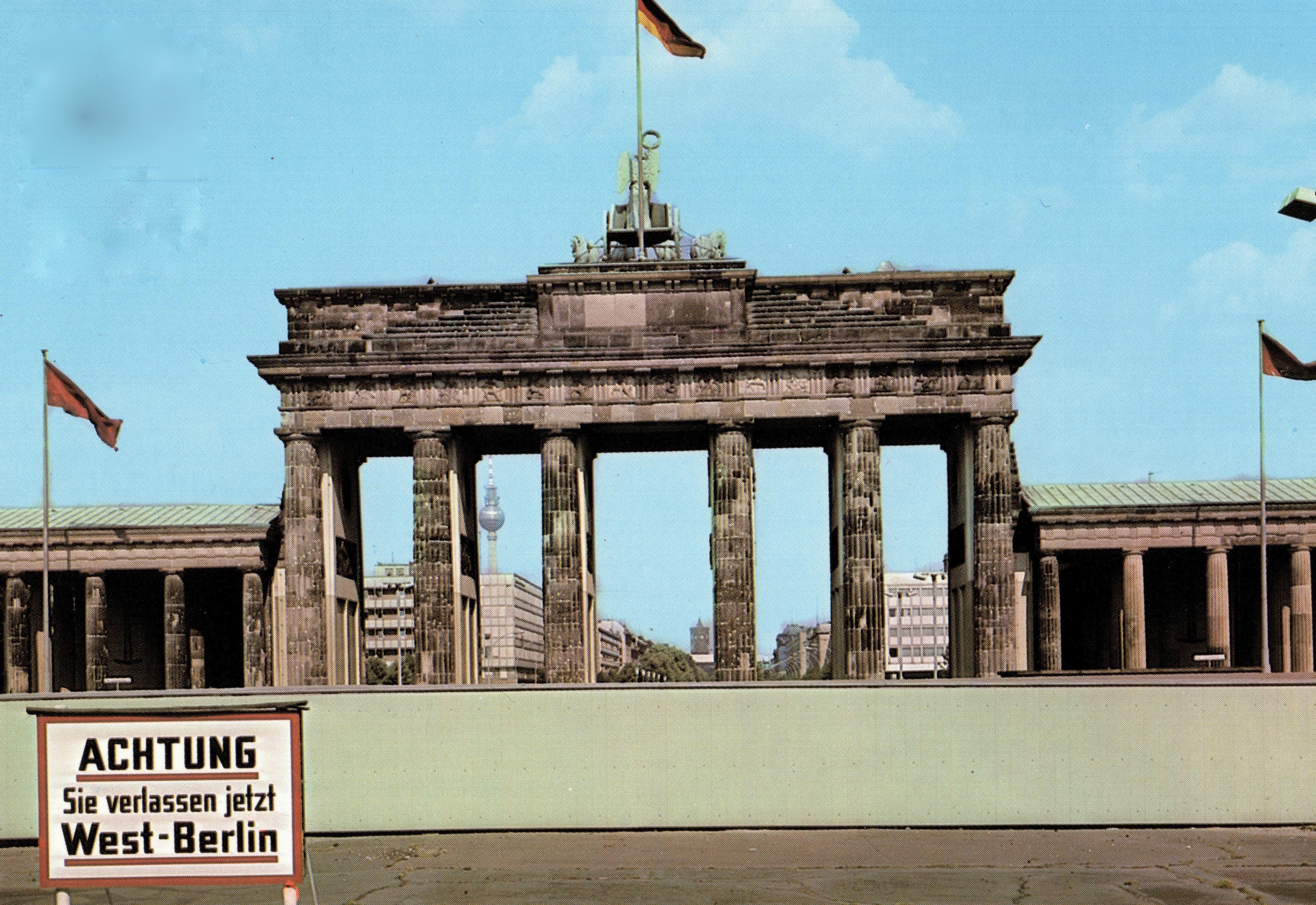
The Brandenburg Gate separated from West Berlin by the Berlin Wall – 1984

.

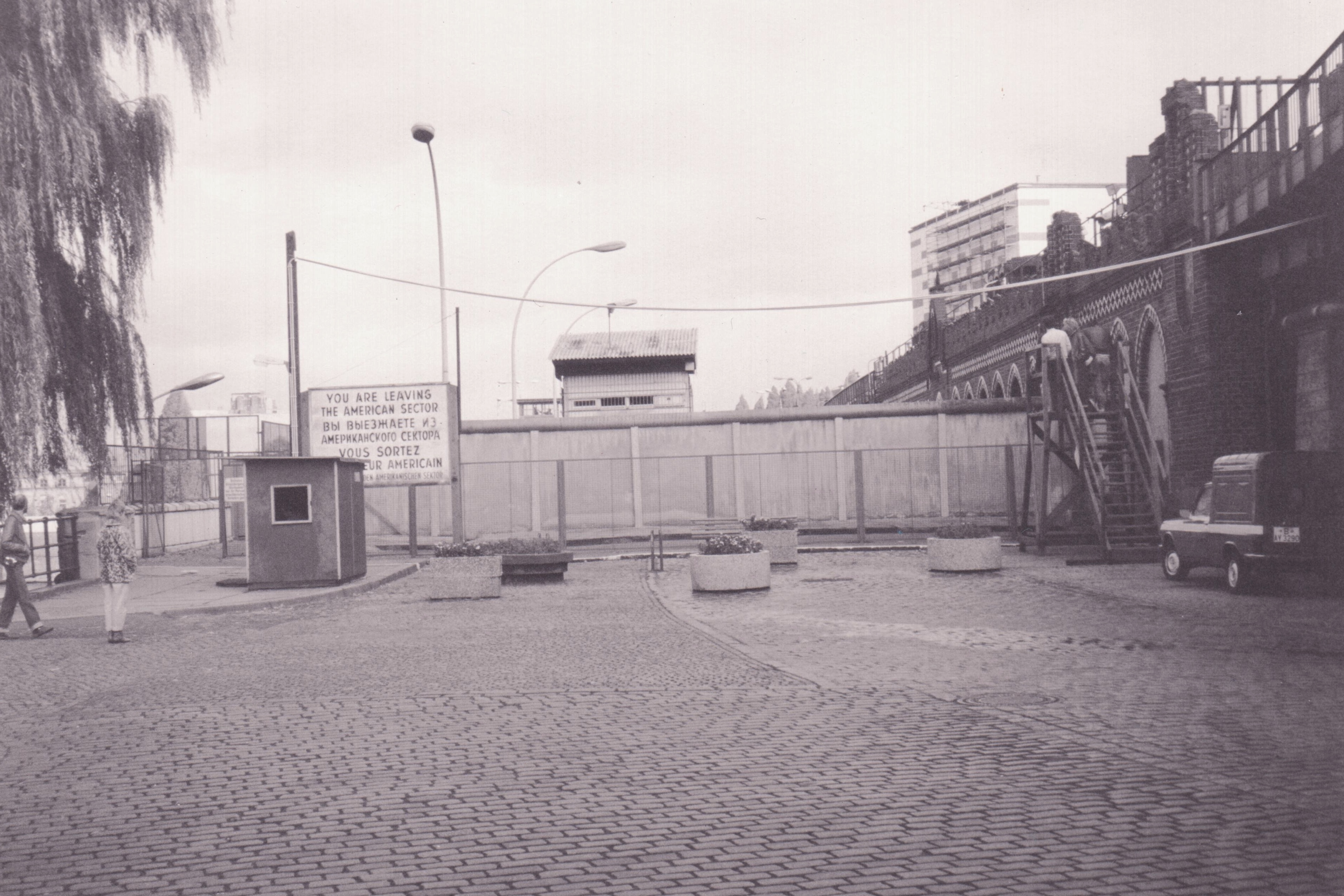
Checkpoint Charlie,  between East and West Berlin – American Sector of West Berlin 1981

I shall cover various aspects of the two opposing forces, providing the backdrop and background information for my trilogy.

“Today, West German imperialism is United States’ chief ally in Europe in aggravating world tension. West Germany is increasingly becoming the seat of the war danger, where revenge-seeking passions are running high… The policy pursued by the Federal Republic of Germany is being increasingly determined by the same monopolies that brought Hitler to power.

The Rhineland politicians fancy that once they get the atomic bomb, frontier posts will topple and they will be able to achieve their cherished desire of carving up the map of Europe again and taking revenge for defeat in the second world war.

One of the most ominous factors endangering peace is the bilateral military alliance that is taking shape between the ruling circles of the United States and the Federal Republic of Germany. This factor remains an objective of unflagging attention.”

Leonid Brezhnev

23rd Party Congress

March 1966

In 1984/85, the Warsaw Pact was already a significant force, the Soviet Union in particular. To counter this NATO, the North Atlantic Treaty Organisation, assembled its own force of arms along the Iron Curtain. Not just as a show force against the communist ideals purported by the East, but because the likelihood of Warsaw Pact troops, led by the Soviet Union, crossing the Inner German Border was a real possibility.

The Soviet, European Theatre forces during the early to mid 80’s were growing in size and power daily.

What were the likely forces that NATO would have been up against had the Warsaw Pact, led by the Soviet Union, attacked across the Inner German Border with the intention of defeating NATO and occupying western Europe?

The concentration of forces under Marshal Ogarkov’s High Command showed a huge build up during the period 1980-1984.  The High Command of the ‘Western Strategic Direction’, the ‘Western TVD’, was the most important of the Soviet Union’s four commands and contained the largest number of troops, tactical and medium-range surface to surface missiles and aircraft of any ‘Strategic Direction’.  He commanded all the Soviet military forces in Poland, East Germany, Czechoslovakia and Belorussia. The other Strategic Direction’s;  Northwestern, Southwestern and North Caucasus.

Western TVD:

Northern Group of Soviet Forces (Poland)

  • 20th Tank Division
  • 6th Guards Motor Rifle Division
  • SSM Brigade (18 x Scud B)
  • SAM Brigade (27 x SA-4)
  • Attack Helicopter Regiment (40 x Mi-24 (Hind) and 20 x Mi-8)

Central Group of Soviet Forces (Czechoslovakia)

4 Guards Army and CGSF assets

  • 1st Guards Tank Division
  • 51st Tank Division
  • 18th Guards Motor Rifle Division
  • 30th Guards Motor Rifle Division
  • 48th Motor Rifle Division
  • Attack Helicopter Regiment
  • 3 x SSM Brigade (54 x Scud B)
  • Artillery Brigade (96 x 2S5)
  • Artillery Brigade (24 x 2S7 and 24 x 2S5)
  • SAM Brigade
  • Air Assault Battalion (17 x BMD)
  • Spetsnaz Battalion (250+)
  • Tank Brigade (150+ x T-80)
  • Anti-Tank Regiment (36 x Anti-Tank Guns and 27 x BRDM-3)

Southern Group of Soviet Forces (Hungary)

9 Guards Army + SGSF assets

  • 2nd Guards Tank Division
  • 13th Guards Tank Division
  • 93rd Guards Motor Rifle Division
  • 253rd Motor Rifle Division
  • Attack Helicopter Regiment
  • Artillery Brigade (96 x 2S5)
  • 3 x SSM Brigade (18 x Scud B)
  • Rocket Regiment (54 x BM-21)
  • 2 x SAM Brigade
  • Air Assault Battalion (17 x BMD)
  • Spetsnaz Battalion
  • Anti-tank Regiment
  • Artillery Brigade (24 x 2S7 and s4 x 2S5)

Baltic Military District (HQ in Kaliningrad, Russia.)

Category B Division 30-50% readiness

Category C Division 5-10% readiness.

11th Guards Army (HQ in Kaliningrad, Russia.)

  • 15th Guards Tank Division (Cat B)
  • 40th Guards Tank Division (Cat B)
  • 1st Guards Motor Rifle Division (Cat B)
  • 3rd Guards Motor Rifle Division (Cat C)

14th Combined Arms Army (HQ in Kaunas, Lithuania)

  • 24th Guards Tank Division (Cat B)
  • 26th Guards Motor Rifle Division (Cat C)
  • 88th Motor Rifle Division (Cat C)
  • 107th Guards Motor Rifle Division

Baltic MD Assets

  • 7th Guards Airborne Division
  • 44th Guards Airborne Division (Training Unit)
  • Baltic Naval Infantry Brigade
  • 129th Artillery Division
  • 344th Artillery Division
  • Spetsnaz Naval Brigade
  • 32nd Air Assault Brigade

Belorussian Military District (HQ in Minsk, Belarus)

5th Guards Tank Army (HQ in Babrujsk, Belarus)

  • 6th Guards Tank Division (Cat B)
  • 8th Guards Tank Division
  • 22nd Tank Division (Cat B)
  • 29th Tank Division (Cat B)

7th Guards Tank Army (HQ in Barysau, belarus)

  • 3rd Guards Tank Division (Cat B)
  • 34th Guards tank Division (Cat B)
  • 37th Guards Tank Division (Cat B)
  • 47th Tank Division (Cat B)
  • 58th Guards Motor Rifle Division (Cat B)

28th Combined Arms Army HQ in Grodno, Belarus)

  • 8th Tank Division (Cat B)
  • 45th Guards Tank Division (Cat B)
  • 50th Guards Motor Rifle Division Cat B)
  • 120th Guards Motor Rifle Division

BMD Assets

  • 3 x Tank Brigades (150+ x T-64/T-80
  • Motor Rifle regiment
  • Artillery Brigade
  • Air Defence Regiment
  • Attack Helicopter Regiment
  • Reconnaissance Battalion
  • 103rd Airborne Division
  • 3rd Guards Artillery Division
  • 5th Artillery Division
  • 31st Air Assault Brigade

Carpathian Military District (HQ in L’vov, Ukraine)

2nd Guards Tank Army (HQ in Zhytomyr)

  • 23rd tank Division
  • 17th Motor Rifle Division (Cat C)
  • 66th Guards Motor Rifle Division (Cat B)
  • 117th Guards Tank Division (Cat C)

13th Combined Arms Army (HQ in Rovno, USSR)

  • 13th Tank Division (Cat B)
  • 15th Tank Division
  • 24th Motor Rifle Division (Cat B)
  • 97th Guards Motor Rifle Division (Cat C)

38th Combined Arms Army (HQ in Ivano-Frankovsk, Ukraine)

  • 30th Guards Tank Division (Cat B)
  • 61st Motor Rifle Division (Cat B)
  • 70th Guards Motor Rifle Division (Cat B)
  • 128th Guards Motor Rifle Division (Cat B)

CMD Assets

  • 3 x Tank Brigades (150+ x T-64/T-80)
  • Motor Rifle Regiment
  • Artillery Brigade
  • Air Defence Regiment
  • Attack Helicopter Regiment
  • Reconnaissance Battalion
  • 36th Artillery Division
  • 81st Artillery Division
  • 37th Air Assault Brigade

Group of Soviet Forces Germany (HQ in Magdeburg)

The main striking force was the Group of Soviet Forces Germany, GSFG, commanded by the man below, Army General Mikhail Zaitsev.

.

Army General Mikhail Zaitsev – Commander of the Group of Soviet Forces Germany – at the Soviet War Memorial Tiergarten – 1982

.

GSFG was a significant force consisting of:

8 Guards Army (HQ in Weimar – Nohra – German Democratic Republic, GDR.)

  • 79th Guards Tank Division
  • 27th Guards Motor Rifle Division
  • 39th Guards Motor Rifle Division
  • 57th Guards Motor Rifle Division

1 Guards Tank Army (HQ in Dresden, GDR)

  • 9th Tank Division
  • 11th Guards Tank Division
  • 20th Guards Motor Rifle Division

2 Guards Tank Army (HQ in Neubrandenburg, GDR)

  • 16th Guards Tank Division
  • 94th Guards Motor Rifle Division
  • 21st Motor Rifle Division
  • 207th Motor Rifle Division

20 Guards Tank Army (HQ in Eberswalde, GDR)

  • 32nd Tank Division
  • 25th Tank Division
  • 35th Motor Rifle Division
  • 6th Guards Motor Rifle Division

3 Shock Army (HQ in Magdeburg, GDR)

3rd Shock Army was the force that was most likely to have gone up against the Northern Army Group, in particular BAOR/I British Corps.

I shall show a more detailed breakdown of this particular Army.

  • 7th Guards Tank Division
  • 10th Guards Tank Division
  • A typical Tank Division would consist of: 10GTD

61 Guards Tank Regiment  (90+  x T-80, 40+ x BMP-2, 2S6, SA-13 and 18 x 2S1)

62 Guards Tank Regiment  (90+  x T-80, 40+ x BMP-2, 2S6, SA-13 and 18 x 2S1)

63 Guards Tank Regiment  (90+  x T-80, 40+ x BMP-2, 2S6, SA-13 and 18 x 2S1)

248 Guards Motor Rifle Regiment (40 x T-80, 142 x BMP-2, 2S6, SA-13, BRDM -3 and 18 x 2S1

744 Guards Artillery Regiment (48 x 2S3 and 18 x BM-21

SS-21 battalion (4 x SS-21)

359 Guards Air Defence Regiment (20 x SA-15 and 21 SA-7/14/16

112 Independent Reconnaissance Battalion (6 x T-80, 13 x BRDM 2, 13 x BMP-2 and BRM)

Helicopter Squadron (6 x Mi-24 (Hind), 6 x Mi-8 (Hip) and 6 x Mi-2 (Hoplite))

131 Independent Engineer Battalion (TMM, GSP, PMP, K-61, BTM, MTK and GMZ)

152 Independent Signals Battalion

127 Independent Chemical Protection Battalion

1072 Independent Supply Battalion

60 Independent Repair Battalion

188 Independent Medical and Sanitary Battalion.

  • 12th Guards Tank Division
  • 47th Guards Tank Division
  • 3rd Shock Attack Helicopter Regiment (40 x MI-24 Hind, 20 x MI-8 Hip)
  • 3rd Shock Air Assault Battalion (17 x BMD)
  • 3rd Shock Spetsnaz Battalion (25+ teams of approximately 10 men.)
  • 3o4th Artillery Brigade (3 x Battalions (24 x 2S5 each battalion)
  • 3rd Shock SSM Brigade (18 x ScudB surface to surface missiles.)
  • 3rd Shock Rocket Regiment (54 x BM-21. each capable of launching 40 x 122mm rockets)
  • 3rd Shock Engineer Brigade (TMM, MTU, PMP, GSP, K-61, BTM, GMZ and MTK)
  • 36th Pontoon Bridging Regiment (TMM, PMP, K-61 and BTM)
  • 3rd Shock Reconnaissance Battalion
  • 3rd Shock SAM Brigade (27 x SA-4 Ghecko)

Notes:

  1. All 10 of the Tank Divisions in East Germany were beefed up with an additional Tank Regiment – an addition of over 100 tanks each
  2. All 9 of the Motor Rifle Divisions had been given an additional tank battalion of over 40 tanks each.
  3.  2 Guards Tank Army, facing northern Germany and Schleswig-Holstein was given an additional 3 Independent Tank Regiments giving them a further 450 main battle tanks to wield at NATO.
  4. Each Division has 4 x Artillery Battalions (50% 152mm and 50% 122mm)

GSFG Assets

  • 34th Artillery Division (3 x Howitzer Brigades (72 x 2S3 each Brigade), 1 x Heavy Brigade (72 x 2S7 each), 1 x Heavy Brigade (24 x 2S7 + 24 x 2S5) and 1 x Missile Brigade (72 x BM-27).
  • 4 x Motor Rifle Battalions
  • 1 x Tank Battalion (40 x T-80’s)
  • 2 x SSM Brigade (18 x SS-23 each)
  • 35th Air Assault Brigade
  • Engineer Brigade
  • 2 x SAM (Surface to Air Missiles) Brigades (one with 27 x SA-4 and one with 27 x SA-5)
  • 1 x SAM Regiment (20 x SA-15)
  • 1 x Spetsnaz Brigade (Between 1500 and 2000 men. Split into teams of 50-150 special forces.)

Western TVD Assets:

  • 72 x SS-22 Surface to Surface missiles, range of 600+ miles, capable of carrying a tactical nuclear warhead. (Stationed in the GDR)
  • 36 x SS-22 Surface to Surface missiles, range of 600+ miles, capable of carrying a tactical nuclear warhead. (Stationed in the Czechoslovakia)
  • 90 x SS-23 Surface to Surface missiles, range of 300+ miles, capable of carrying a tactical nuclear warhead. (Stationed in the GDR)

.

Below, some of the Warsaw Pact Equipment NATO would be up against.

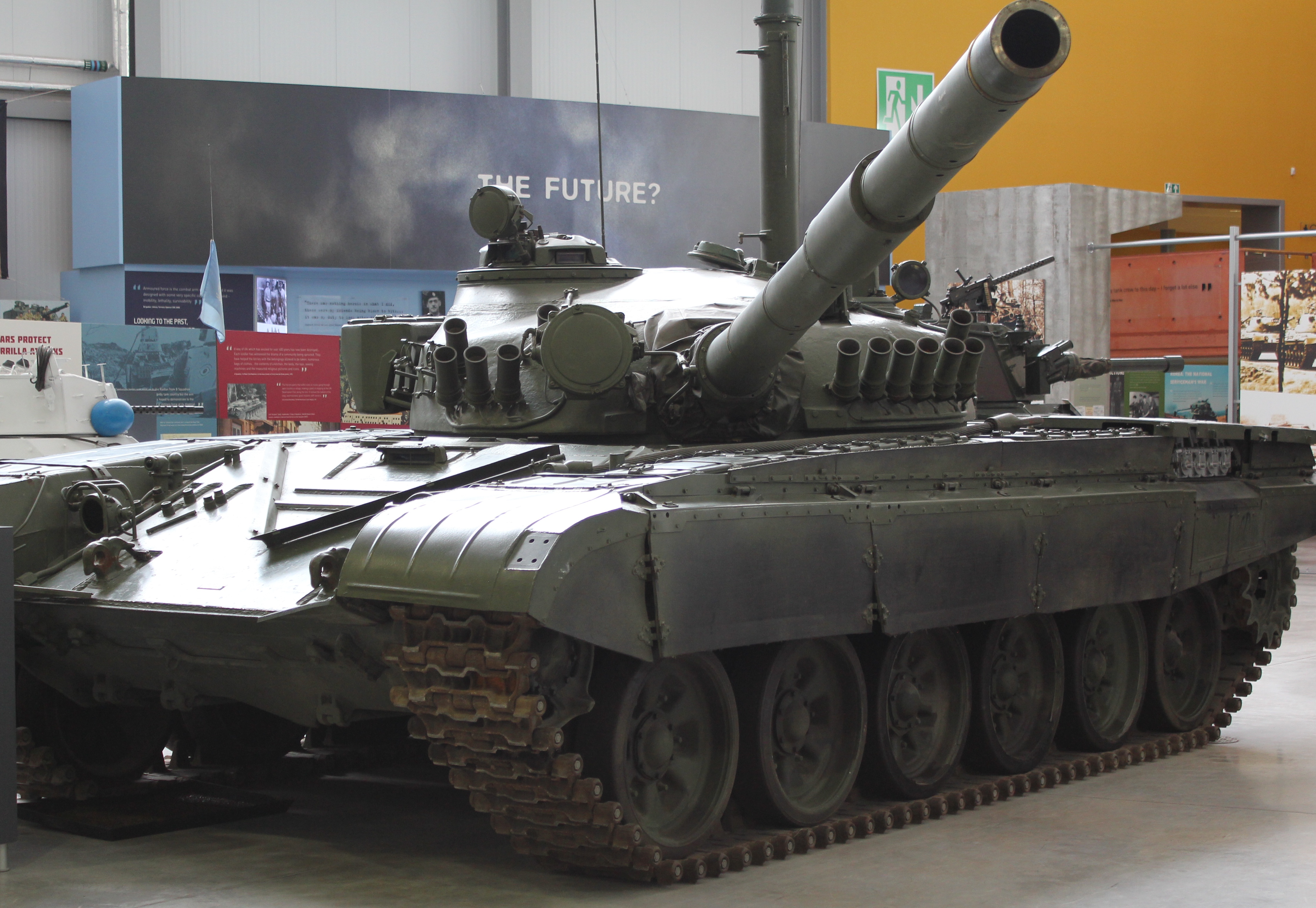
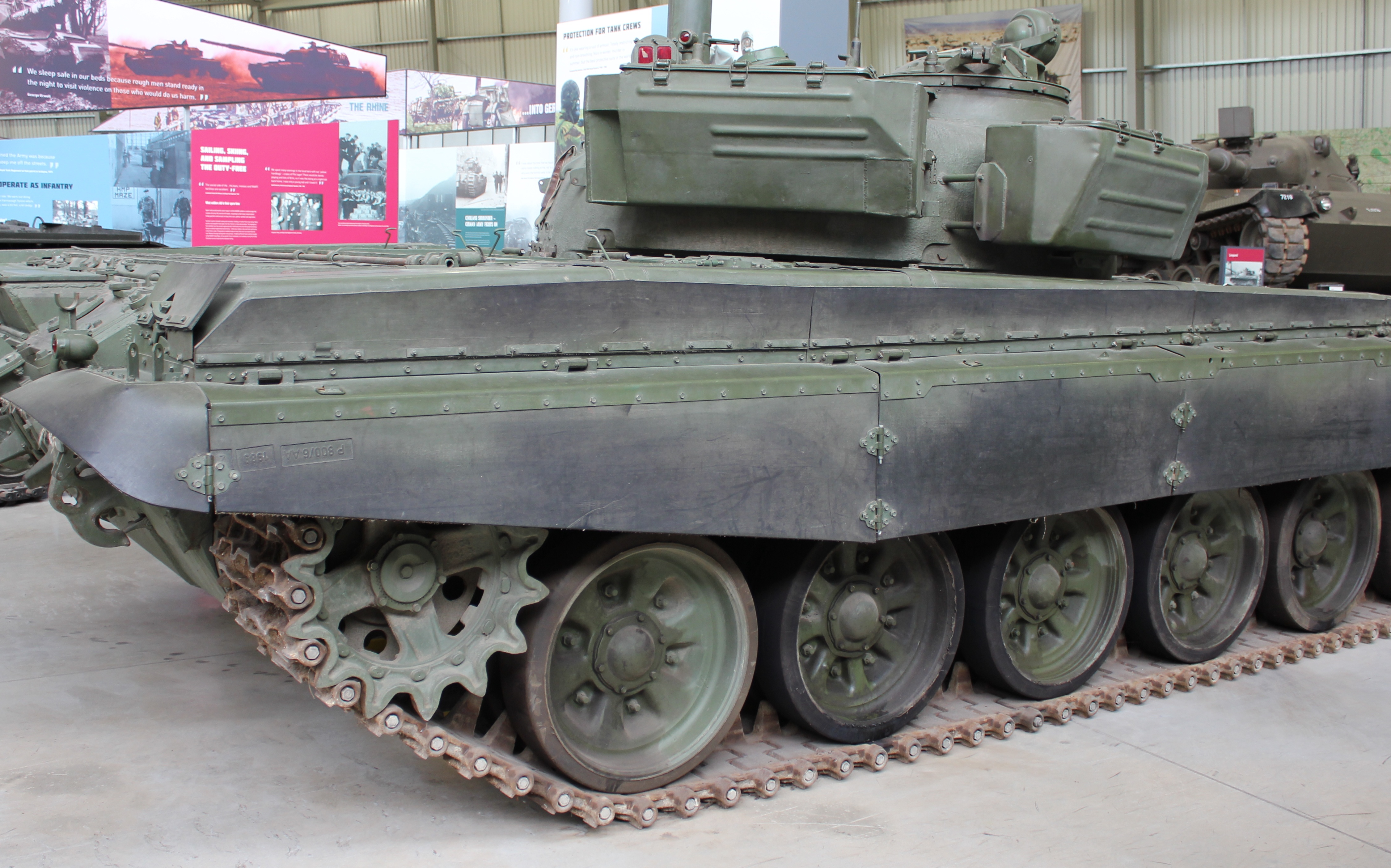
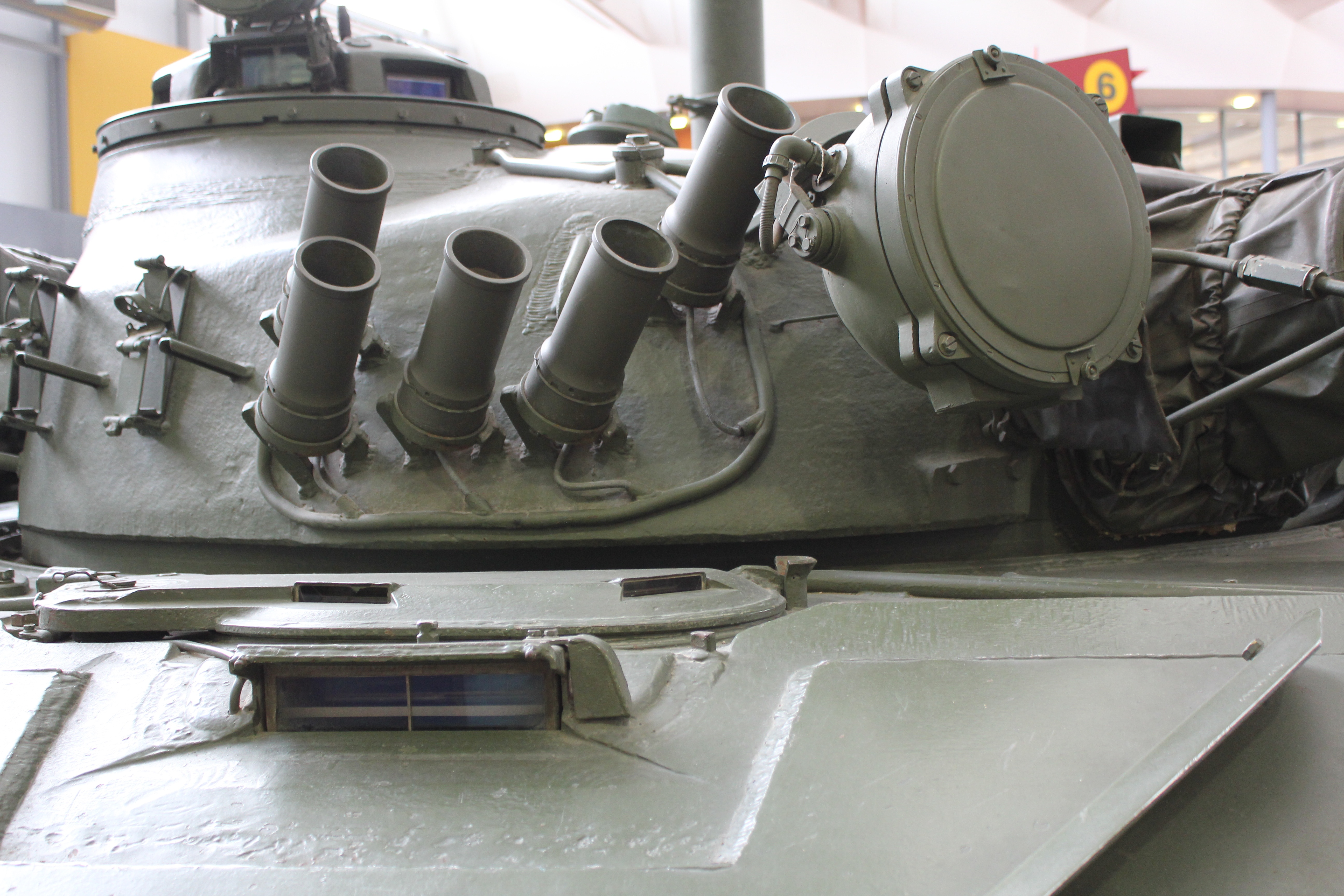
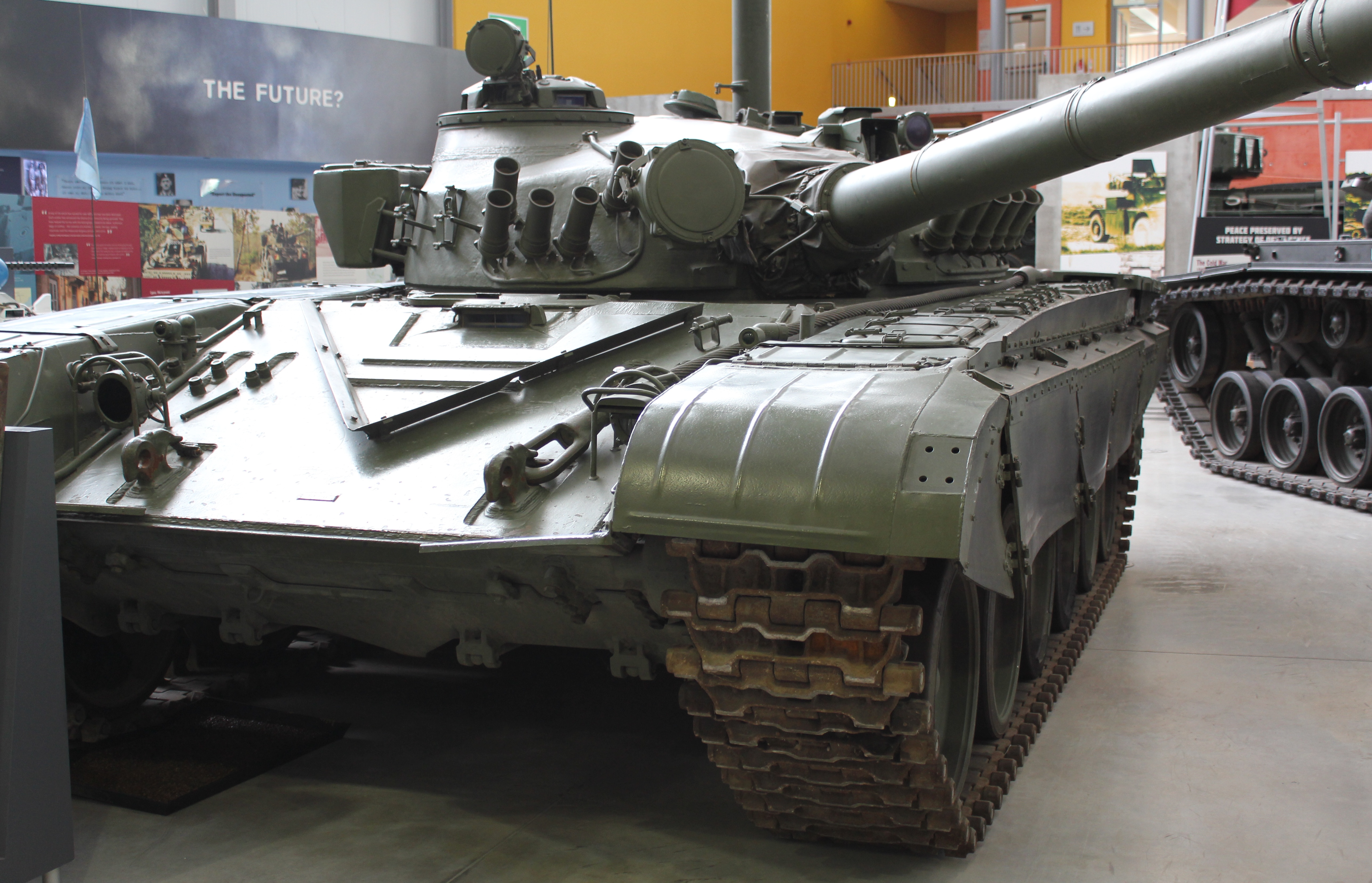
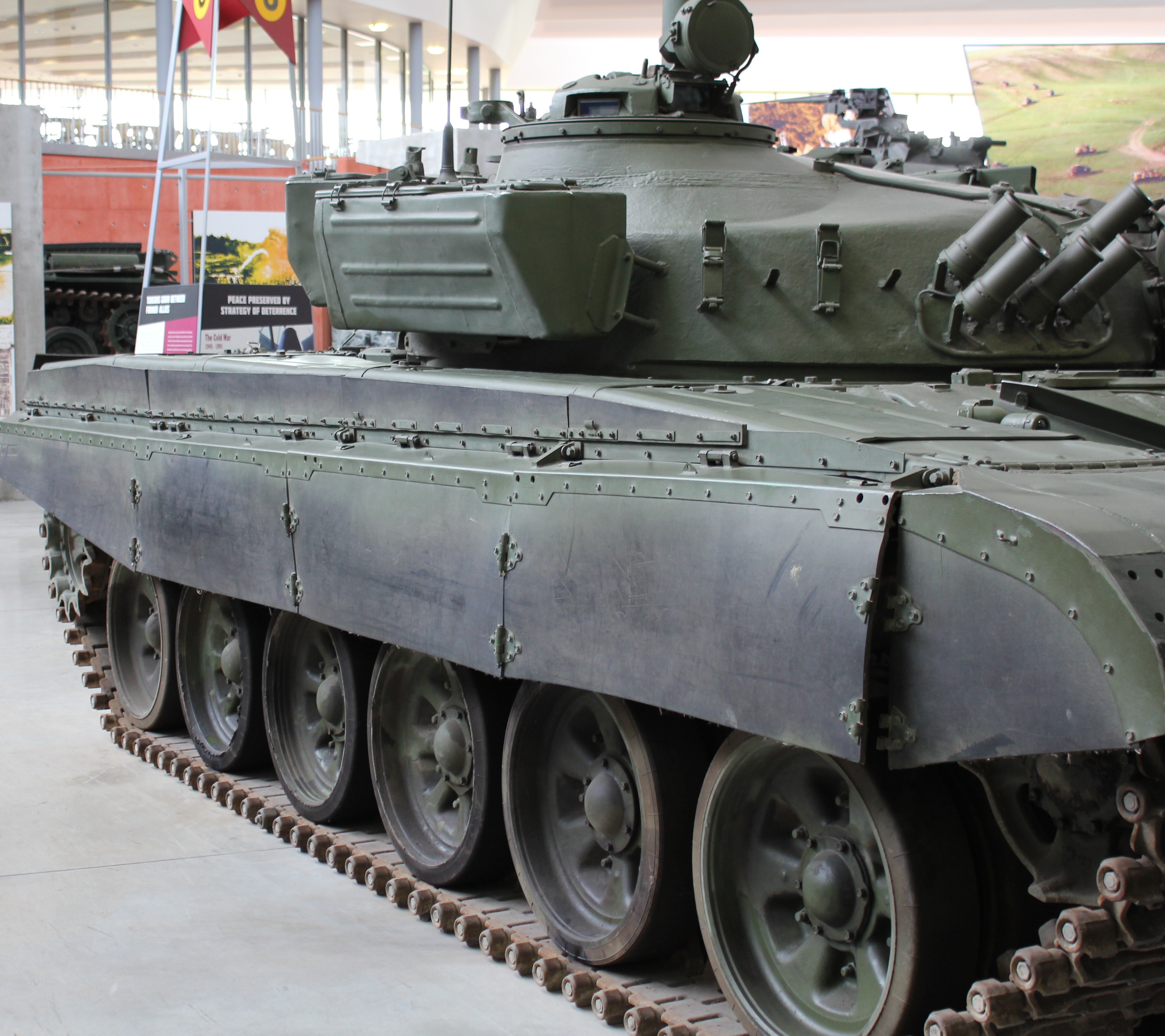
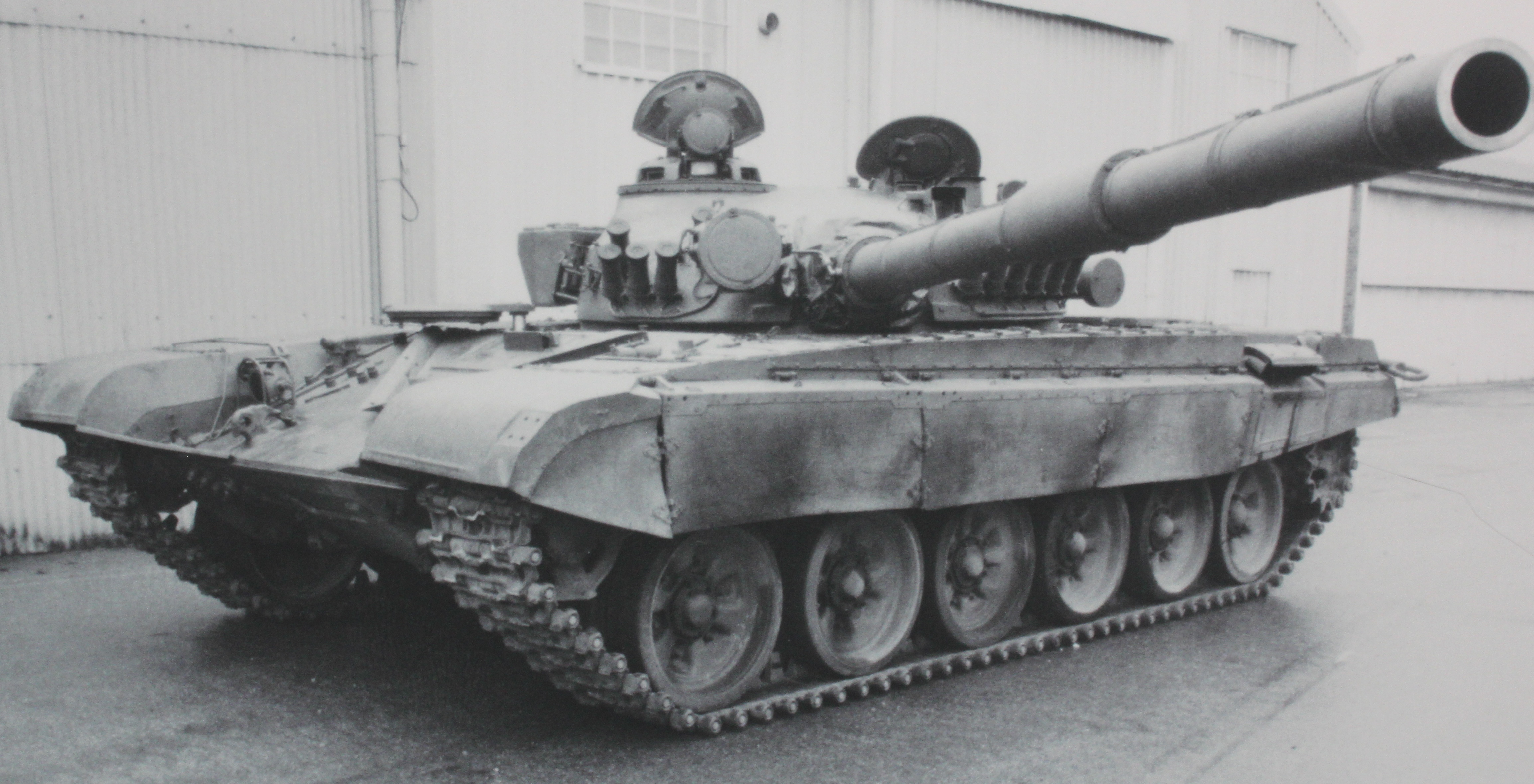
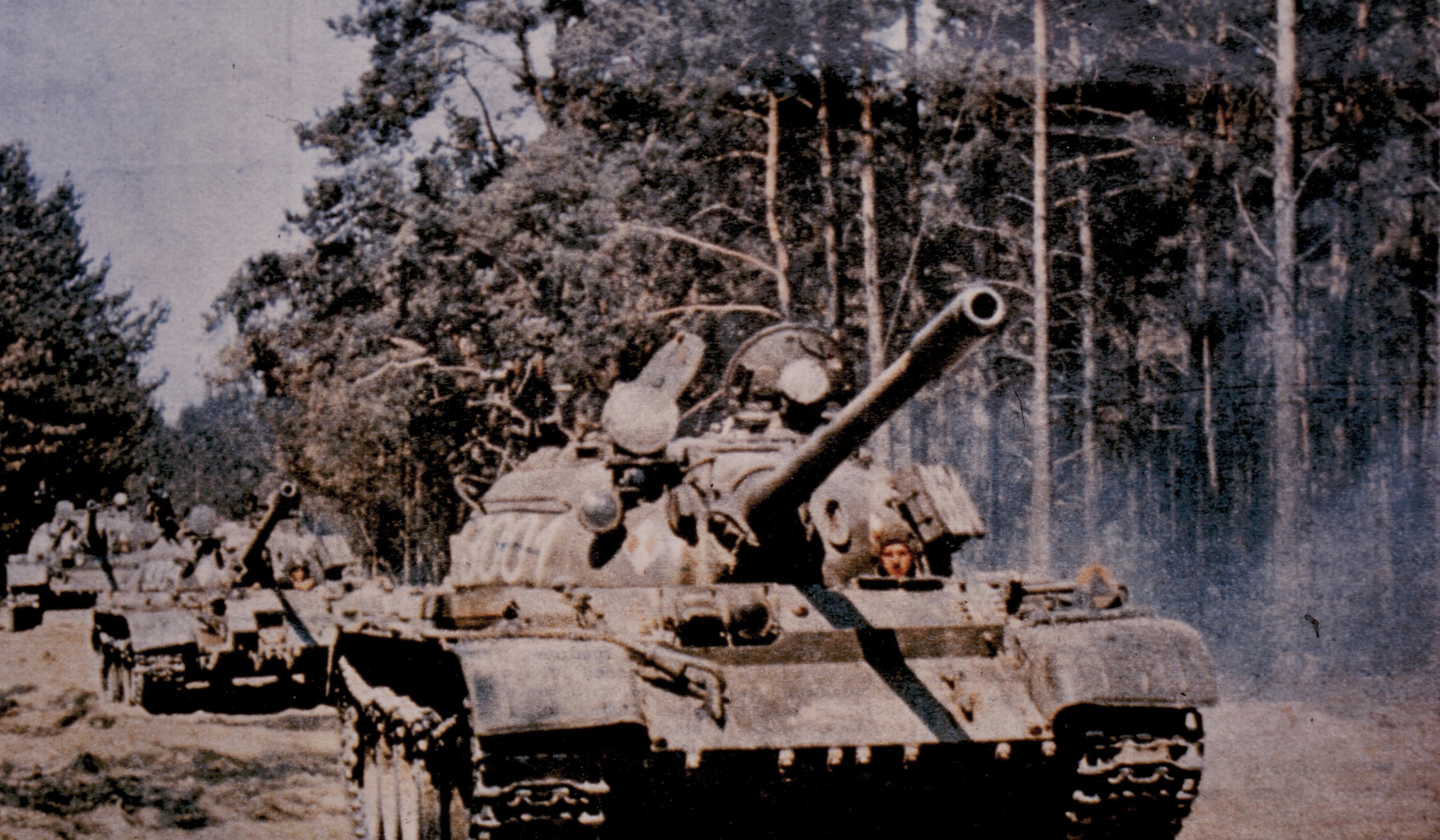
Soviet T-72 Main Battle Tank. 125mm 2A46M smoothbore gun. Snorkel can be seen attached, allowing the tank to ford rivers.

.
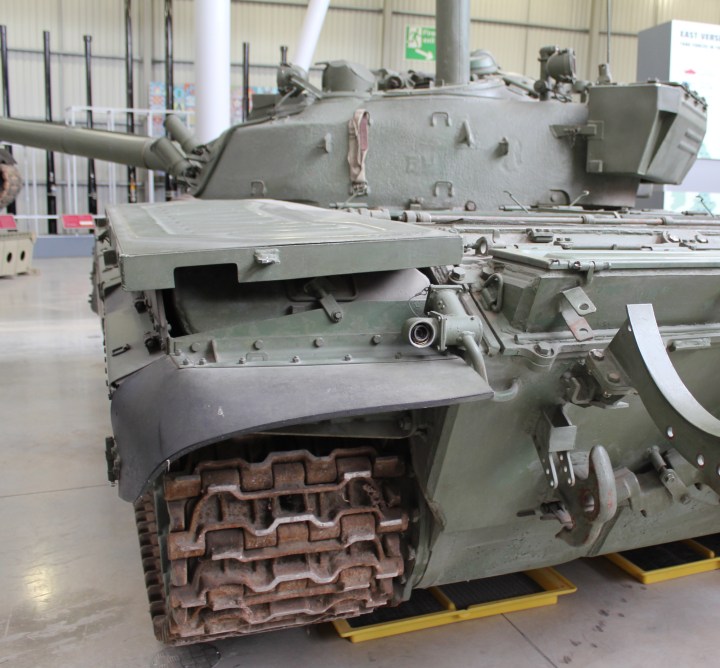
Weighs 41.5 tons.

.

Steel and composite armour.

.
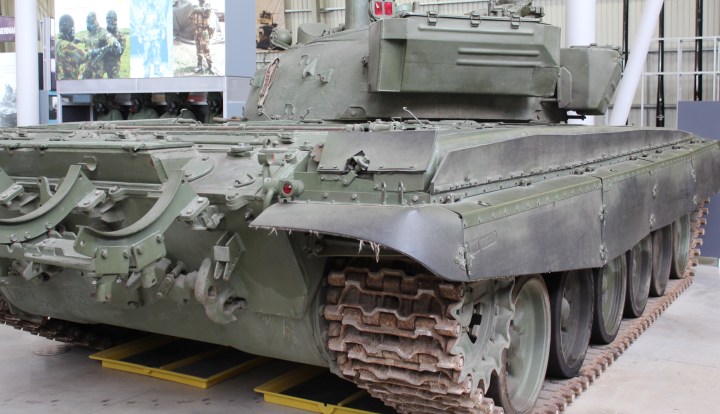
It was far too expensive to equip the Soviet Divisions with the T-64, so a cheaper alternative was introduced. 

.
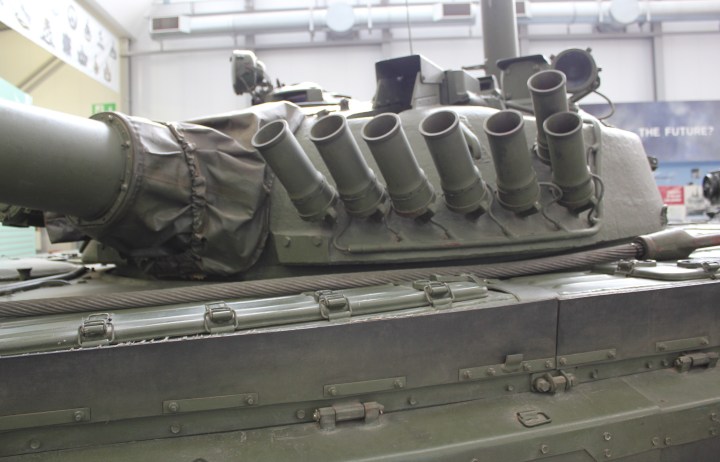
Crew of 3. 25,000 were built.

.

37mph with a range of 430 miles with fuel drums fitted on the back.

.

Autoloader replaced one of the crew. Expected to load 8 rounds per minute.

.

It had a comprehensive nuclear, biological and chemical (NBC) protection ystem.

.
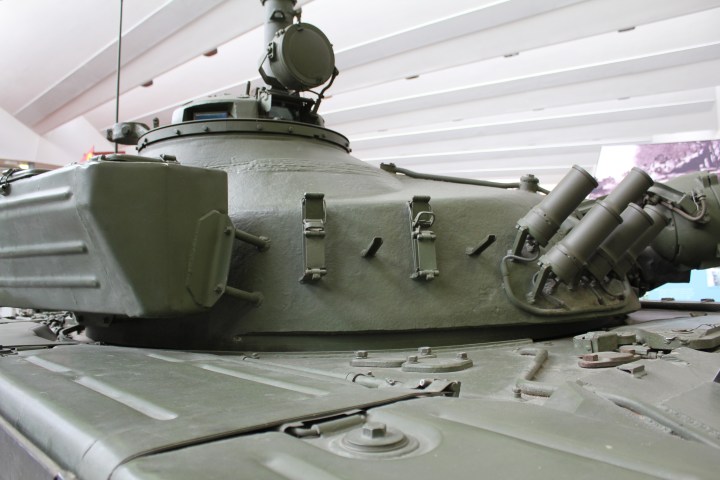
T-72

.
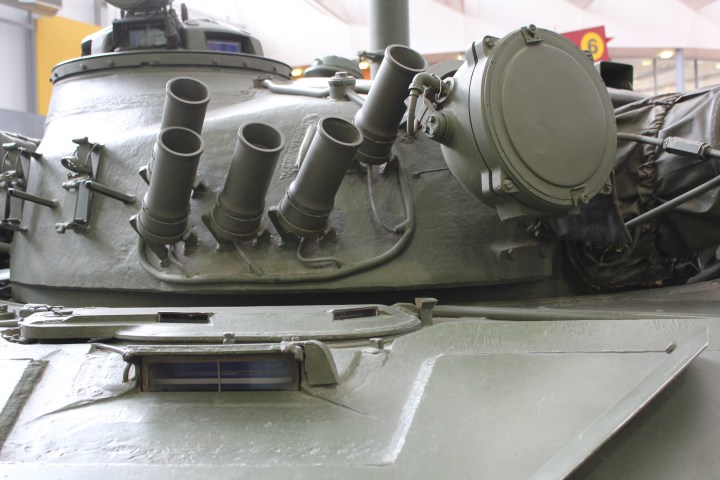
T-72.

.
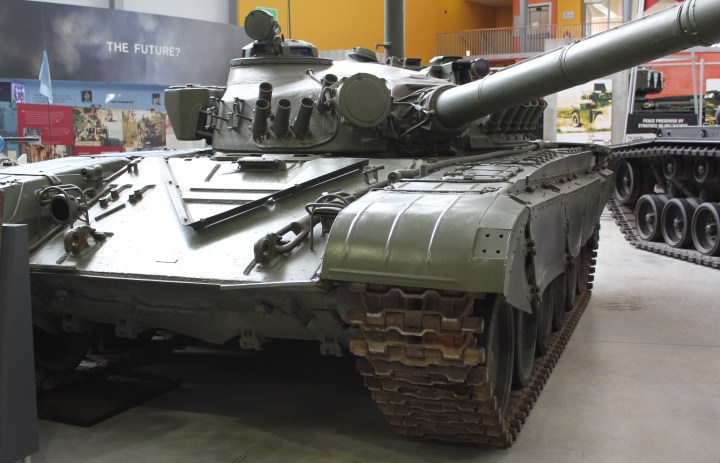
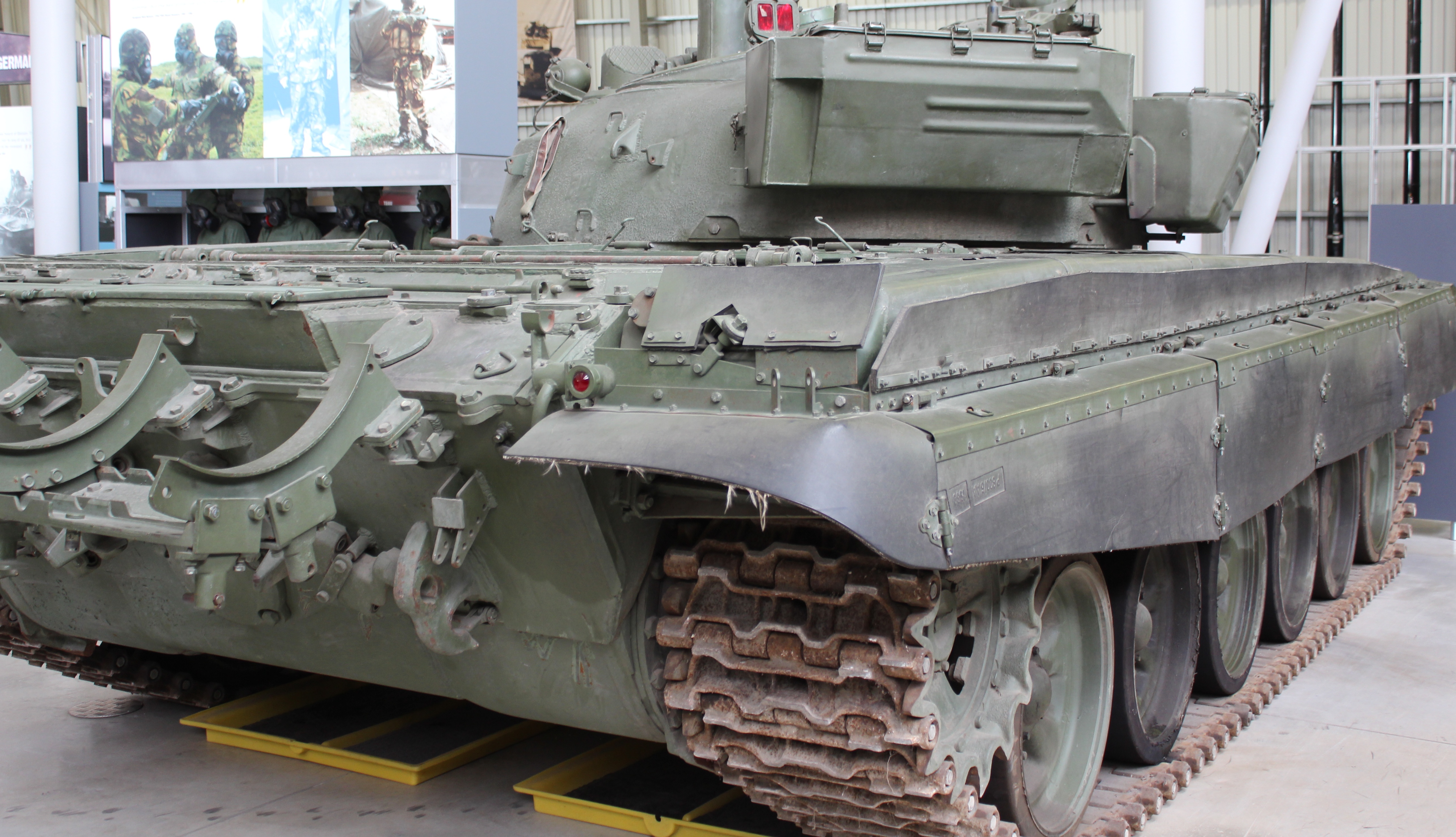
The T-72 was short on room inside as a consequence of its very low profile.

.

Torsion bar suspension.

.

V-12 diesel 780 hp engine.

.

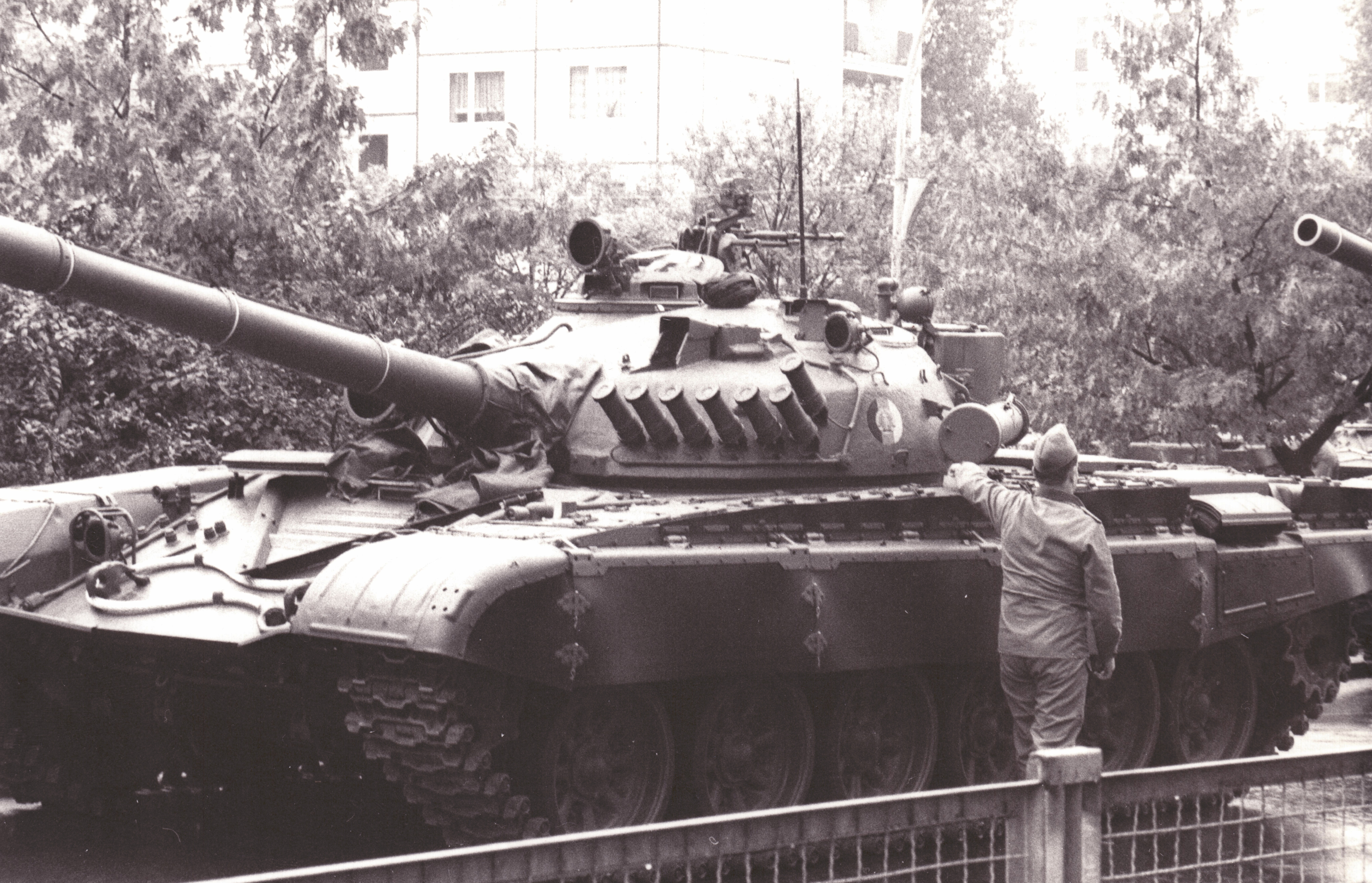
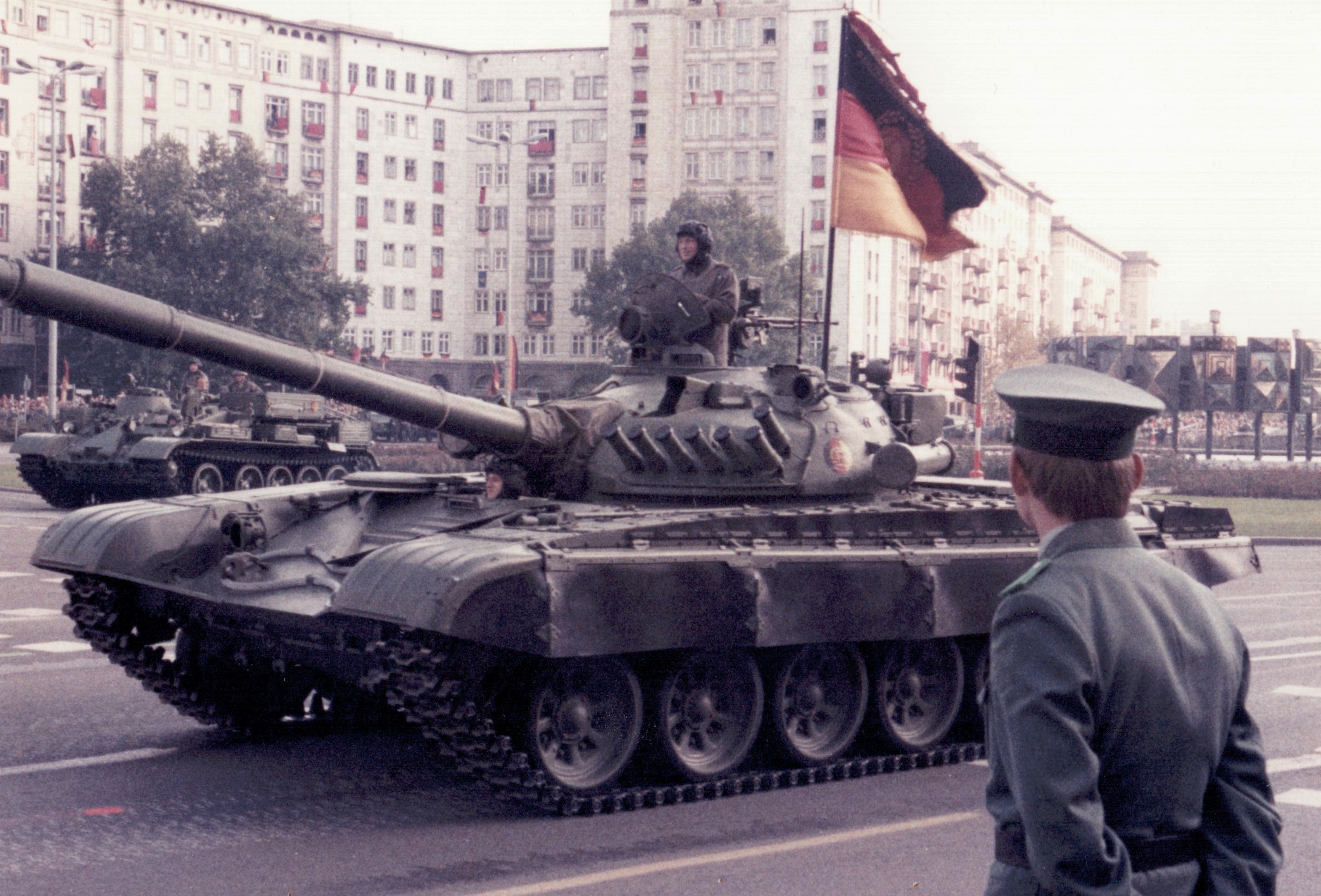
On parade in East berlin in 1984.

.

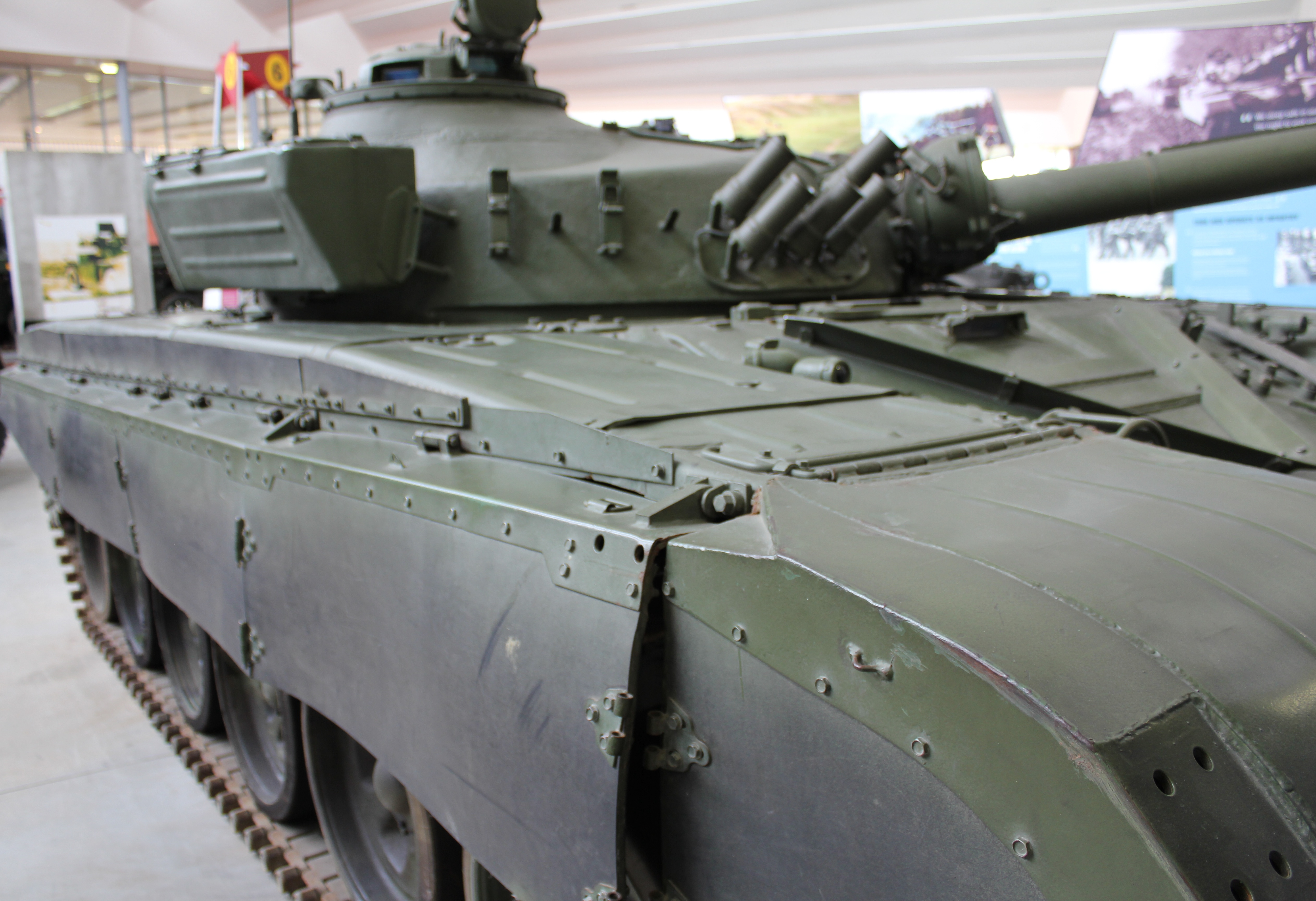
This is the East German, export version, T-72M.

.


It was called the ‘monkey model’ and had thinner armour and downgraded weapons systems.

.
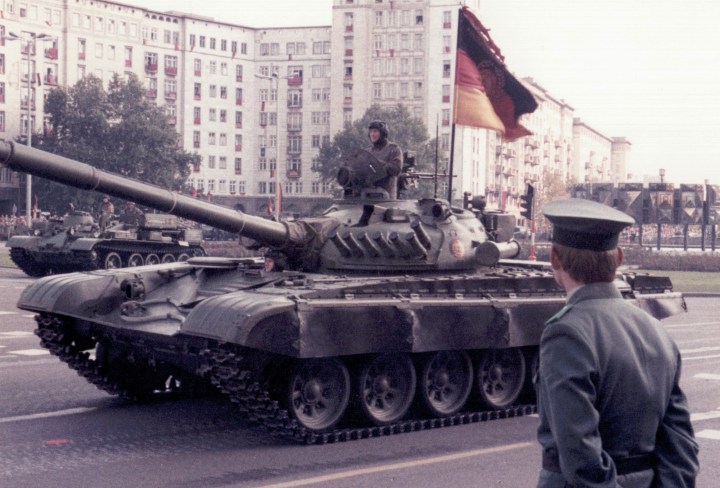
T-72M, East Berlin 1984.

.

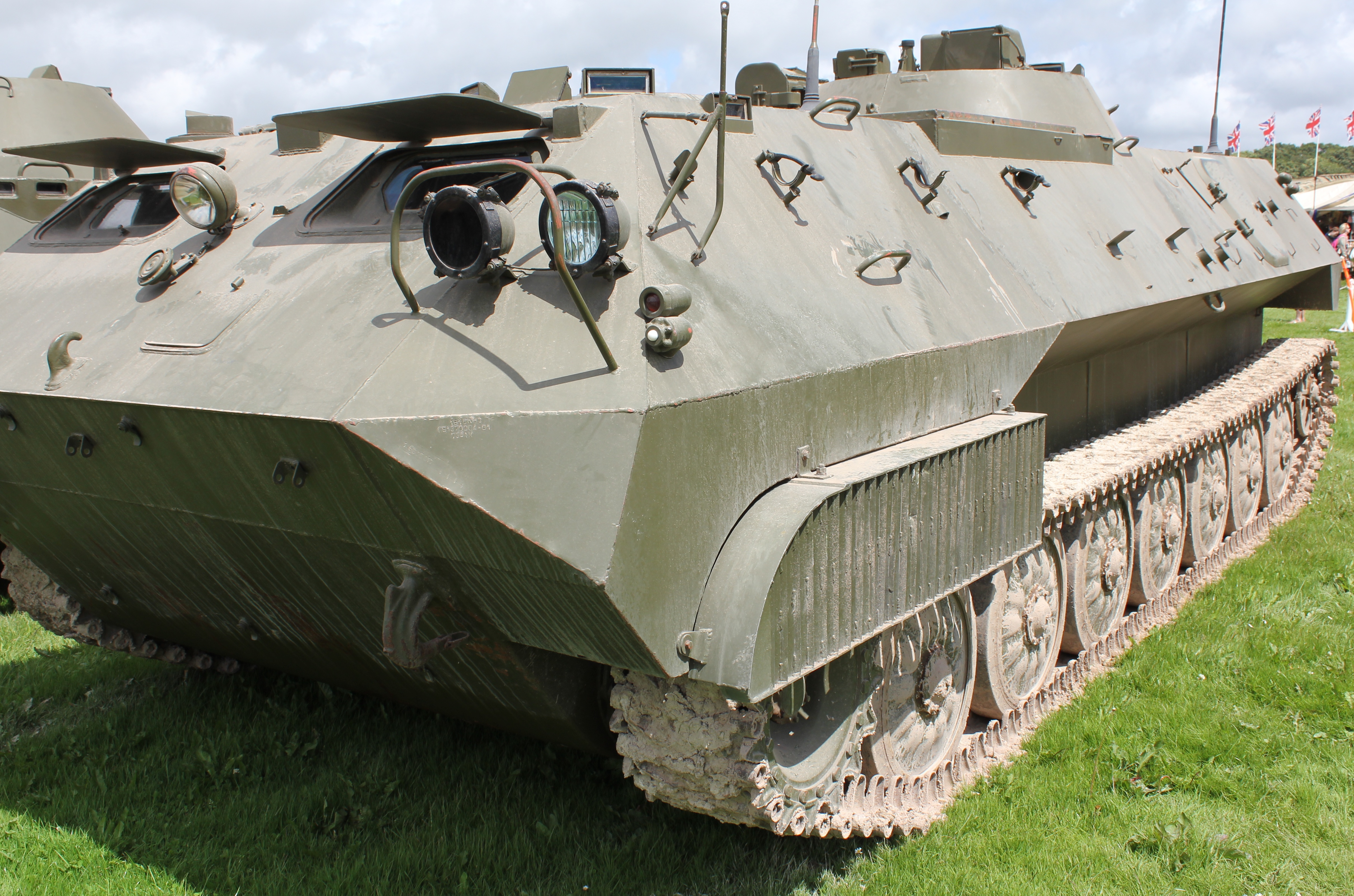
Soviet ACRV M 1974(2).

.

Artillery Command & Reconnaissance Vehicle.

.
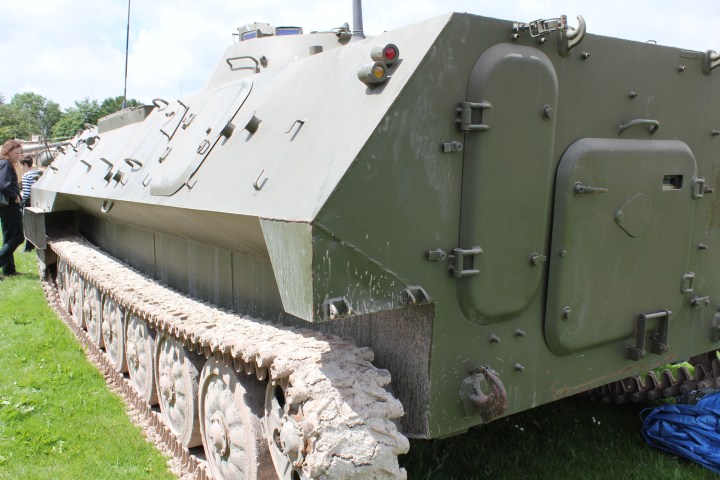
Designed and built to operate with the 2S3 and 2S5 122mm and 152mm self-propelled artillery systems.

.

The hull is of all-welded steel armour construction, protecting the crew for small arms fire and shell splinters. It has three roof-mounted day periscopes and a roof mounted swivelling periscope.

.

The commander and driver are seated at the front of the vehicle with to large windows which can be covered by armoured shutters.

.
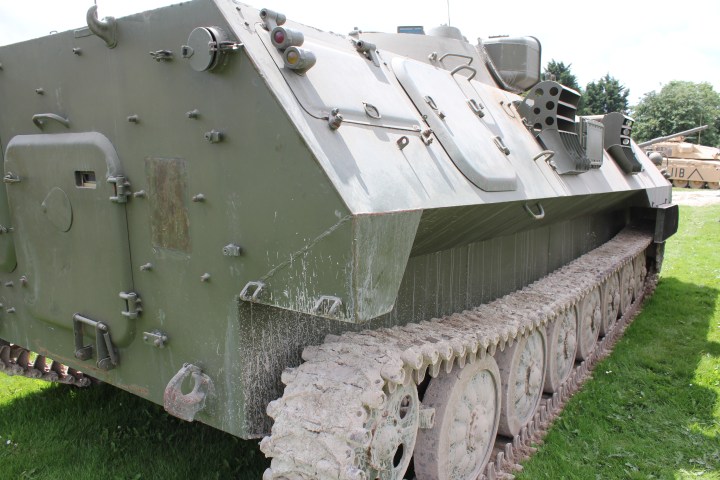
Single door in the rear of the hull.

.

Powered by a diesel engine.

.

ACRV’s on route to East Berlin – 1984.

.
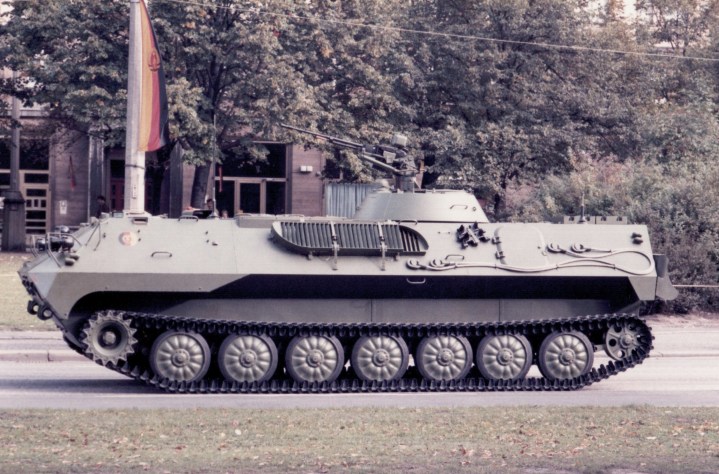
ACRV’s on parade in East Berlin – 1984

.

ACRV on the move

Future posts will cover the Warsaw Pact,  the Soviet likely strategy and the Airborne and Spetsnaz force.

My intention is not to portray a particular message, but just share some of my research and experiences with you.  This is the first of my new ‘Cold War’ series, supporting the writing of my new ‘Cold War’ series of novels, covering the hypothetical invasion of West Germany by the Warsaw Pact in the 80’s. ‘The Red Effect’. so keep your eyes peeled.

.
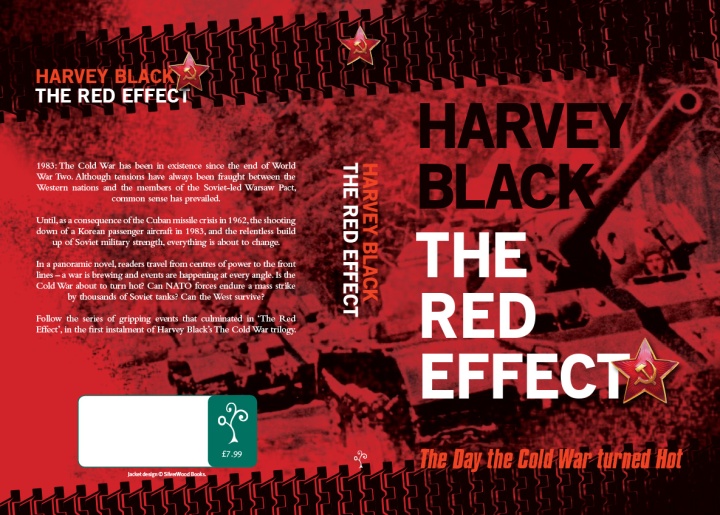
HarveyBlack-Red Effect150313

The equipment Photographs and Blog are copyrighted to Harvey Black

The Cold War Years. A Hot War in reality. Part 7.

My ‘Cold War’ trilogy is complete. I enjoyed writing it and the empty space it has left will be filled with a new set of books, based on the outcome of a strategic nuclear exchange. An Apocalyptic trilogy, survival at its worst.

The Cold War era started very soon after the end of the second world war, when the communist east, led by the Soviet Union, and the Western world, led by the United States and its NATO allies, faced each across what became known as the ‘Iron Curtain’.

.

.

The capital of Germany, Berlin, was divided into four Sectors. The consequence being, that the three Western Allied powers now controlled territory deep within the Soviet Union Zone of Germany.

Over time, the tensions between the four Allied powers increased, eventually resulting in the Berlin blockade in 1948, when the Soviets attempted to starve West Berlin into submission and force the other three Allied powers out. This failed and the Soviets eventually relented, but an ever-increasing number of East Germans fled to the West; between 150,000 and 300,000 a year during 1951-1953. As a consequence restrictions were placed on movement between the divided country. From 1961, the border was closed and Berlin completely encircled, first by barbed wire, then bricks and finally a concrete wall, along with the infamous ‘death strip’.

Access was now restricted between Berlin and the West. A wall, 124 mile miles in length, was placed around the three sectors of West Berlin, cutting off the city from the rest of the world.

The Stasi Prison in East Berlin.  The Cold War truly starts – October 1961.

.

Checkpoint  between East and West Berlin – American Sector of West Berlin 1981

I shall cover various aspects of the two opposing forces, providing the backdrop and background information for my trilogy.

In 1984/85, the Warsaw Pact was already a significant force, the Soviet Union in particular. To counter this NATO, the North Atlantic Treaty Organisation, assembled its own force of arms along the Iron Curtain. Not just as a show force against the communist ideals purported by the East, but because the likelihood of Warsaw Pact troops, led by the Soviet Union, crossing the Inner German Border was a real possibility.


This post is just to take the opportunity to add some more equipment photographs. My next post will cover the Soviet European Theatre forces during the mid 80’s.

.

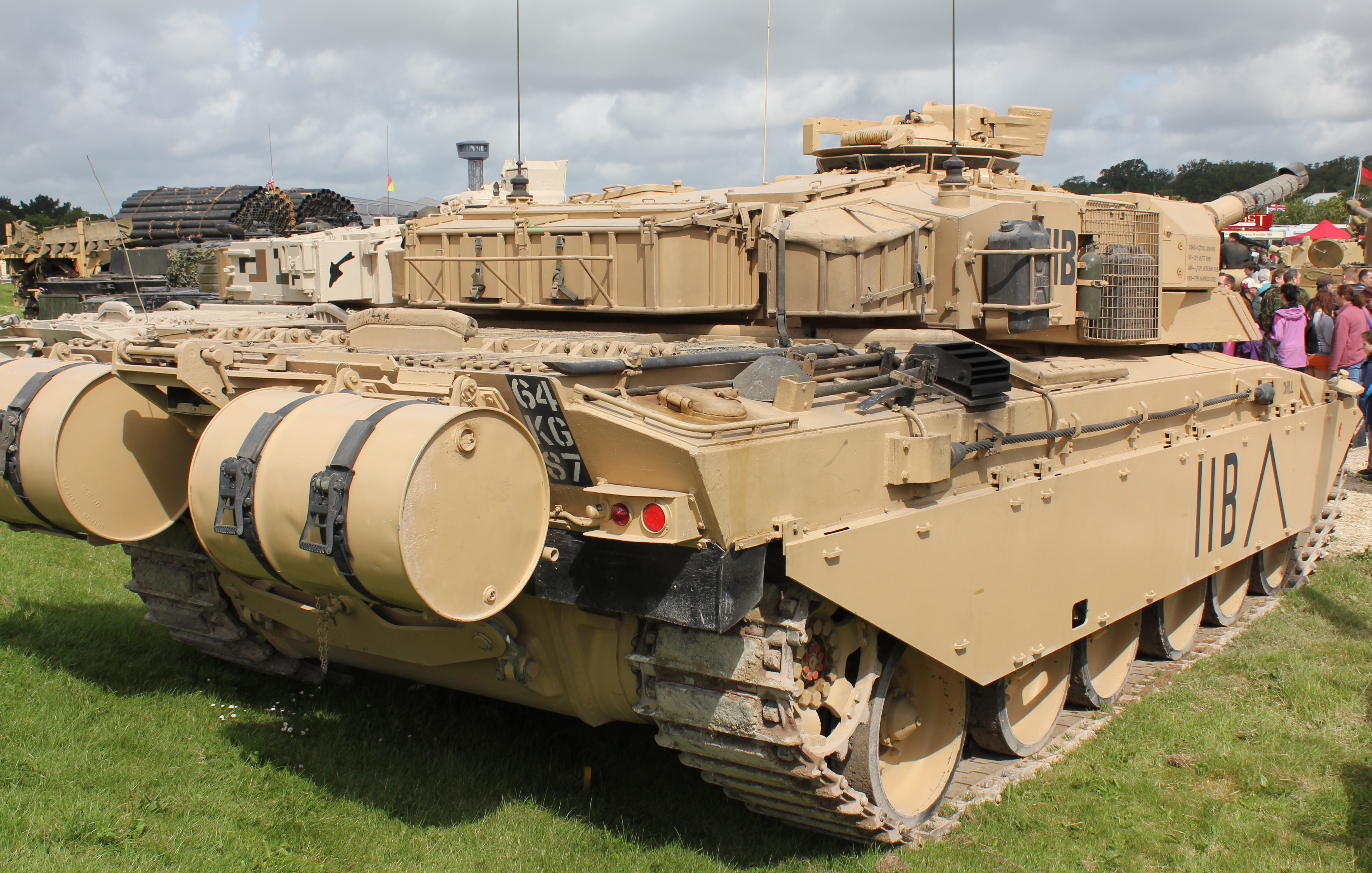
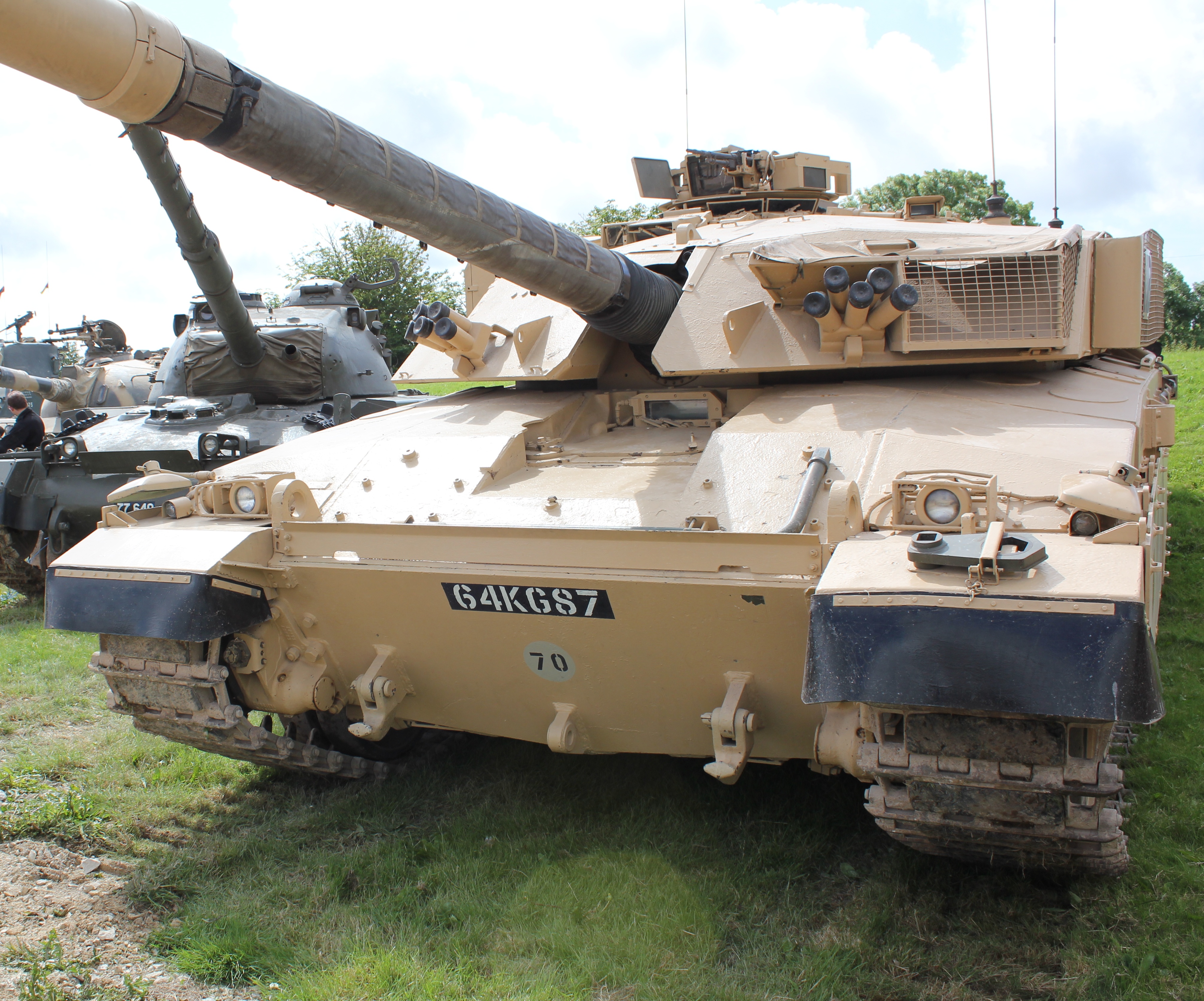
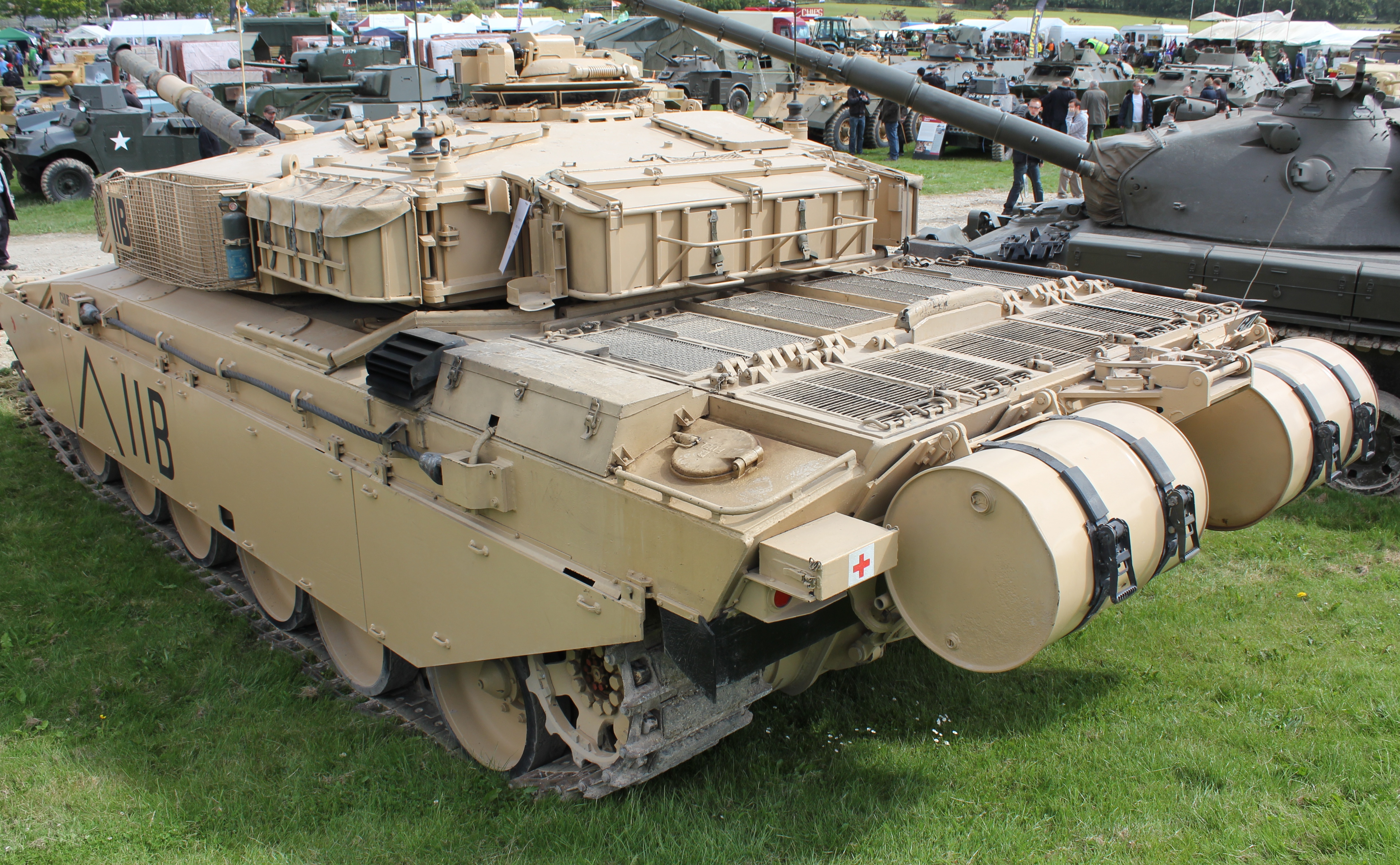
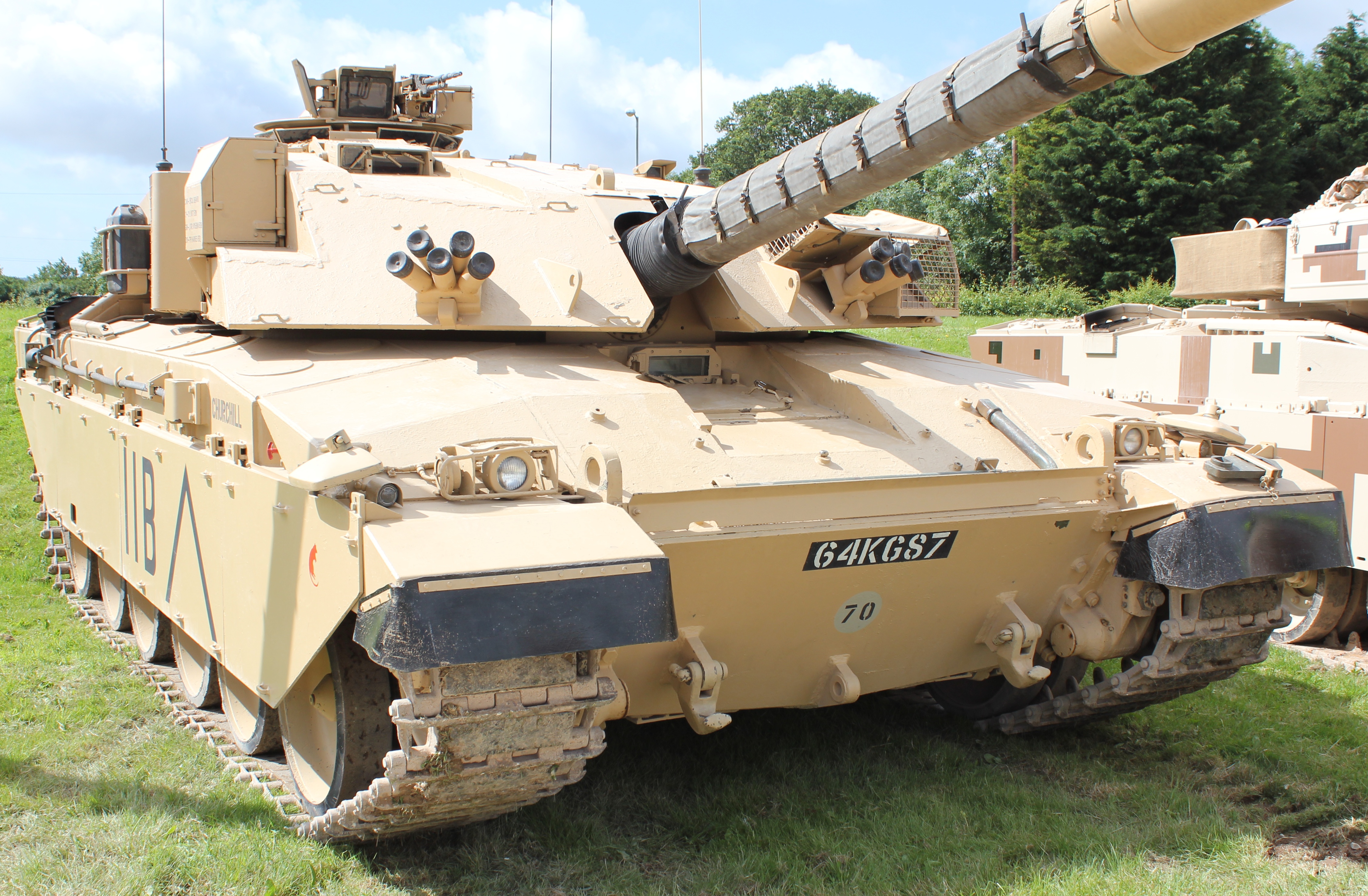
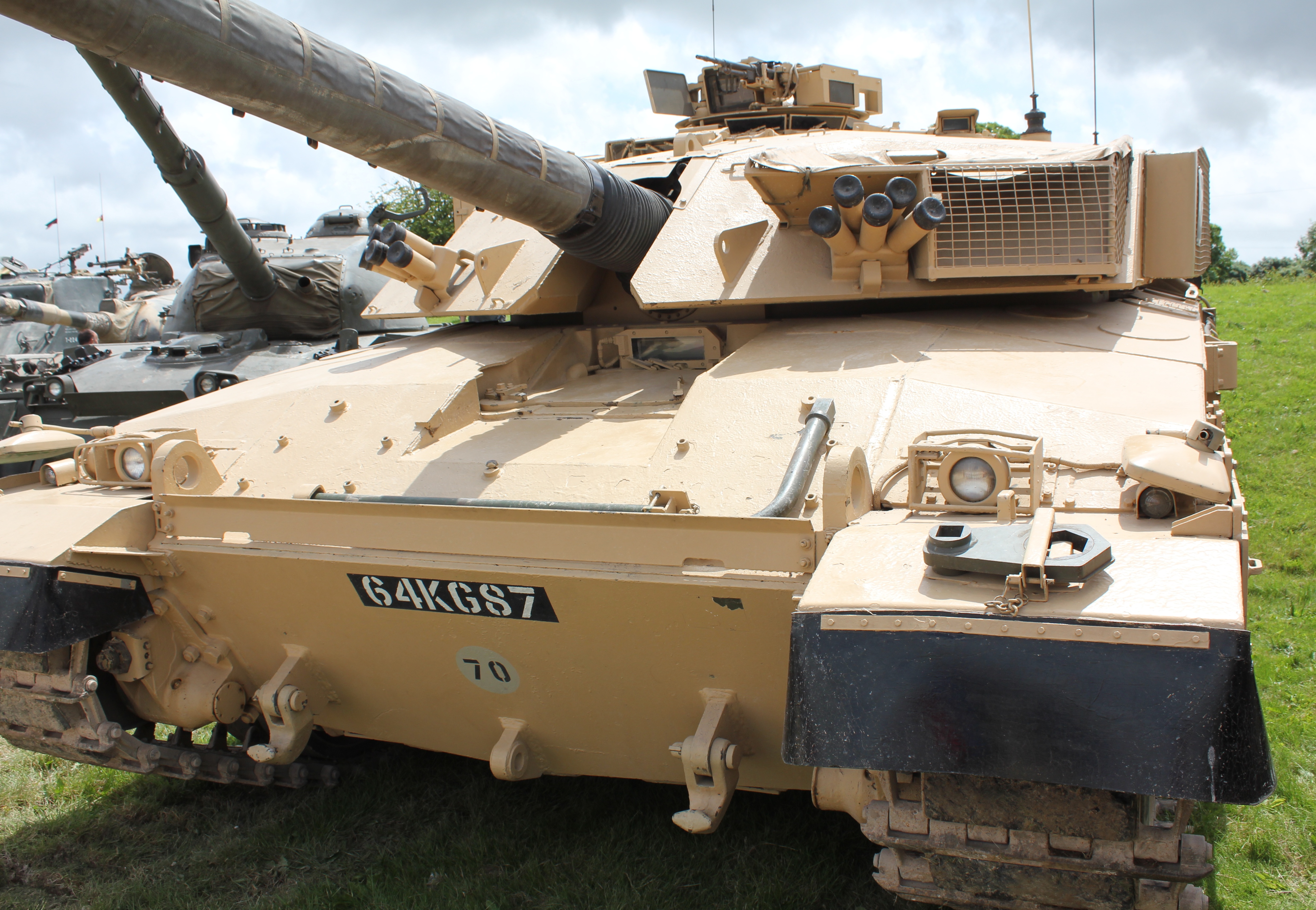
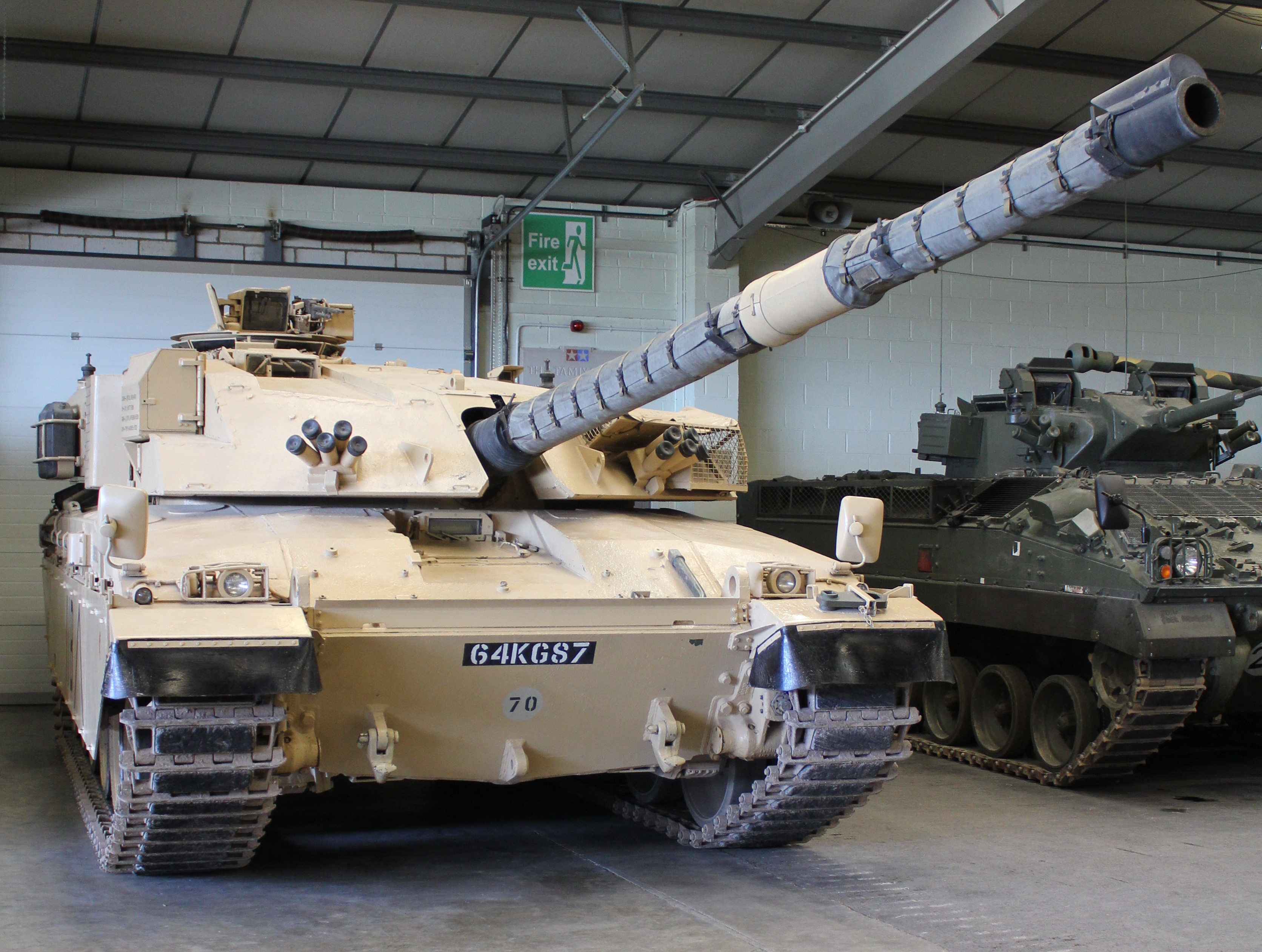
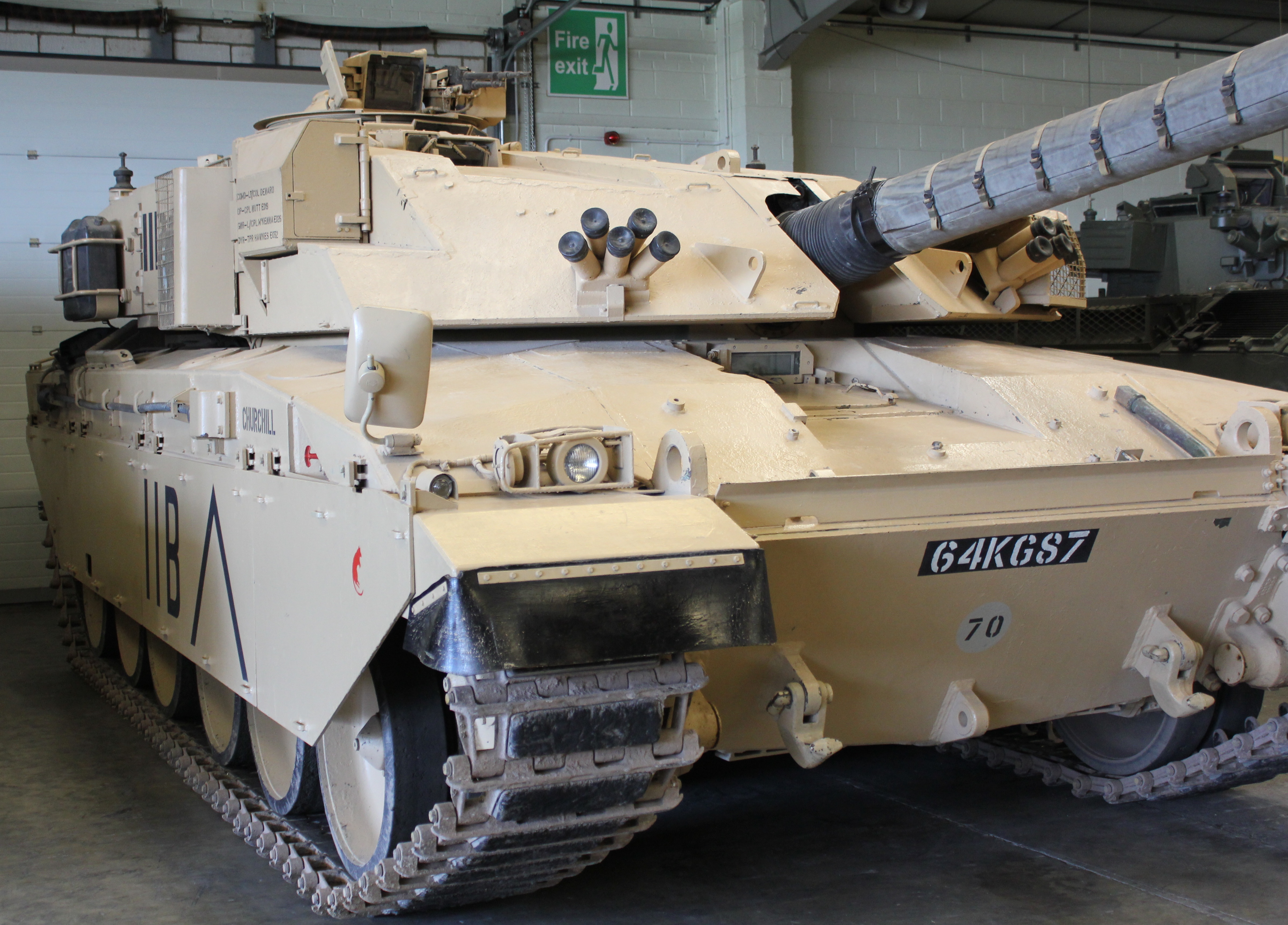
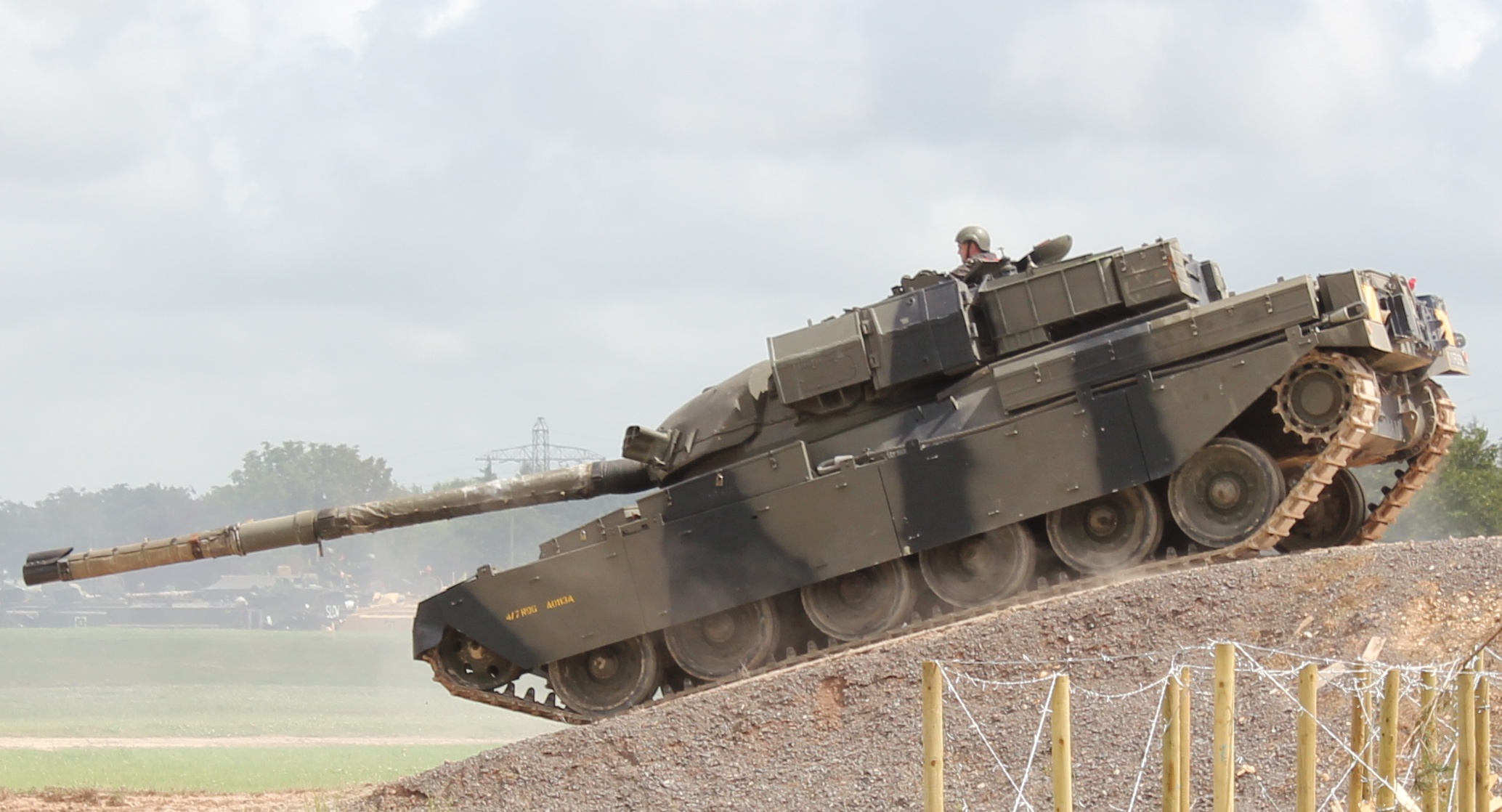
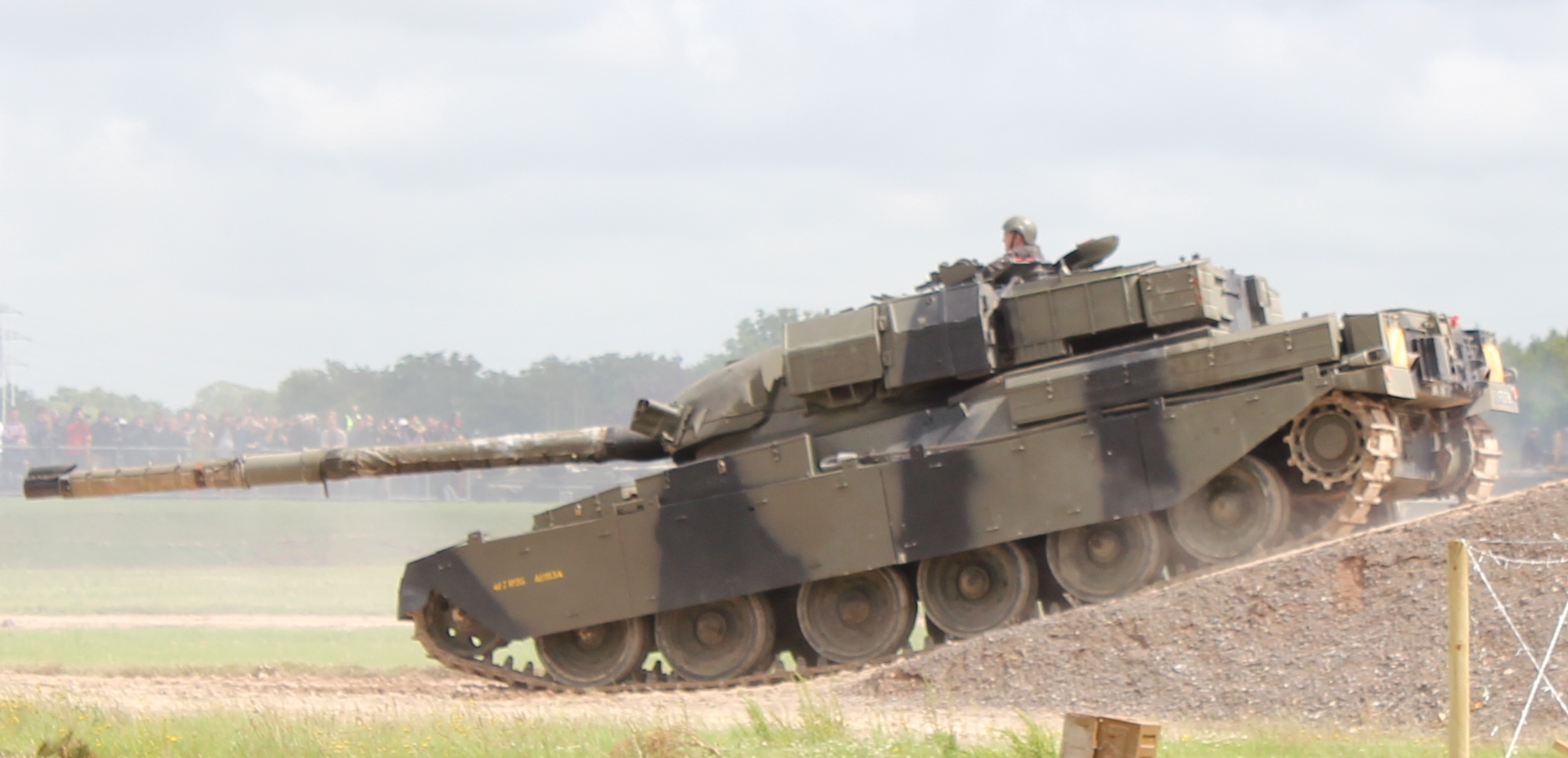
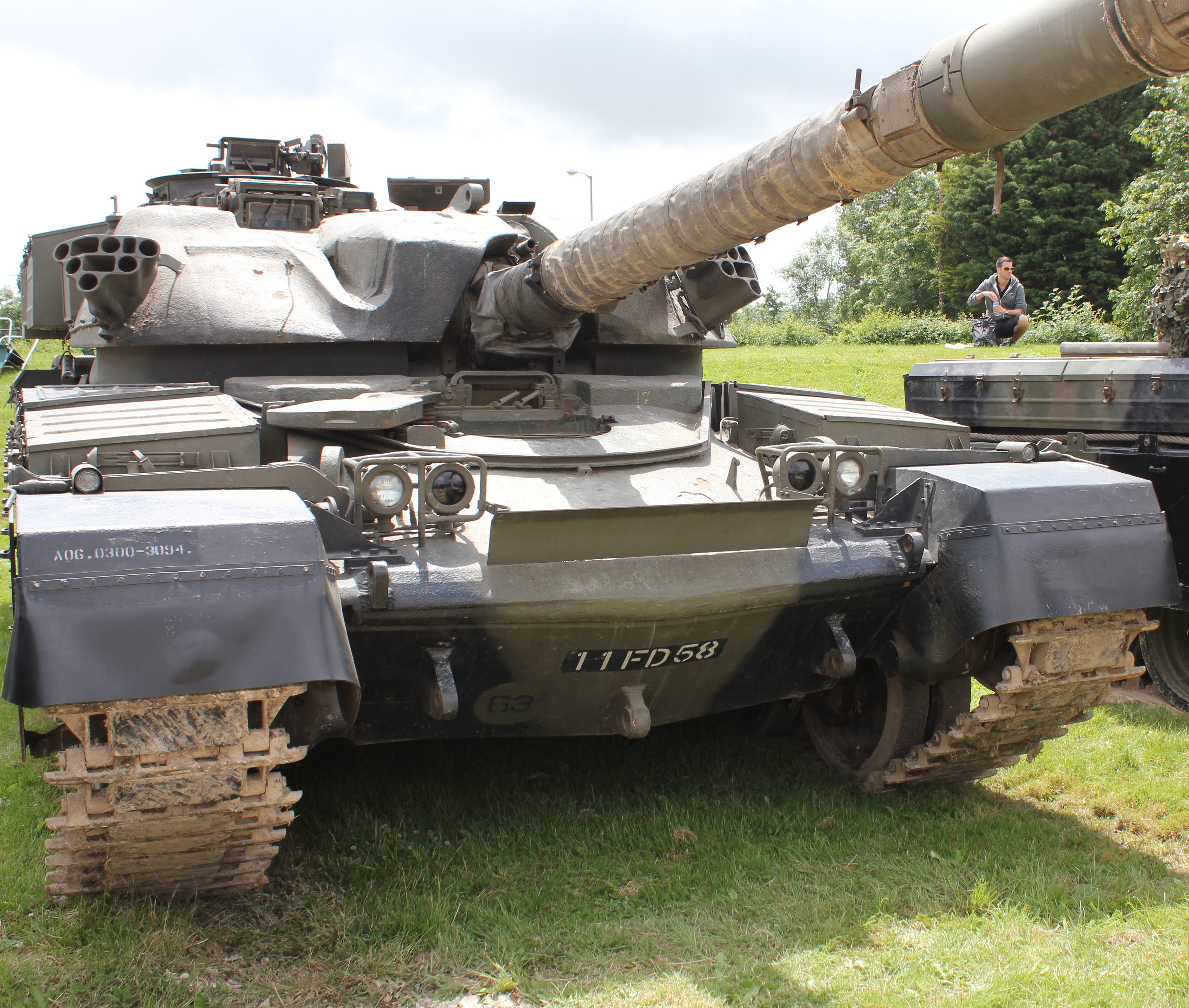
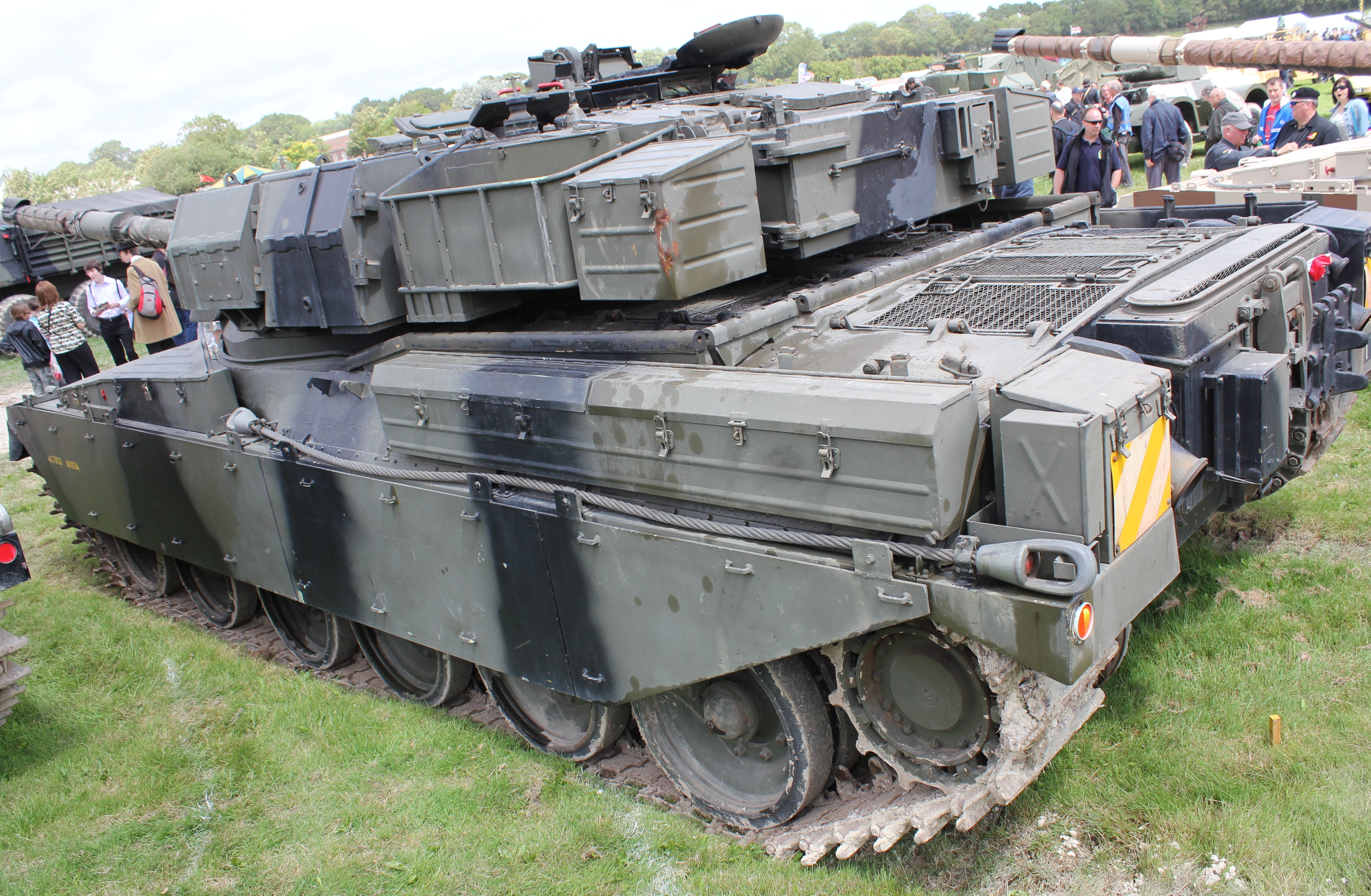
Challenger 1.

.

Although the tanks shown later in my Post, such as the Challenger 2, weren’t around in the 80’s, the Challenger 1

had just been introduced.

.

Weighs 62 tons.

.

L11A5 120mm rifled gun.

.

Challenger 1. The 62 ton Main battle Tank is capable of a speed of up to 35mph. Its armour, still classified, and 120mm gun make this a formidable opponent

.

Crew of 4. Commander, Gunner, Loader and Driver.

.

Challenger 1

.

Challenger 1 was deployed  in Saudi Arabia for Operation Granby, for the UK role in the Gulf War.

.

Challenger 1 in the Bovington Tank Museum.

.

Challenger 1

.

Challenger 1. At the end of the post is a video clip of a Challenger 1 on the move.

.

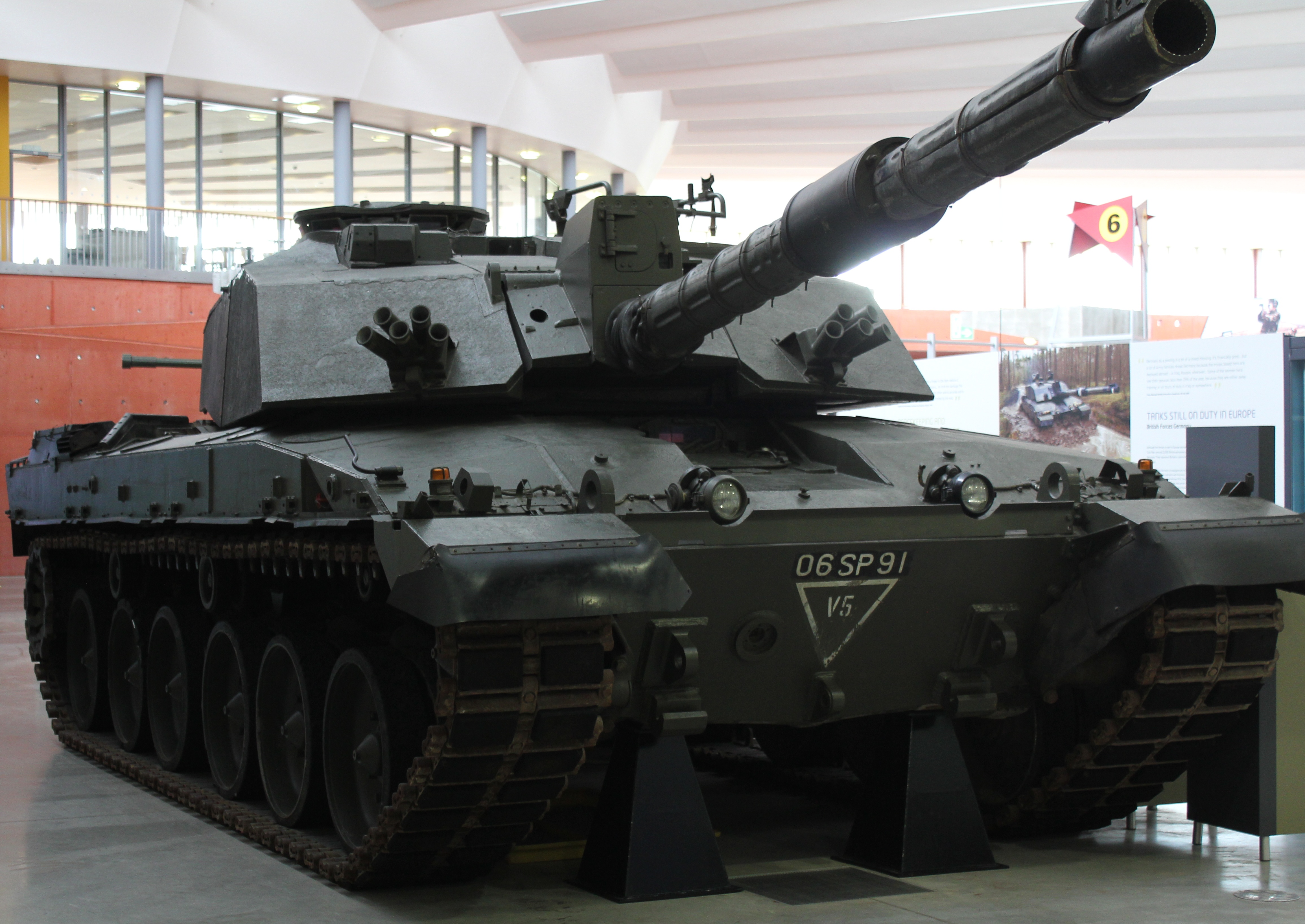
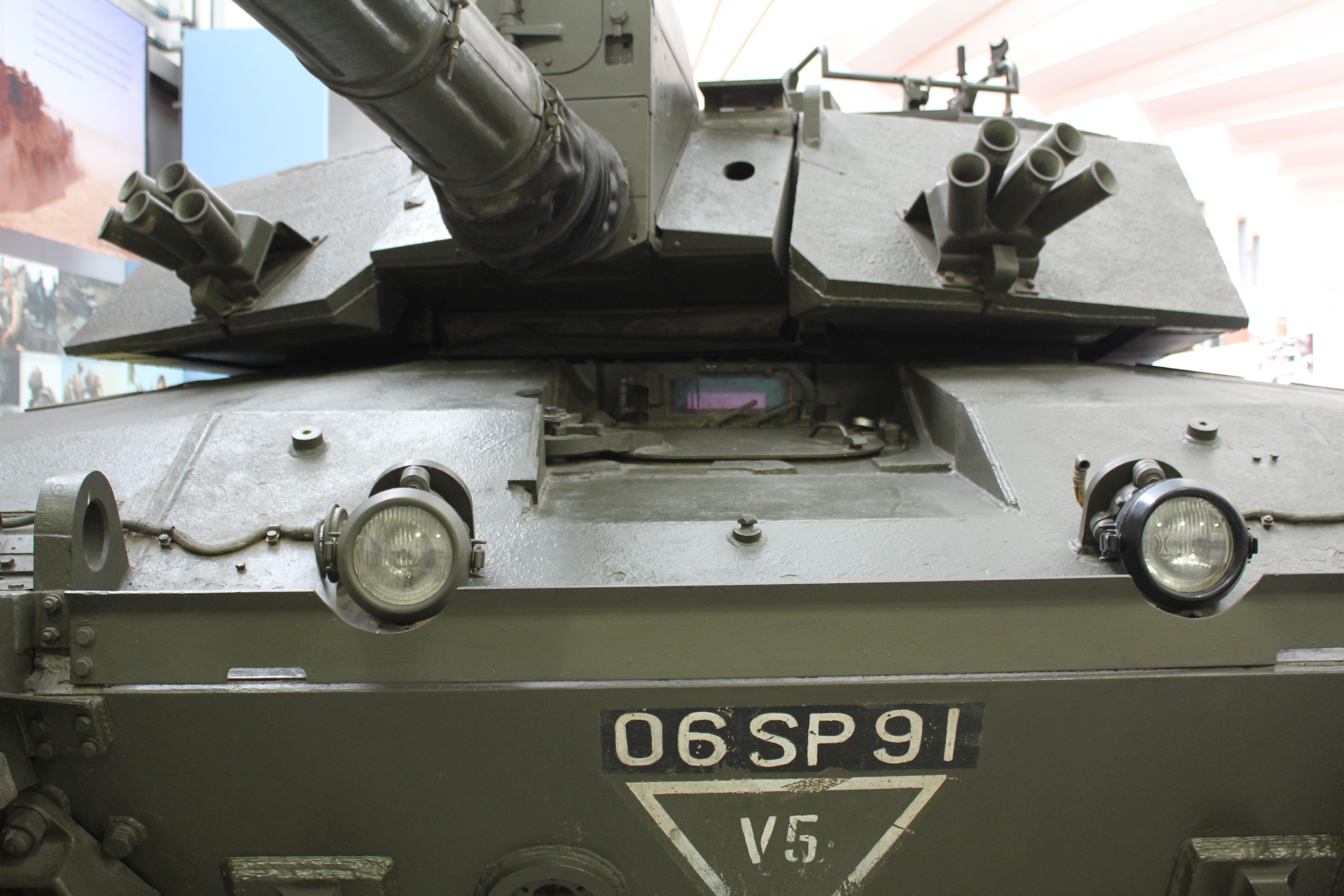
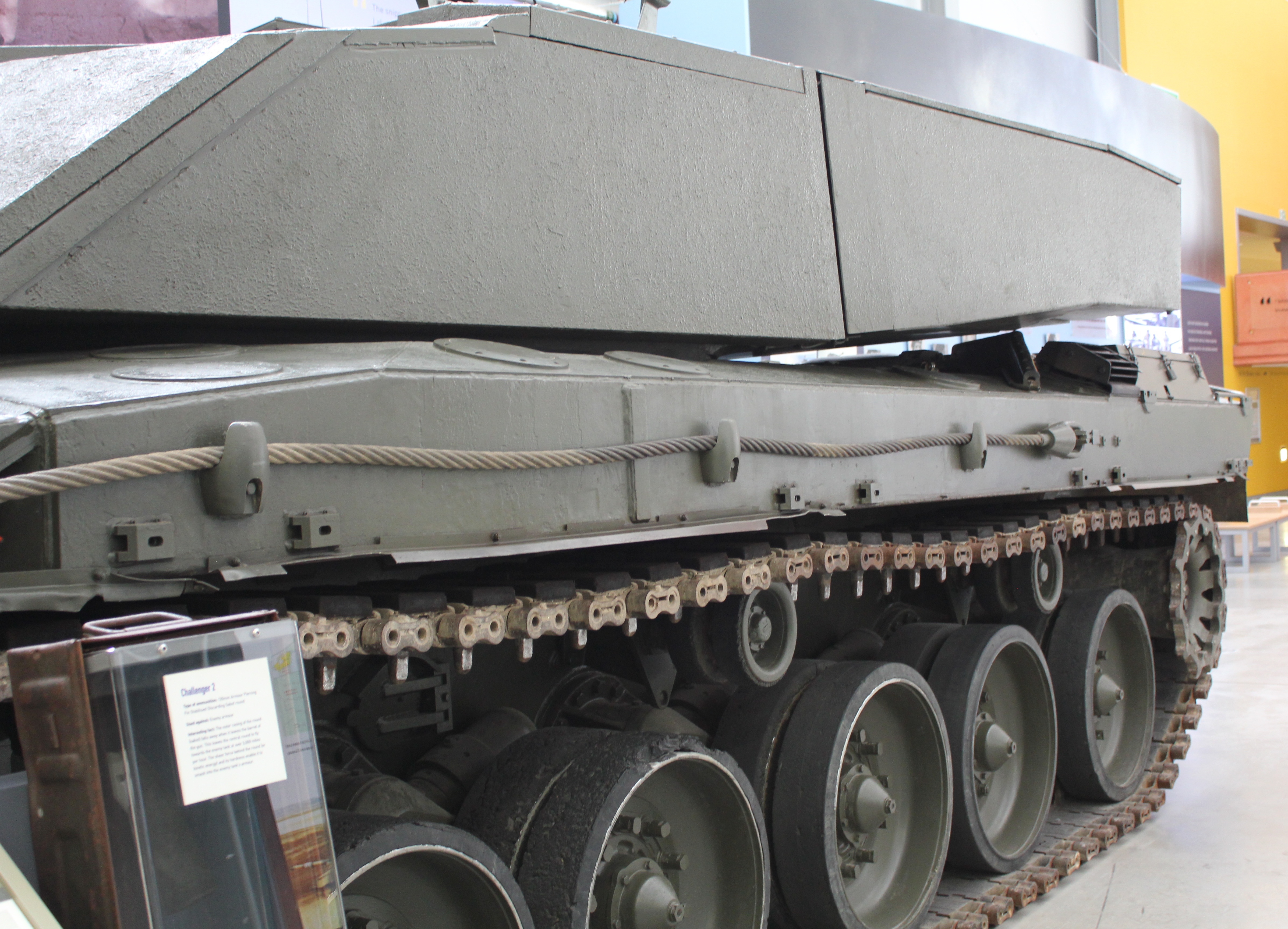
Challenger 2. The latest of Britain’s Main Battle Tanks. Weighs in at a hefty 63 tons.

.

Although heavy, the Perkins CV 12 V12 – 26.1 1200 horsepower engine gives it a top speed of 37mph.

.

It has a crew of 4 and the thickness of the armour protecting them is still classified Secret.

.

It has a 120mm main gun. The thermal imagery system can be seen above the barrel. This enables the crew to see thermal images of any ‘hot spots’, vehicles, soldiers….

.

It has hydropneumatic suspension with a David Brown TN54 epicyclic transmission, giving it 6 forward and 2 reverse gears.

.


Challenger 2

.

It has a range of 280 miles on road and 156 miles cross country.

.

Whereas the Chieftain tank had rounded armour with an angle of 70 degrees, the Challenger 2 is more angular with its front armour sloping at 50 degrees.

.

The turret and hull are protected by Chobham armour and is one of the most heavily protected tanks in the world. Although content of the armour is classified, it is said that it is twice as strong as steel.

.

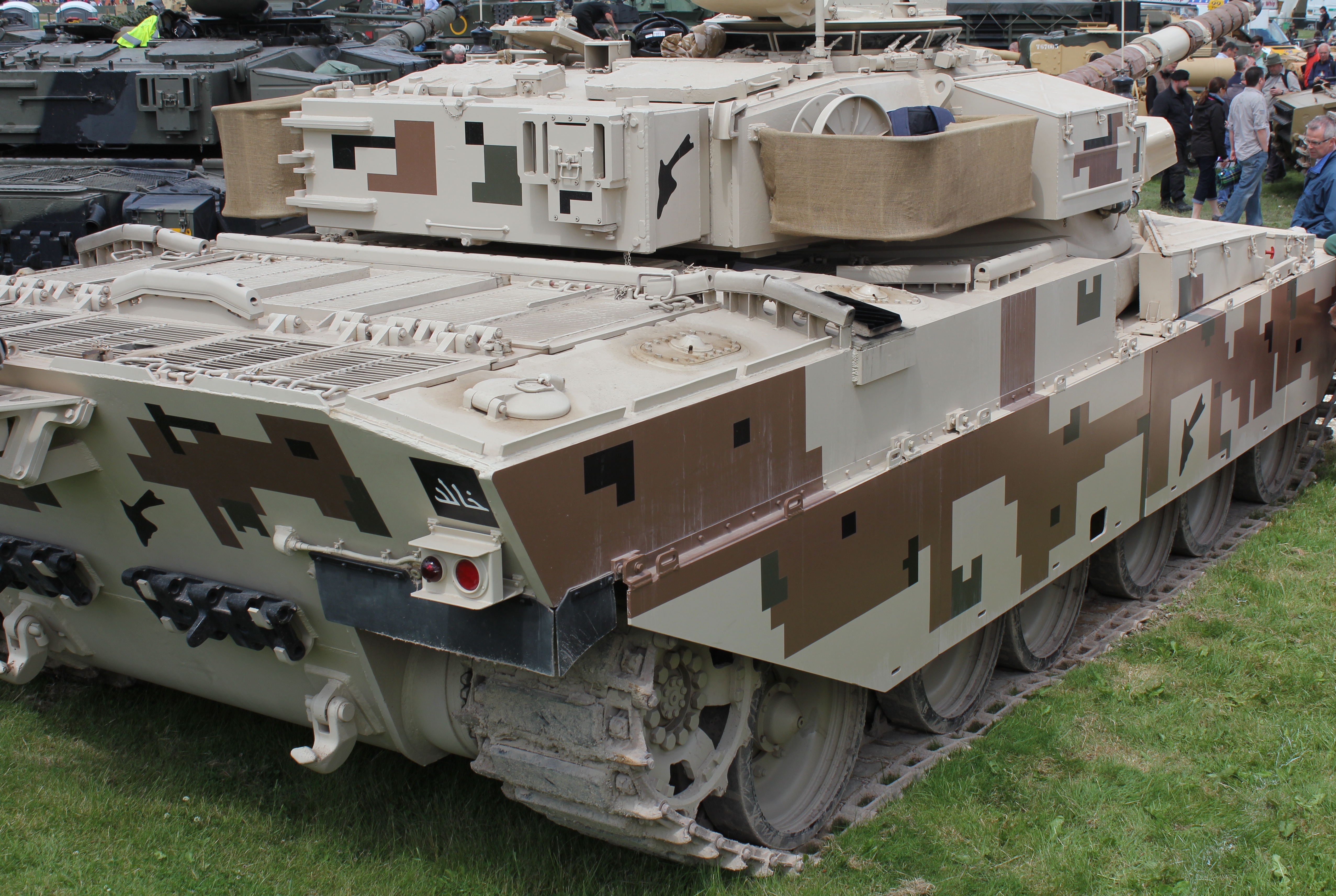
The Khalid variant of the Chieftain Tank. Also designated 4030P2J.

.

Its digital camouflage. This Jordanian/Indian variant has the same running gear as the Challenger 1. This was the transition vehicle from the Chieftain to the Shir 2. After the cancellation of the Iranian order, after the overthrow of the Shah, they were reworked and effectively became the early Challenger 1s.

.

The front half was still very much a Chieftain Hull.

.

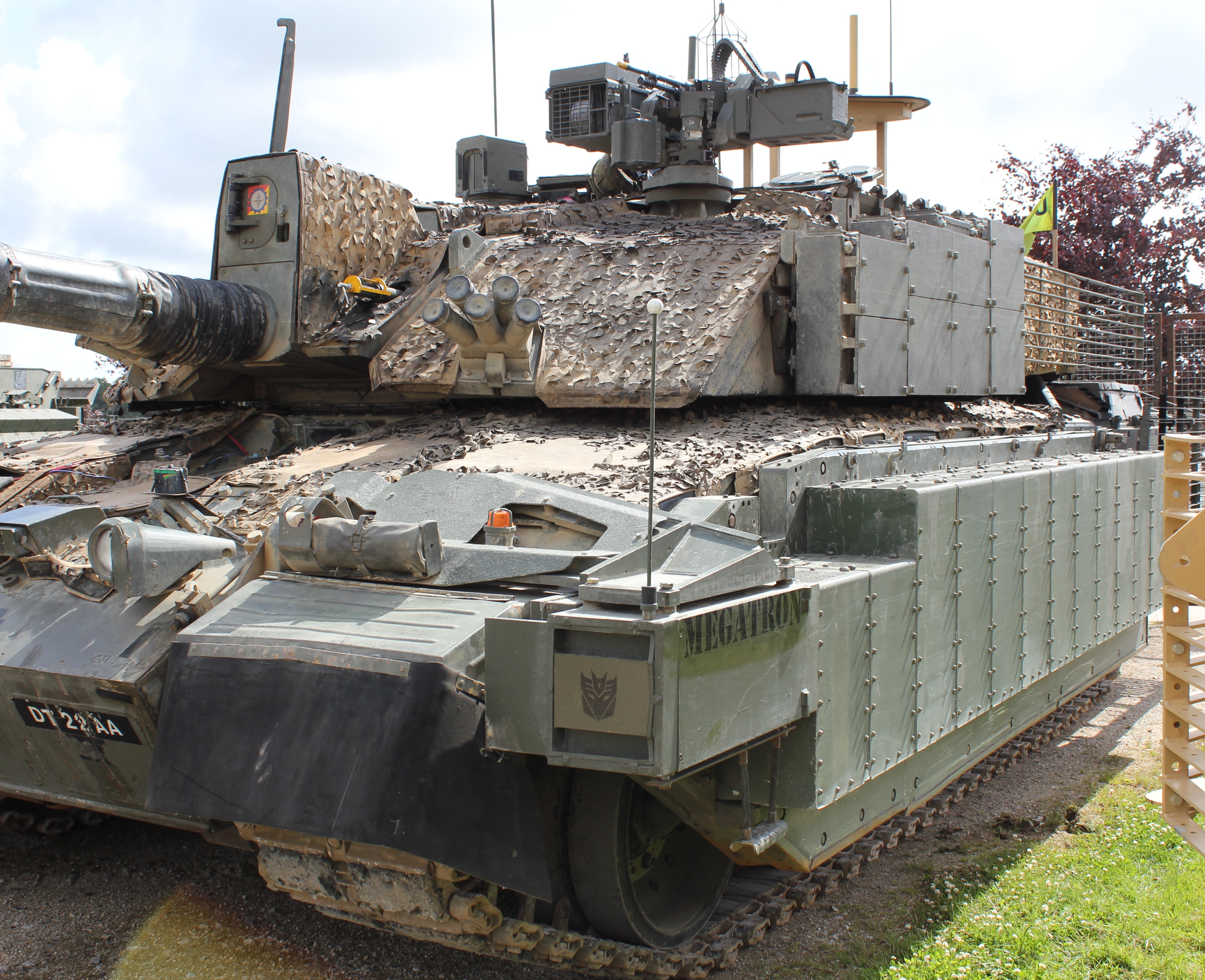
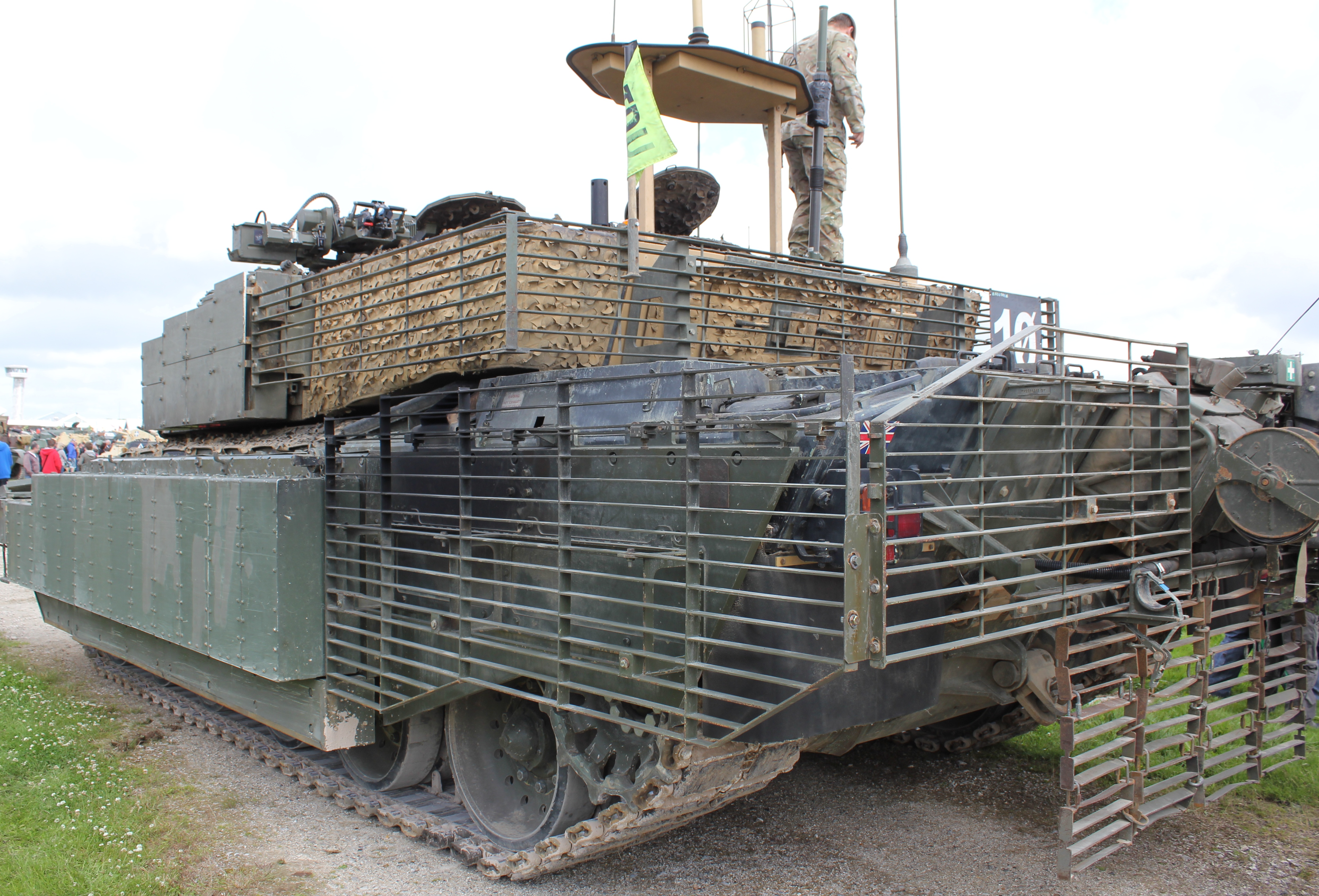
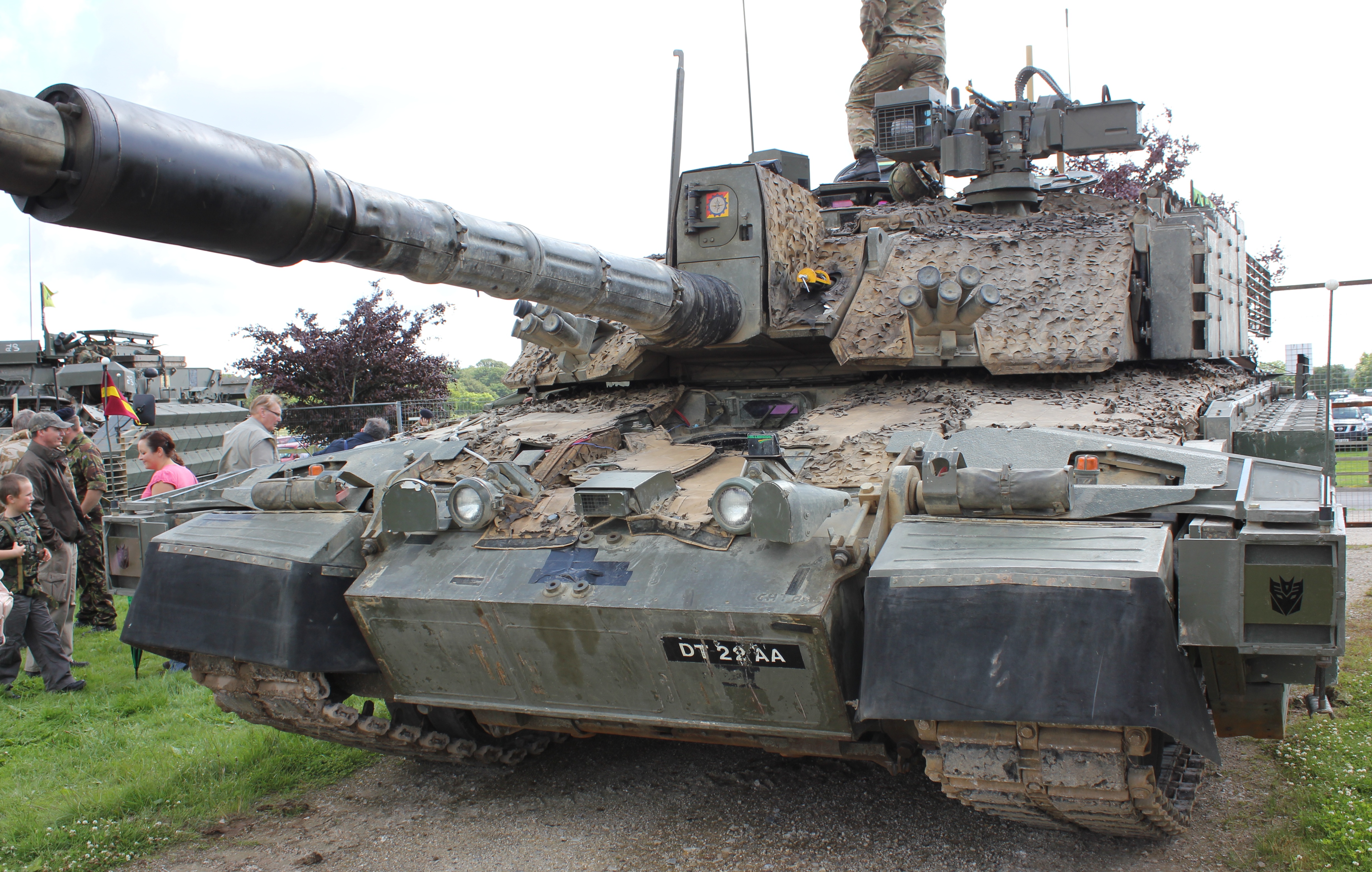
The most up-to-date version of Challenger 2 comes with lots of extras.

.

Challenger 2, was designed and built by the British company, Vickers Defence Systems. It is in service with the armies of the United Kingdom and the Oman.

.

The Challenger has additional in theatre protection. Here you can see the explosive reactive armour, ERA, panels on the side and the bar armour for protection against shaped charges.

.

Challenger 2

.

Challenger 1 and Khalid in action

My intention is not to portray a particular message, but just share some of my research and experiences with you.  This is the first of my new ‘Cold War’ series, supporting the writing of my new ‘Cold War’ series of novels, covering the hypothetical invasion of West Germany by the Warsaw Pact in the 80’s.

.

HarveyBlack-Red Effect150313

The equipment Photographs and Blog are copyrighted to Harvey Black
The Cold War Years. A Hot War in reality. Part 5.

My ‘Cold War’ trilogy is complete. I enjoyed writing it and the empty space it has left will be filled with a new set of books, based on the outcome of a strategic nuclear exchange. An Apocalyptic trilogy, survival at its worst.

The Cold War era started very soon after the end of the second world war, when the communist east, led by the Soviet Union, and the Western world, led by the United States and its NATO allies, faced each across what became known as the ‘Iron Curtain’.

.

.

The capital of Germany, Berlin, was divided into four Sectors. The consequence being, that the three Western Allied powers now controlled territory deep within the Soviet Union Zone of Germany.

Over time, the tensions between the four Allied powers increased, eventually resulting in the Berlin blockade in 1948, when the Soviets attempted to starve West Berlin into submission and force the other three Allied powers out. This failed and the Soviets eventually relented, but an ever-increasing number of East Germans fled to the West; between 150,000 and 300,000 a year during 1951-1953. As a consequence restrictions were placed on movement between the divided country. From 1961, the border was closed and Berlin completely encircled, first by barbed wire, then bricks and finally a concrete wall, along with the infamous ‘death strip’.

Access was now restricted between Berlin and the West. A wall, 124 mile miles in length, was placed around the three sectors of West Berlin, cutting off the city from the rest of the world.

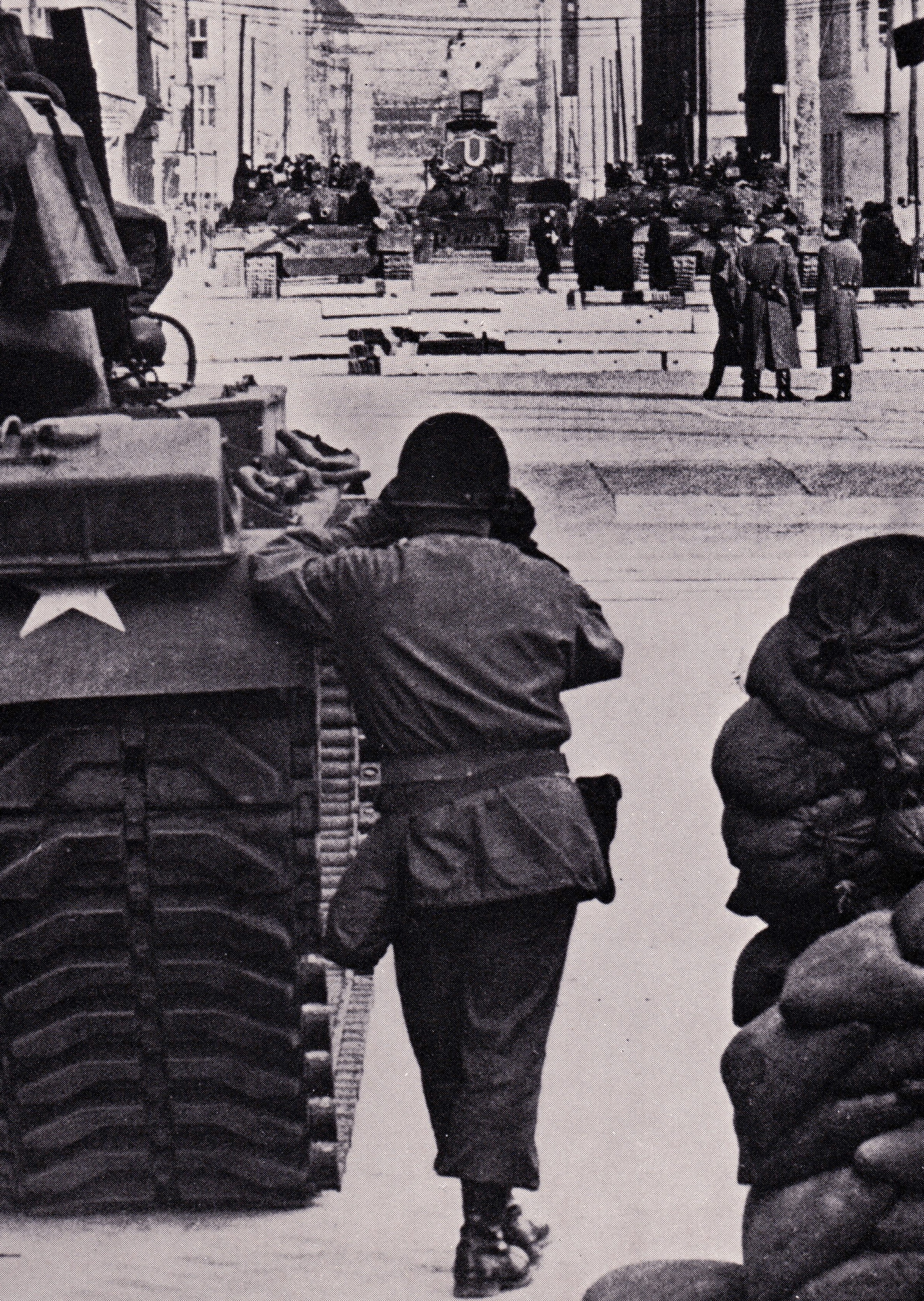
An Iconic picture of the face-off between the West and the East.  The Cold War truly starts – October 1961.

.

I shall cover various aspects of the two opposing forces, providing the backdrop and background information for my three novels.

In 1984/85, the Warsaw Pact was already a significant force, the Soviet Union in particular. To counter this NATO, the North Atlantic Treaty Organisation, assembled its own force of arms along the Iron Curtain. Not just as a show force against the communist ideals purported by the East, but because the likelihood of Warsaw Pact troops, led by the Soviet Union, crossing the Inner German Border was a real possibility.

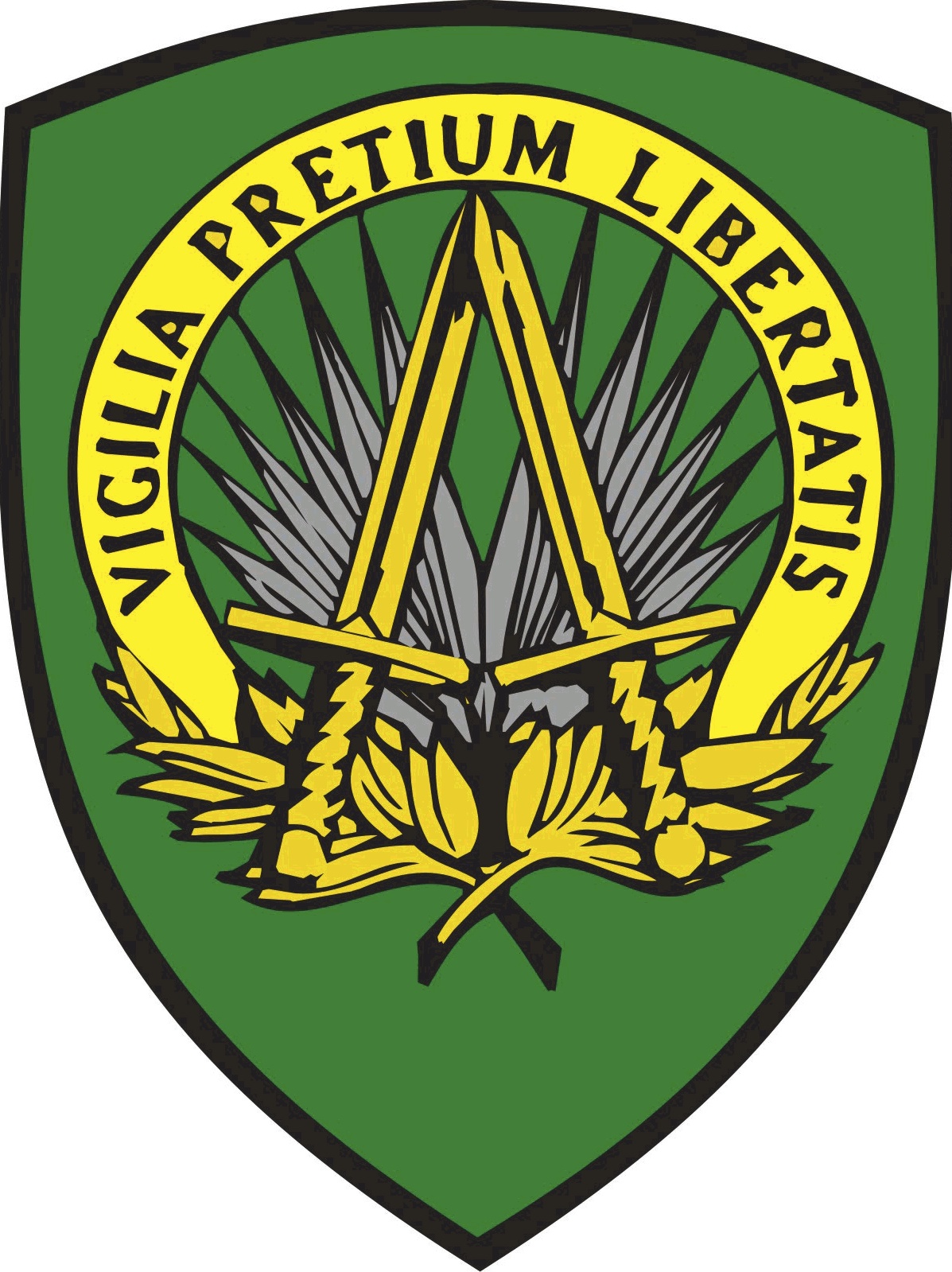
Although SHAPE, Supreme Headquarters Allied Powers Europe, was referenced to Europe for legal reasons, its activities were extended beyond those borders in 2003. SHAPE’s motto is Vigilia Pretium Liberatis, Latin for ‘The Price of Freedom is Vigilance’. In 1951, General Eisenhower signed the activation order for ACE, Allied Command Europe. The key subordinate commands being Allied Forces Northern Europe, AFNORTH, Allied Forces Central Europe, AFCENT, the commands I shall be covering in this and future posts, and AFSOUTH, Allied Forces Southern Europe.


.

Supreme Headquarters Allied Powers Europe – Emblem

.

Allied Forces Central Europe.

.

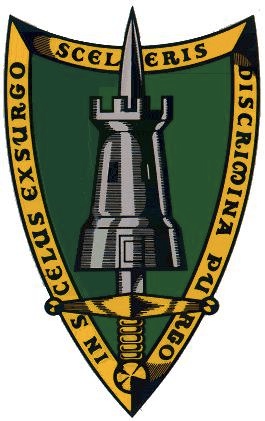
Allied Forces Central Europe, AFCENT, would have to take the brunt of any attack by the Warsaw Pact forces. With responsibility for Parts of Europe stretching from Denmark to the borders of Austria, it had three subordinate commands. The two key ones, Northern Army Group, NORTHAG, and Central Army Group, CENTAG. For this and the next Post, I will concentrate on NORTHAG.

.

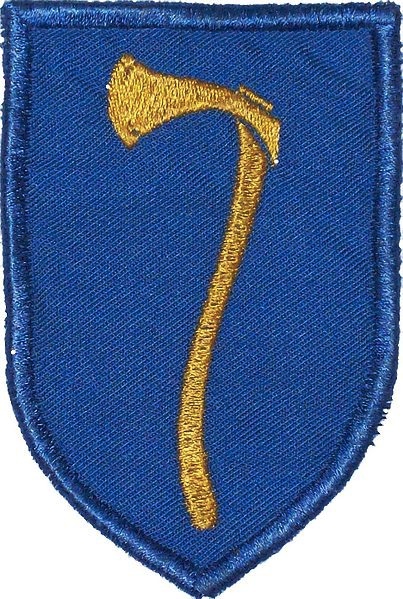
Northern Army Group Insignia. During the building of the Joint Headquarters, a Frankish battle axe was discovered and subsequently used as their emblem. They chose it because the Franks were a West-European tribe defending against attackers from the East.

.

During the 1980’s there was a genuine fear that the Warsaw Pact would come storming across the Inner German Border.

.

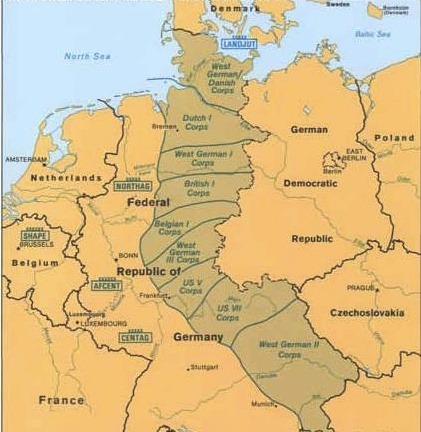
For the defence of the Federal Republic of Germany, NATO used a ‘layer-cake’ principle. The country was sectioned into layers, with a designated Army Corps taking responsibility for its defence.

.

Northern Army Group consisted of four Army Corps; 1 Dutch Corps in the north, beneath that 1 German Corps, 1 British Corps and 1 Belgian Corps. NORTHAG’s area of responsibility ran from the North German Plains, south of the river Elbe, to the city of Kassel. Below Kassel was the responsibility of CENTAG and north of the Elbe was the responsibility of Allied Land Forces Command.

.

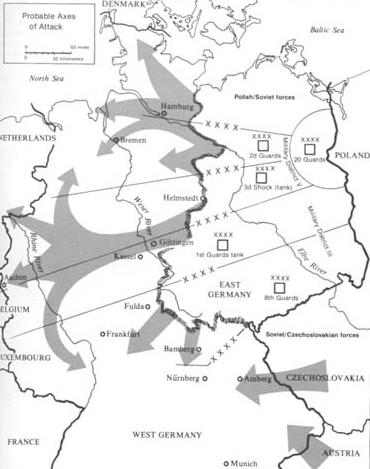
Crossing the Inner German Border, the Warsaw Pact was expected to attack on possibly two key fronts. The ‘North German Plains’, ideal terrain for their particularly large tank forces, and from the ‘Thurungian Bulge’, punching through the ‘Fulda Gap’, Frankfurt a mere 62 miles from the Inner German Border at that point.
.

In the 1950’s, NATO supported the ‘Rhine Defence Concept’, using the wide river as a major barrier to an invading army. The defence line would be along the Rhine and east of the Rhine would be used as a ‘delaying zone’, enabling NATO to pull in reinforcements and reserves. In the late 1950’s, the defence line moved closer to the Inner German Border, the concept of ‘Defence in Depth’. By the 1960’s, West Germany, by now more of an ally than a conquered country, had major concerns about German Cities being left undefended and open to Soviet Occupation. So, by the 1970’s, the concept of a ‘Forward Defence’ was born. Northern Army Group had a tough task. Each of their Army Corps would have a ‘covering force area’, where they would delay the enemy while they moved their forces into position, and  a ‘main battle area’, where the bulk of their forces would dig in. Behind them, in the Corps rear area, they would also have to find the forces to defend against Warsaw Pact Assault Brigades,  Airborne Divisions dropping behind their lines to secure bridges and attack key nuclear weapons stocks and communications centres. Not forgetting Spetsnaz activity.
.

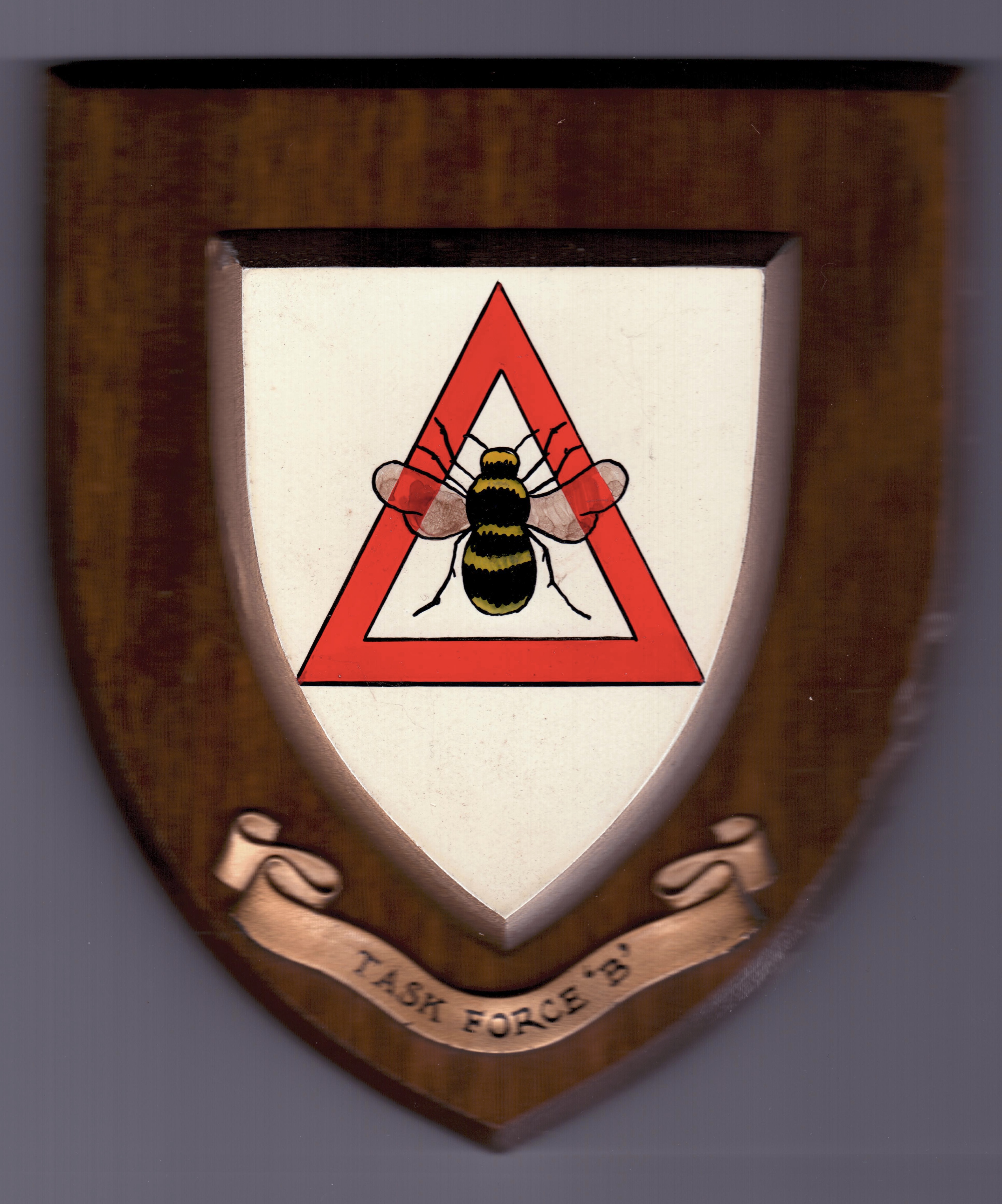
Task Force Bravo, later re-designated 22 Armoured Brigade, its Headquarters in Bergen-Hohne, was part of 1st Armoured Division.

NORTHAG had four Army Corps in its lineup (1980’s).

.

I (NL) Corps

Netherlands

1e Devisie (mechanised division).

  • 1 x Panzer Brigade and 2 x Mechanised Brigades
  • Divisional Artillery Group
  • Approximately 245 x Leopard  1v
  • 5 x Mechanised Infantry Infantry Battalions
  • 60 x M109A3

4e Devisie (mechanised division)

  • 1 x Panzer Brigade and 2 x Mechanised Brigades
  • Divisional Artillery Group
  • 244 x Leopard 2A4
  • 5 x Mechanised Infantry Battalions
  • 60 x M109A3

5e Devisie

  • 1 x Panzer Brigade and 2 x Mechanised Brigades
  • Divisional Artillery Group
  • 140 x Leopard 1v and 104 Leopard 2A4
  • 5 x Mechanised Infantry Battalions

101e Infantry Brigade (reserve)

  • 2 x Mechanised Infantry Battalions and 2 x Infantry Battalions.

1 (NL) Corps Artillery

  • 22 x M270 MRLS
  • 6 x Lance Missile Launchers
  • 48 x M110A2
  • 20 x M109A2

1 (NL) Corps also had integral reconnaissance and Air Defence units.

1 (NL) Corps, also potentially had the German 3rd Panzer Division as part of their Corps. 13 x Leopard 1A5 and 220 x Leopard 2. 5 x Panzer Grenadier Battalions and a Divisional Artillery Group. 18 x M110A2, 18 x FH-70, 16 x LARS and 16 x MLRS

.

1 (GE) Corps

Germany

1st Panzer Division

  • 2 x Panzer Brigades and  1 x Panzer Grenadier Brigade.
  • 1 x Artillery Regiment
  • 261 x Leopard 2 and 13 x Leopard 1A5
  • 5 x Grenadier Battalions
  • 18 x M110A2, 18 x FH-70, 16 x LARS and 16 x MLRS

7th Panzer Division

  • 2 x Panzer Brigades and 1 x Panzer Grenadier Brigade
  • 1 x Artillery Regiment
  • 261 x Leopard 2 and 13 x Leopard 1A5
  • 5 x Panzer Grenadier Battalions
  • 18 x M110A2, 18 x FH-70, 16 x LARS and 16 x MLRS

11th Panzer Grenadier Division

  • 1 x Panzer Brigade and 2 x Panzer Grenadier Brigades
  • 1 x Artillery Regiment
  • 192 x Leopard 2 and 26 x Leopard 1
  • 7 x Panzer Grenadier Battalions
  •  18 x M110A2, 18 x FH-70, 16 x LARS and 16 x MLRS

27th Airborne Brigade

  • 4 x Airborne Battalions

Each 1 (GE) Corps Brigade, also had integral armoured reconnaissance and Air Defence. Also artillery,  in the form of M109A3G.

.

1 (BR) Corps

Britain

1st Armoured Division

  • 3 x Armoured Brigades
  • Parachute Regiment Group
  • Divisional Artillery Group
  • 168 x Challenger 1 and 114 x Chieftain
  • 5 x Mechanised Infantry Battalions
  • 3 x Parachute Battalions
  • 48 x M109A2 and 24 x Abbot

2nd Infantry Division

  • 2 x Infantry Brigades and 1 x Airmobile Brigade
  • Divisional Artillery Group
  • 15 x Infantry Battalions
  • 60 x FH-70

3rd Armoured Division

  • 3 x Armoured Brigades
  • Divisional Artillery Group
  • 224 x Challenger 1
  • 5 x Mechanised Infantry Battalions
  • 24 x M109A2 and 48 x Abbot

4th Armoured Division

  • 2 x Armoured Brigades and 1 x Infantry Brigade
  • Divisional Artillery Group
  • 171 x Chieftain
  • 5 x Mechanised Infantry Battalions
  • 6 x Infantry Battalions
  • 48 x M109A2 and 24 x FH-70

1st Artillery Brigade

  • 3 x Heavy Artillery Regiments and 1 x Missile Regiment.
  • 24 x M107, 24 x M270 MLRS and 12 x Lance Missile Launchers.
  • .

1 (BE) Corps

Belgium

1er Infantry Division

  • 3 x Armoured Mechanised Brigades
  • Divisional Artillery Group
  • 120 x Leopard 1
  • 6 x Mechanised Infantry Battalions
  • 54 x M109A2

16de Panzer Division

  • 1 x Panzer Brigade and 2 x Armoured  Mechanised Brigades
  • Divisional Artillery Group
  • 160 x Leopard 1
  • 6 x Mechanised Infantry Battalions
  • 54 x M109A2

Corps Artillery

  • 36 x M109A2, 12 x M110A2 and 4 x Lance Missile Launchers.

On the face of it, quite a significant force. Over 2,000 tanks. There were also light tanks for reconnaissance and anti-tank systems in support. But, when you consider that NORTHAG could potentially be up against 3 Shock Army and 20 Guards Tank Army, the 1st Strategic Echelon of the Soviet Union from the Group of Soviet Forces Germany, which had over  2,000 main battle tanks, it would be a testing time. Then you would need to consider the 2nd Strategic Echelon, followed by the Strategic Reserves. On top of that, NORTHAG would probably have to contend with at least 2 Airborne Division drops behind the lines and numerous Airborne Brigade Assaults, along with numerous Spetsnaz operations. But, don’t forget the other Warsaw Pact members, Poland, Hungary, Czechoslovakia and Poland.
.

I shall cover the Chieftain Main Battle Tank for the rest of  this Post, but future Posts will look at more of 1 BR Corps, CENTAG and the Group of Soviet Forces Germany. Although Challenger 1, was slowly being introduced, the Chieftain was the mainstay of the British forces for most of the early to mid 80’s.

.

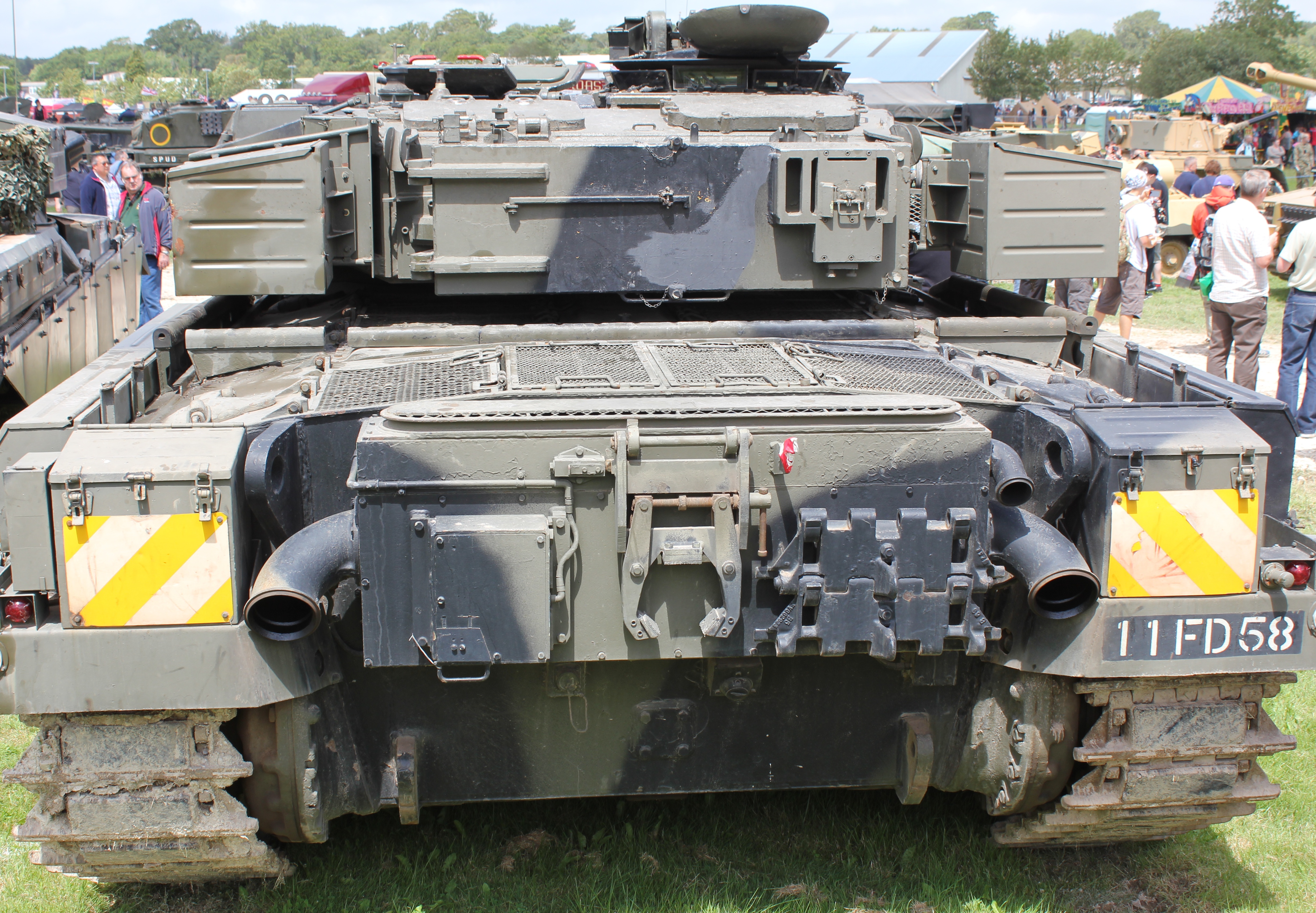
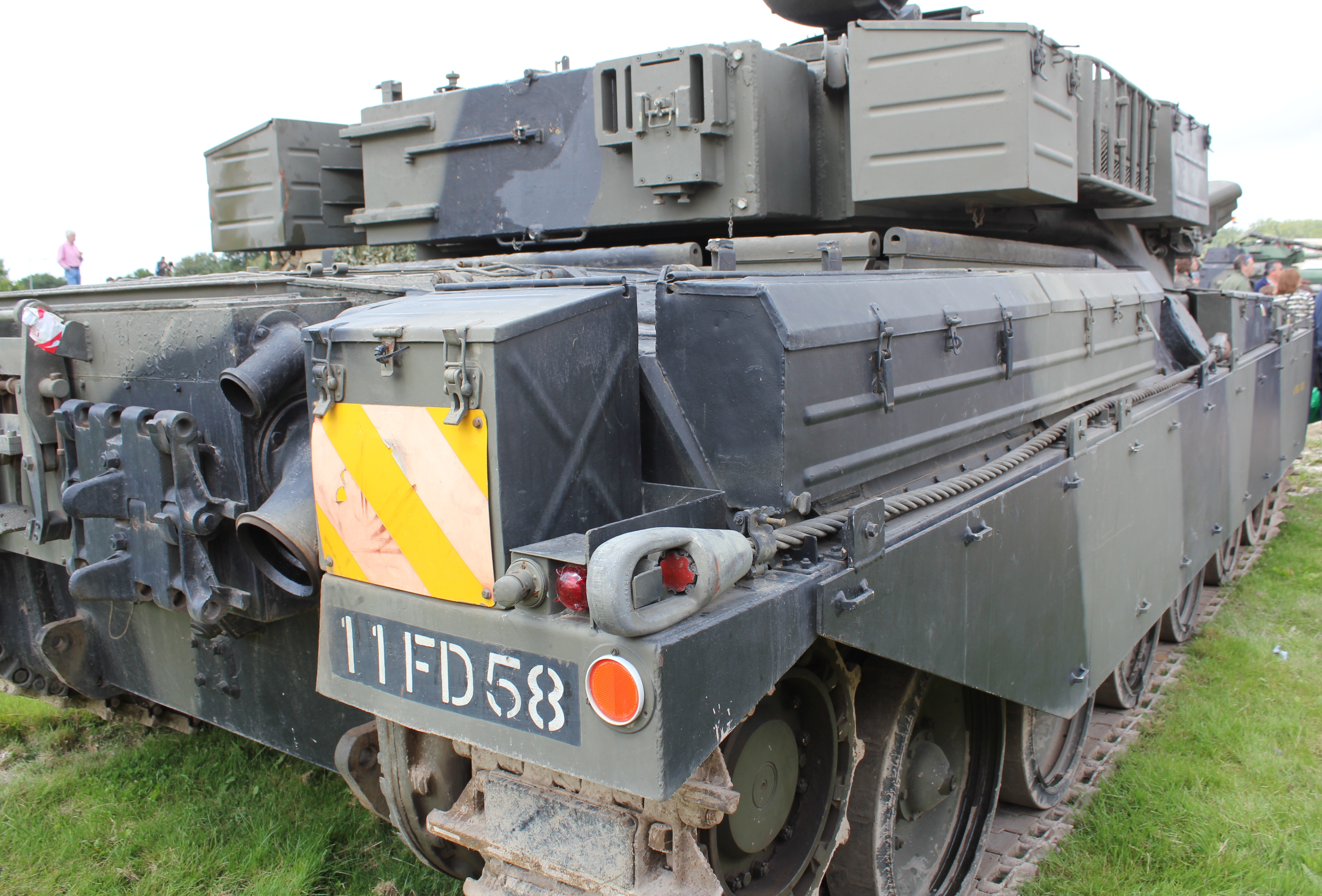
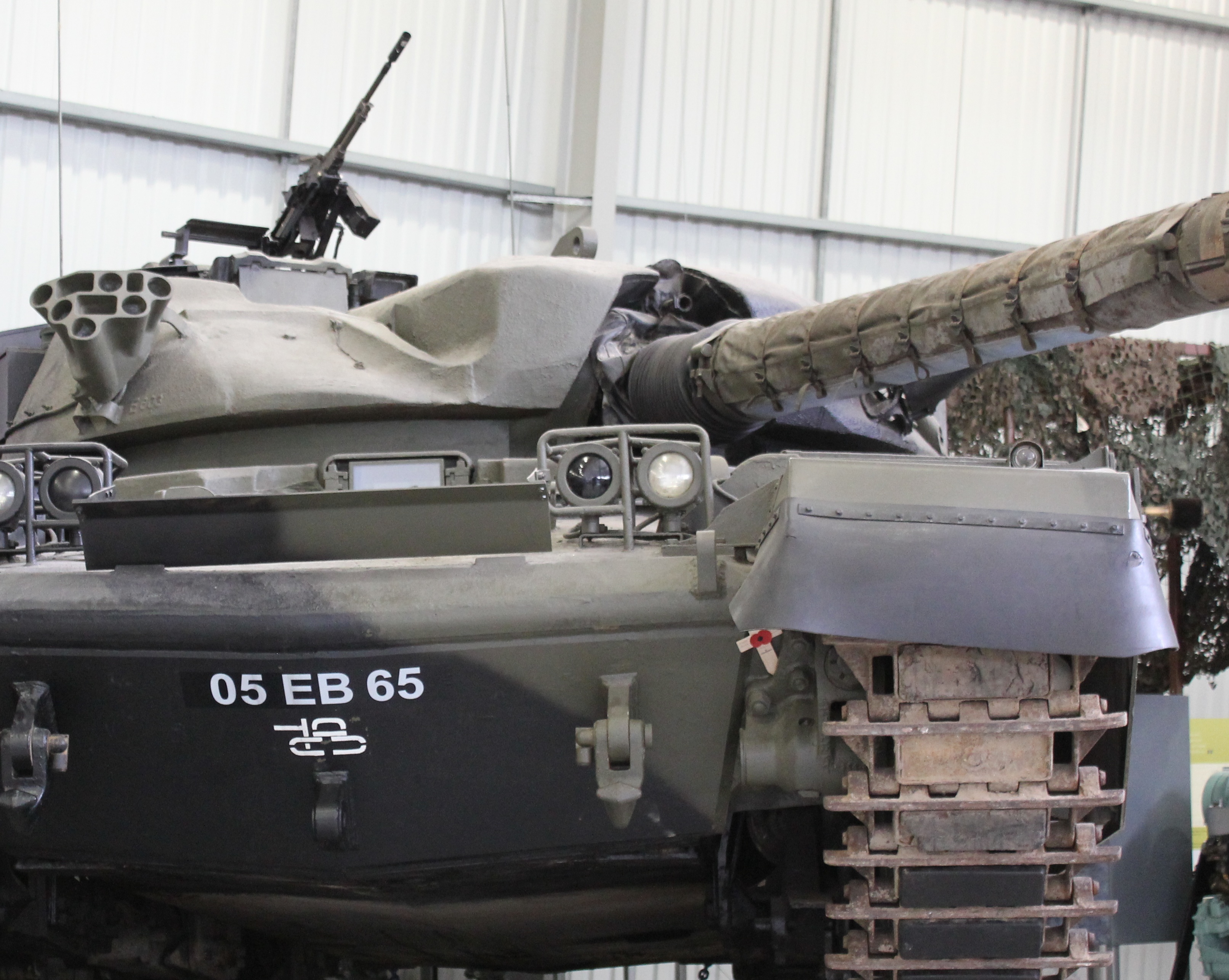
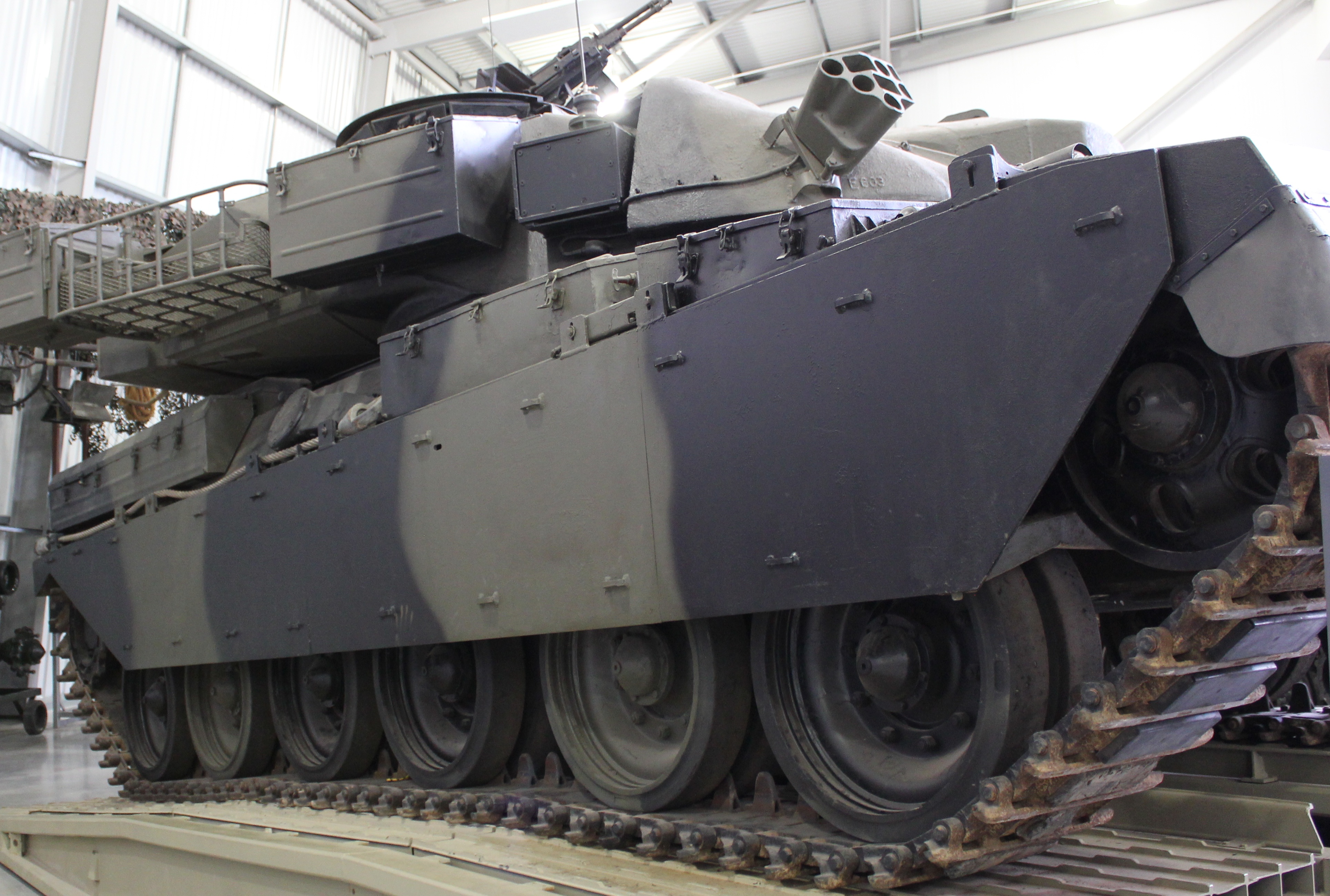
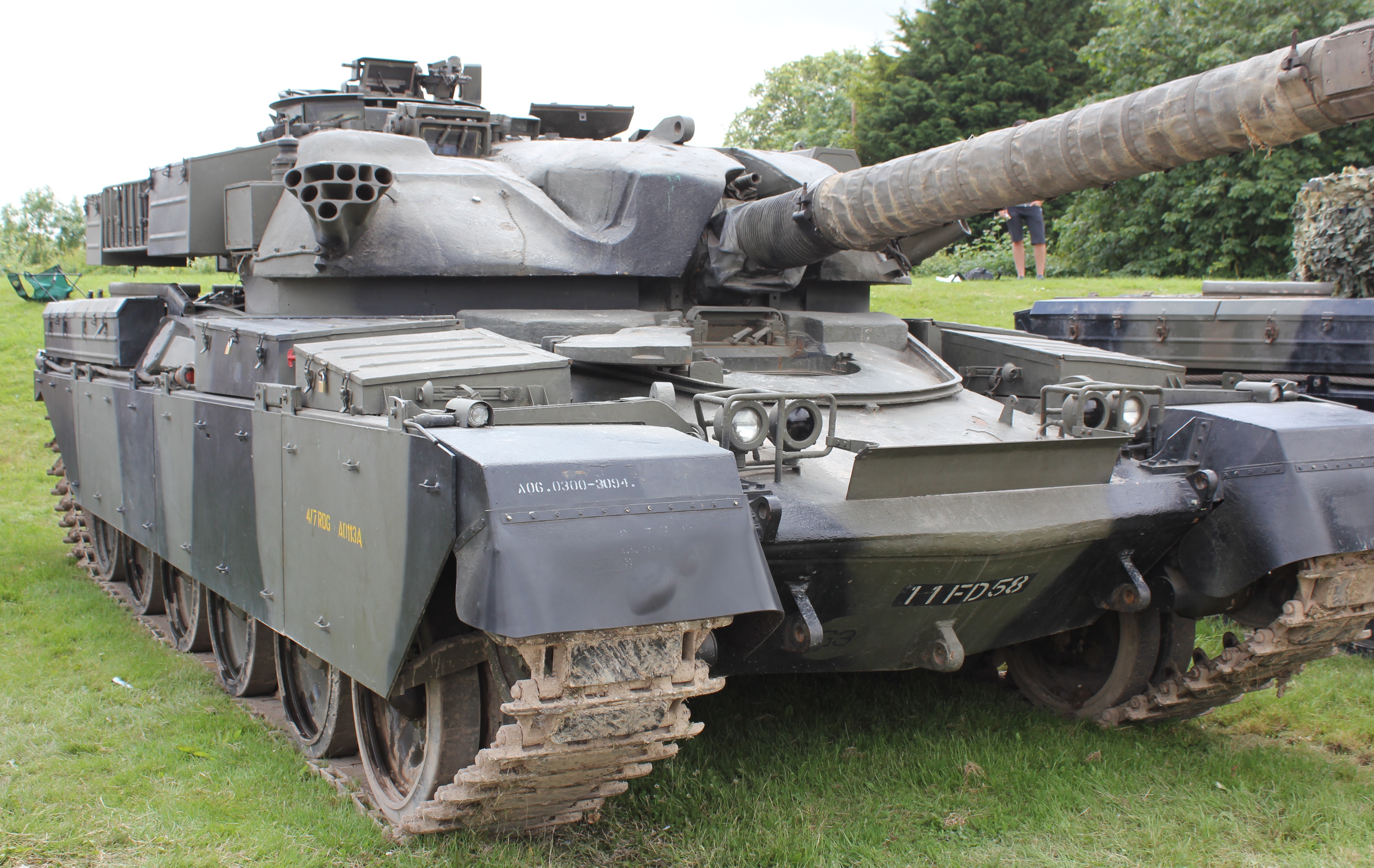
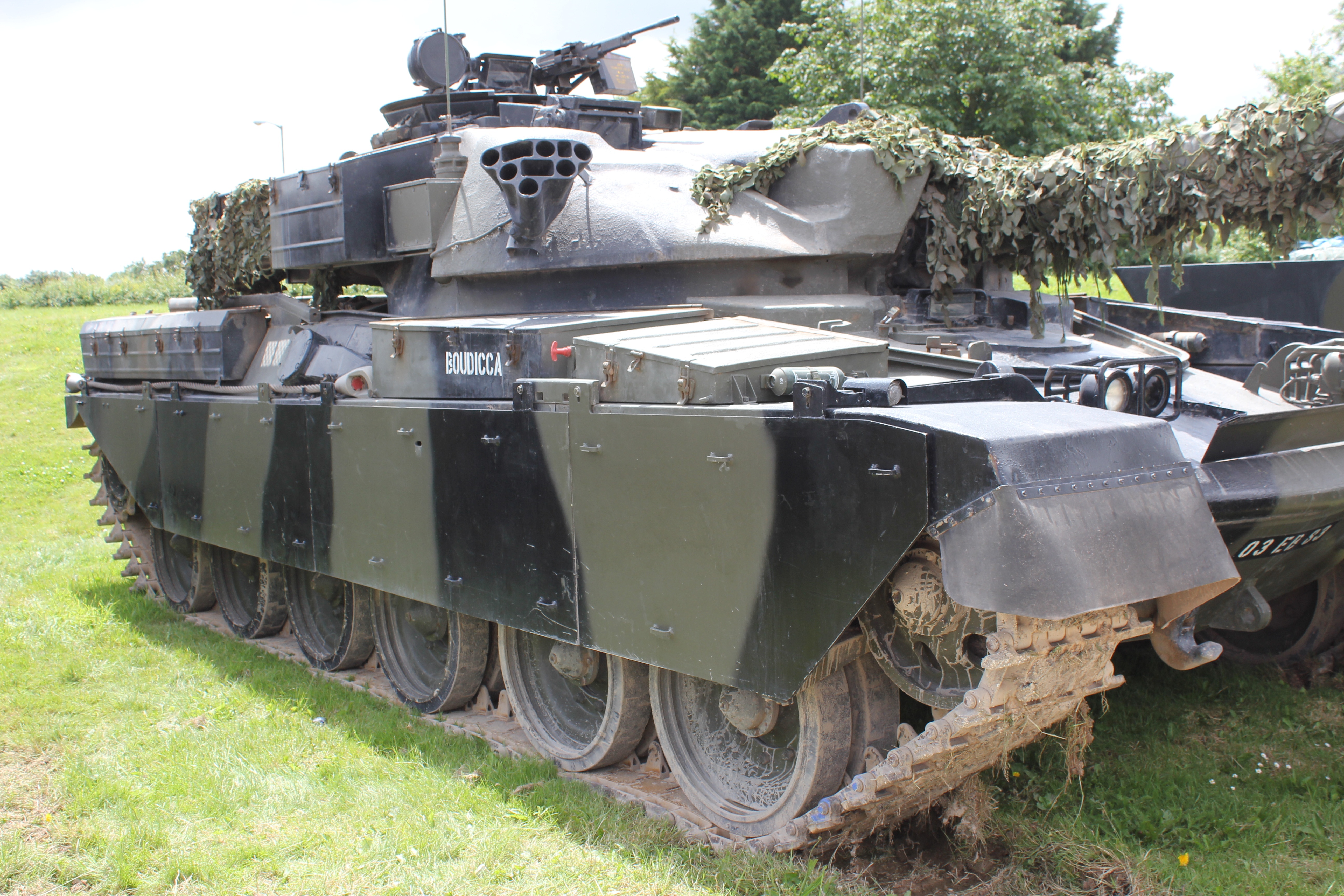
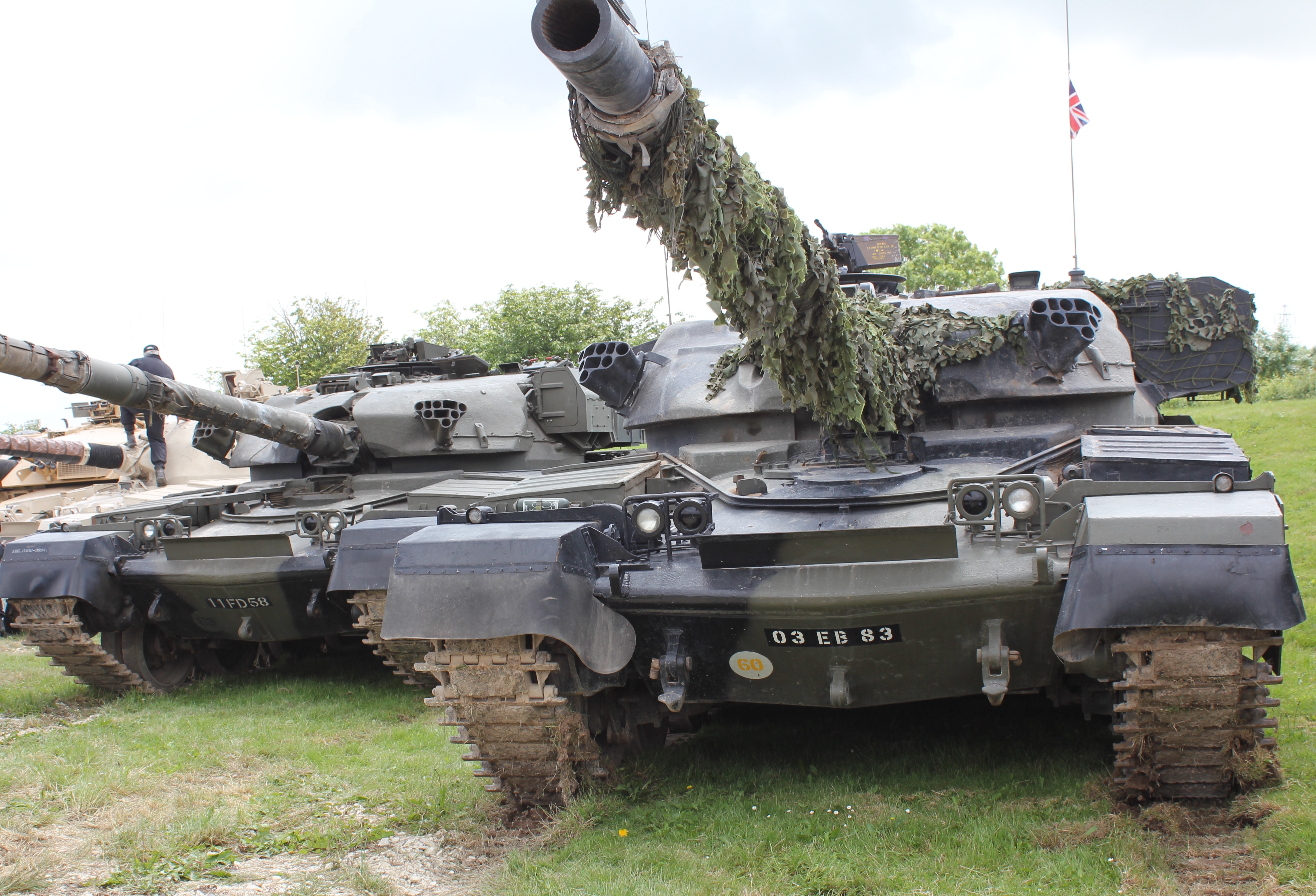
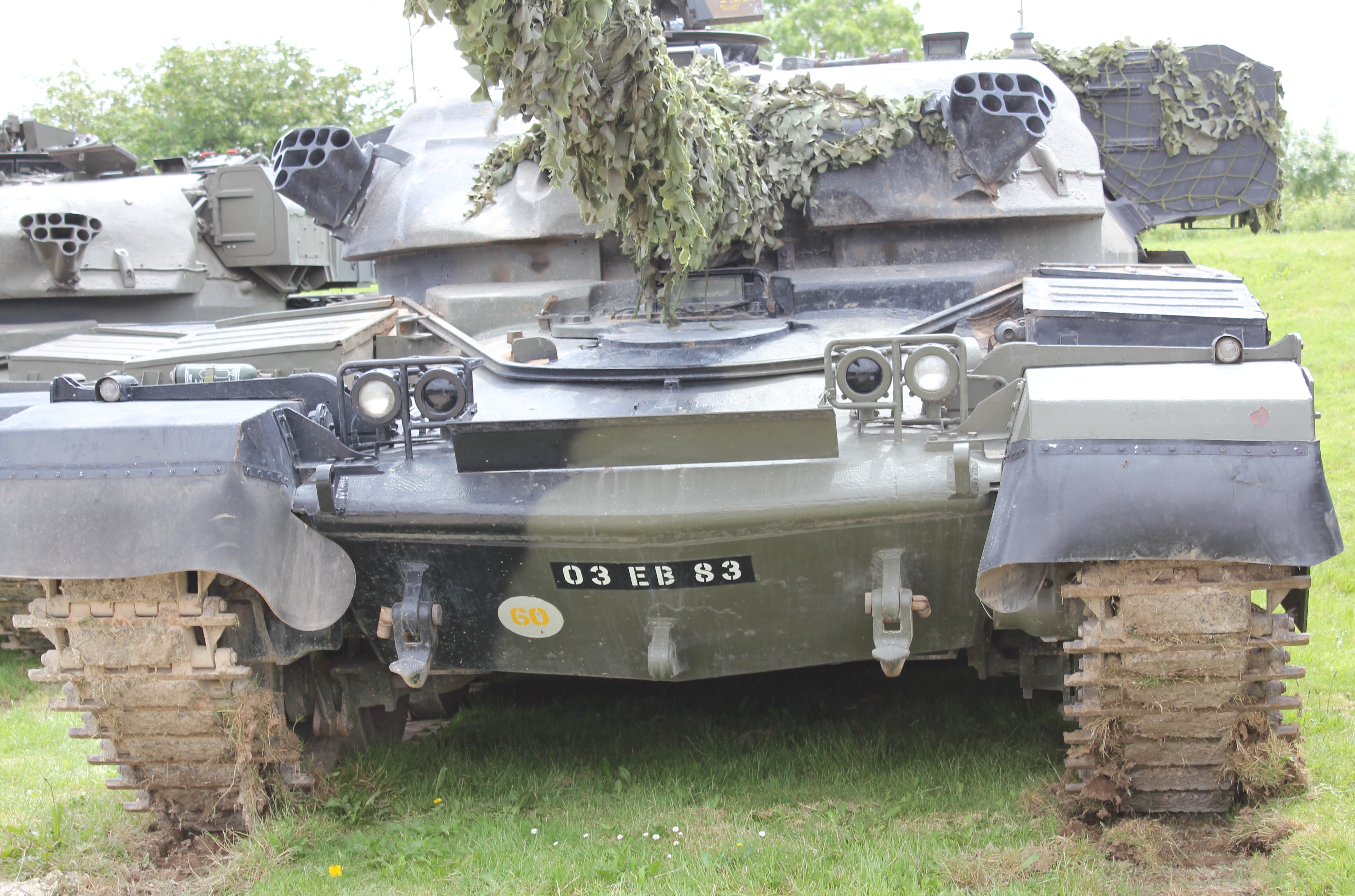
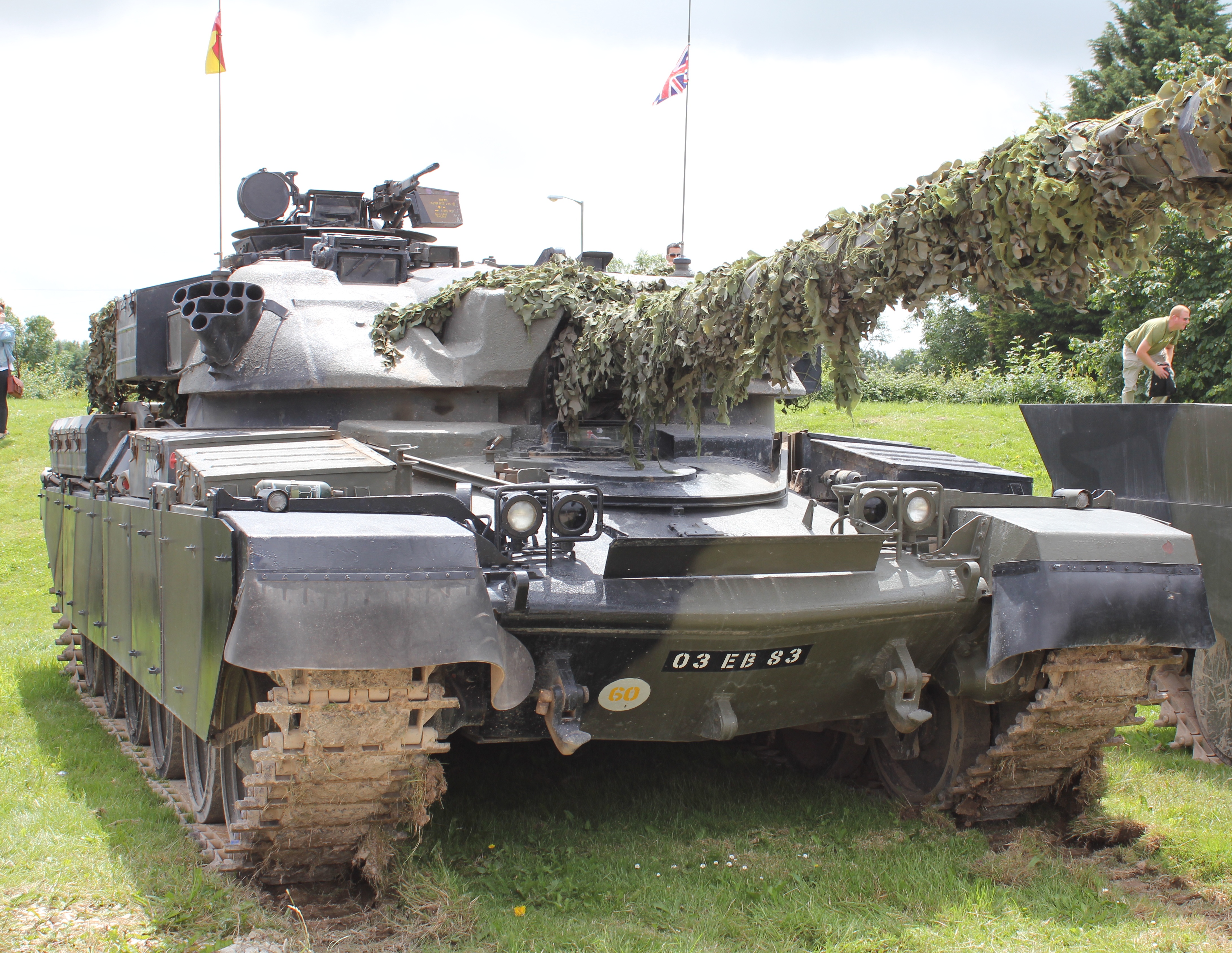
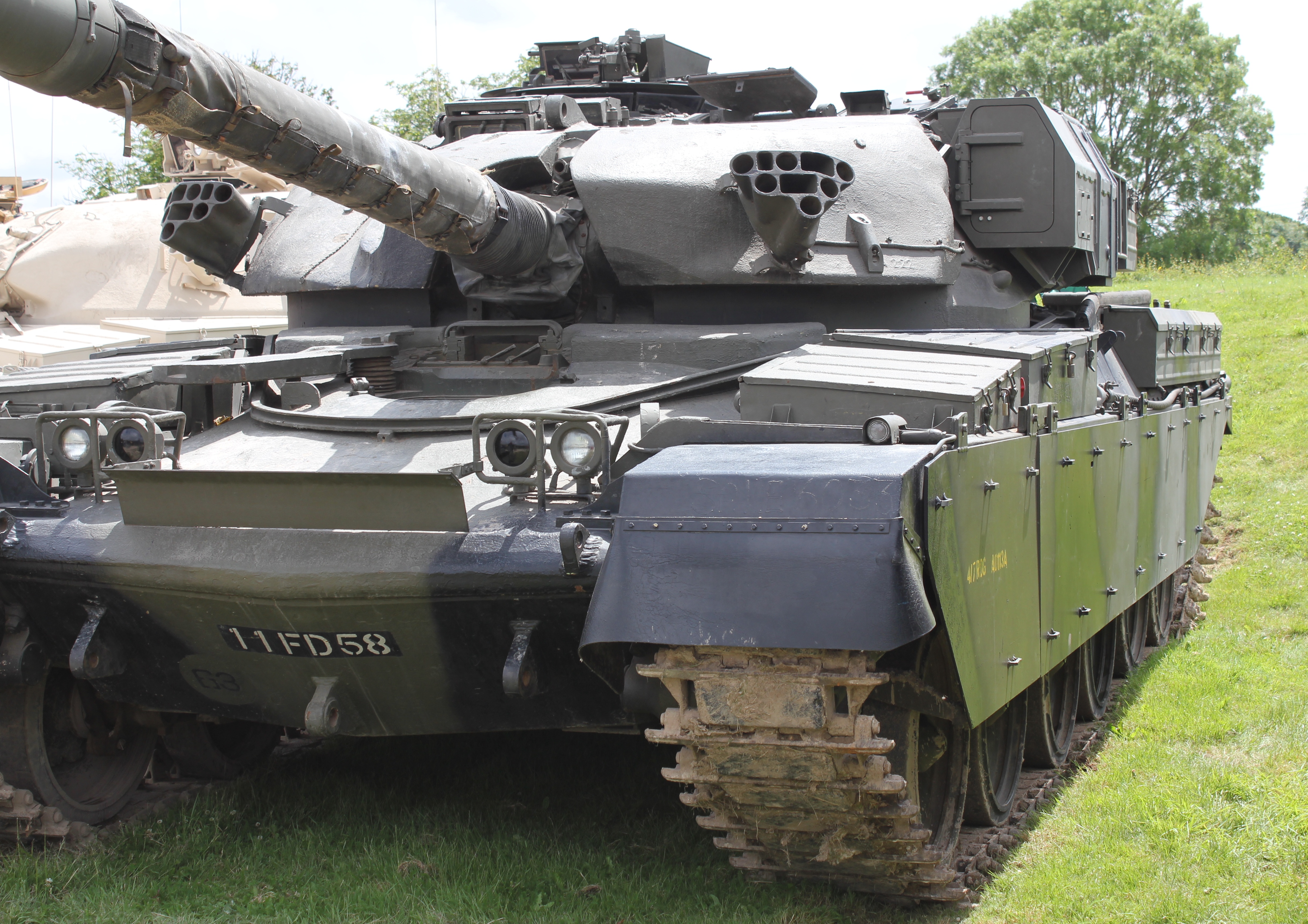
Chieftain Mark 10.

.

The L11A5, 120mm, high-velocity rifled tank  gun prominent.

.

The fume extractor can be seen half way down the barrel which is also wrapped in thermal sleeve to minimise distortion of the tube. Otherwise, loss of accuracy would occur at long ranges due to the differential heating or cooling.

.

Hortsmann suspension with 12 pairs of twin wheels in six bogies.

.

The tracks are Dry pin, rubber padded with 96 links per track.

.

The Mark 10/11 had stillbrew passive armour added to the frontal aspect of the turret and around the driver’s position. It gave added protection against Hollow Charged Weapons such as the Sagger Anti-Tank Missile and the RPG-7, but with very little additional weight for the already 56 ton tank.

.

On the right hand side of the turret, as you are facing the tank, and on the left in this picture, you can see part of the TOGS, Thermal Observation and Gunnery System.

.

The upgraded Nuclear, Biological, Chemical (NBC) Filtration system can be seen on the back of the turret.


.

Steel towing cable lashed to the side.

.

Stillbrew armour clearly visible on this Mark 11.

.

Twin wheels in six bogies.

.

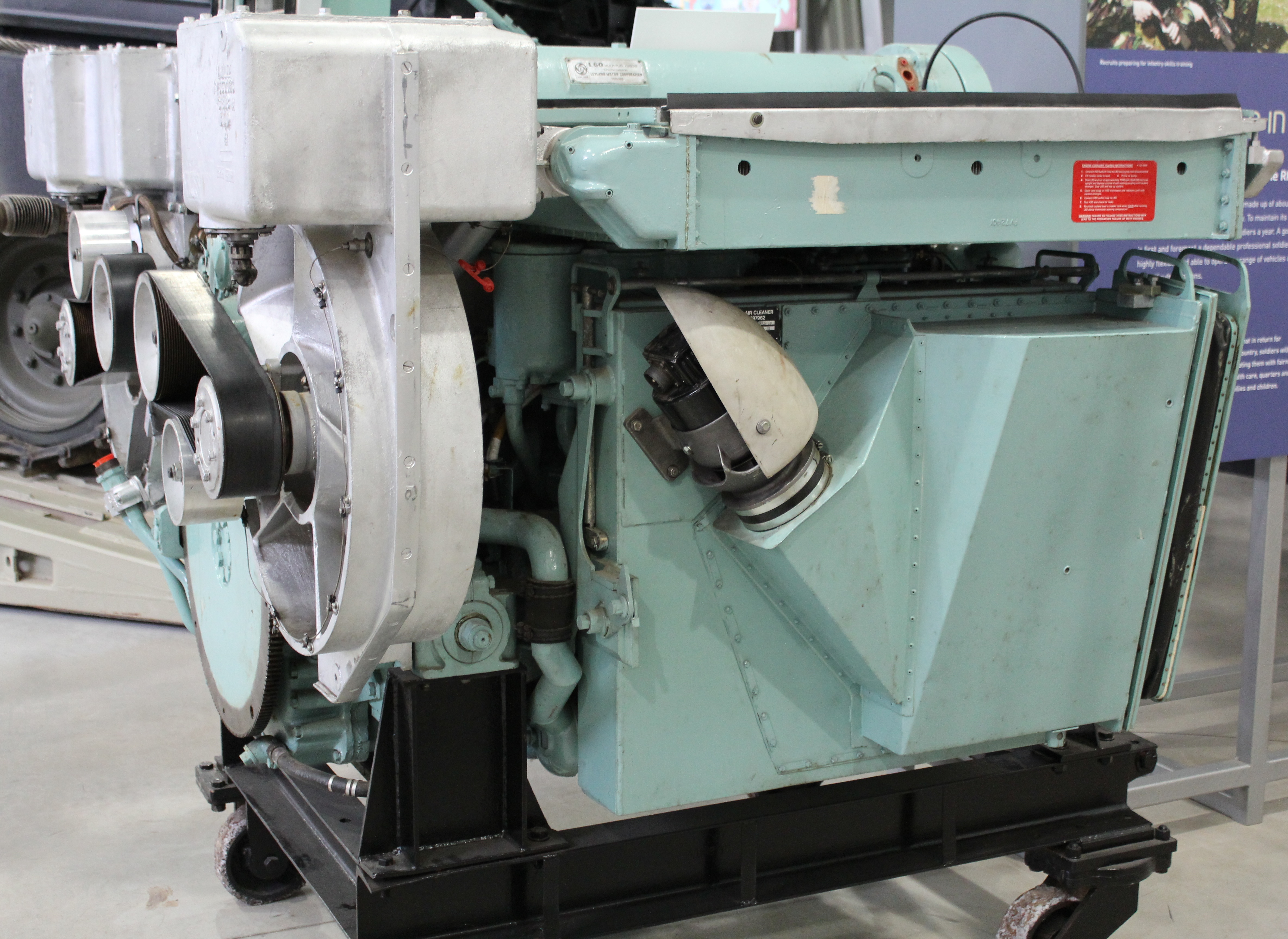
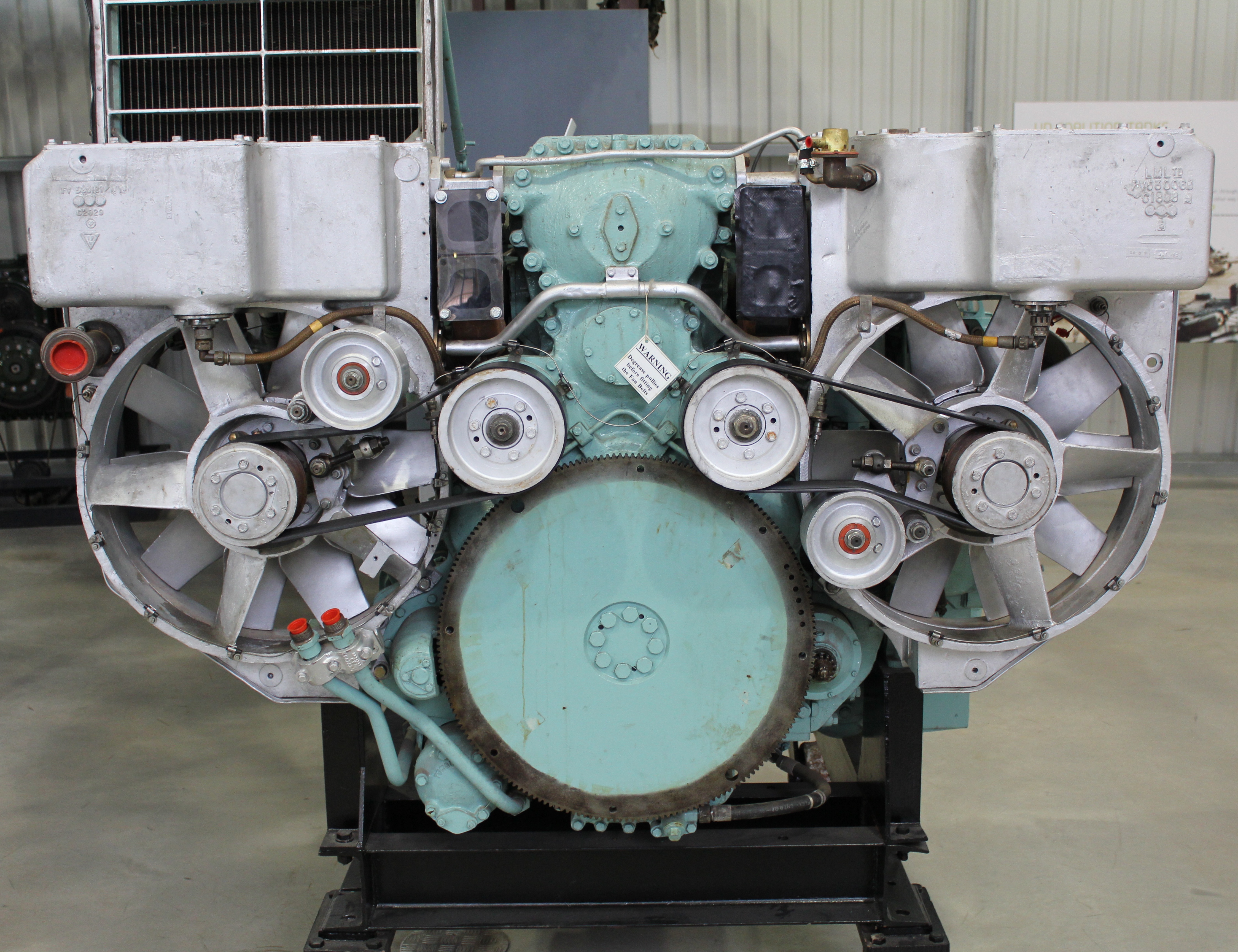
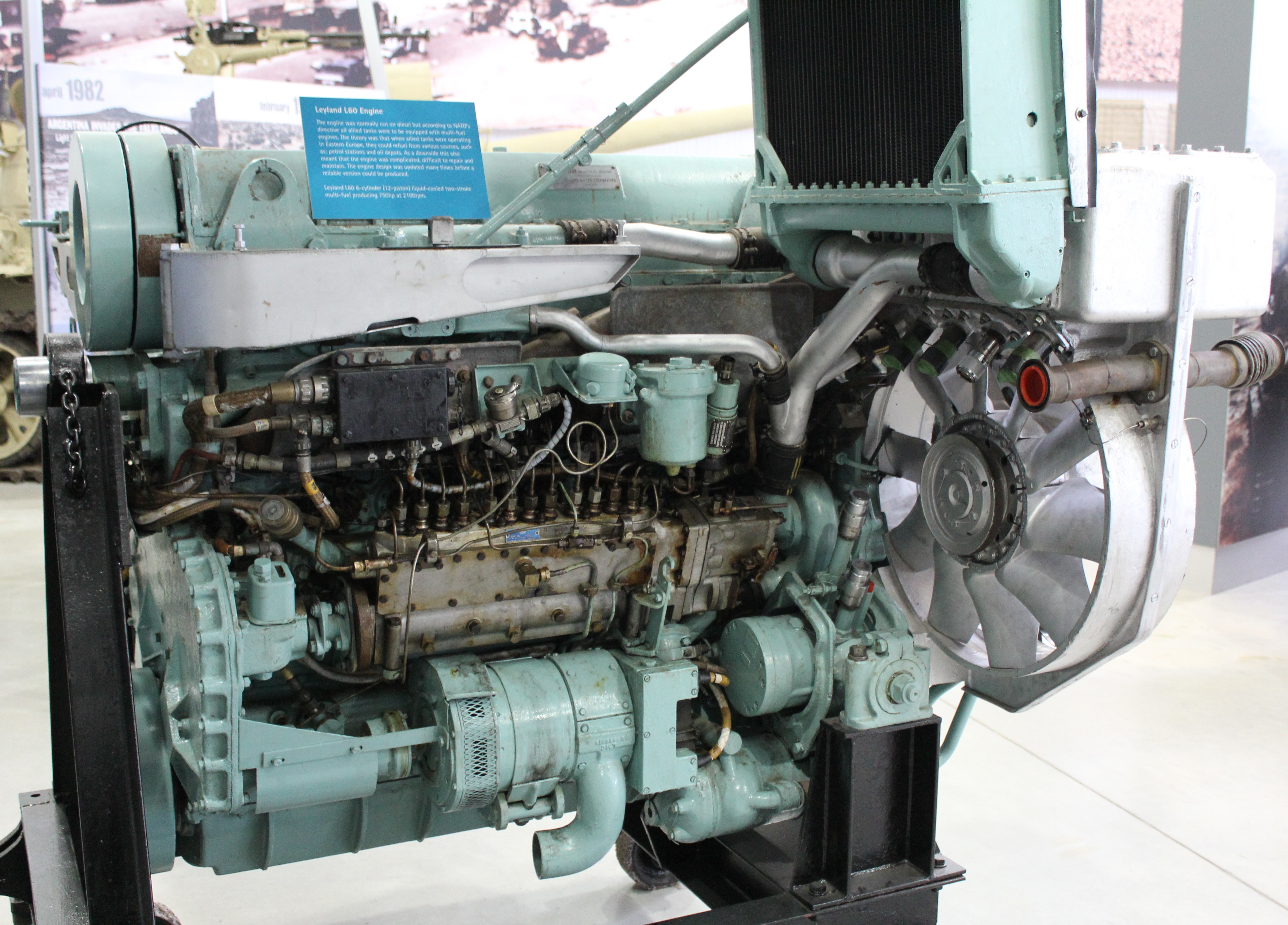
The Leyland L60 Engine power-pack for the Chieftain 

.

6-cylinder (12-piston) liquid-cooled two-stroke, multi-fuelled engine producing 750bhp at 2100rpm.

.

The multi-fuel element, a NATO directive, meant that the engine was complicated and difficult to maintain. It was plagued with problems in the early days.

.

Smoke projectors, six each side of the turret.

.

Weighing in at 56 tons, it could still reach a speed of 20mph off road and 30mph on road

.

Mark 11 on the left and Mark 10 on the right.

.

The Chieftain carried 64 rounds of 120mm and  6,800 rounds of 7.62mm.

.

The L11 series 120mm rifled tank gun could fire a variety of projectiles, including the L23A1 ADFSDS-T (Armour Piercing Fin Stabilised Discarding Sabot Tracer) and L31 HESH (High Explosive Squash Head).

.

The Glacis armour was 120mm thick.

.

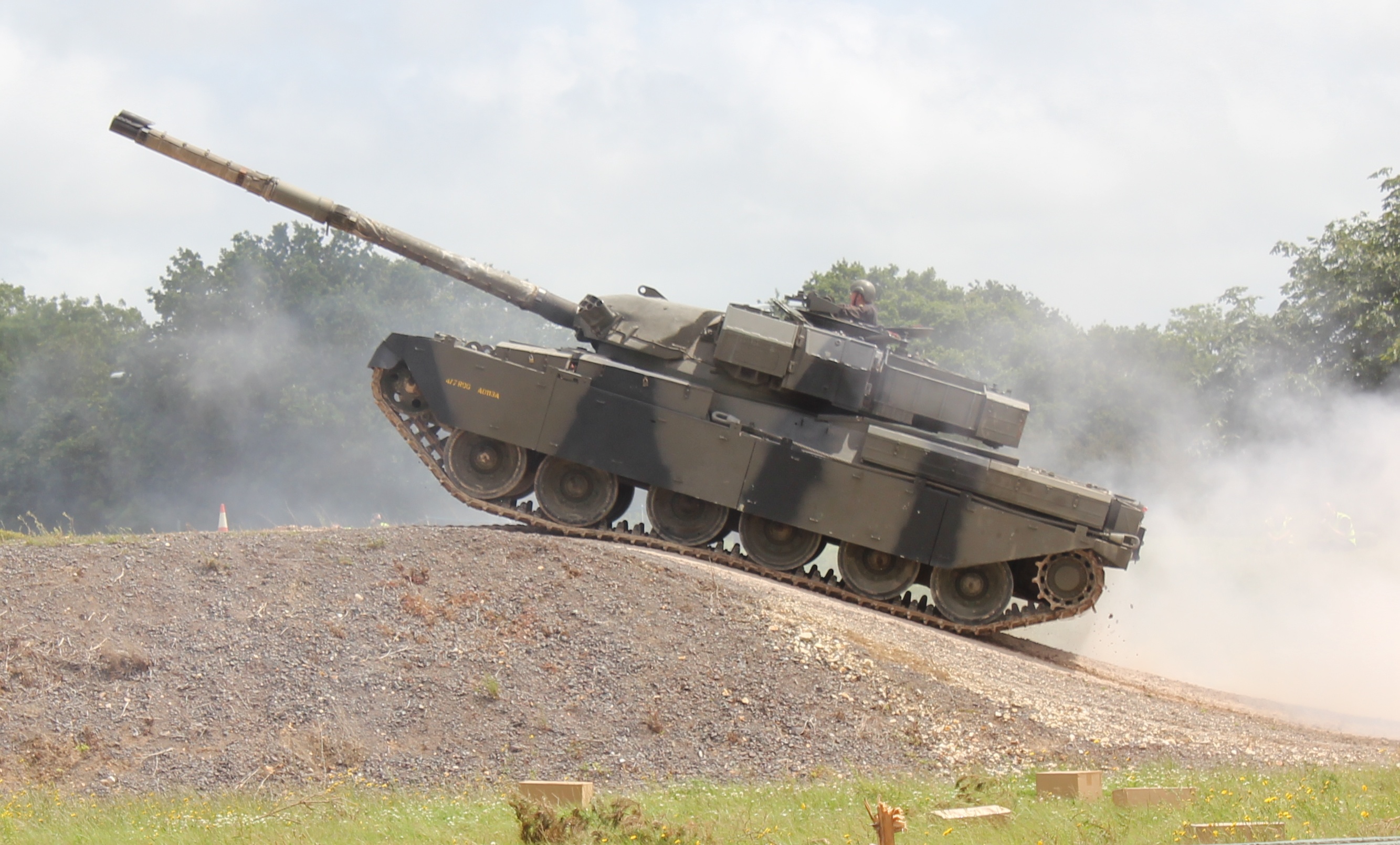
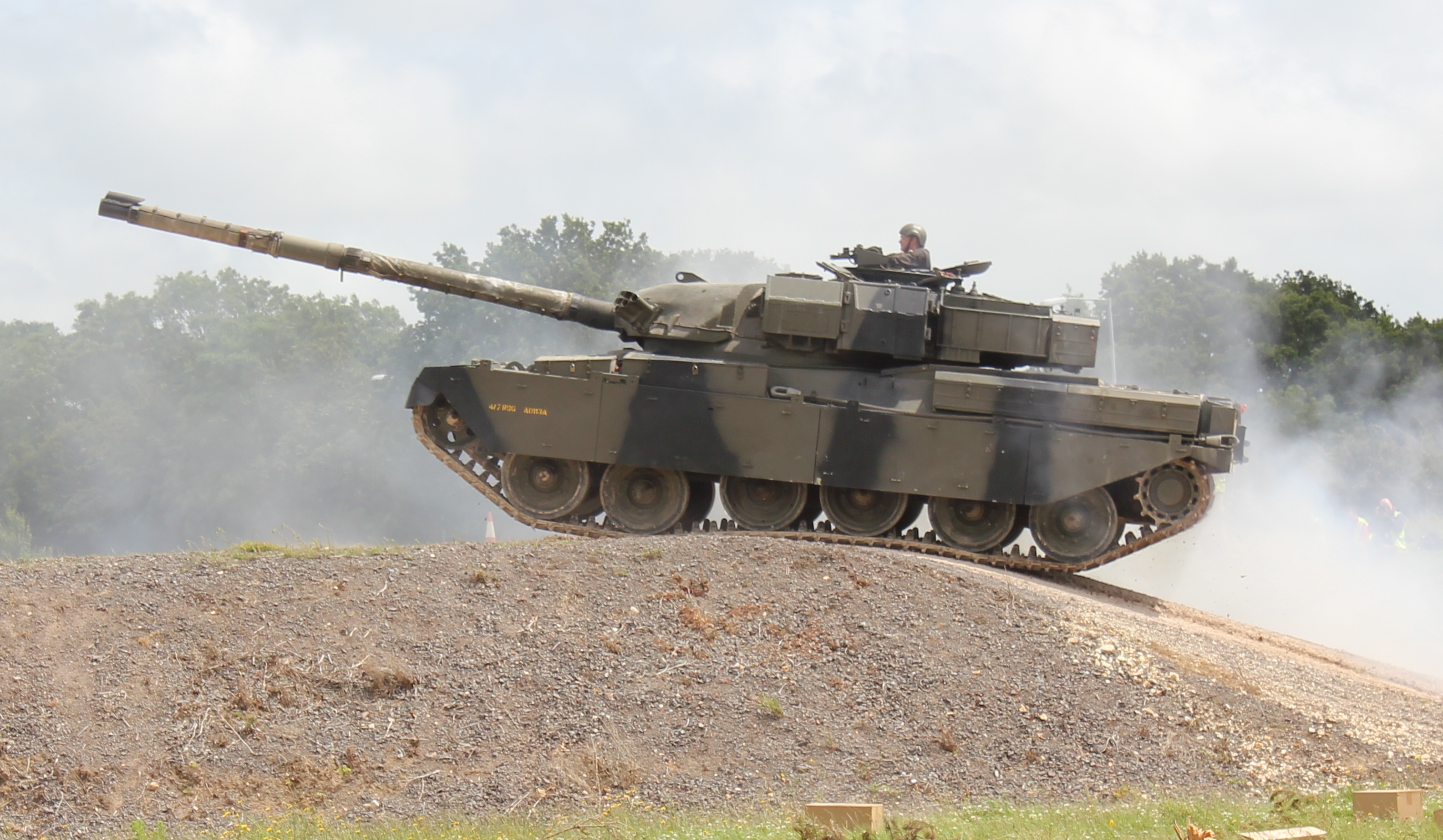
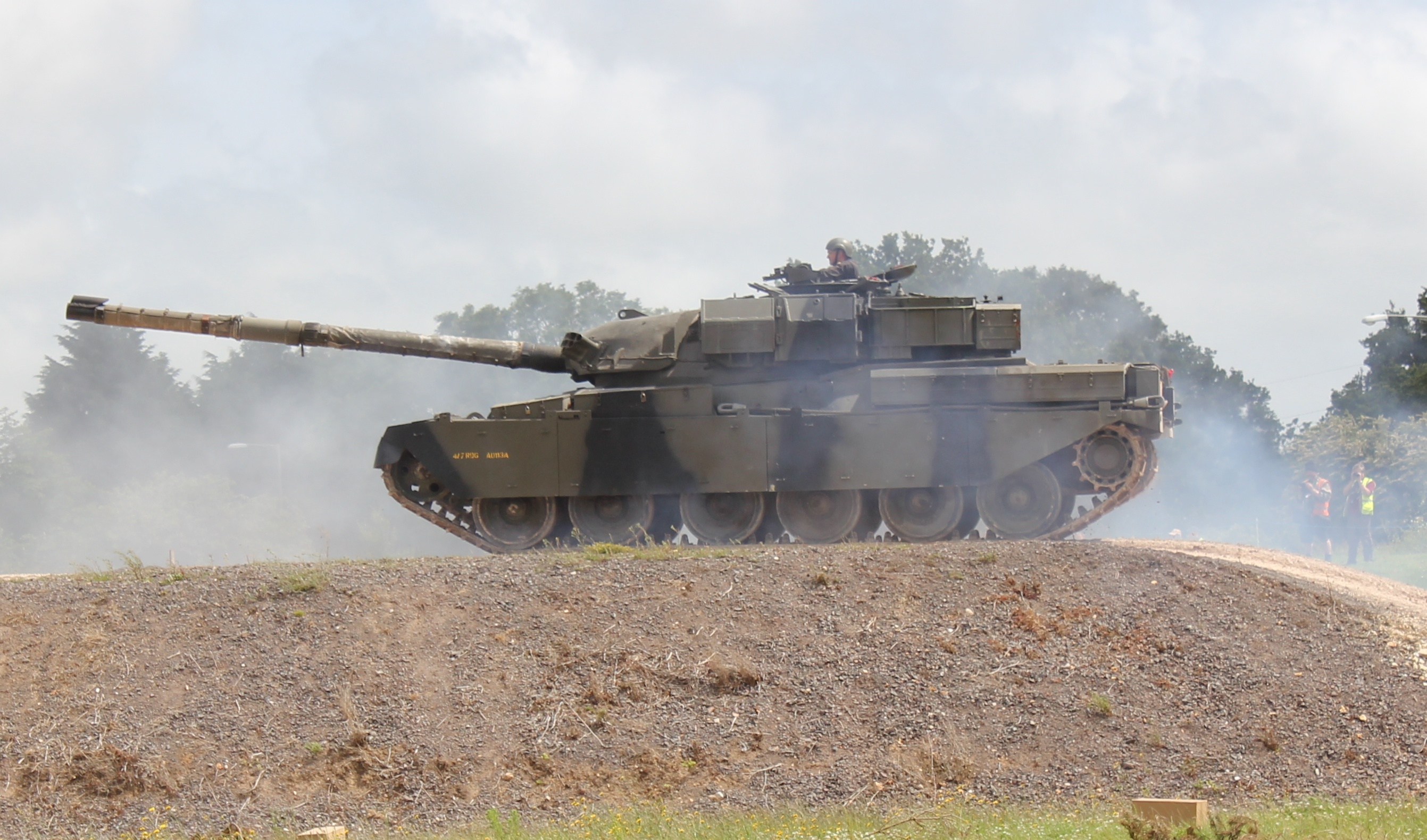
Chieftains in motion.

My intention is not to portray a particular message, but just share some of my research and experiences with you.  This is the fifth of my new ‘Cold War’ series, supporting the writing of my new ‘Cold War’ series of novels, covering the hypothetical invasion of West Germany by the Warsaw Pact in the 80’s. ‘The Red Effect’.

.

HarveyBlack-Red Effect150313

The equipment Photographs and Blog are copyrighted to Harvey Black