Cold War Kit. CVR(T) Scorpion. Part 1.

.

The first novel in my ‘Cold War’ trilogy, The Red Effect, published by SilverWood Books, is now available. Thoroughly enjoyed writing it, as i do with all my novels. There will be three books in total, covering the hypothetical invasion of West Germany, the Federal Republic of Germany, by the Warsaw Pact in the mid 1980’s. Book 1, ‘The Red Effect’, encompasses part of the intelligence build up leading to the initial Warsaw Pact strike against the NATO forces lined up against them. The purpose of the next few posts is to cover some of the Iconic pieces of equipment that would have played a part, should the Cold War have turned Hot.

. RedEffect72dpi-4 .

‘The Red Effect’ by Harvey Black – Available now. The Cold War that became a Hot War.

The Cold War era started very soon after the end of the second world war, when the communist east, led by the Soviet Union, and the Western world, led by the United States and its NATO allies, faced each across what became known as the ‘Iron Curtain’.

The perception of a potential Third World War, was generally one of a nuclear war. It may have come to that. In reality we will never know. But, one scenario is that of a conventional war. The massed forces of the Warsaw Pact against the supposedly technically superior, but weaker, NATO armies, that may well have escalated into a nuclear exchange. But a pure conventional war was just as likely.

.
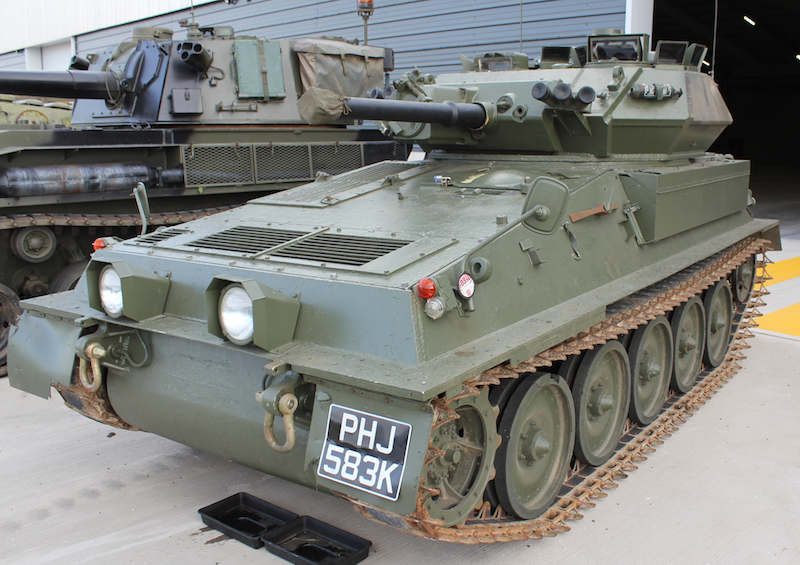
Cold War Kit. 079

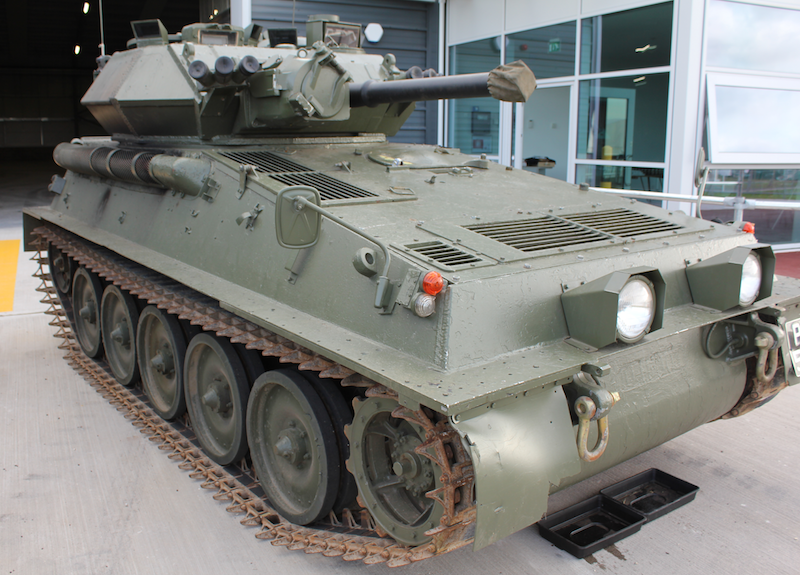
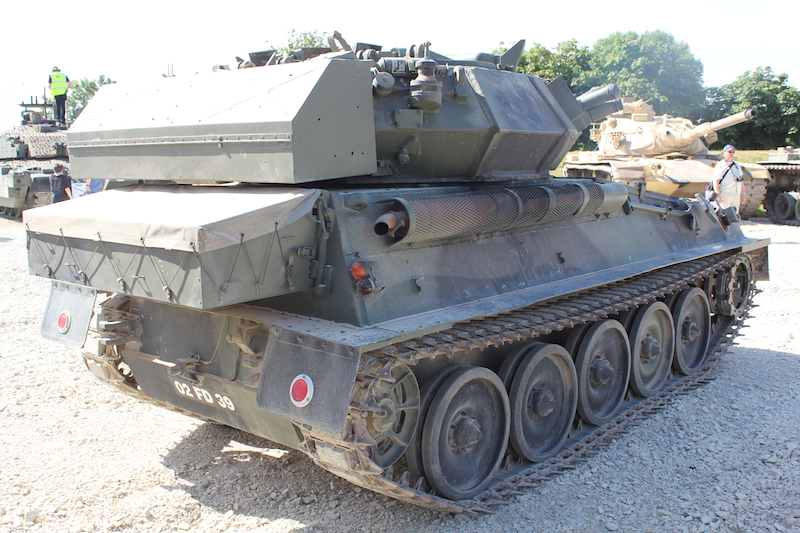
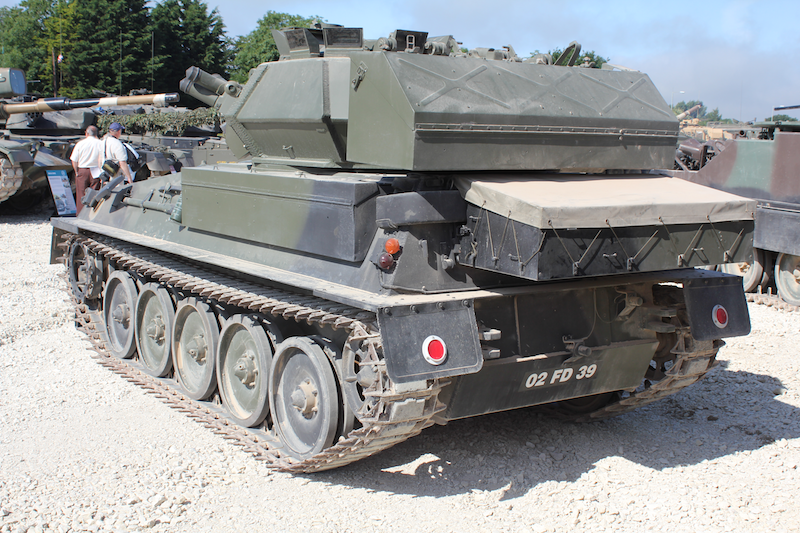
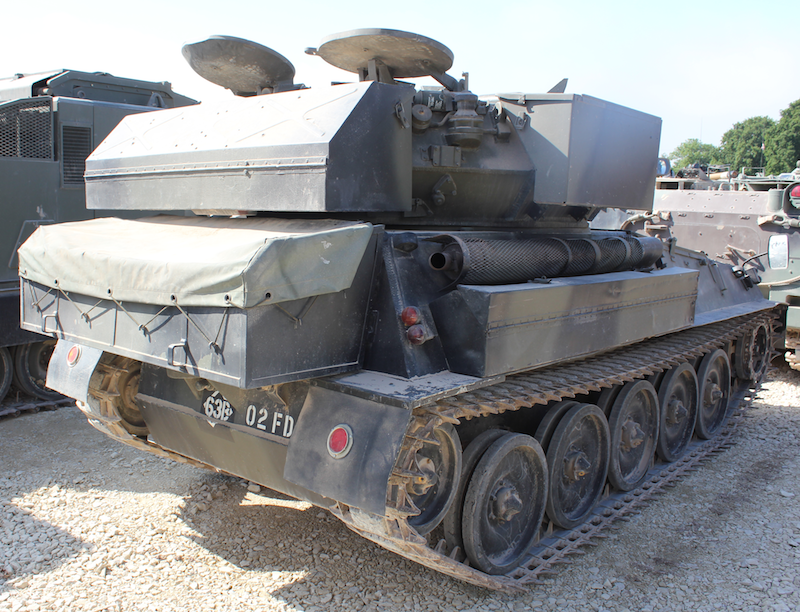
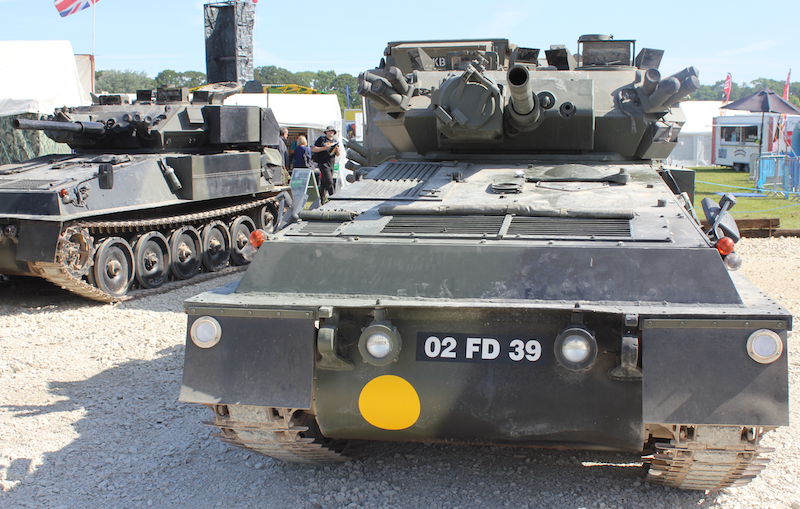
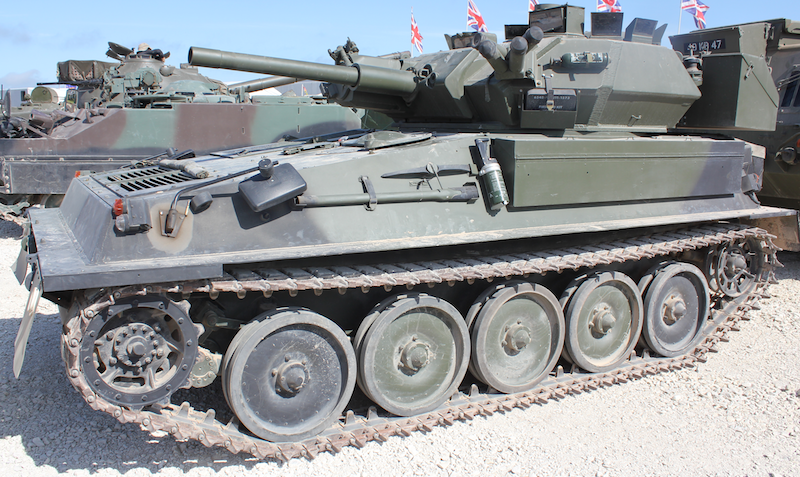
The FV101 Scorpion is a British armoured reconnaissance vehicle. 

.
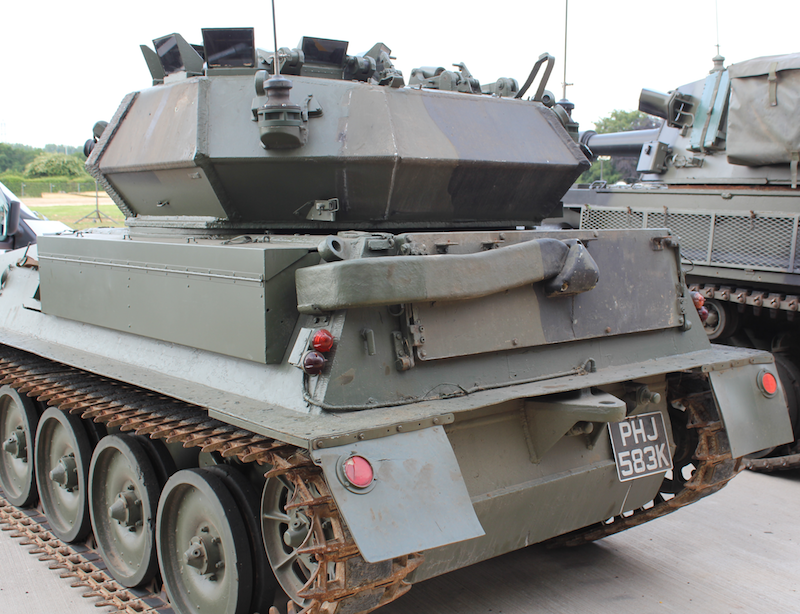
Cold War Kit. 080

Manufactured by Alvis, it was put into service by the British Army in 1973.

.

It was used as a reconnaissance vehicle or a light tank.

.

Cold War Kit. 082

3,000 were produced.

.

Cold War Kit. 083

The Scorpion was armed with a low-velocity, 76mm L23A1 gun, along with a coaxial 7.62mm machine gun.

.

Cold War Kit. 084

The first British Regiment to be equipped with the Scorpion were the Blues and Royals

of the Household Cavalry in 1973.

.

Cold War Kit. 085

Its rate of fire was said to be six rounds per minute.

.

Cold War Kit. 086

The original engine was the Jaguar J60, a 4.2 litre petrol engine. It was later change to a Cummins or Perkins diesel engine.

.

Cold War Kit. 087

A Soviet airborne amphibious tracked infantry combat vehicle. It can be palletised and dropped by parachute or off-loaded from an aircraft after a standard runway landing.

.
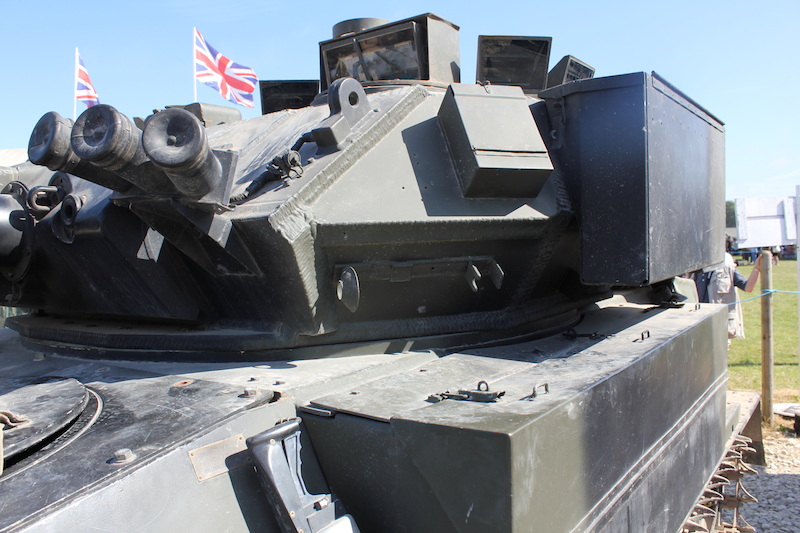
Cold War Kit. 088

Present day, airborne troops in Abkhazia.

.

Cold War Kit. 089

It was also fitted with a nuclear, biological and chemical protection system. There was a toilet beneath the commander’s seat, an internal water tank and a BV. A Boiling Vessel for cooking or heating water.

.
Cold War Kit. 090

Two troops from B Squadron, Blues and Royals served in the Falklands War.

.
Cold War Kit. 091

Its low ground pressure, similar to a soldier on foot, was particularly useful on the boggy ground of the Falkland Islands.

.

Cold War Kit. 092

The armour was made of 12.7mm welded aluminium.

.
Cold War Kit. 093

A top speed of 45mph, although i am sure it has been driven at a higher speed.

.

Cold War Kit. 094

Torsion bar suspension.

.

Cold War Kit. 095

The close reconnaissance troop of an Armoured Regiment each had eight Scorpions.

.
Cold War Kit. 096

It was used by 21 other countries, including Spain and Togo.

.
Cold War Kit. 097

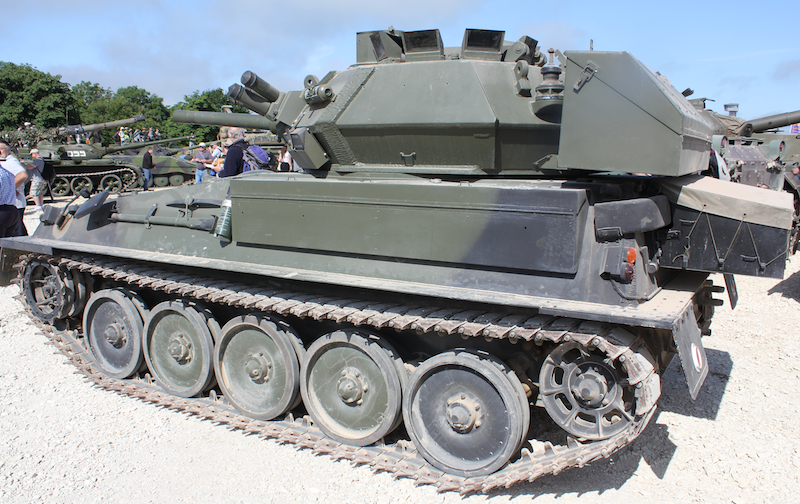
The basic chassis of the CVR(T), supported a range of vehicles. FV 102 Striker, anti-tank guided weapon carrier. FV 103 Spartan, armoured personnel carrier. FV 104. Samaritan armoured ambulance.

.
Cold War Kit. 098

FV 105. Sultan Command Post vehicle. FV 106. Sampson armoured recovery vehicle. FV 107 Scimitar armoured reconnaissance vehicle.

.

i hope this has given you a further insight into what NATO, in particular the British Army, had in their armoury.

The equipment Photographs and Blog are copyrighted to Harvey Black.

. HarveyBlack-Red Effect150313
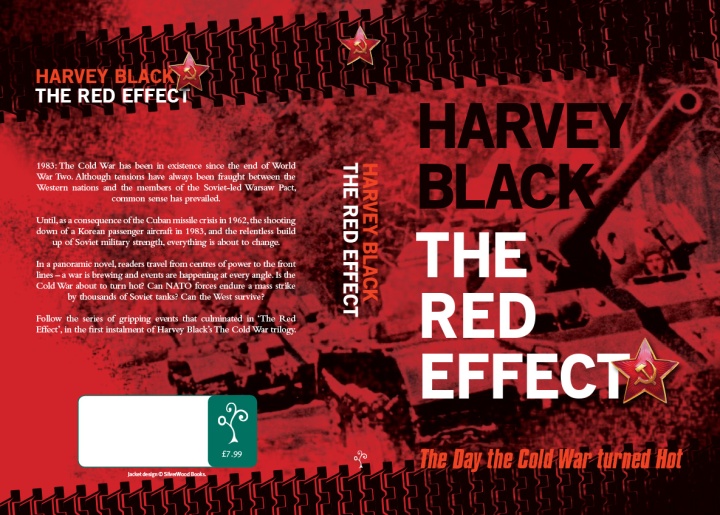
‘The Red Effect’ by Harvey Black – Kindle version out now! The Cold War that became a Hot War. Paperback edition imminent.

.

Berlin, the Cold War Years. A Hot War in reality. – Part 2.

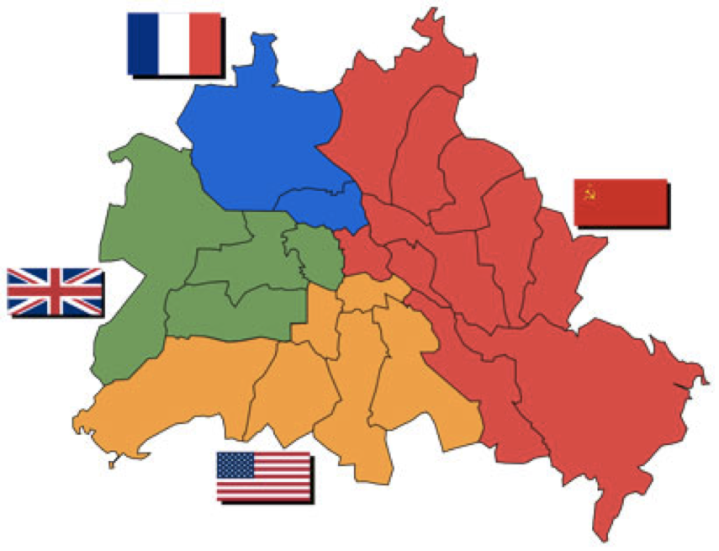
At the end of World War 2, what remained of pre-war Germany was divided into four sectors of occupation. Each of the Allied powers; the United Kingdom, United States, France and Russia, controlled one of them.

The capital of Germany, Berlin, was also divided into four sectors. The consequence being, that the three Western Allied powers now controlled territory deep within the Soviet Union Sector of Germany.

Over time, the tensions between the four Allied powers increased, eventually resulting in the Berlin blockade in 1948, when the Soviets attempted to starve West Berlin into submission and force the other three Allied powers out. This failed and the Soviets eventually relented, but an ever-increasing number of East Germans fled to the West; between 150,000 and 300,000 a year during 1951-1953. As a consequence restrictions were placed on movement between the divided country. From 1961, the border was closed and Berlin completely encircled, first by barbed wire, then bricks and finally a concrete wall, along with the infamous ‘death strip’.

Access was now restricted between the City of Berlin and the West. The main access point for the three Western Allies was the famous ‘Checkpoint Charlie’. I transited through that point on numerous occasions at all hours of the day and Night. Now it no longer exists and is merely a tourist site.

Checkpoint Charlie – 1983

Checkpoint Charlie – February 2102

As I previously stated in Part 1, I had an Intelligence gathering role while serving in Berlin. On my recent visit, I landed at Schonefeld Airport, which up until reunification was in East Berlin. Below was my previous visit to the Airport, trapped in the runway lights by the VOPO, Volkspolitzei. There was no ‘Virgin’ airhostess coming to my rescue.


Caught napping again, this time by the Volkspolitzei amongst Schonefeld runway lights – 1983

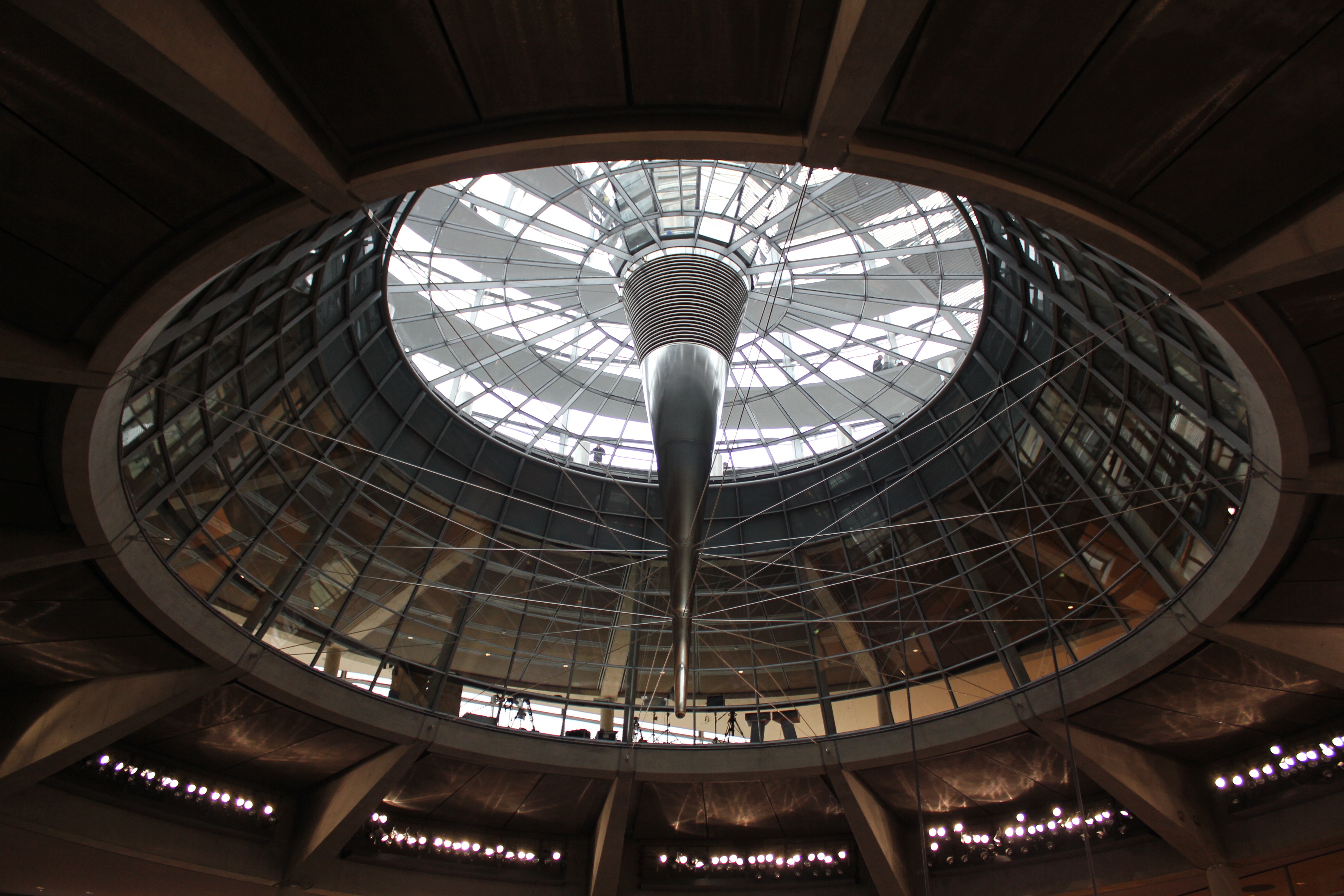
I particularly enjoyed my visit to the Reichstag, on this occasion able to see it from the inside. During reconstruction, it was practically gutted, being redesigned by the British architect, Sir Norman Foster. The new glass dome is truly impressive, erected on the roof as a gesture to the original 1894, cupola.

Reichstag – February 2012

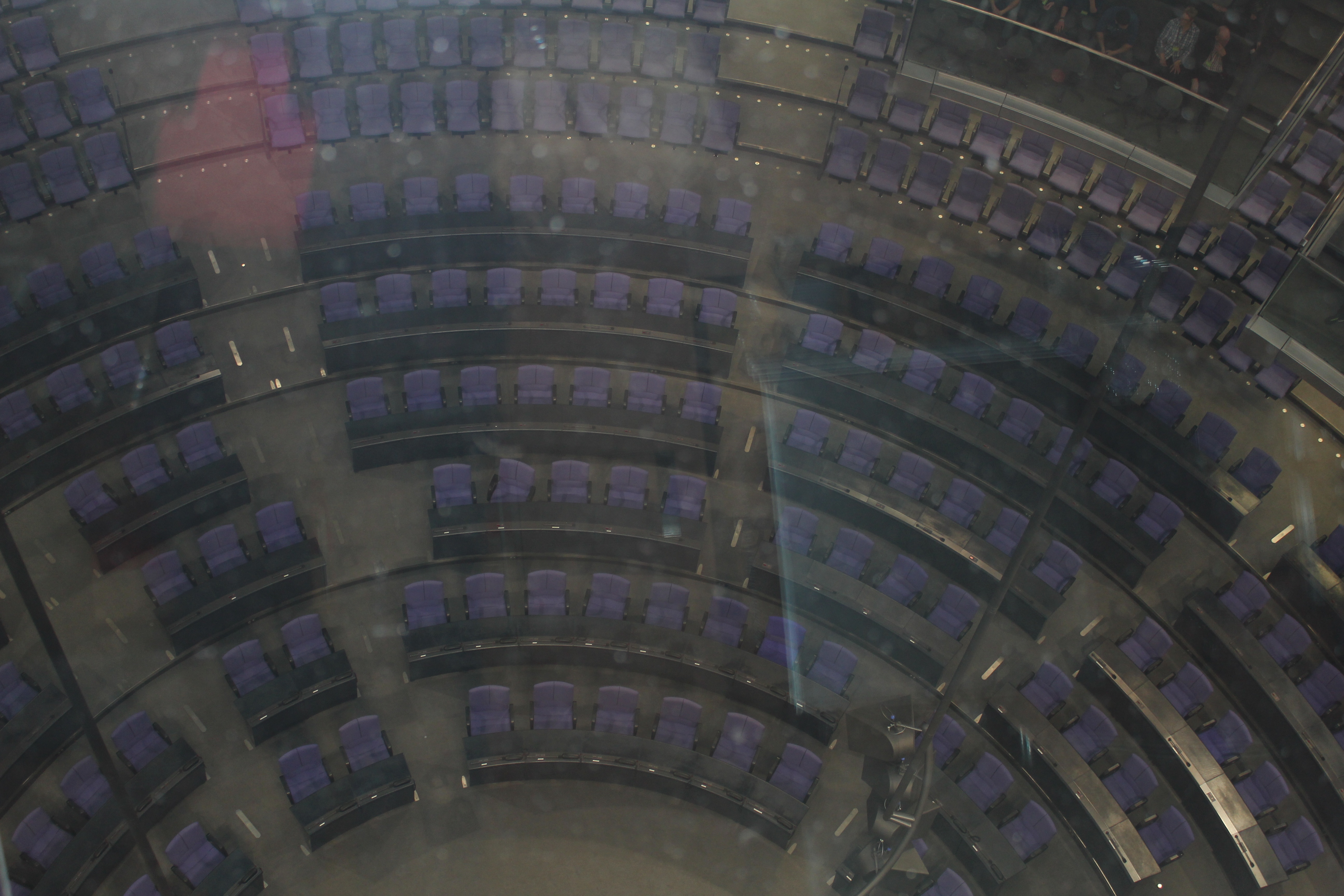
Supporting structure for the glass dome, the German Parliament sits directly below – February 2012

Parliament seats directly below

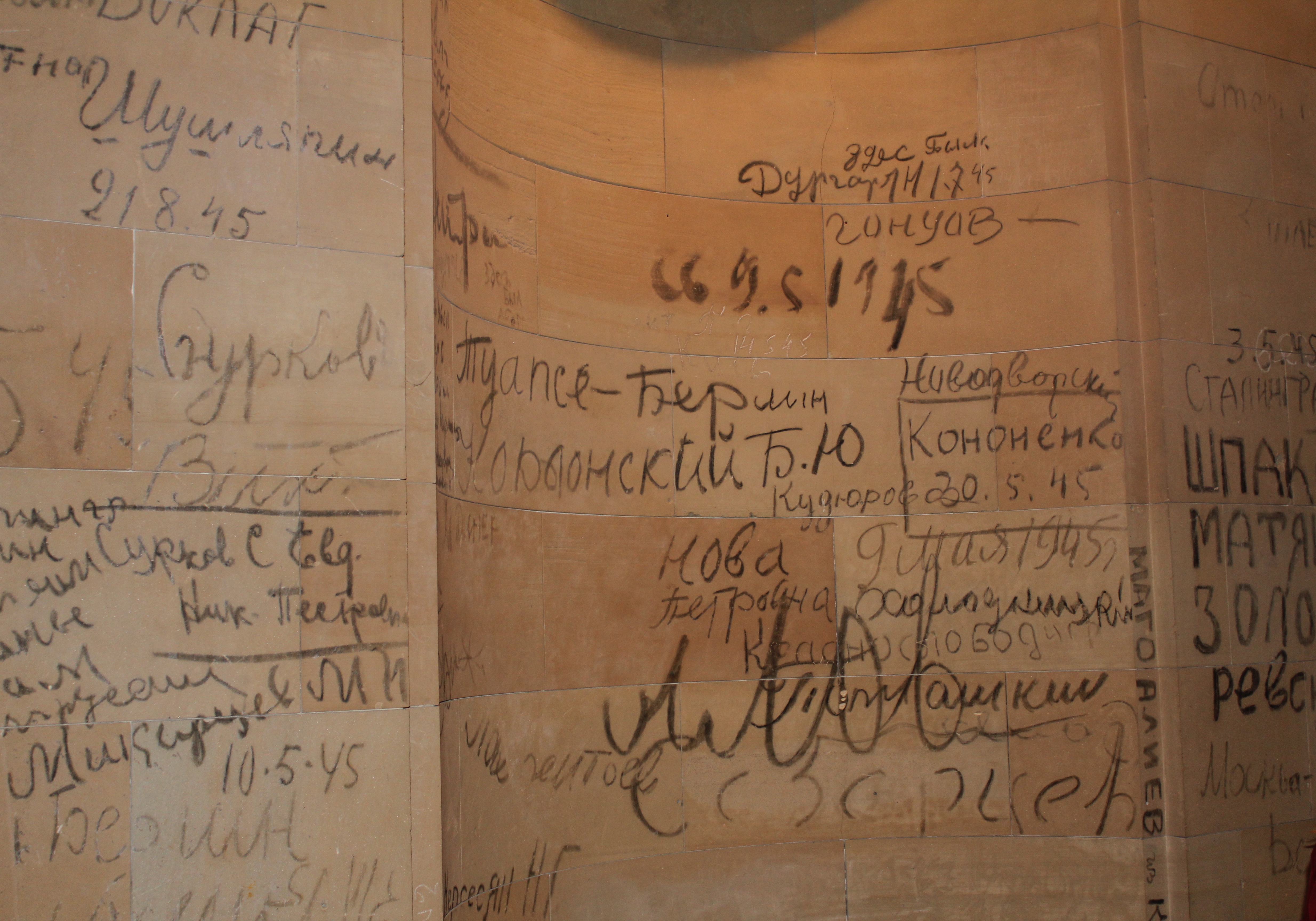
Not all of the original internal walls were demolished, and a few, covered in graffiti scrawled by victorious Russian soldiers once the Reichstag had fallen, still remain.

One section of many, showing graffiti left by Russian troops on capturing the Reichstag – Feb 2012

The Reichstag. Note the “Berlin Wall’ in the background – 1983

The fourth member of the ‘Allied Powers’ was naturally the Soviet Union. Below is one of the Soviet memorials close to the Reichstag.

Soviet War Memorial, Tiergarten. – February 2012

There was very much a sinister side to the Soviet Union at that time. Army-General Mikhail Zaitsev, commander of the Group of Soviet Forces Germany, GSFG, seen attending a Ceremony at the Soviet Memorial, Tiergarten, the big man in the middle, was in command of one of their key forces. GSFG would be assigned to any likely attack on the NATO Alliance and the potential invasion of West Germany. Consisting of some 20 Divisions made up of over 4,000 tanks and 8,000 armoured vehicles, it was a phenomenal force. But, behind that were well over 140 other Soviet tank and Infantry divisions, albeit of a lower quality.

Being a part of the Warsaw Pact Alliance, they could also call upon significant forces from Poland, East Germany, Romania, Hungary and more. When I cut my teeth in the army serving with an Armoured Brigade in northern Germany, it wasn’t a question of if they were coming across the Inner German Border, but when.

Commander of the GFSG, at the Soviet War Memorial Tiergarten – 1982

Part of my role in Berlin in the early 80’s, was to track the movement of Russian and East German forces.


East German FROG 7, missile carrier, being moved by rail – 1982

Soviet Infantry on exercise – 1981

.

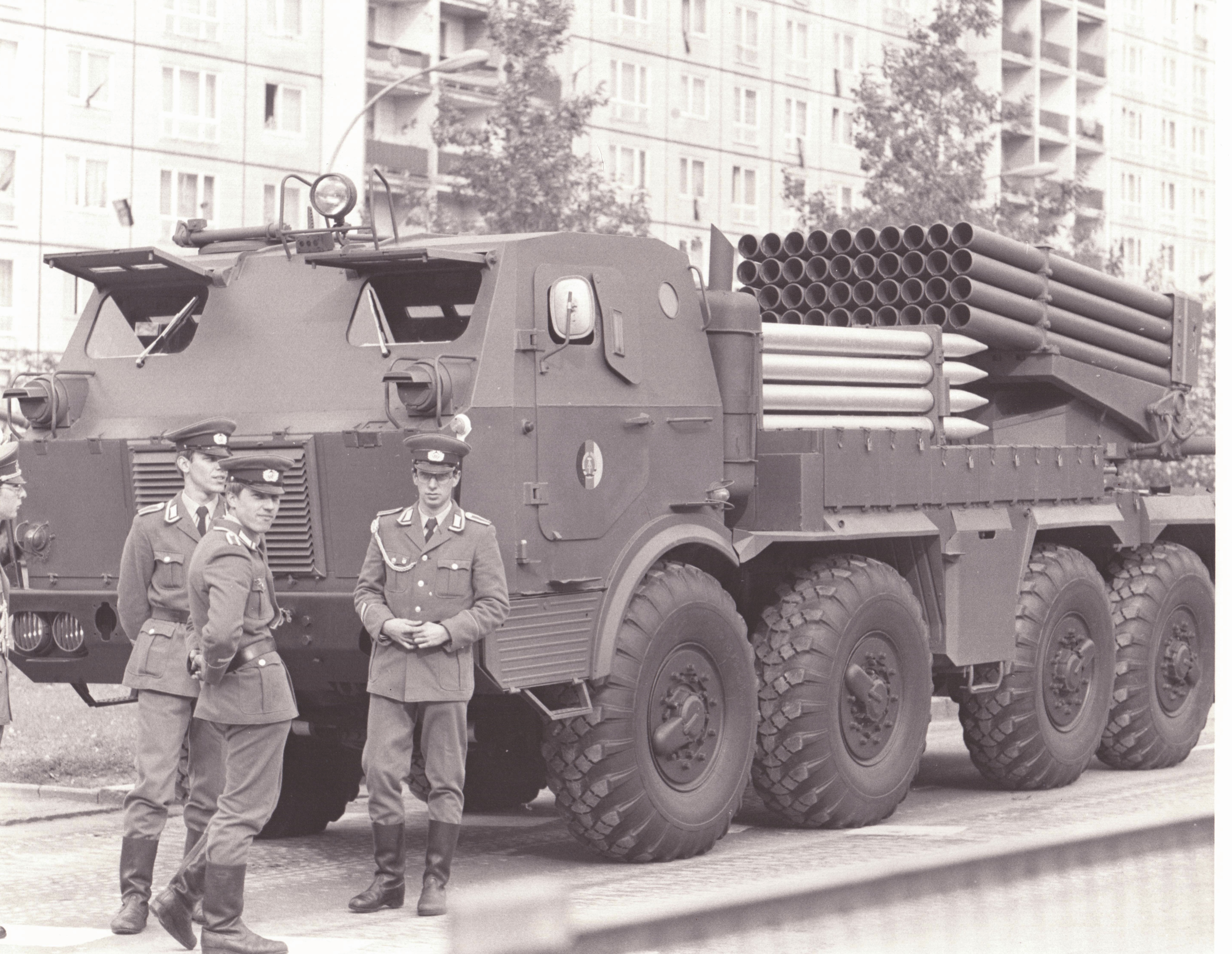
RM-70, the East German equivalent of the Russian BM-21 – 1983

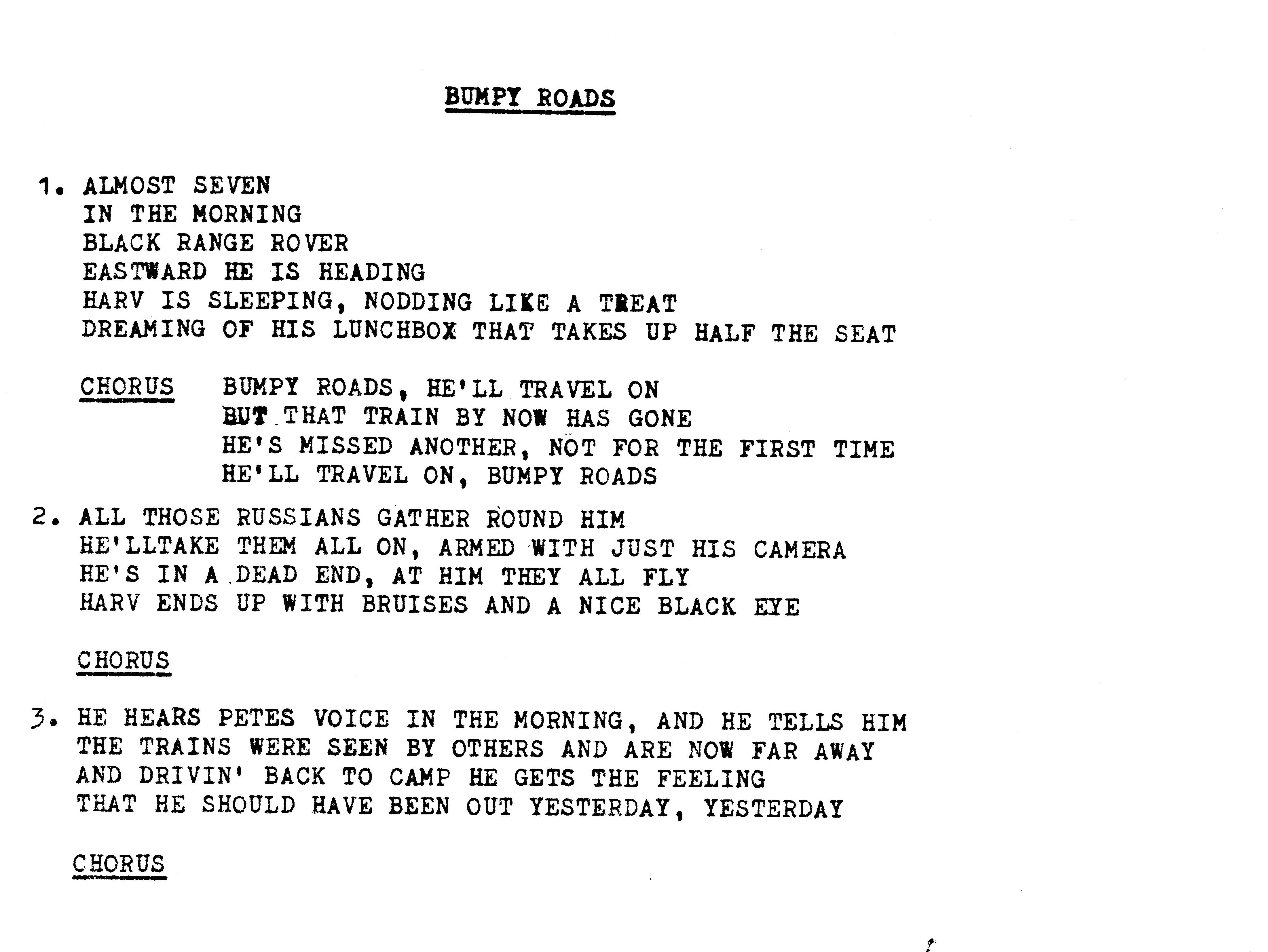
On completion of my tour, one of my team wrote a song for me, to the tune of  ‘Country Roads’. It was a privilege to serve with such a specialist unit.

.

The majority of us are aware of the atrocities carried out by the Nazis during WW2, so I particularly wanted to see the Memorial to the Jewish dead.  It wasn’t built without controversy.

Memorial to the murdered Jews of Europe – Berlin February 2012

 Some felt the memorial should have looked very different, others were concerned it was very close to where Hitler’s bunker had been and their was controversy concerning the manufacturers involved in the project and potential links with the Nazis regime during WW2.

.
HarveyBlack-Red Effect150313

My intention is not to portray a particular message, but just share some of my photographs and experiences with you. 

Photographs are copyrighted to Harvey Black

Berlin, The Cold War Years – A Hot War in reality. Part 1.

At the end of World War 2, what remained of pre-war Germany was divided into four zones of occupation. Each of the Allied powers; the United Kingdom, United States, France and Russia, controlled one of them.

The capital of Germany, Berlin, was also divided into four sectors. The consequence being, that the three Western Allied powers now controlled territory deep within the Soviet Union Zone of Germany.

Berlin Sectors

Over time, the tensions between the four Allied powers increased, eventually resulting in the Berlin blockade in 1948, when the Soviets attempted to starve West Berlin into submission and force the other three Allied powers out. This failed and the Soviets eventually relented, but an ever-increasing number of East Germans fled to the West; between 150,000 and 300,000 a year during 1951-1953. As a consequence, restrictions were placed on movement between the divided country. From 1961, the border was closed and Berlin was completely encircled, first by barbed wire, then bricks and finally a concrete wall, along with the infamous ‘death strip’.

Wall

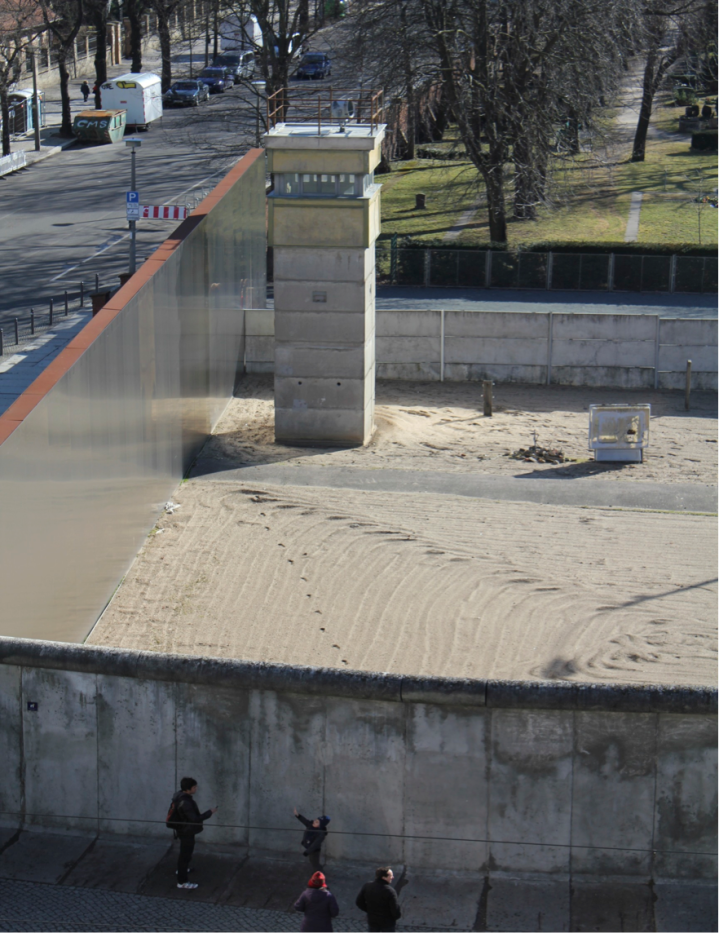
Remains of the Berlin Wall and ‘Death Strip’ –February 2012

During my time in Berlin in the 80’s, I was one member of a small army intelligence unit that had the task of monitoring Soviet and East German activity in the Eastern Sector of Berlin. In February 2012, I returned to Berlin again, after a gap of 25 years; I would like to share with you some of my experiences.

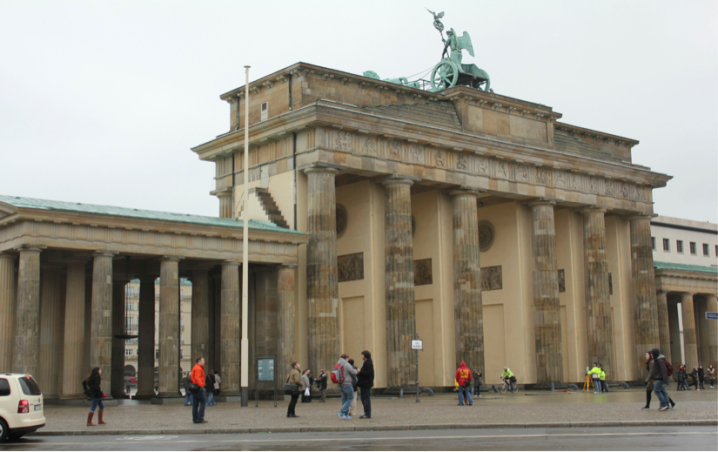
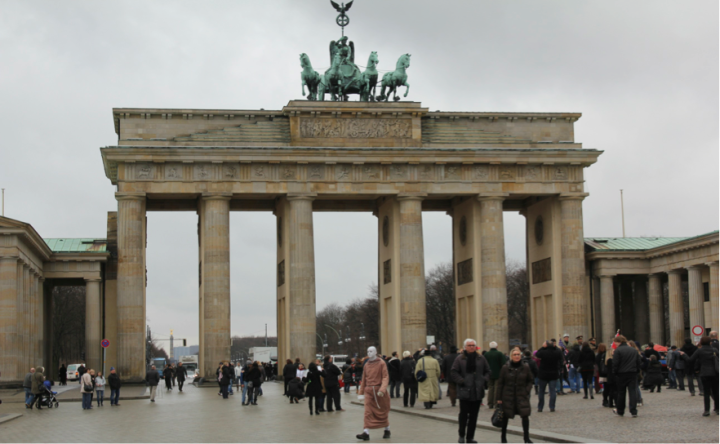
Brandenburg Gate1

.

Brandenburg Gate 2

Brandenburg Gate –February 2012

As you can see from these recent photographs of the Brandenberg Gate, the general public now has free access to both sides of this unique monument. On the day I took these photographs a protest was in progress right next to it, unheard of back in the 80’s. By the way, West Berliners don’t normally dress as Monks and wear white face masks.
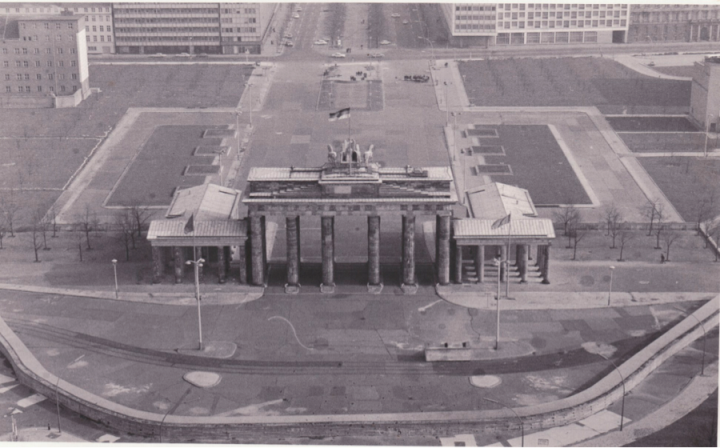
Brandenburg Gate 3

Brandenburg Gate -­‐ 1983

As this photograph, from the early 80’s, shows access to the monument was prohibited and the Berlin Wall is in plain view.

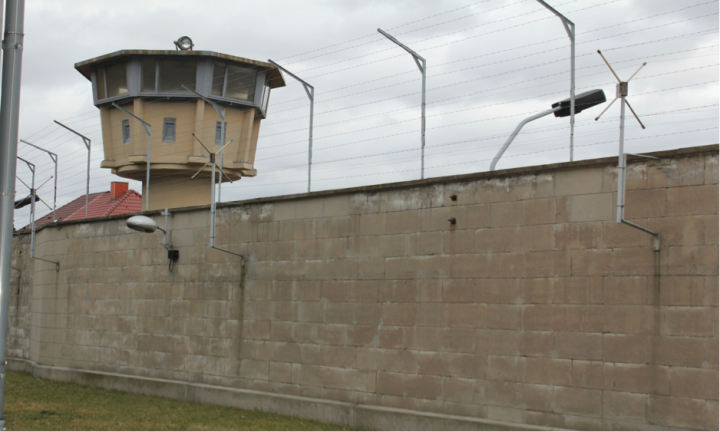
During the Cold War, there was very much a dark side to East Berlin. Although I had seen the Soviet Special Camp and Ministry of State Security (Stasi) Remand Prison from the outside in the 80’s, on my recent visit I was able to see it from the inside.

Stasi Prison

Outside the walls of the Stasi Prison, Genslerstrasse, Berlin – February 2012

VOPO
.
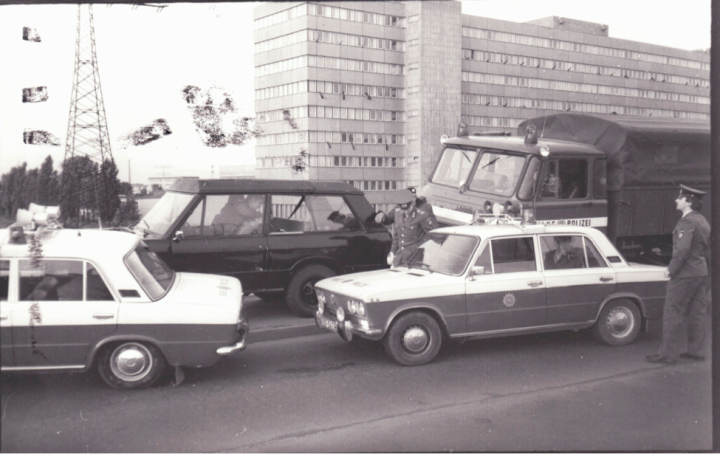
Blocked in by VOPO’s, early 80’s

Although we endeavoured to gain access to all areas, we were often boxed in by the VOPO’s, Volkspolizei, who frequently tried to detain us and often blocked us in, sometimes covering our vehicle in blankets.

Stasi Water

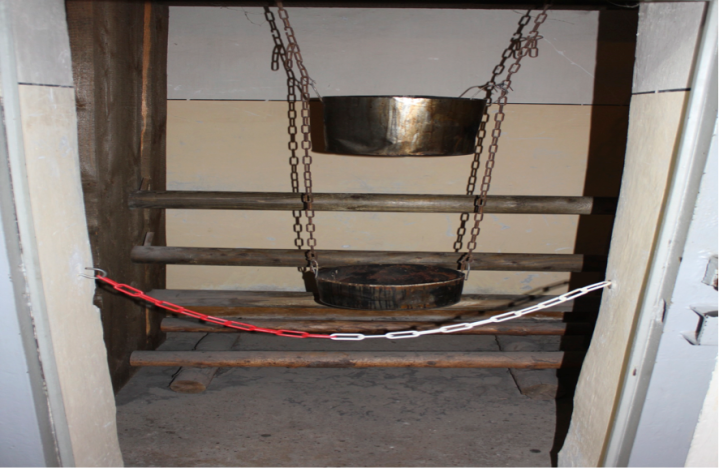
Stasi Prison-­‐water torture cell – February 2012

For this particular site, the Stasi Prison, it was obvious why they didn’t want us near it. The above photograph shows the instrument used for water torture.

Stasi Van

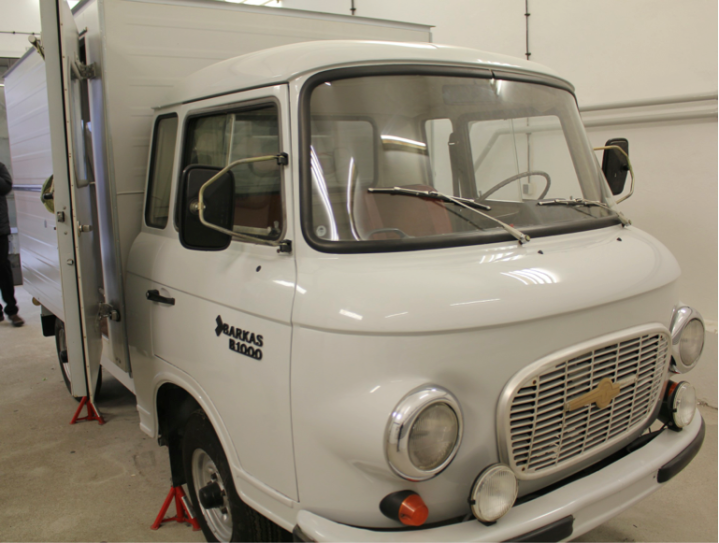
Vehicle used to transport and disorientate Stasi prisoners –February 2012

When arrested, they were driven around Berlin in a sealed vehicle for up to 4 hours to disorientate them. Bear in mind the prisoners were on Remand and had not, as yet, been convicted. They were basically held until such times as they signed a confession, then taken to court and sentenced.

Stasi Cell

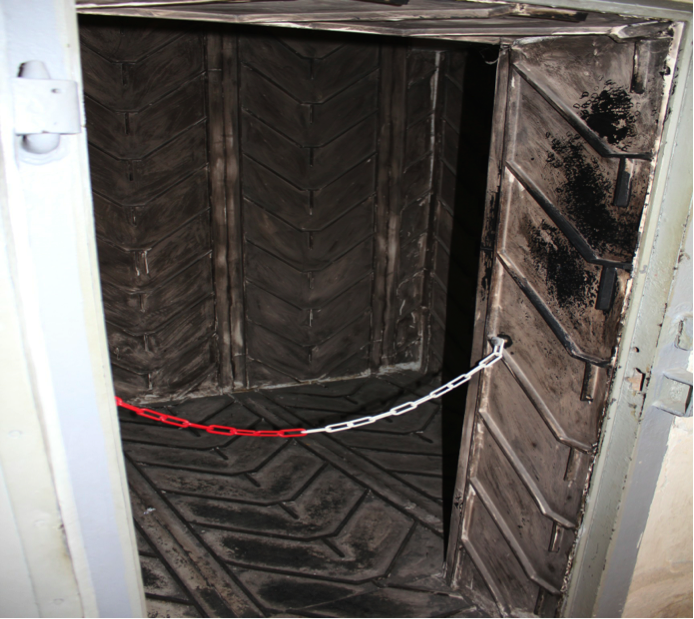
Padded cell for isolating the prisoners – February 2012

In the padded isolation cells, as above, the prisoners were held incommunicado. There was even a traffic light system in the corridor to ensure prisoners never met.

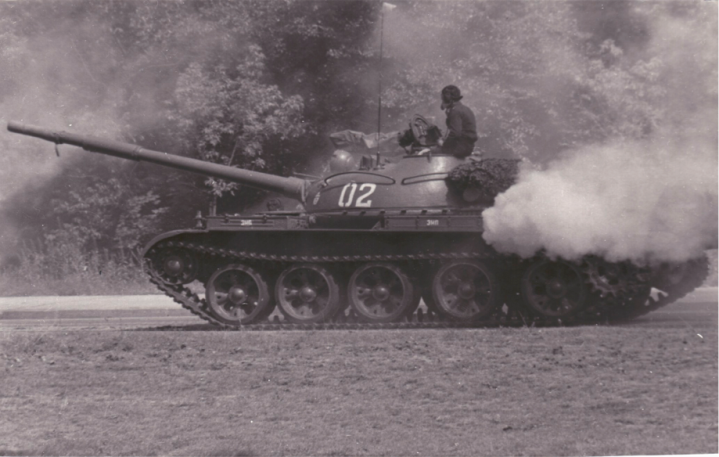
T62

Russian T-­‐62 tank, East Berlin -­‐ 1982

When monitoring Soviet troop movements such as these, the reaction was often far more violent. On one occasion, our vehicle rammed side on, so hard and pushed along sideways, that the tyres were ripped off the wheels. And on one occasion, I was personally dragged out of my vehicle and beaten up by Soviet and KGB troops.

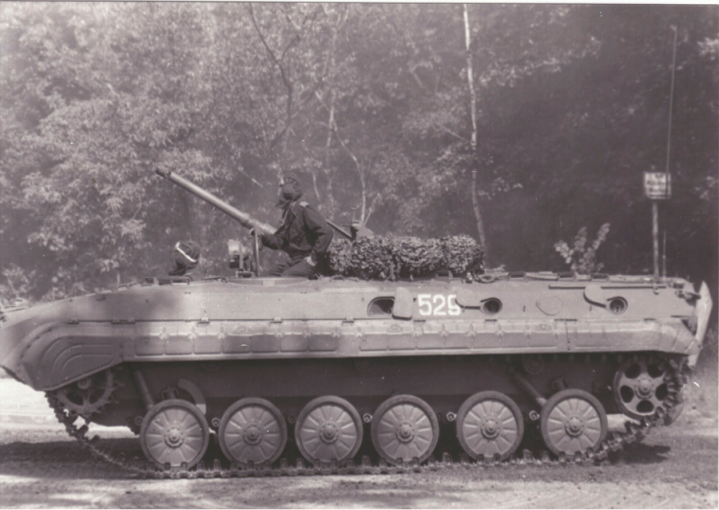
BMP1

Russian BMP-­‐1, East Berlin – 1982

.

HarveyBlack-Red Effect150313

Photographs are copyrighted to Harvey Black

The Red Effect. Nuclear Defence.  The first novel in my ‘Cold War’ trilogy, The Red Effect, published by SilverWood Books, is now available. Thoroughly enjoyed writing it, as i do with all my novels. There will be three books in total, covering the hypothetical invasion of West Germany, the Federal Republic of Germany, by the Warsaw Pact in the mid 1980’s. Book 1, ‘The Red Effect’, encompasses part of the intelligence build up leading to the initial Warsaw Pact strike against the NATO forces lined up against them. The purpose of the next few posts is to give the reader some additional background information to enhance their reading experience.

. RedEffect72dpi-4 .

‘The Red Effect’ by Harvey Black – Available now. The Cold War that became a Hot War.

Even as early as the late 40s, early 50s, there was a real fear of a nuclear attack from the Soviet Union.

Cold War 4 029 (1)

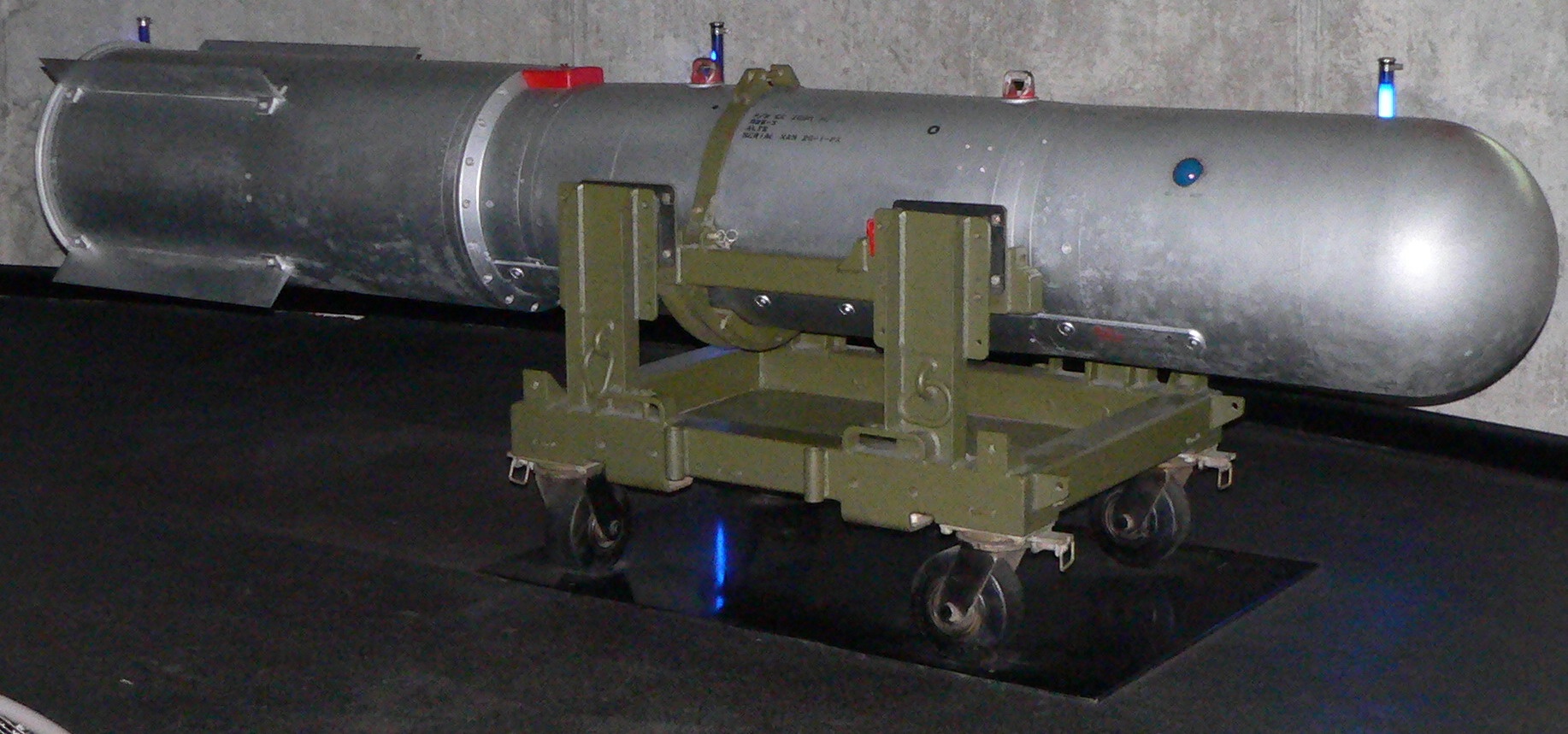
B-28 Nuclear Bomb, carried by the B-52 bomber in the 60s.

.

Red effect 3 082 (1)

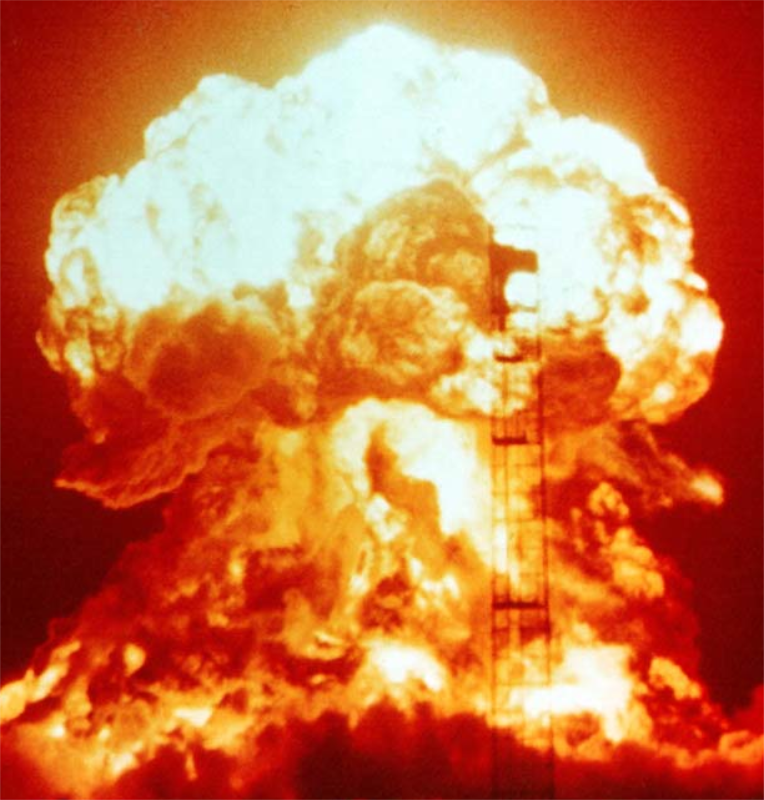
With a 1 megaton yield, it would devastate a city and the surrounding area.

The perception of a potential Third World War, was generally one of a nuclear war. It may have come to that. In reality we will never know. But, one scenario is that of a conventional war. The massed forces of the Warsaw Pact against the supposedly technically superior, but weaker, NATO armies, that may well have escalated into a nuclear exchange. But we still prepared for the worst.

.

Red Effect. Nuclear Defence. 091

Advice was provided by the local authorities, giving guidance on how best to defend yourself from the threat.

.

Red Effect. Nuclear Defence. 092

Information was basic, but the authorities themselves knew very little about how the population could defend themselves against an all-out nuclear exchange. It was expected that over 300 megatons would be dropped on Great Britain alone, enough to blast it back into the dark ages.

.

Red Effect. Nuclear Defence. 079

To assist local Government, in the event of a nuclear exchange, or other major catastrophe, Regional Control Centres would assume full powers over a specific area. They were provided with tools to help cope with the nuclear threat. 

.

Red Effect. Nuclear Defence. 080

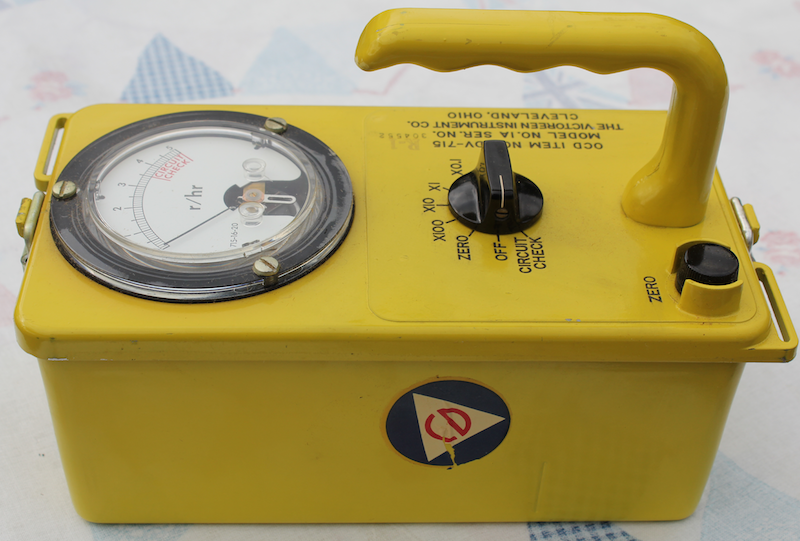
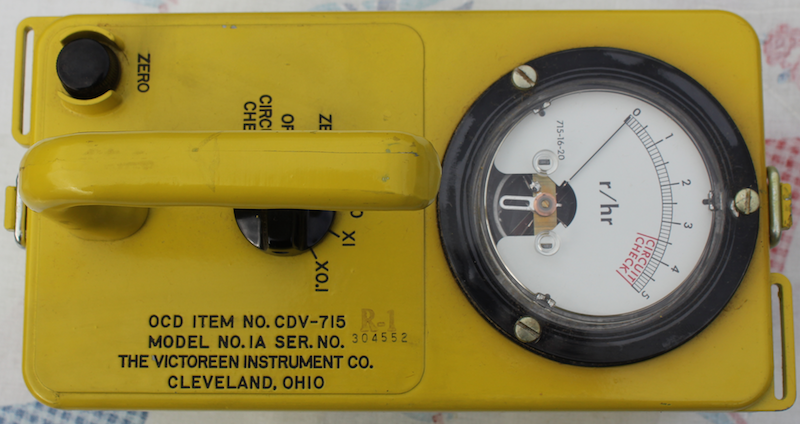
This Radiological Survey Meter was built in 1962, by the Victoreen Instrument Company in Cleveland Ohio. It is brand new, fortunately unused.

.

Red Effect. Nuclear Defence. 081

It records the rate at which at which your body is being exposed to radiation. It is used to find the best shelter and evaluate shielding arrangements. Even stacks of books were seen as an aid to blocking out radiation.

.

Red Effect. Nuclear Defence. 082

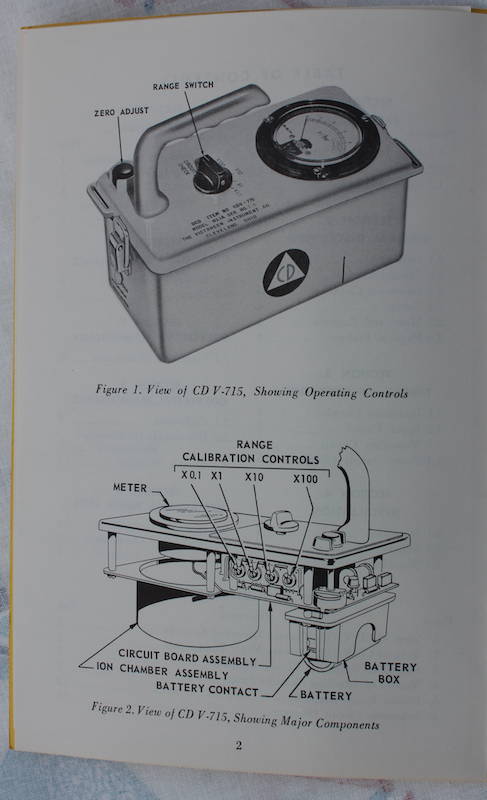
Very basic circuitry, powered by a 1.5 volt, D-Cell battery

.

Red Effect. Nuclear Defence. 083

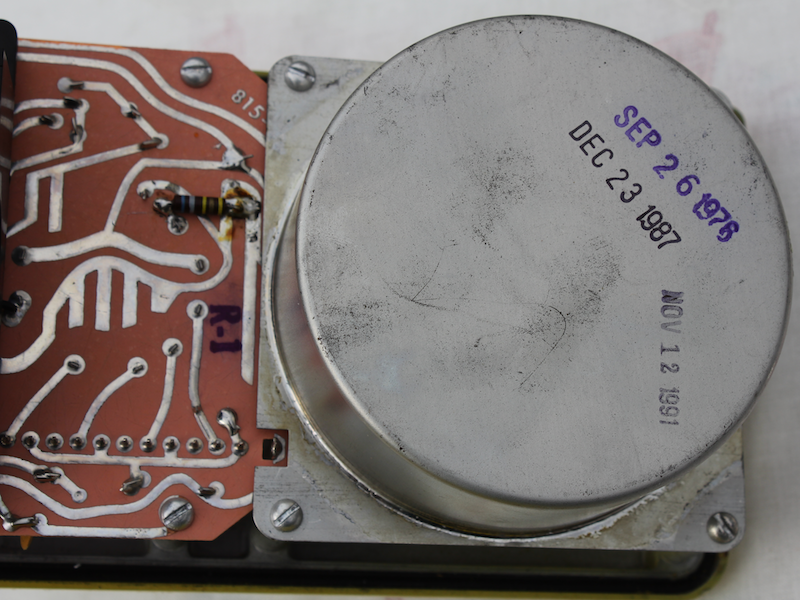
Made in 1962, the latest test date for the Ion Chamber is 1991, and it still works.

.

Red Effect. Nuclear Defence. 084

Measures up to 500 roentgens per hour. Only a few hours at that level would usually be lethal for a human being.

.

Red Effect. Nuclear Defence. 087

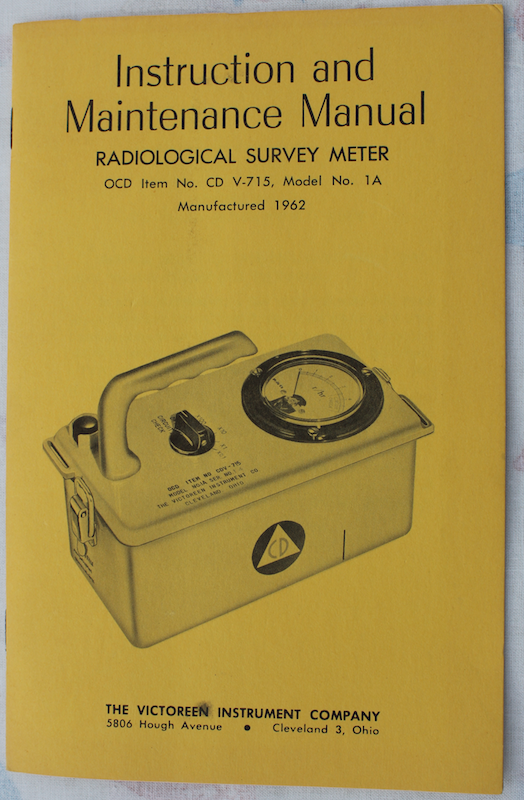
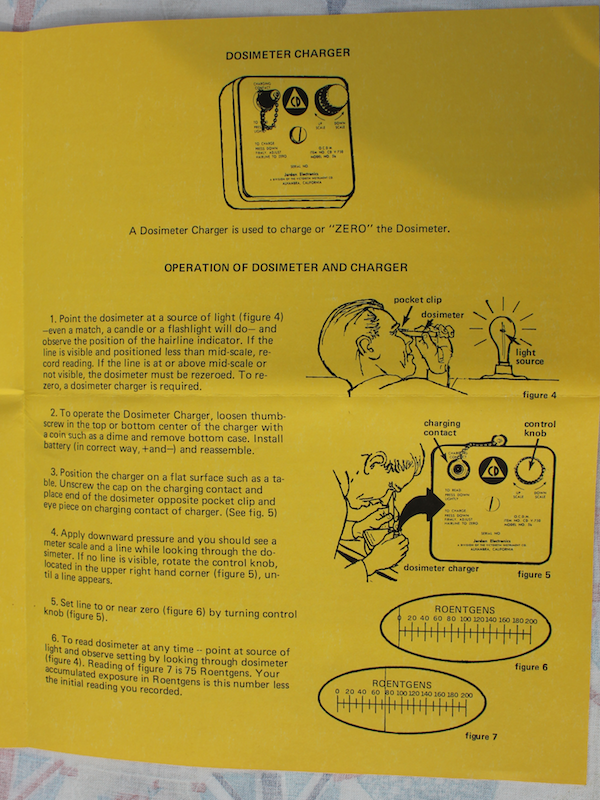
Basic Instruction Book

.

Red Effect. Nuclear Defence. 088

CD V-175

Red Effect. Nuclear Defence. 085

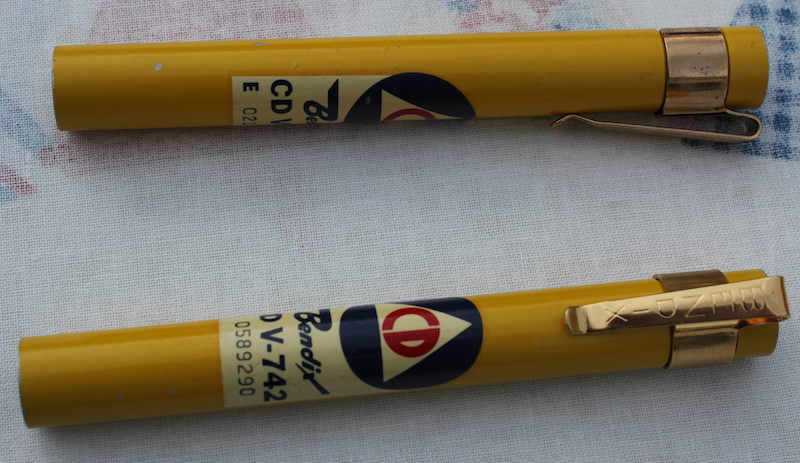
Dosimeters. Design to be carried on the person to measure the body’s accumulated exposure to radiation.

.

Red Effect. Nuclear Defence. 089

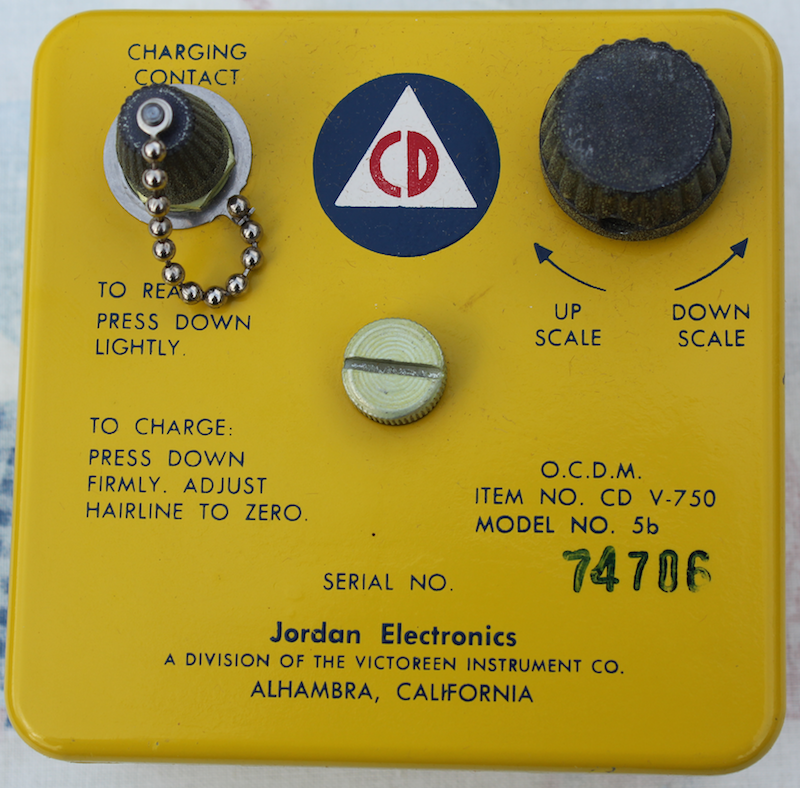
Dosimeter charger, used to ‘Zero’ the dosimeters.

.

Red Effect. Nuclear Defence. 079 (1)

.

Total Exposure

0-50R – No visible effects

50-200R – Brief periods of nausea. 50% experience radiation sickness

200-450R – 50% deaths within two to four weeks.

450-600R – Serious radiation sickness. Death to 50% within one to three weeks.

Over 600R – Severe radiation sickness. 100% deaths within two weeks.

The thought of it ever happening is frightening.

i hope this has given you a further insight into what was happening during the Cold War Period, 1946-1989. Going forward I will add more information in support of my Cold War trilogy.

The Blog is copyrighted to Harvey Black.

. HarveyBlack-Red Effect150313

‘The Red Effect’ by Harvey Black – Kindle and Paperback version out now! The Cold War that became a Hot War.

.