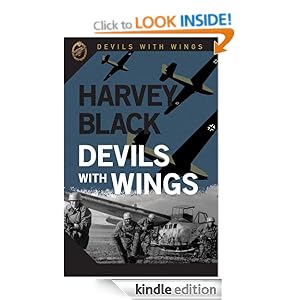
A military thriller based around the adventures of two young Fallschirmjager paratroopers during the early part of World War II. It is a fictionalised adventure based on the famous assault on the impregnable Belgian Fortress, Eben Emael.

Fallschirmjager Harvey Black 055

Tall, gangly Paul Brand is supported by his junior sergeant, Unterfeldwebel Max Grun, as he experiences his first action as a platoon commander in Poland, September 1939. The mutual respect between the two comrades grows as they experience the sights and smells of battle at close quarters.  Following their success in Poland, Paul, Max and the platoon are sent to a clandestine camp in the foothills of the Harz Mountains to train for a secret mission. Confined to camp for six months they undergo intensive training for their next mission – the subjugation of the Eben Emael Fortress.

Two German secret weapons will assist them to complete their task; the first is the glider, used for the first time to deposit troops directly onto a target, and the second secret weapon is a new Hollow Charge Weapon, capable of blasting through steel or concrete. On completion of their training, nine gliders containing seventy two Fallschirmjager land on top of the fortress, before the troops move in to the depths of the tunnels to finish the job. Over one thousand Belgian troops fail to stop them.

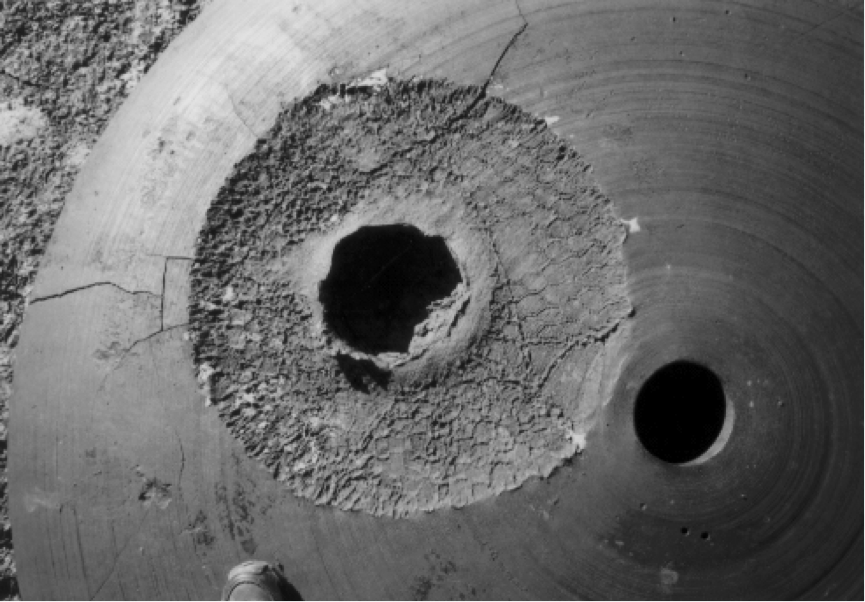
Effects of a Hohlladung, shaped charge, on an armoured turret.

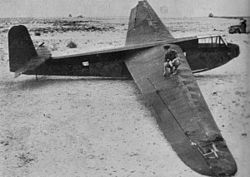
DFS-230 Glider

This exciting fictionalised retelling of the assault on Eben Emael is written by an author with experience in army intelligence.

Video Clip- Assualt on Eben Emael.

http://www.youtube.com/watch?v=R_xsfQPQicQ&context=C4ee50f8ADvjVQa1PpcFN4SRfRBFPjuFRtYcx2OZf4CM9-Mi_XGZQ=

Buy the book from….

.

51r3+Lge68L._BO2,204,203,200_PIsitb-sticker-arrow-click,TopRight,35,-76_AA278_PIkin4,BottomRight,-67,22_AA300_SH20_OU02_

General Erich Von Manstein, Part 3.
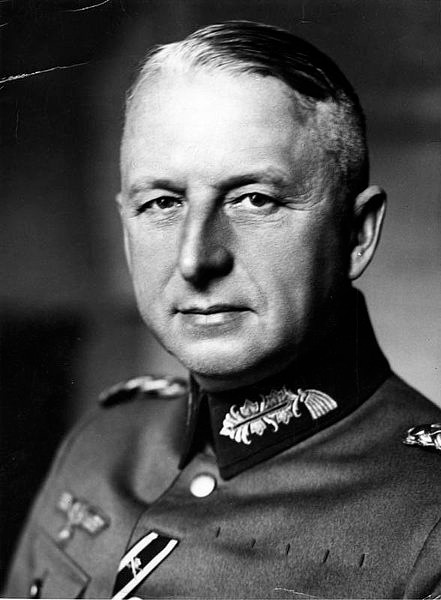
During the battles around southern Leningrad, in October and November 1941, in temperatures reaching -40 degrees, the 3rd Fallschirmjager Regiment, FJR3, 7th Flieger Division, commanded by General Student, was dispatched to defend parts of the River Neva and repulse any Russian attempts at creating a bridgehead. They were used in battalion-sized units in a fire-fighting role and consequently some elements suffered up to 75% casualties. The setting for my third novel, Devils with Wings: Frozen Sun

This unit was just a small piece of the jigsaw of Army Group North’s push through the Balkans during Operation Barbarossa, launched by Hitler on Sunday, 22nd June 1941.

With Operation Sea lion, the Invasion of Britain cancelled, Hitler’s eyes were already turning east. Manstein was to prove his worth yet again in one of the largest battles ever…

For the drive east, Operation Barbarossa, the subjugation of the Soviet Union, Manstein was put in command of a motorised corps, LVI AK (mot), assigned to Generaloberst Erich Hopner’s 4th Panzergruppe, part of Army Group North. He was assigned the 8th Panzer Division, 3rd Infantry Division (mot) and the 290th Infantry Division, a key problem being that one of his divisions would have to move by the age-old method of travel, by foot.

He received his instructions from Hopner and, along with General Reinhardt, was ordered to punch through the thinly held Russian defences, then, encircling any units on their way, particularly the Soviet 6th Army, secure crossings over the Dvina River.

In the early hours of the 22nd June 1941, Manstein struck at the army boundary between the Soviet 8th and 11th Armies, advancing over 40 miles in the first day. Although General Reinhardt’s XLI AK (mot) Corps, had been held up by a surprise attack from the Soviet 3rd Mechanised Corps around Raseiniai, Manstein continued his dash across Lithuania and made rapid progress down the Dvinsk highway. After an advance of nearly 200 hundred miles in less than 5 days, he secured the Dvinsk road and rail bridges across the River Dvina intact.

The drawback to this speedy advance meant that Manstein’s forces were well ahead of the rest of Army Group North and his Infantry were still two days away. Along with that, his lack of experience in commanding armoured units meant his advanced units were practically immobilised through lack of supplies, particularly fuel. He had used up to 100 tons of gasoline per day.

After an unsuccessful counterattack on Manstein’s bridgehead on the 28th June, by Soviet General-Major Lelyushenko’s 21st Mechanised Corps, Manstein’s Corps refuelled, the rest of Army Group North reached the Dvina River, and Manstein was again able to continue his advance, pursuing Lelyushenko’s retreat northeast, supported by the SS-Division ‘Totenkopf’, now attached to his Corps.

Although his advance proved sluggish, Reinhardt having much more success in his drive for Leningrad, his Corps eventually marched northeast towards Novgorod with his 8th Panzer Division in the lead.

In the meantime, Soviet General-Major Lazarev, gathered a force in the woods north of Soltsy, the 21st Tank Division and 70th Rifle Division, and three weaker rifle divisions south of Soltsy.  On the morning of the 15th July he struck, mounting a pincer attack behind 8th Panzer Division in an attempt to cut them off from the rest of their Corps, the German panzer division was soon surrounded.

Provided with limited supplies from the air, 8th Panzer Division was ordered to break out. After two days of fighting and incurring heavy casualties, they succeeded, but had to be withdrawn and switched to being a reserve unit while refitting.

In early August, Manstein, reinforced by two Infantry divisions, conducted a frontal action against the Soviet defences around Luga. Just as he was on the verge of linking up with Reinhardt’s enveloping Panzers the Soviets counterattacked again.

On the 12th August, the Soviet 11th and 34th Armies’ ten divisions attacked the three divisions of the German X AK, in Staraya, Russia. This was a major catastrophe for Army Group North. Manstein, on the 19th August, with his SS-Division ‘Totenkopf’ and 3rd Infantry Division, mounted a two-division pincer attack against Kachanov’s 34th Army to relieve the trapped Corps.

Manstein not only re-established communication with the encircled Army Corps, but encircled the elements of five Soviet divisions capturing up to 12,000 prisoners. The Soviet High Command considered the defeat so serious; Kachanov was executed for his failure.

Generalfieldmarschall Ritter von Leeb, commander of Army Group North, then attached Manstein’s Corp to 16th Army Corps to continue the push eastwards towards Demyansk. But, on the 12th September, very close to Demyansk, Manstein was given the command of 11th Army Corps in Army Group South. He left the next day to join his new command. The Crimea his next destination…

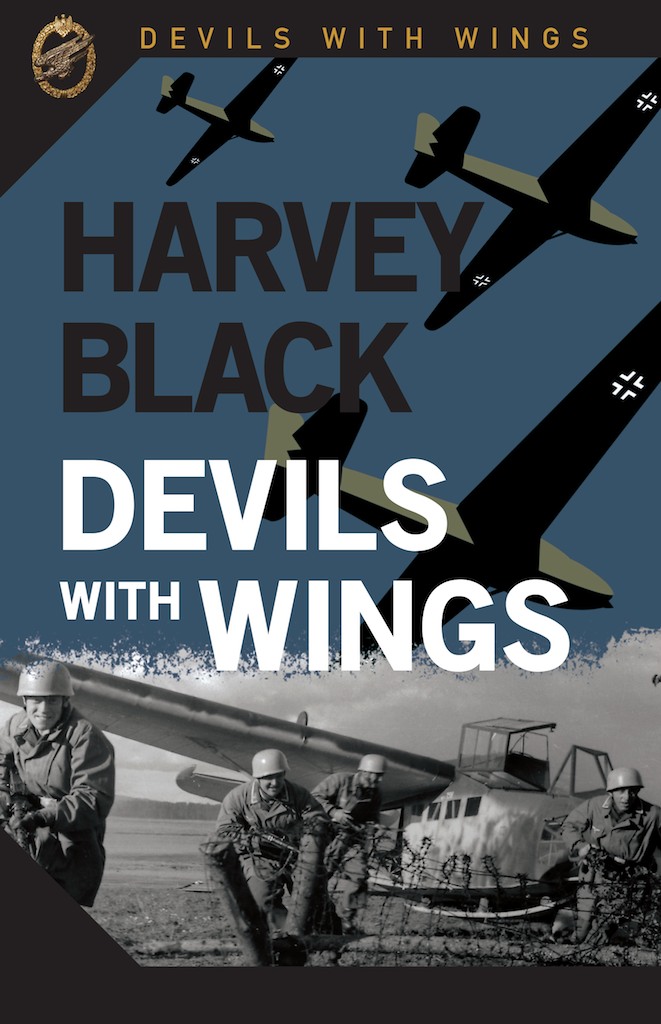
Book review – Devils with Wings – The Green Devils assault on Fort Eben Emael by Harvey Black.

Read the book review of my debut novel, but also check out the rest of this impressive site!

HB

General Erich Von Manstein, Part 2.

During the battles around southern Leningrad, in October and November 1941, in temperatures reaching -40 degrees, the 3rd Fallschirmjager Regiment, FJR3, 7th Flieger Division, commanded by General Student, was dispatched to defend parts of the River Neva and repulse any Russian attempts at creating a bridgehead. They were used in battalion-sized units in a fire-fighting role and consequently some elements suffered up to 75% casualties. The setting for my third novel, Devils with Wings: Frozen Sun

This unit was just a small piece of the jigsaw of Army Group North’s push through the Balkans during Operation Barbarossa, launched by Hitler on Sunday, 22nd June 1941.

General Manstein’s WW2 career started as the Chief of Staff of Heeresgruppe Süd, Army Group South, coordinating the three subordinate armies during the initial invasion of the West, the infamous Blitzkrieg, and rapidly defeating Poland in its wake.

After only a matter of weeks after the fall of Poland, the General was given the operations order, Fall Gelb, Case Yellow, the plan for the attack on the Anglo-French Allies. The initial plan was for the focal point, using Heeresgruppe B, to be on the right flank in Belgium and Heeresgruppe A, with two armies and a single panzer division, making a supporting attack through the Ardennes.

Manstein quickly identified weaknesses in this approach, advocating that the allies would expect an attack through Belgium and the German Army would be unable to fulfil the new concept of encirclement. With Rundstedt behind him, Manstein wrote to the German High Command, OKH, suggesting that the main push, with Heeresgruppe A, should be through the Ardennes, with four panzer divisions, pushing across the River Meuse, followed by a ‘Sickle-cut’ deep into the allied lines to reach the Channel coast.

His preferences were not welcomed however, and many of his memos were blocked and did not reach Hitler. However, some of Manstein’s supporters managed to leak his ideas to Hitler and on the 17th February 1940, along with other senior commanders, he was invited to breakfast with the Führer himself. Taken aside and asked for his opinion, Hitler adopted this new approach and Heeresgruppe A was increased from 24 to 44 divisions, including the newly formed Panzergruppe Kleist, consisting of five panzer divisions, totalling some 1,200 tanks.

Manstein, although the father of the attack plan, had little involvement in the early stages. Eventually his XXXVIII Armeekorps was involved and was part of a multi-corps assault across the River Somme on the 5th June, eventually pushing the French forces back to the River Loire.

The rest is history, with the invasion of the west being launched on the 10th May 1940, the main allied force being quickly defeated and the remaining French forces defeated by a second Blitzkrieg, ending with the signing of the armistice on the 22 June.

Manstein’s involvement in the Campaign, although short, was successful and he was awarded the Ritterkreuz der Eisernen Keuzes, Knight’s Cross of the Iron Cross, and made General of the Infantry. Although there were a number of contributors to the final plan, it was Manstein’s model that ensured German’s greatest military victory.

With Operation Sea lion, the Invasion of Britain cancelled, Hitler’s eyes were already turning east. Manstein was to prove his worth yet again in one of the largest battles ever…